
Walk into any home with a cat, and you’ll likely find one curled up inside a cardboard box—often one that’s too small, recently discarded, or clearly meant for something else entirely. It doesn’t matter if you’ve bought an expensive cat bed; your feline will still choose a shipping container from last week’s online order. This behavior is so universal that it’s become a meme, but beneath the humor lies a complex web of instinct, psychology, and environmental needs. Understanding why cats are drawn to cardboard boxes isn’t just amusing—it reveals deeper truths about their natural behaviors and emotional needs.
The Science Behind the Box Obsession
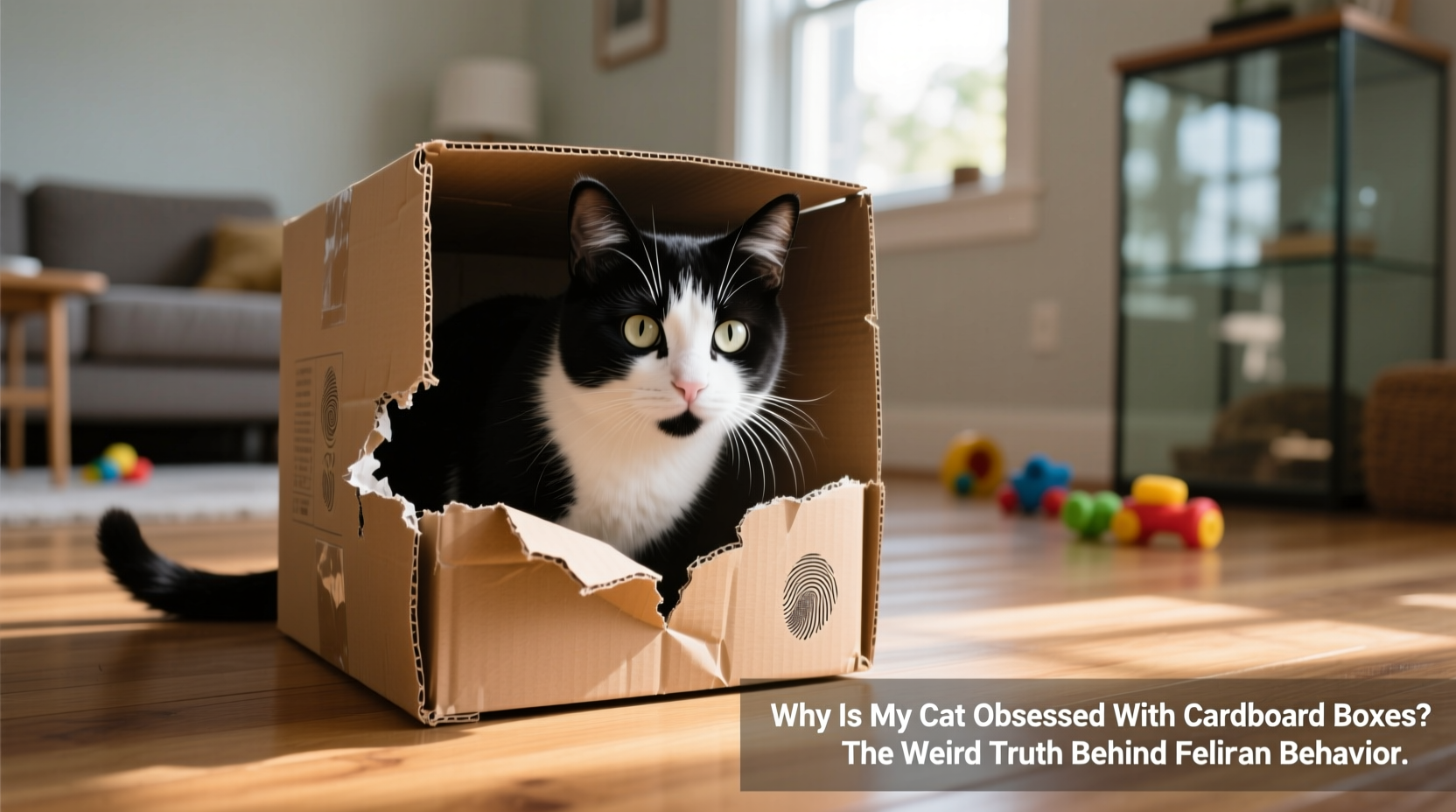
Cats are predators by nature, but they’re also prey animals in the wild. This duality shapes much of their behavior. In the wild, felines seek out enclosed spaces not for comfort alone, but for survival. A confined space like a cardboard box offers protection from potential threats while allowing them to observe their surroundings without being seen. This sense of security triggers a psychological response that reduces stress and anxiety.
Studies have shown that shelter cats given access to hiding boxes exhibit lower stress levels and adapt more quickly to new environments. One notable 2014 study published in *Applied Animal Behaviour Science* found that cats with boxes acclimated faster and showed fewer signs of fear than those without. The researchers concluded that “hiding is a coping strategy” for cats under stress—making the humble cardboard box a vital tool for emotional regulation.
Thermal Comfort: Why Cardboard Is Warm
Cardboard may seem flimsy, but it’s surprisingly effective at insulation. The corrugated material contains air pockets between its layers, which trap body heat. Cats, who prefer ambient temperatures between 86°F and 97°F (30°C–36°C), often feel cold in typical household settings maintained at 68°F–72°F. A cardboard box acts like a personal heated blanket, helping them maintain optimal body temperature with minimal effort.
This thermal benefit explains why cats gravitate toward boxes even when plush beds are available. Unlike fabric or metal surfaces, cardboard doesn’t draw heat away from their bodies. Instead, it reflects warmth back, creating a microclimate ideal for napping—a necessity, considering cats sleep an average of 12 to 16 hours a day.
How Temperature Influences Cat Behavior
| Surface Type | Heat Retention | Cat Preference Level |
|---|---|---|
| Cardboard | High (traps air) | ★★★★★ |
| Wood | Moderate | ★★★☆☆ |
| Tile/Marble | Low (draws heat) | ★☆☆☆☆ |
| Fabric Bed | Variable (depends on filling) | ★★★☆☆ |
| Plastic Container | Low to Moderate | ★★☆☆☆ |
The data shows that materials offering passive thermal support rank highest in preference. Cardboard wins not because of luxury, but because it meets a fundamental physiological need.
Scent Marking and Territorial Behavior
Cats have scent glands concentrated on their cheeks, chin, and paws. When they rub against objects—including the edges of a cardboard box—they deposit pheromones that mark the item as part of their territory. This act transforms a neutral object into a familiar, emotionally safe zone.
A new box carries the faint industrial scents of glue and paper, which initially intrigue cats due to novelty. Once they’ve investigated and rubbed against it, their own scent overlays the foreign smells, making the space “safe.” Over time, this creates a feedback loop: the more they use the box, the more it smells like them, reinforcing its value as a personal sanctuary.
“Cats don’t just seek shelter—they create it through scent. A cardboard box becomes theirs the moment they claim it.” — Dr. Sarah Thompson, Feline Behavioral Scientist, Cornell University College of Veterinary Medicine
The Role of Novelty and Environmental Enrichment
In addition to safety and warmth, cardboard boxes satisfy a cat’s innate curiosity. Cats thrive on environmental enrichment—stimuli that engage their senses and encourage natural behaviors like stalking, pouncing, and exploring. A fresh box represents a new landscape to investigate. Its crinkly texture, confined space, and unpredictable shape trigger exploratory instincts.
Even empty boxes can serve as play structures. Some cats treat them as ambush points, launching surprise attacks on toys or unsuspecting feet. Others chew on the edges, satisfying mild oral fixation or teething discomfort (especially in younger cats). The tactile feedback from biting cardboard is distinct—firm yet yielding—which may be inherently satisfying.
Psychological Security in Domestic Settings
Despite being domesticated for thousands of years, cats retain many wild instincts. In multi-pet households or homes with frequent visitors, cats often feel the need to retreat. A cardboard box provides a quick-access refuge where they can observe without participating. This is particularly important for shy or introverted cats who may otherwise suppress natural behaviors due to stress.
Interestingly, the size of the box matters less than its enclosure. Even a shallow tray or flattened container with raised edges can function as a de facto den. The key factor is visual barrier—if the cat cannot be easily seen, it feels protected. This explains why some cats squeeze into boxes far too small for their bodies: it’s not about physical fit, but about perceived concealment.
Mini Case Study: Luna, the Apartment Cat
Luna, a three-year-old domestic shorthair living in a busy Brooklyn apartment, began exhibiting signs of stress after her owners adopted a second cat. She stopped using her designer cat tree, avoided shared spaces, and vocalized more frequently at night. Her veterinarian suggested introducing multiple cardboard boxes in quiet corners of the home.
Within days, Luna selected one box near a sunlit window as her primary resting spot. She rubbed against it daily, slept inside almost exclusively, and gradually resumed normal interactions with the other cat. The owners noted that she never used the matching plush bed placed beside the box—only the cardboard.
This case illustrates how simple, low-cost interventions can significantly improve feline well-being. For Luna, the box wasn’t just a sleeping spot—it was a psychological anchor in a changing environment.
Step-by-Step Guide: Creating the Ideal Box Environment
If you want to harness the power of cardboard boxes to support your cat’s mental health, follow this practical guide:
- Select the right size: Choose a box large enough for your cat to turn around in, but not so big that it loses its cozy feel. Medium-sized shipping boxes (about 18” x 14” x 12”) work well for most adult cats.
- Cut entry points: Use scissors to make one or two openings at ground level. Rounded corners reduce the risk of tearing. Avoid sharp edges.
- Place strategically: Position boxes in quiet areas, near windows, or in rooms where your cat spends time. Avoid high-traffic zones unless your cat is confident.
- Add soft lining (optional): Place a removable fleece blanket or towel inside for added comfort. Wash regularly to prevent odor buildup.
- Rotate monthly: Introduce a fresh box every 4–6 weeks to maintain interest. Retire old ones once they lose structural integrity or become overly soiled.
- Monitor usage: Observe whether your cat uses the box for sleeping, hiding, or playing. Adjust placement or design based on observed preferences.
This routine ensures your cat always has access to secure, stimulating spaces without relying on costly furniture.
Checklist: Is Your Cat Getting Enough Hiding Spots?
- ✅ At least one enclosed space per cat in the household
- ✅ Boxes placed in low-stress, accessible locations
- ✅ Multiple options available (boxes, tunnels, covered beds)
- ✅ No forced interaction—cats should enter freely
- ✅ Regular inspection for wear, moisture, or pests
- ✅ Rotation schedule to prevent boredom
Use this checklist to audit your home environment. Many behavioral issues—such as aggression, inappropriate elimination, or excessive vocalization—can stem from insufficient hiding opportunities.
FAQ: Common Questions About Cats and Boxes
Is it safe for my cat to eat cardboard?
Occasional nibbling is usually harmless, but ingesting large amounts can lead to gastrointestinal blockages. If your cat consistently eats cardboard, consult a veterinarian to rule out nutritional deficiencies or obsessive-compulsive behaviors.
Why does my cat only like certain boxes?
Cats are sensitive to texture, smell, and history. A box that previously held food items might carry enticing residual odors. Others may dislike boxes that are too noisy when stepped on or lack proper ventilation. Experiment with different types to identify preferences.
Can I reuse boxes after my cat has used them?
Yes, as long as they remain structurally sound and clean. Remove any loose fibers or drool residue. Replace boxes that are damp, moldy, or falling apart.
Conclusion: Respecting the Box Instinct
The fascination cats have with cardboard boxes isn’t quirky randomness—it’s rooted in survival, thermoregulation, scent communication, and emotional safety. What seems like a whimsical habit is actually a sophisticated adaptation to their environment. By embracing this behavior instead of discouraging it, we honor our cats’ evolutionary heritage and support their psychological health.
You don’t need to buy expensive cat furniture to make your pet happy. Sometimes, the best enrichment comes free with delivery. Pay attention to how your cat interacts with boxes. Notice when they retreat, when they play, and when they simply rest. These moments offer insight into their inner world—an intimate glimpse made possible by a humble piece of corrugated fiberboard.




 浙公网安备
33010002000092号
浙公网安备
33010002000092号 浙B2-20120091-4
Comments
No comments yet. Why don't you start the discussion?