
Cats scratch. It’s not just a habit—it’s a fundamental behavior rooted in instinct. Whether it's marking territory, stretching muscles, or shedding old claw sheaths, scratching serves multiple purposes in a cat’s daily life. But when your feline chooses the living room carpet over the brand-new scratching post you bought, frustration can set in. The good news? This behavior is both understandable and fixable. With insight into feline psychology and practical adjustments to your home environment, you can redirect your cat’s scratching habits effectively—without resorting to punishment or declawing.
Understanding Why Cats Scratch the Carpet
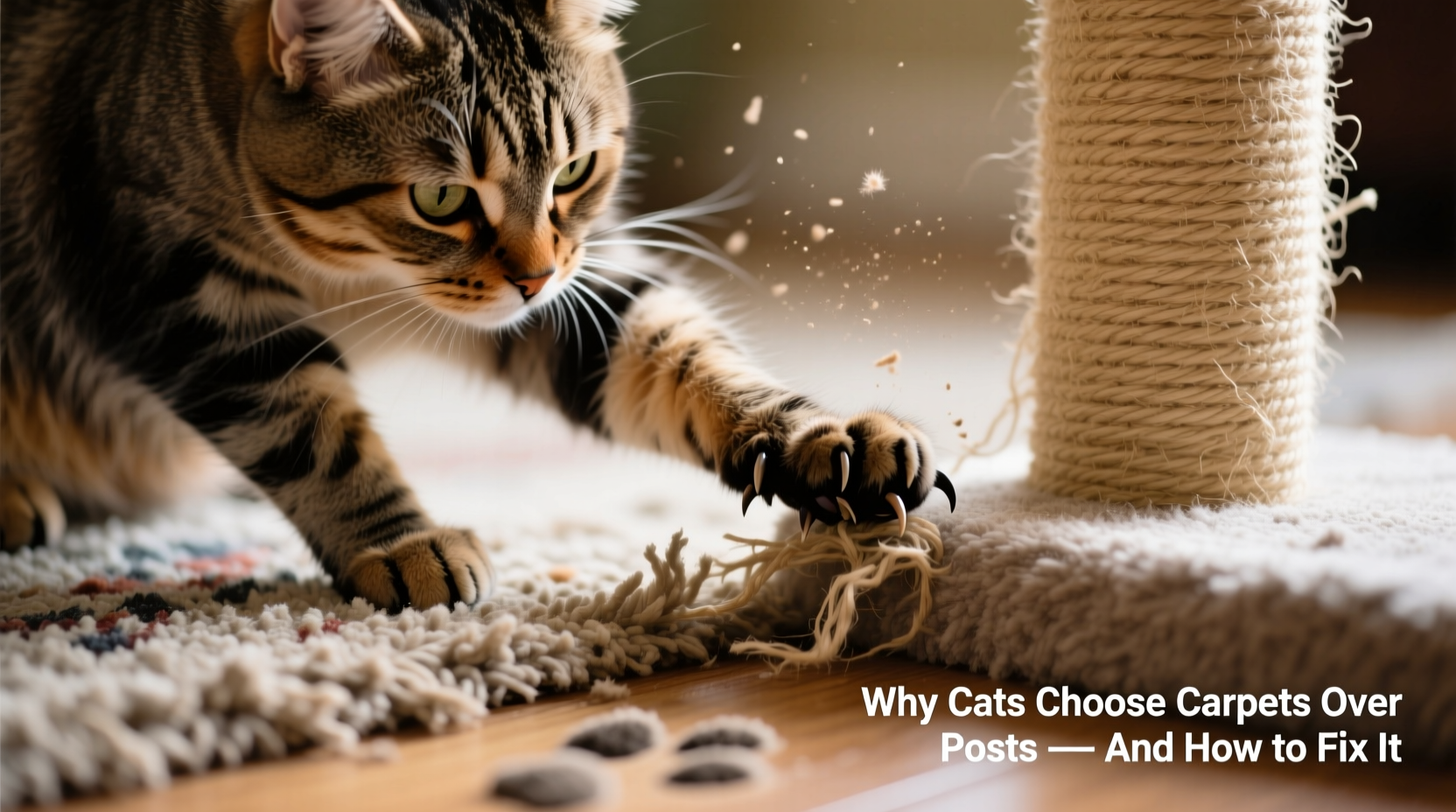
Before addressing solutions, it's essential to understand what drives a cat to favor carpet over a scratching post. Unlike humans, cats don’t act out of spite or mischief. Their choices are guided by instinct, comfort, and environmental cues.
Carpet offers several features that may appeal more than a standard scratching post:
- Texture: Many cats prefer soft, fibrous surfaces that allow deep claw penetration.
- Location: If the carpet is near a sleeping area, doorway, or window, it’s strategically placed for scent marking and visibility.
- Stability: Wobbly posts discourage use; carpets are firmly anchored and reliable.
- Habit: Once a cat establishes a preferred spot, repetition reinforces the behavior.
Dr. Sarah Ellis, a feline behavior expert at the International Cat Care organization, explains:
“Scratching isn’t destructive behavior—it’s natural communication. When a cat scratches where we don’t want them to, it usually means their needs aren’t being met in a suitable alternative location.” — Dr. Sarah Ellis, Feline Behavior Specialist
Common Mistakes That Encourage Carpet Scratching
Sometimes, well-intentioned actions unintentionally reinforce unwanted scratching. Here are frequent missteps pet owners make:
| Mistake | Why It Backfires | Better Alternative |
|---|---|---|
| Placing the post in a quiet corner | Cats prefer high-traffic areas for territorial marking | Position near furniture they already use |
| Buying a flimsy or short post | Unstable posts feel unsafe; too short prevents full stretch | Choose a sturdy, floor-to-ceiling model |
| Using only horizontal scratchers | Many cats prefer vertical scratching | Offer both vertical and horizontal options |
| Punishing the cat | Fear-based responses increase stress and marking | Redirect positively with rewards |
Step-by-Step Guide to Redirect Carpet Scratching
Changing your cat’s scratching behavior requires patience and consistency. Follow this timeline to guide the transition from carpet to appropriate surfaces.
- Week 1: Observe and Map Patterns
Track where, when, and how your cat scratches. Note if it happens after waking, during play, or while marking. Identify high-use zones on the carpet. - Week 2: Introduce Proper Alternatives
Place new scratching posts directly in front of or beside the targeted carpet areas. Choose posts made of sisal rope, corrugated cardboard, or natural wood—materials most cats find appealing. Ensure the post is tall enough for a full-body stretch (at least 30 inches). - Week 3: Make the Post Irresistible
Sprinkle catnip on the base, attach dangling toys, or rub silver vine on the surface. Use pheromone sprays like Feliway Classic to create a calming association. Sit nearby and gently guide your cat’s paws up the post during relaxed moments. - Week 4: Discourage Carpet Access Strategically
Only after the cat shows interest in the post should you begin blocking carpet access. Use temporary barriers like furniture rearrangement, non-slip rug pads (bumpy side up), or aluminum foil in targeted spots. Avoid sticky tapes unless paired with a better option nearby. - Week 5–6: Reinforce Success and Expand Options
Reward every instance of correct scratching with treats or affection. Gradually introduce additional scratchers in other key areas (bedroom, hallway, near windows). Rotate materials to keep engagement high.
Effective Scratching Post Features That Work
Not all scratching posts are created equal. To compete with the appeal of carpet, your cat’s post must meet specific criteria. Use this checklist when selecting or evaluating one:
📋 **Scratcher Selection Checklist**- ✅ Sturdy base – doesn’t wobble when scratched vigorously
- ✅ Minimum height of 30 inches for full vertical stretch
- ✅ Made from sisal, cardboard, or natural wood (avoid plush fabric)
- ✅ Positioned in a high-activity zone (not hidden away)
- ✅ Offers both vertical and horizontal scratching options
- ✅ Easy to clean and maintain long-term
Some cats show strong material preferences. For example, a 2020 study published in *Applied Animal Behaviour Science* found that 68% of indoor cats showed a clear preference for sisal over carpet-like fabrics when given a choice. However, individual variation exists—always offer variety and observe which textures your cat returns to.
Real Example: Fixing Max’s Carpet Habit
Max, a 3-year-old tabby in Portland, had been scratching the same patch of hallway carpet every morning upon waking. His owner, Lisa, tried scolding him and covering the area with foil, but Max began scratching the couch instead.
After consulting a veterinary behaviorist, Lisa implemented a new strategy:
- She placed a 36-inch sisal-wrapped post directly over the favorite carpet spot.
- She rubbed dried silver vine on the post each evening.
- Each time Max approached the area, she gently tapped the post and offered a treat when he interacted with it.
Within 10 days, Max was using the post consistently. After two weeks, Lisa slowly moved the post two feet to the side, replacing the original spot with a small rug. Max adapted seamlessly and now uses three different scratchers around the house.
This case illustrates a crucial principle: you cannot remove a behavior without replacing it. By offering a superior alternative in the exact location of the undesired behavior, redirection becomes intuitive for the cat.
FAQ: Common Questions About Cat Scratching
Why does my cat only scratch the carpet at night?
Nighttime scratching often coincides with waking from sleep. Cats stretch and mark territory upon rising. If your bedroom has carpet, it becomes a convenient target. Placing a tall scratching post next to the bed or in the doorway can intercept this routine.
Is it okay to trim my cat’s claws if they’re damaging the carpet?
Yes, regular claw trimming (every 2–3 weeks) reduces damage and is safe when done correctly. Use cat-specific clippers and avoid the pink quick. Trimming doesn’t stop scratching behavior but minimizes wear on surfaces. Combine with environmental changes for best results.
Will a scratching post really stop my cat from ruining the carpet?
A single post might not be enough. Cats often have multiple scratching sites based on activity zones. Provide at least one appropriate scratcher per floor of your home, especially near resting and entry areas. Success depends on placement, stability, and material—not just presence.
Long-Term Prevention and Maintenance
Even after your cat switches to the scratching post, ongoing maintenance ensures lasting success. Consider these strategies to prevent relapse:
- Rotate scratchers: Every few months, switch out or reposition scratchers to renew interest.
- Replace worn surfaces: Frayed sisal or flattened cardboard loses appeal. Keep surfaces intact to maintain attractiveness.
- Use positive reinforcement periodically: Even established behaviors benefit from occasional treats or praise.
- Monitor stress levels: Changes in household dynamics, new pets, or moving can trigger renewed marking. Address root causes early.
Remember, scratching is not something to eliminate—it’s something to manage wisely. A home without any scratching outlets will inevitably lead to inappropriate targeting. The goal is coexistence, not suppression.
Conclusion: Building a Scratch-Friendly Home
Your cat isn’t misbehaving—they’re communicating. When they choose the carpet over the post, they’re telling you that their current options aren’t meeting their physical or emotional needs. Instead of viewing this as defiance, see it as feedback—an opportunity to refine your approach and strengthen your bond.
By understanding feline instincts, avoiding common mistakes, and implementing thoughtful, step-by-step changes, you can guide your cat toward healthier scratching habits. The right post, in the right place, with the right encouragement, makes all the difference.




 浙公网安备
33010002000092号
浙公网安备
33010002000092号 浙B2-20120091-4
Comments
No comments yet. Why don't you start the discussion?