
Cat owners often invest in high-quality scratching posts, only to find their pets ignoring them completely—sometimes turning walls, door frames, or furniture into preferred scratching zones. This behavior can be frustrating, especially when it damages paint, drywall, or wallpaper. But before reacting with annoyance, it’s essential to understand that scratching isn’t misbehavior—it’s a natural, instinctive act for cats. The real issue lies not in the cat’s actions, but in whether their environment meets their physical and emotional needs. By identifying the root causes behind wall-scratching and applying targeted, evidence-based solutions, you can redirect your cat to appropriate surfaces and preserve both your home and your peace of mind.
Understanding Why Cats Scratch Walls
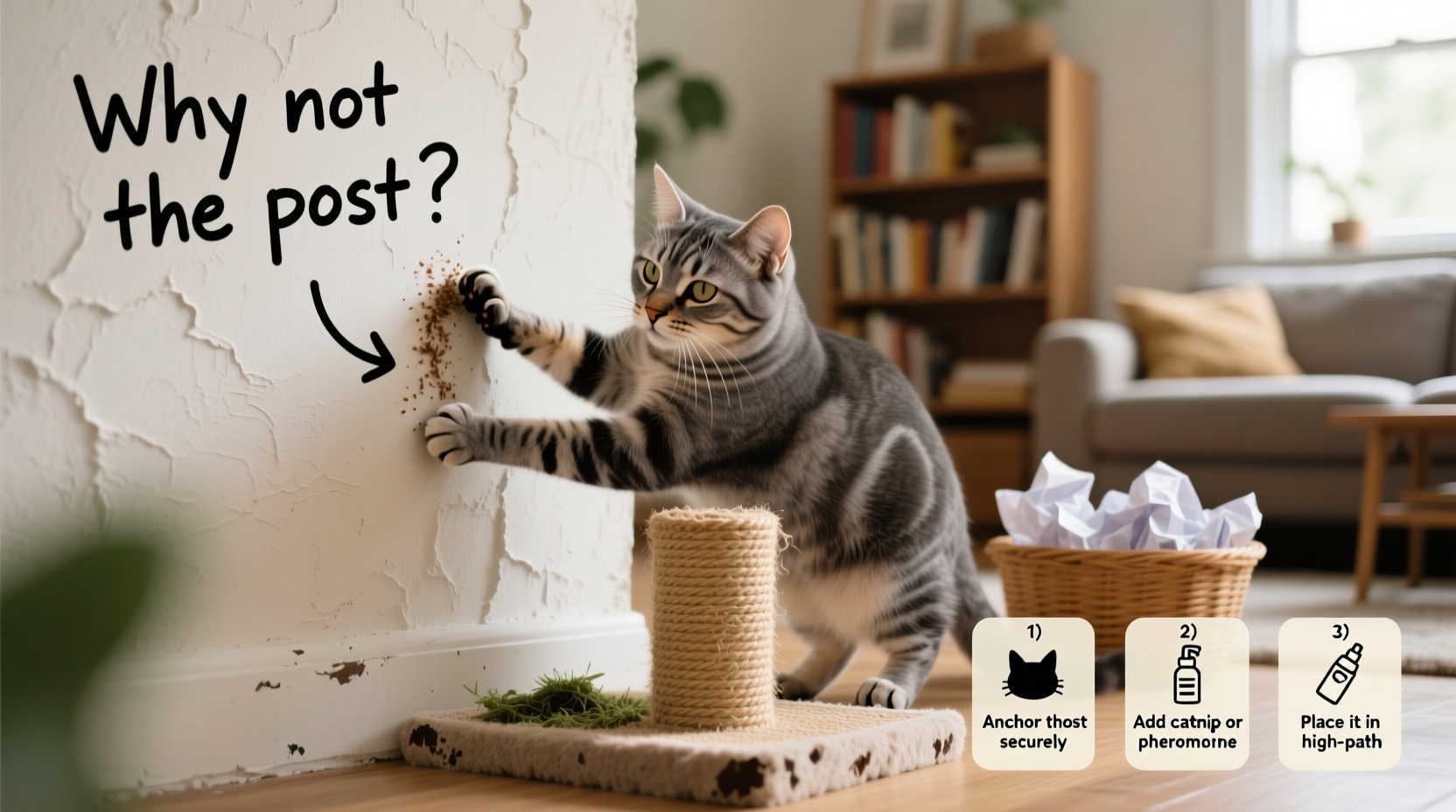
Scratching is an innate feline behavior rooted in survival instincts. In the wild, cats use their claws to mark territory, condition their paws, stretch muscles, and relieve stress. Even domesticated cats retain these impulses. When a cat chooses to scratch a wall rather than a designated post, it's usually because the post fails to meet one or more of their core requirements.
Common reasons include:
- Lack of appeal: The scratching post may be too short, unstable, or covered in uninviting material.
- Location issues: Cats prefer to scratch in high-traffic or transitional areas where they can leave visible and olfactory marks.
- Texture preference: Some cats strongly favor vertical surfaces like walls over horizontal or angled ones.
- Stress or anxiety: Changes in the household, new pets, or lack of stimulation can trigger increased marking behaviors.
- Habit reinforcement: If a cat has already scratched a wall multiple times, the scent and visual cue encourage repetition.
“Cats don’t scratch out of spite—they scratch because their environment isn’t giving them what they need. The solution is never punishment, but understanding.” — Dr. Sarah Ellis, Feline Behavior Specialist, University of Lincoln
Choosing the Right Scratching Post: What Actually Works
Not all scratching posts are created equal. Many commercially available options are poorly designed from a cat’s perspective—too flimsy, too low, or covered in soft plush that doesn’t allow for proper claw engagement. To replace wall scratching, your post must meet specific criteria aligned with feline preferences.
Key Features of an Effective Scratching Post
| Feature | Why It Matters | Ideal Specification |
|---|---|---|
| Height | Cats need to fully extend their bodies while scratching | At least 30 inches tall (ideally floor-to-ceiling) |
| Stability | Wobbly posts discourage use due to insecurity | Heavy base or wall-mounted for zero movement |
| Material | Cats prefer coarse textures that catch claws | Sisal rope or cardboard—avoid plush fabric |
| Orientation | Many cats prefer vertical scratching | Vertical or slightly angled surface |
| Location | Cats mark territory in visible areas | Near entryways, sleeping spots, or social zones |
Step-by-Step Guide to Redirecting Wall Scratching
Changing a cat’s scratching behavior requires consistency, patience, and environmental adjustment. Follow this timeline-based approach for best results:
- Week 1: Assess and Remove Reinforcement
Identify exactly where and when your cat scratches the wall. Cover the area temporarily with double-sided tape, aluminum foil, or plastic panels. These textures are unpleasant on contact but cause no harm. - Week 1–2: Introduce the Right Post
Place a tall, sturdy sisal post directly in front of or beside the scratched wall. Ensure it’s secure and won’t tip. If possible, choose a post anchored to the ceiling or wall. - Week 2: Encourage Use with Scent and Play
Rub catnip or silver vine on the post. Dangle a wand toy above it to encourage stretching and swatting motions that naturally lead to scratching. - Week 2–3: Reward and Reinforce
Whenever your cat uses the post—even briefly—offer immediate praise and a treat. Positive reinforcement strengthens the association. - Week 3–4: Gradual Relocation (if needed)
Once consistent use is established, slowly move the post several inches per day toward a more permanent location, never more than 1–2 feet from the original spot unless stability allows. - Ongoing: Maintain Engagement
Rotate toys near the post, reapply catnip monthly, and inspect sisal for wear. Replace frayed sections to keep it appealing.
Real Example: Solving Bella’s Bedroom Wall Habit
Maria adopted a 2-year-old rescue cat named Bella who began aggressively scratching the bedroom wall each morning. Despite owning two scratching pads, Bella ignored them. After observing her routine, Maria noticed Bella always scratched after waking up—part of her daily stretch and territory-marking ritual.
The breakthrough came when Maria replaced a short carpeted pad with a 36-inch sisal-wrapped post placed right next to the bed—Bella’s preferred starting point for the day. She rubbed silver vine on the post and dangled a feather toy nearby during morning play. Within five days, Bella used the post consistently. After two weeks, Maria moved it just 18 inches away without regression. The wall damage stopped completely within three weeks.
This case highlights how timing, placement, and understanding the cat’s routine are often more important than the product itself.
Common Mistakes That Undermine Success
Even well-intentioned efforts can fail if common pitfalls aren't avoided. Be mindful of these mistakes:
- Punishing the cat: Hissing, spraying water, or yelling creates fear and erodes trust. It does not teach the cat where to scratch—only that you’re unpredictable.
- Using ineffective deterrents: Sticky strips work only if reapplied frequently. Motion-activated devices can startle cats and increase anxiety.
- Placing posts in isolated areas: A post tucked in a quiet corner won’t compete with the social significance of a hallway or bedroom wall.
- Ignoring wear and tear: A shredded post loses its appeal. Replace worn sisal or flip cardboard scratchers regularly.
- Offering only horizontal options: While some cats like flat scratchers, many strongly prefer vertical surfaces—especially for full-body stretches.
When Scratching Signals Deeper Issues
While most wall scratching stems from environmental mismatch, excessive or sudden changes in scratching patterns can indicate underlying problems:
- Anxiety: Cats under stress may over-mark territory. Look for signs like hiding, over-grooming, or litter box avoidance.
- Pain or arthritis: Older cats may avoid tall or awkward posts if jumping hurts. Consider low-entry or wall-mounted scratchers at hip height.
- Multi-cat tension: In homes with multiple cats, increased scratching may signal social competition. Provide one scratching station per cat plus one extra.
If behavioral shifts accompany scratching—such as aggression, vocalization, or restlessness—consult a veterinarian or certified feline behaviorist. Medical conditions like hyperthyroidism can also alter behavior.
Checklist: How to Stop Wall Scratching for Good
Use this actionable checklist to systematically address the problem:
- ✅ Identify the exact wall(s) being scratched and the time of day it occurs.
- ✅ Cover the damaged area temporarily with a non-damaging deterrent (e.g., double-sided tape).
- ✅ Purchase or build a tall (minimum 30”), stable, sisal-covered scratching post.
- ✅ Place the post directly in front of or adjacent to the scratched wall.
- ✅ Apply catnip or silver vine to the post to attract interest.
- ✅ Use interactive play to guide your cat toward using the post.
- ✅ Reward every correct use with treats and verbal praise.
- ✅ Monitor usage for at least two weeks before considering relocation.
- ✅ Inspect the post monthly for wear and repair or replace as needed.
- ✅ Provide additional scratchers in other key areas (e.g., near entrances, windows).
Frequently Asked Questions
Can I train an older cat to stop scratching the wall?
Yes. While kittens are easier to shape, adult and senior cats can learn new habits with patience and consistency. Focus on making the desired option more appealing than the current behavior. Older cats may need lower-height or sturdier posts if mobility is an issue.
Are there safe sprays to deter wall scratching?
Certain pet-safe sprays containing citrus or herbal scents (like lemongrass or rosemary) can deter some cats. However, they should be used in conjunction with positive redirection, not alone. Always test on a small area first to avoid staining paint or wallpaper.
My cat only scratches painted walls—why?
Painted drywall offers slight texture that can catch claws, and the sound may be satisfying. Additionally, the smooth surface makes claw marks highly visible, which serves the cat’s territorial marking purpose. Providing a similarly prominent but appropriate alternative—like a dark sisal post in the same location—often resolves this.
Conclusion: Turn Frustration into a Lasting Solution
Wall scratching isn’t defiance—it’s communication. Your cat is telling you that their current scratching setup isn’t meeting their instinctual needs. Instead of focusing on stopping the behavior, shift your energy toward understanding and fulfilling those needs. With the right post, strategic placement, and consistent encouragement, most cats will abandon the wall within weeks. Remember, success isn’t about perfection—it’s about progress. Every step you take builds a healthier, happier environment for your cat and protects your home in the process.




 浙公网安备
33010002000092号
浙公网安备
33010002000092号 浙B2-20120091-4
Comments
No comments yet. Why don't you start the discussion?