
Cats are often portrayed as aloof and independent, but many owners know the truth: some cats form deep emotional bonds and can become remarkably attached. If your cat follows you from room to room, vocalizes when you're out of sight, or insists on sitting in your lap even during mundane tasks, you might wonder—why is my cat so clingy? This behavior isn’t random. It stems from instinct, personality, environment, and sometimes unmet needs. Understanding the roots of clinginess helps strengthen your bond while ensuring your cat’s emotional well-being.
The Nature of Feline Attachment
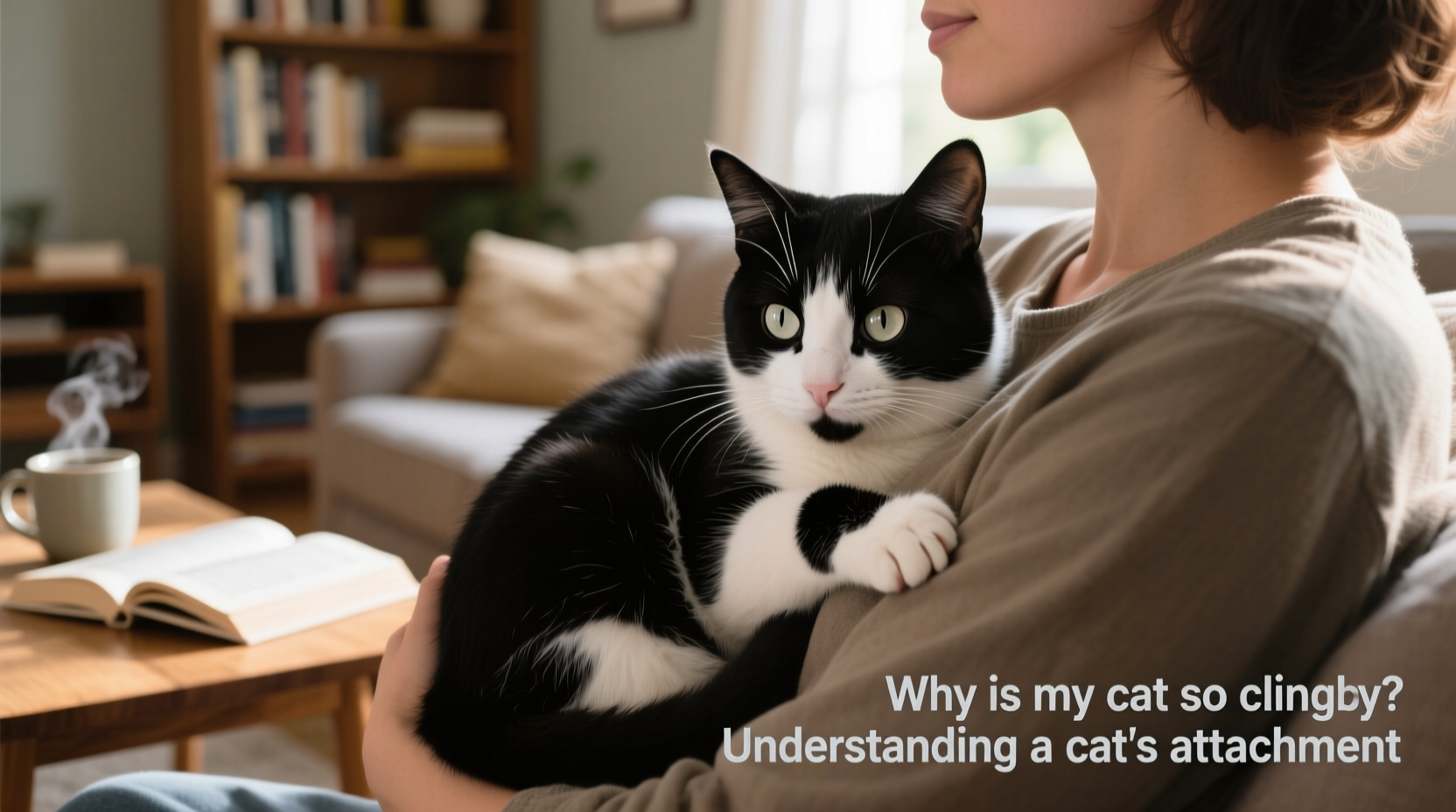
Contrary to popular belief, cats are capable of forming strong attachments to their humans. Research published in *Current Biology* shows that around 64% of cats exhibit secure attachment behaviors similar to human infants and dogs. When a cat feels safe with its caregiver, it uses them as a “secure base” to explore the world. Clinginess often reflects this trust—not dependency.
However, not all clinginess is rooted in security. Some cats become overly attached due to early life experiences, such as being hand-raised or separated too early from their mother. Others may develop attachment behaviors in response to changes in routine, lack of stimulation, or anxiety.
“Cats aren’t solitary by nature—they form complex social bonds. What looks like clinginess is often an expression of trust.” — Dr. Sarah Ellis, Co-Director of Cat Advocacy at International Cat Care
Common Causes of Clingy Behavior
Clinginess isn’t inherently problematic, but understanding the underlying cause helps determine whether intervention is needed. Here are the most frequent triggers:
- Bonding and affection: Your cat genuinely enjoys your company and sees you as a source of comfort.
- Lack of environmental enrichment: Cats without toys, climbing structures, or mental stimulation may fixate on their owner for entertainment.
- Changes in routine: A new work schedule, moving homes, or adding another pet can trigger insecurity.
- Health issues: Pain, hyperthyroidism, or cognitive decline in older cats can lead to increased vocalization and neediness.
- Past trauma or abandonment: Rescue cats with unstable histories may develop anxious attachment patterns.
When Clinginess Becomes a Concern
Occasional attention-seeking is normal. But if your cat exhibits any of the following, it may signal distress:
- Pacing or excessive meowing when you prepare to leave
- Refusing to eat unless you’re present
- Destructive behavior (scratching furniture, knocking things over) when alone
- Following you into the bathroom and crying nonstop
This pattern could indicate separation anxiety—a condition more common in cats than previously believed. Unlike dogs, cats express anxiety more subtly, making it easy to overlook until behaviors escalate.
Distinguishing Between Healthy and Unhealthy Attachment
| Healthy Attachment | Unhealthy/Anxious Attachment |
|---|---|
| Seeks proximity but naps independently | Cannot relax unless physically touching you |
| Grooms itself and explores when you’re busy | Stops all activity when you leave the room |
| Vocalizes occasionally for attention | Constant yowling, especially when alone |
| Plays with toys or looks out the window | Stares at the door or your belongings obsessively |
Supporting Your Cat’s Emotional Needs
If your cat’s clinginess stems from anxiety or under-stimulation, behavioral adjustments can make a significant difference. The goal isn’t to discourage bonding—it’s to build confidence so your cat feels secure even when you’re not immediately available.
Step-by-Step Guide to Reducing Over-Attachment
- Establish a predictable routine: Feed, play, and interact at consistent times daily. Predictability reduces anxiety.
- Increase play sessions: Two 10–15 minute interactive play periods per day help burn energy and mimic hunting.
- Introduce puzzle feeders: These encourage independent problem-solving and provide mental engagement.
- Create vertical space: Install shelves or cat trees near windows to expand territory and viewing options.
- Use calming aids: Feliway diffusers release synthetic feline facial pheromones that promote relaxation.
- Practice short absences: Leave the room for 30 seconds, then return calmly. Gradually increase duration to desensitize your cat to separation.
“Desensitization works best when paired with positive reinforcement. Reward calm behavior with treats or gentle praise.” — Dr. Liz Bales, Veterinarian and Feline Behavior Consultant
Real-Life Example: Luna’s Transformation
Luna, a 3-year-old domestic shorthair, was adopted after spending her first six months in a shelter. Her new owner, Mark, noticed she followed him everywhere—even into the shower. She would cry if he closed a door and refused to use her litter box when he was away.
A vet ruled out medical causes, and a behaviorist suggested Luna was experiencing post-adoption anxiety. Mark implemented a structured routine: morning wand toy sessions, food puzzles at mealtime, and a window perch overlooking a bird feeder. He also began leaving the room for brief intervals while playing calming music.
Within six weeks, Luna started napping on her own and used her scratching post regularly. While still affectionate, she no longer panicked when Mark worked from another room. Her clinginess shifted from anxious dependence to confident companionship.
Practical Checklist for Managing Clingy Cats
Use this checklist to assess and improve your cat’s emotional environment:
- ✅ Schedule two interactive play sessions daily
- ✅ Rotate toys weekly to maintain interest
- ✅ Provide at least one high perch near a window
- ✅ Use food puzzles or treat-dispensing toys
- ✅ Maintain a consistent feeding and bedtime routine
- ✅ Introduce a pheromone diffuser in shared spaces
- ✅ Avoid reinforcing anxious behavior (e.g., comforting only when calm)
Frequently Asked Questions
Is it normal for my cat to follow me everywhere?
Yes, if your cat is otherwise relaxed and engaged in independent activities. Following you can be a sign of affection and curiosity. However, if it’s accompanied by constant vocalization or distress when out of contact, it may reflect anxiety.
Can I train my cat to be less clingy?
You can’t eliminate attachment, but you can shape healthier behaviors. Focus on building independence through environmental enrichment and positive reinforcement. Never punish clinginess—it will only increase insecurity.
Do certain breeds tend to be more clingy?
Yes. Breeds like Siamese, Burmese, and Ragdolls are known for their sociable, people-oriented personalities. However, individual temperament and upbringing play a larger role than breed alone.
Conclusion: Embracing Connection with Balance
Your cat’s clinginess is a testament to the bond you’ve built. Rather than viewing it as a nuisance, see it as a call for deeper understanding. With patience and consistency, you can nurture a relationship where your cat feels loved and secure—without sacrificing their ability to thrive independently.




 浙公网安备
33010002000092号
浙公网安备
33010002000092号 浙B2-20120091-4
Comments
No comments yet. Why don't you start the discussion?