
Cats are creatures of habit, finely tuned to their environments through instinct and routine. A sudden fear of the vacuum cleaner—something that may have previously been tolerated or ignored—can be both puzzling and disruptive for pet owners. The loud noise, unpredictable movement, and vibration can trigger deep-seated survival instincts in even the most confident feline. Understanding the root causes behind this fear is the first step toward helping your cat regain calm. More importantly, a structured desensitization process can significantly reduce anxiety and transform a traumatic experience into a manageable one.
This guide explores the behavioral and sensory reasons behind vacuum-induced fear, outlines a practical, humane training plan, and provides actionable strategies to help your cat coexist peacefully with household appliances.
Why Cats React Strongly to Vacuums
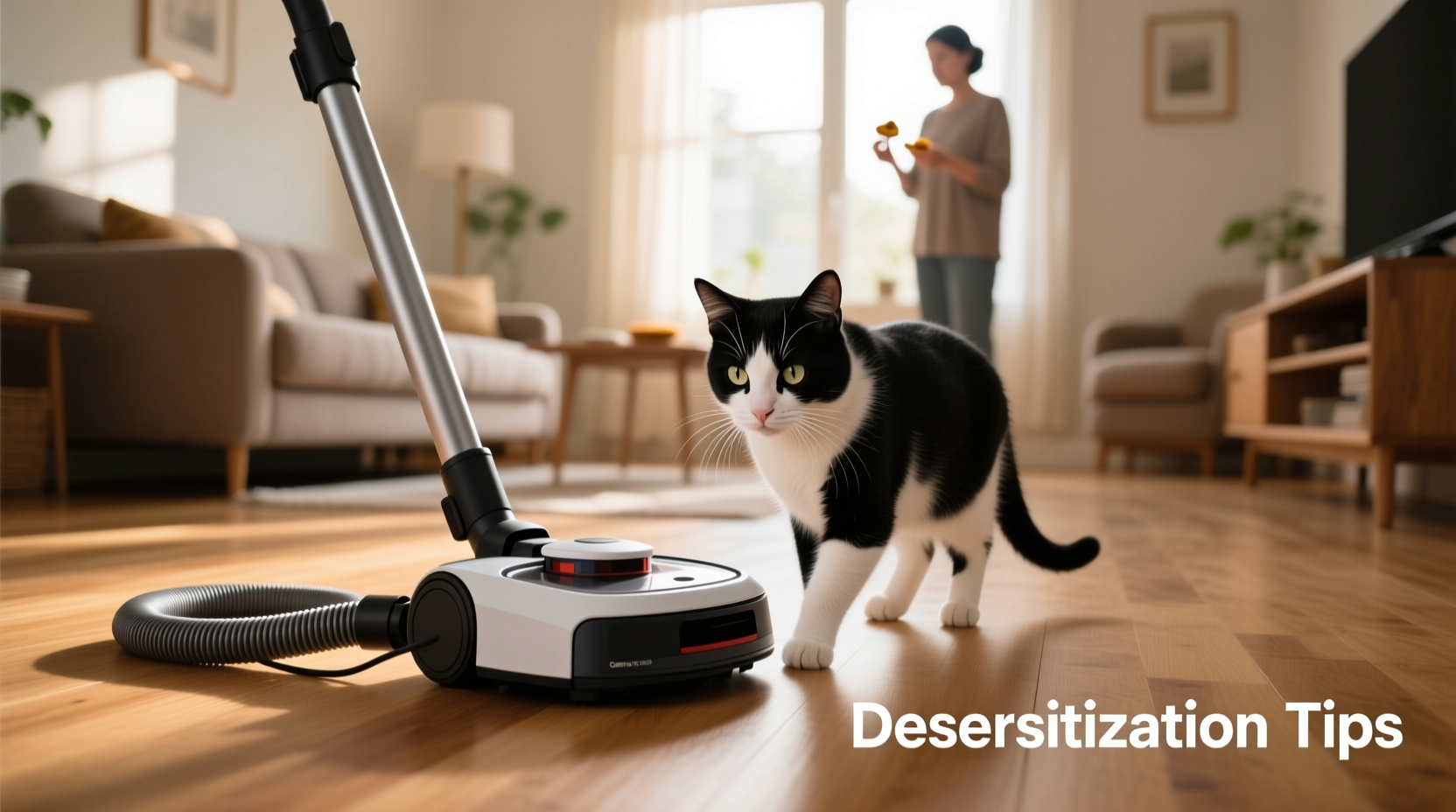
Cat behavior is heavily influenced by evolutionary adaptations. In the wild, sudden loud noises often signal danger—predators, collapsing shelters, or environmental threats. The vacuum cleaner combines several alarming stimuli: high-decibel sound (often above 70 dB), rapid mechanical vibrations, erratic motion, and unfamiliar scents from dust and cleaning residue.
Even cats that once tolerated vacuums may develop new fears due to changes in age, health, environment, or past negative experiences. For example, an older cat with declining hearing may perceive sounds more harshly due to auditory distortion, while a younger cat might associate the vacuum with being chased or startled during a vulnerable moment like napping.
Additionally, cats rely on scent marking to feel secure. When a vacuum passes over their favorite resting spots, it removes familiar odors, which can be psychologically unsettling—even if they don’t show it immediately.
The Science of Desensitization and Counterconditioning
Effective fear reduction relies on two key behavioral principles: desensitization and counterconditioning. Desensitization involves gradually exposing your cat to a feared stimulus at a low intensity, allowing them to acclimate without triggering panic. Counterconditioning pairs that stimulus with something positive—like treats or affection—to shift emotional response from fear to anticipation.
These methods are widely supported in veterinary behavior circles. According to Dr. Karen Overall, a board-certified veterinary behaviorist:
“Cats don’t ‘get over’ fear through repetition of trauma. They need controlled, positive experiences to reframe their perception. Rushing the process does more harm than good.” — Dr. Karen Overall, Veterinary Behaviorist
Unlike punishment-based techniques, which increase stress hormones like cortisol, positive reinforcement builds neural associations that promote resilience. This approach not only helps with vacuums but can improve overall confidence in anxious cats.
A Step-by-Step Desensitization Plan
Desensitizing your cat to the vacuum requires patience, consistency, and attention to subtle body language cues. Follow this timeline-based method over several weeks. Progress should be dictated by your cat’s comfort—not a calendar.
- Phase 1: Introduce the Vacuum at Rest (Days 1–3)
Place the unplugged vacuum in a common area. Let your cat investigate freely. Reward calm behavior with treats, praise, or play. Do not force interaction. - Phase 2: Touch and Movement (Days 4–7)
Gently push the vacuum a few inches while your cat is nearby (but not stressed). Pair each movement with a high-value treat (e.g., tuna flakes or chicken bits). Repeat multiple times daily for short sessions (2–3 minutes). - Phase 3: Power On, No Suction (Days 8–10)
Plug in the vacuum and turn it on without activating suction (if possible) or use the hose attachment alone. Keep distance—start in another room. If your cat shows no signs of fear (dilated pupils, flattened ears, hiding), offer treats. Gradually decrease distance over days. - Phase 4: Low-Intensity Operation (Days 11–14)
Run the vacuum briefly (5–10 seconds) at maximum distance. Immediately reward calmness. Increase duration slowly. Never operate directly near your cat at this stage. - Phase 5: Controlled Exposure During Use (Weeks 3–4+)
Begin using the vacuum in another room while feeding your cat a meal or offering a food puzzle. Over time, work toward brief, calm exposure in shared spaces. Always end sessions positively.
Progress may stall—and that’s normal. If your cat regresses, return to the previous successful phase. Each cat learns at their own pace; some may take weeks, others months.
Common Mistakes That Reinforce Fear
Well-meaning actions can unintentionally worsen fear. Recognizing these pitfalls ensures your efforts lead to progress, not setbacks.
| Mistake | Why It’s Harmful | Better Alternative |
|---|---|---|
| Using the vacuum when cat is present without preparation | Triggers full fear response, reinforcing negative association | Only run vacuum during training sessions or when cat is safely confined elsewhere |
| Picking up or hugging cat during vacuum operation | Restricts escape, increases stress; mimics predator behavior | Allow cat to retreat to a safe zone; never trap them |
| Offering treats only after turning off vacuum | Reinforces relief from fear, not positive association with sound | Give treats *during* exposure, as long as cat remains calm |
| Increasing intensity too quickly | Overwhelms sensory tolerance, resets progress | Advance in tiny increments; watch for micro-signals of stress |
Creating a Safe Environment During Cleaning
While desensitization is ongoing, modify your cleaning routine to minimize distress. Designate a quiet, enclosed room—such as a bedroom or bathroom—as a “vacuum-free sanctuary.” Equip it with your cat’s bed, litter box, water, and toys. Close the door before starting the vacuum.
Use white noise or calming music in adjacent rooms to dampen the sound. Some pet owners find success with pheromone diffusers like Feliway Classic, which mimic facial pheromones cats use to mark safe spaces.
Mini Case Study: Luna, the Once-Fearless Kitten Turned Vacuum Avoider
Luna, a 2-year-old domestic shorthair, had always observed household activity with curiosity. But after a particularly loud vacuum session where she was accidentally cornered, she began fleeing at the sight of the machine—even when unplugged.
Her owner, Maria, implemented the five-phase desensitization plan. She started by placing the vacuum in the living room with treats nearby. After three days, Luna sniffed it cautiously. By day six, she accepted treats while Maria tapped the machine gently.
When the vacuum was powered on in another room, Maria fed Luna canned food—their highest-value reward. Within two weeks, Luna remained in the same room during brief, distant operation. After four weeks, she no longer hid when the vacuum appeared, though she still preferred her safe room during active cleaning.
“It wasn’t about winning,” Maria said. “It was about giving her control back. Now she watches from the doorway like it’s just another weird human ritual.”
Checklist: Preparing for Successful Desensitization
- ✅ Choose a high-value treat your cat rarely gets
- ✅ Identify your cat’s fear signals (hiding, tail flicking, ear position)
- ✅ Select a quiet, distraction-free room for initial sessions
- ✅ Commit to 3–5 short sessions per day (2–5 minutes each)
- ✅ Remove other stressors (e.g., guests, loud TV) during training
- ✅ Use a consistent cue word or action before starting (e.g., saying “machine time”)
- ✅ Keep the vacuum stored visibly when not in use to normalize its presence
FAQ: Common Questions About Cat Vacuum Fear
Can older cats be desensitized to vacuums?
Yes. While senior cats may learn more slowly due to cognitive or sensory changes, they can still benefit from gradual exposure. Adjust session length and frequency to match their energy levels. Patience is key—older cats often respond well to predictable routines.
What if my cat has never reacted to the vacuum before?
Sudden fear onset can indicate an underlying issue. Consider recent events: Was the vacuum dropped? Did a loud noise coincide with its use? Has your cat experienced pain or illness? A veterinary checkup can rule out medical causes like hyperesthesia or hearing sensitivity.
Are there quieter vacuums designed for homes with pets?
Some models advertise lower noise output (under 70 dB). Look for “pet-friendly” or “quiet mode” features. However, sound isn’t the only trigger—movement and vibration matter too. Even a quiet vacuum should be introduced gradually.
Conclusion: Building Confidence One Step at a Time
A cat’s fear of the vacuum isn’t misbehavior—it’s communication. By respecting their instincts and responding with empathy, you create a safer, calmer home environment. Desensitization isn’t just about tolerating an appliance; it’s about strengthening trust and reducing overall anxiety.
Start small. Celebrate subtle wins. Your cat doesn’t need to love the vacuum—just coexist with it without fear. With time, consistency, and positive reinforcement, many cats go from bolting at the sight of the machine to calmly observing from a distance, perhaps even resuming their nap once the noise passes.




 浙公网安备
33010002000092号
浙公网安备
33010002000092号 浙B2-20120091-4
Comments
No comments yet. Why don't you start the discussion?