
Cats are naturally alert animals, finely tuned by evolution to detect subtle changes in their environment. But when a normally composed feline becomes unusually skittish—darting at sudden noises, flinching at movement, or hiding more than usual—it’s natural for owners to wonder: what’s changed? A sudden increase in jumpiness isn’t just quirky behavior; it can signal underlying stress, health issues, or environmental shifts. Understanding the root causes is essential to restoring your cat’s sense of security and well-being.
Understanding Feline Sensitivity
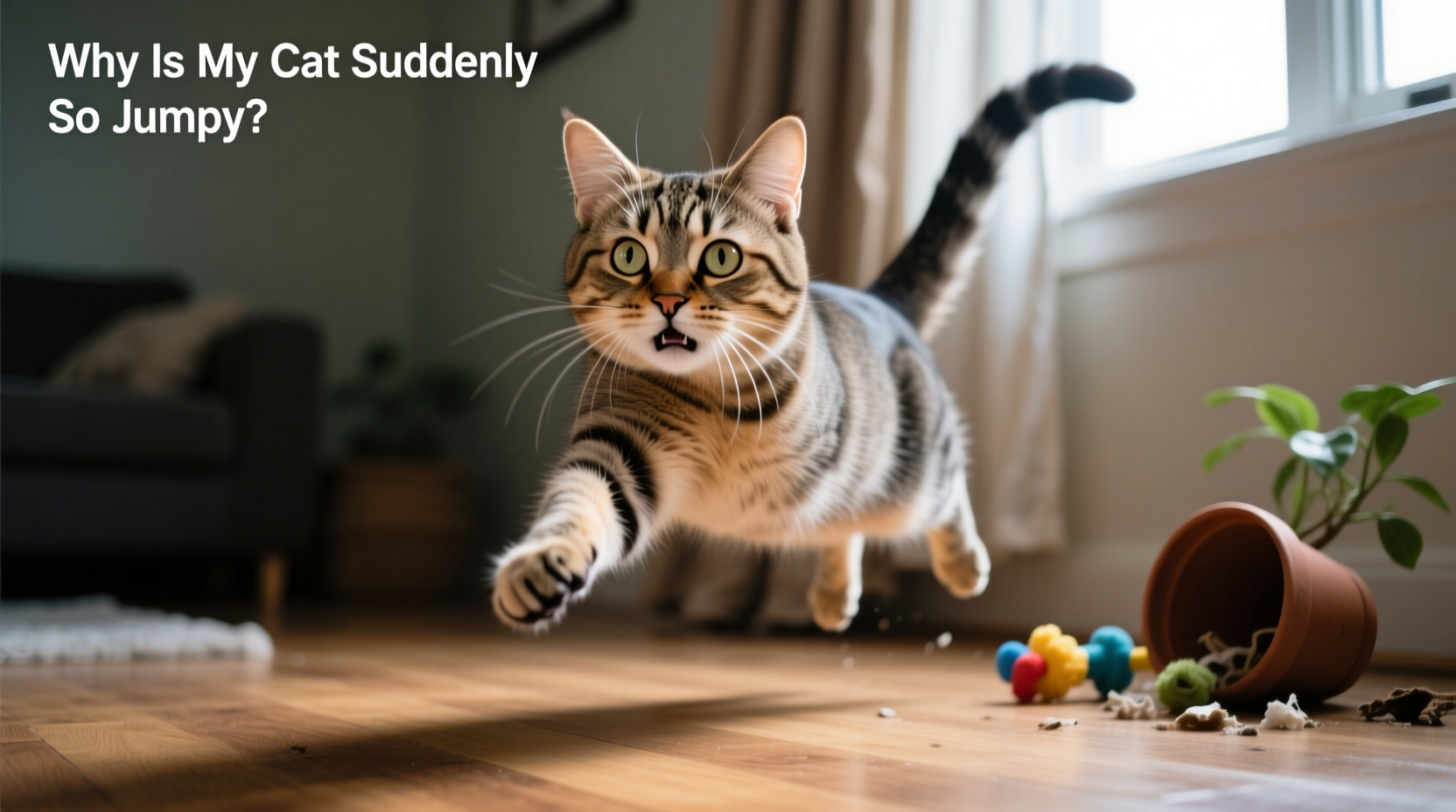
Cats possess acute senses far beyond human capabilities. Their hearing detects frequencies up to 64 kHz—nearly double that of humans—and their eyes are adapted to perceive even the faintest motion in low light. While these traits make them excellent hunters, they also mean cats process sensory input more intensely. A sound you barely notice—a refrigerator clicking on, distant construction, or high-pitched electronic noise—can be startling or distressing to a cat.
This hypersensitivity explains why seemingly minor changes can trigger exaggerated reactions. A new household appliance, visitors, rearranged furniture, or even a shift in routine may disrupt your cat’s sense of safety. Unlike dogs, cats often internalize stress rather than express it through obvious behaviors like barking or pacing. Instead, they may become hyper-vigilant, easily startled, or withdrawn.
Common Causes of Sudden Jumpiness
A jumpy cat rarely acts out of nowhere. Most behavioral shifts have identifiable triggers. Below are the most frequent causes behind sudden nervousness in otherwise calm cats.
Environmental Changes
Moving homes, renovations, new furniture, or even redecorating can unsettle a cat. Cats rely heavily on scent and spatial memory. Rearranging rooms erases familiar landmarks, while new smells—from paint, cleaning products, or guests—can be perceived as threats.
New Household Members
The arrival of a baby, roommate, partner, or another pet alters the social dynamics of a home. Even if your cat appears indifferent, the change in energy, sounds, and routines can create low-level chronic stress that manifests as jumpiness.
Health Issues
Pain or discomfort can make cats more reactive. Conditions like arthritis, dental disease, hyperthyroidism, or neurological disorders heighten sensitivity. An older cat with declining vision or hearing may startle more easily because they can't anticipate movements or sounds.
Age-Related Cognitive Decline
Feline cognitive dysfunction (FCD), similar to dementia in humans, affects up to 55% of cats over 15 years old. Symptoms include disorientation, altered sleep cycles, and increased anxiety—often leading to exaggerated startle responses.
Previous Trauma or Lack of Socialization
Cats with limited exposure to people, sounds, or environments during their critical socialization period (2–7 weeks of age) may remain fearful into adulthood. Rescue cats, in particular, may react strongly to stimuli reminiscent of past trauma.
External Stimuli
Outdoor animals (stray cats, birds, rodents), loud neighborhood activity, or even television sounds (fireworks, thunder, gunshots) can provoke fear. Indoor sources like vacuum cleaners, blenders, or doorbells emit high-frequency noises that cats find jarring.
“Cats don’t misbehave out of spite—they react based on instinct, experience, and perception. When a cat becomes suddenly jumpy, it’s usually a cry for help, not defiance.” — Dr. Sarah Thompson, DVM, Veterinary Behavior Specialist
How to Assess the Situation: A Step-by-Step Guide
Before assuming behavioral causes, rule out medical issues and systematically evaluate possible stressors.
- Schedule a veterinary checkup. Blood tests, urinalysis, and physical exams can detect pain, infection, hormonal imbalances, or neurological conditions.
- Monitor behavior patterns. Keep a journal noting when jumpiness occurs, duration, and potential triggers (e.g., after vacuuming, during storms).
- Inspect the environment. Walk through your home from your cat’s eye level. Look for unfamiliar objects, noises, or access points for outdoor animals.
- Evaluate recent changes. List any alterations in routine, household members, furniture, or pet products used in the last 2–6 weeks.
- Test sensory sensitivity. Play soft sounds (doorbell, phone ringtone) at low volume to see if your cat reacts abnormally.
- Introduce calming strategies. Use pheromone diffusers, quiet spaces, and predictable routines to reduce baseline stress.
Tips and Strategies to Calm a Jumpy Cat
Once medical concerns are ruled out, focus on creating a stable, reassuring environment. Consistency is key—cats thrive on predictability.
Use Feline-Friendly Sound Management
Reduce sudden noises by closing windows during noisy hours, using white noise machines, or playing calming music designed for cats (such as classical arrangements with slow tempos).
Leverage Pheromone Therapy
Synthetic facial pheromones like Feliway mimic the calming scents cats deposit when rubbing against objects. Plug-in diffusers in main living areas can significantly reduce anxiety-related behaviors.
Provide Vertical Space and Hiding Spots
Cats feel safer when elevated. Install cat shelves, window perches, or covered beds to give them vantage points and escape routes. Cardboard boxes, cloth tunnels, and under-furniture spaces also serve as secure hideaways.
Maintain Predictable Routines
Feed, play, and interact at consistent times each day. Sudden disruptions in schedule can elevate stress hormones, making cats more reactive.
Gradual Desensitization
If your cat fears specific sounds (e.g., vacuum), use recorded audio at very low volume, gradually increasing over days while offering treats or play. This helps reframe the stimulus as non-threatening.
Do’s and Don’ts: Managing a Nervous Cat
| Do | Don’t |
|---|---|
| Approach slowly and speak softly when your cat seems anxious | Force interaction or pull your cat from hiding |
| Offer high-value treats during calm moments | Reward fearful behavior (e.g., giving attention mid-panic) |
| Use puzzle feeders and interactive toys to build confidence | Allow prolonged isolation—ensure daily gentle engagement |
| Keep windows covered if outdoor animals provoke stress | Yell or punish your cat for being scared |
| Consult a vet or veterinary behaviorist if behavior worsens | Assume the behavior will “just go away” without intervention |
Real Example: Luna, the Once-Calm Kitten Turned Nervous Adult
Luna, a 2-year-old domestic shorthair, had always been affectionate and playful. But after her owners adopted a second kitten, she began hiding, hissing at sudden movements, and bolting when someone entered the room. At first, they assumed she’d adjust. When her appetite dropped and she started urinating outside the litter box, they consulted a veterinarian.
After ruling out urinary tract infection and other medical causes, the vet suggested environmental stress. The owners implemented several changes: they created separate feeding and resting zones, used Feliway diffusers, and introduced structured play sessions to rebuild Luna’s confidence. Over six weeks, Luna’s jumpiness decreased significantly. She now shares space with the other kitten and no longer flees at minor sounds.
This case illustrates how seemingly positive changes—like adding a companion—can deeply affect sensitive cats. With patience and targeted support, recovery is possible.
FAQ
Can sudden jumpiness be a sign of illness?
Yes. Pain, hyperthyroidism, hypertension, or neurological conditions can cause increased sensitivity. If your cat’s behavior change is abrupt and persistent, a vet visit is essential.
How long does it take for a jumpy cat to calm down?
It varies. Some cats respond within days to environmental adjustments; others, especially those with trauma histories, may take weeks or months. Consistency and low-stress routines accelerate progress.
Should I comfort my cat when they’re scared?
Yes, but calmly. Offer a quiet presence and let them approach you. Avoid excessive petting or soothing talk during panic episodes, as this may reinforce the emotional state. Instead, reward calm behavior afterward with treats or gentle strokes.
Conclusion: Restoring Calm Through Understanding
A jumpy cat isn’t being difficult—they’re communicating discomfort. Whether the cause is medical, environmental, or emotional, the path forward lies in empathy and informed action. By listening to your cat’s behavior, eliminating pain or illness, and crafting a secure, predictable environment, you can help them regain confidence.




 浙公网安备
33010002000092号
浙公网安备
33010002000092号 浙B2-20120091-4
Comments
No comments yet. Why don't you start the discussion?