
As the holiday season approaches, homes light up with festive decorations—especially twinkling Christmas lights. For many families, these displays are joyful symbols of celebration. But for some children, the same lights can trigger anxiety, distress, or even full-blown fear. If your child flinches at flashing bulbs, hides during neighborhood light tours, or becomes upset when entering a brightly lit store, you're not alone. Sensory sensitivities, developmental factors, and past experiences can all contribute to this reaction. Understanding the root causes and learning how to respond with empathy and strategy can make a meaningful difference—not just during the holidays, but in building long-term emotional resilience.
Understanding the Root Causes of Fear
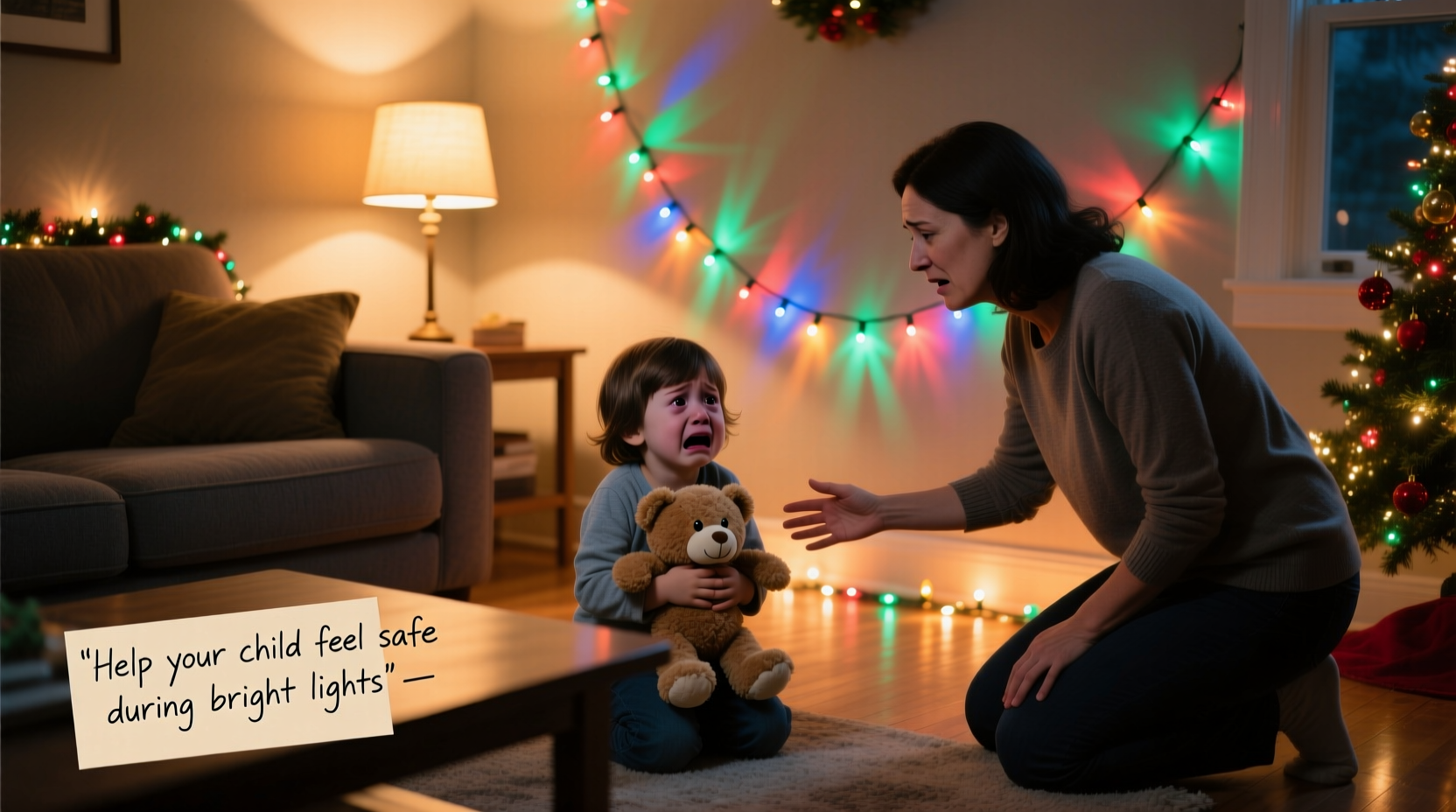
Children don’t typically fear Christmas lights out of defiance or stubbornness. Their reactions often stem from genuine neurological or psychological responses. The brain of a young child is still developing its ability to process sensory input, regulate emotions, and distinguish between real and perceived threats. Flashing lights—especially those that flicker rapidly, change colors, or pulse in unpredictable patterns—can overwhelm the nervous system.
One key factor is **sensory processing sensitivity**. Some children have a heightened response to visual stimuli. What adults perceive as cheerful twinkling may register in a child’s mind as chaotic, disorienting, or even threatening. This is particularly common in children on the autism spectrum, those with sensory processing disorder (SPD), or kids with anxiety conditions. In these cases, the brain receives more visual information than it can comfortably manage, leading to a fight-or-flight response.
Another explanation lies in **predictability and control**. Children thrive on routine and consistency. Flashing lights operate on irregular intervals, creating an environment where what happens next cannot be anticipated. This lack of predictability can erode a child’s sense of safety. Imagine being in a room where sudden bursts of bright light appear without warning—it would unsettle most people, let alone a child who lacks the cognitive tools to rationalize the experience.
In some cases, the fear may be tied to a **past negative association**. Perhaps a child once experienced a startling electrical pop from faulty wiring near lights, or they watched a movie scene where flashing lights signaled danger. Even indirect exposure—like seeing another child cry during a holiday display—can shape their own expectations and fears.
“Sensory overload isn't just discomfort—it's a physiological stress response. When a child covers their eyes at flashing lights, they’re not misbehaving; they’re protecting their nervous system.” — Dr. Lena Torres, Pediatric Neuropsychologist
Recognizing the Signs of Sensory Overload
Fear of flashing lights doesn’t always present as overt crying or screaming. Sometimes, the signs are subtler, especially in older children or those who try to suppress their discomfort. Parents should watch for both behavioral and physical indicators:
- Avoidance: Turning away from windows, refusing to walk through decorated areas, or asking to leave events early.
- Physical reactions: Covering eyes, squinting, increased heart rate, or fidgeting.
- Emotional shifts: Irritability, clinginess, or sudden mood changes when entering brightly lit spaces.
- Verbal cues: Phrases like “It’s too bright,” “Make it stop,” or “I don’t like the sparkles.”
These signals are not manipulative—they are communication. Responding with patience rather than dismissal helps validate the child’s experience and builds trust.
Practical Strategies to Help Your Child Cope
Helping a child overcome their fear of flashing Christmas lights requires a balance of empathy, education, and gradual desensitization. The goal isn’t to eliminate all holiday lights from your life, but to equip your child with coping tools and create environments where they feel safe.
1. Normalize the Experience
Start by talking about lights in a calm, factual way. Explain how they work—electricity, circuits, timers—using age-appropriate language. For younger children, compare them to fireflies or stars. For older ones, explore the science behind LED pulses. Knowledge reduces mystery, and mystery often fuels fear.
2. Control the Environment
At home, opt for steady, non-flashing lights or use a timer to limit display duration. Let your child help choose which decorations go up and where. Giving them agency reinforces a sense of control. If outdoor displays are overwhelming, visit them during daylight hours first, when the lights aren’t active, so your child can become familiar with the setup before experiencing the motion.
3. Use Gradual Exposure
Introduce flashing lights in small, manageable doses. Begin with videos of gentle light displays on a tablet, allowing your child to pause or stop at any time. Then move to viewing distant outdoor displays from inside the car. Progress to standing further away, then closer, always respecting your child’s comfort level.
4. Offer Coping Tools
Equip your child with strategies to manage sensory input. Sunglasses—even indoors—can reduce glare. Noise-canceling headphones might help if accompanying music amplifies stress. Teach simple grounding techniques, such as deep breathing (“breathe in for four, hold for four, breathe out for six”) or focusing on a tactile object like a smooth stone or stuffed animal.
5. Create a Safe Exit Plan
When attending holiday events, agree on a signal your child can use if they feel overwhelmed. It could be a hand gesture, a phrase like “I need quiet,” or a colored card they hand to you. Knowing there’s a dignified way out reduces anticipatory anxiety.
Do’s and Don’ts: A Quick Reference Guide
| Do | Don’t |
|---|---|
| Validate your child’s feelings with phrases like “I see this is hard for you.” | Dismiss their fear with “It’s just lights” or “Everyone else loves them.” |
| Let your child observe from a distance before approaching. | Force them to stand close to flashing displays. |
| Use dimmer switches or timers to control light intensity. | Leave lights running all night if it disrupts sleep or comfort. |
| Practice relaxation techniques together daily. | Rush through calming strategies only when a crisis occurs. |
| Educate siblings and relatives about your child’s needs. | Allow others to tease or pressure the child into compliance. |
A Real-Life Example: Helping Maya Through the Holidays
Maria noticed her 6-year-old daughter Maya began covering her eyes whenever they passed the local shopping mall during the December holidays. The massive animated display—with synchronized music, rotating figures, and pulsing lights—left Maya anxious and tearful. At first, Maria assumed Maya would “grow out of it,” but when bedtime routines were disrupted by nightmares of “dancing lights,” she knew intervention was needed.
Maria started by watching YouTube videos of similar displays at home, pausing whenever Maya felt uneasy. They discussed how the lights were programmed and who made them. Maria introduced blue-tinted sunglasses, which Maya dubbed her “light shields,” and practiced five-finger breathing together each evening. On their first outing, they stayed in the car 100 feet from the display. The next week, they walked to the edge of the parking lot. By the third visit, Maya stood near the entrance, sunglasses on, hand in her mother’s, and managed a small smile.
The breakthrough came when Maya realized she could choose when to look and when to look away. She wasn’t expected to love the lights—just to tolerate them. That shift in expectation reduced the pressure and, over time, the fear itself.
Step-by-Step Plan to Reduce Light-Related Anxiety
- Assess Sensitivity Level: Observe your child’s reactions to different types of lights (steady vs. flashing, indoor vs. outdoor).
- Initiate Open Conversation: Ask how the lights make them feel without judgment. Listen actively.
- Modify Home Environment: Replace flashing lights with steady ones or use smart controls to adjust brightness.
- Begin Controlled Exposure: Start with low-intensity media (videos) and progress to real-world settings.
- Equip with Tools: Introduce sunglasses, noise buffers, or comfort objects.
- Visit Displays Strategically: Go early in the evening, avoid peak crowds, and allow frequent breaks.
- Reinforce Progress: Celebrate small wins—standing near lights, watching for 30 seconds, etc.—without over-praising.
- Debrief Afterwards: Discuss what worked and what felt difficult to inform future outings.
Frequently Asked Questions
Is it normal for a 4-year-old to be scared of flashing lights?
Yes, it’s quite common. Young children are still developing their sensory integration systems. Flashing lights can be overstimulating, especially if they’re bright, fast, or unpredictable. Most children outgrow acute sensitivity with time and support, though some may continue to prefer calmer environments.
Could this fear be a sign of autism or sensory processing disorder?
Heightened sensitivity to visual stimuli can be associated with autism spectrum disorder (ASD) or sensory processing disorder (SPD), but it’s not diagnostic on its own. If your child shows multiple signs—such as aversion to sounds, textures, difficulty with transitions, or social communication challenges—consider consulting a pediatric occupational therapist or developmental specialist for evaluation.
What if we can’t avoid holiday events with lights?
If attendance is unavoidable, prepare in advance. Visit the location beforehand to scout lighting zones. Bring tools like sunglasses or a hat with a brim. Arrive early to secure a seating area away from direct light sources. Most importantly, reassure your child that leaving is an option if needed—this knowledge alone can reduce anxiety significantly.
Conclusion: Building Confidence One Light at a Time
Fear of flashing Christmas lights is more than a seasonal quirk—it’s an opportunity to teach emotional regulation, self-awareness, and compassion. With thoughtful support, most children learn to navigate overwhelming environments without shame or pressure. The goal isn’t to force tolerance, but to foster resilience. By honoring your child’s experience, offering practical tools, and progressing at their pace, you help them develop lifelong skills for managing discomfort in a stimulating world.
The holiday season doesn’t have to be stressful to be meaningful. Small adjustments can preserve joy while respecting individual needs. Whether your child ends up loving the lights or simply tolerating them, your calm presence makes all the difference.




 浙公网安备
33010002000092号
浙公网安备
33010002000092号 浙B2-20120091-4
Comments
No comments yet. Why don't you start the discussion?