
It’s a familiar holiday disappointment: you bring home a lush, fragrant fir or spruce, proudly set it up on December 1st, and by the 7th—barely a week later—you’re vacuuming up a carpet of green needles like confetti at a funeral. This isn’t normal seasonal shedding. Healthy cut Christmas trees retain their needles for four to six weeks when properly cared for. Rapid needle loss within the first seven days signals a breakdown somewhere in the chain—from harvest to hydration to environment. Understanding why helps you salvage the tree—or avoid the same mistake next year.
1. The Cut Was Too Old (or Never Made at All)
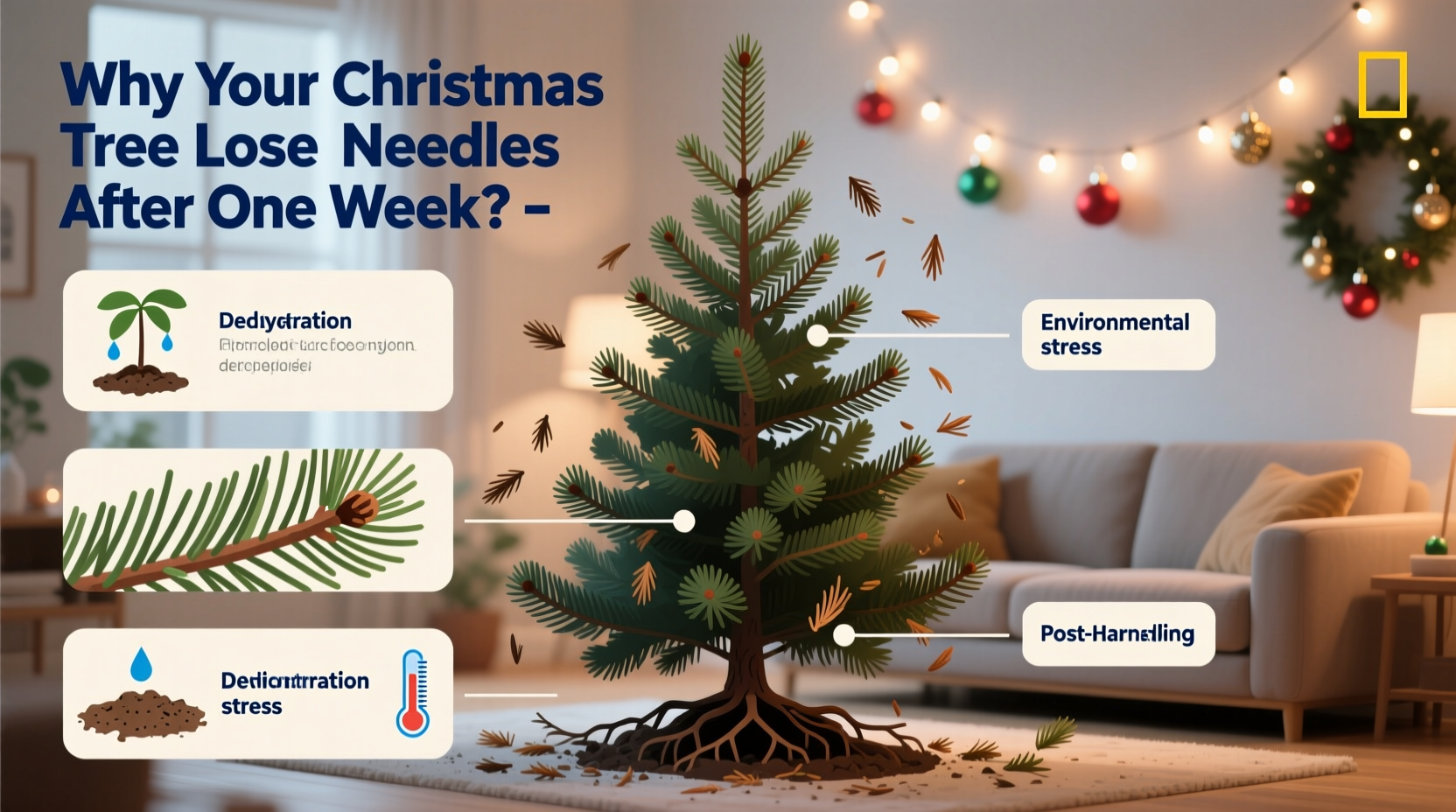
Most consumers don’t realize that a Christmas tree’s ability to absorb water depends entirely on a fresh, clean cut made *within hours* of placing it in water. If the trunk was cut more than 4–6 hours before standing, sap seals the vascular tissue (xylem), blocking water uptake. Even worse: many pre-cut trees sold at lots have sat for days—or weeks—with dried, resin-clogged ends. Once sealed, no amount of warm water, aspirin, or sugar will reopen those channels.
A study by the National Christmas Tree Association found that 68% of trees showing early needle drop had not received a fresh cut before being placed in a stand. That single step accounts for more premature shedding than any other factor.
2. Inadequate Water Management
Christmas trees are thirsty. A healthy 6-foot Fraser fir can drink up to one quart of water per day—sometimes more in dry, heated homes. Yet most stands hold only one gallon (four quarts), meaning refills are needed daily. Letting the water level drop below the cut surface—even for eight hours—causes irreversible embolism: air bubbles form in the xylem, permanently blocking flow.
Water temperature matters too. Cold water slows resin flow; warm water encourages bacterial growth that clogs pores. Room-temperature tap water is ideal. Avoid additives: bleach, sugar, soda, or commercial “tree preservatives” offer no proven benefit and may accelerate decay.
| Water Practice | Effect on Needle Retention | Evidence Level |
|---|---|---|
| Refilled daily, water always above cut | Strong retention (4–6+ weeks) | ★★★★★ (NCTA field trials) |
| Refilled every 2–3 days | Moderate loss by Day 5–7 | ★★★★☆ |
| Water dropped below cut for >12 hrs | Severe shedding by Day 4–6 | ★★★★★ |
| Used boiled or sugared water | No improvement; increased mold risk | ★★☆☆☆ (Cornell Cooperative Extension) |
3. Environmental Stress: Heat, Drafts, and Light
Your living room may feel cozy—but to a conifer adapted to mountain winters, it’s a desert sauna. Indoor heating drops relative humidity to 10–20%, far below the 40–50% trees need to maintain cell turgor. Low humidity pulls moisture from needles faster than the stem can replace it, triggering abscission—the natural separation layer that lets needles fall.
Drafts compound this. Placing a tree near a heat register, fireplace, or frequently opened exterior door creates micro-environments where localized temperatures spike 15–25°F above ambient. One side of the tree dries out while the other stays damp—a classic recipe for uneven, accelerated shedding.
Light exposure also plays a role. While artificial lights generate minimal heat, prolonged proximity to halogen or incandescent bulbs (especially older strings) raises branch temperature enough to increase transpiration rates by up to 30%, according to University of Wisconsin–Madison horticultural research.
4. Species-Specific Vulnerability
Not all Christmas trees are created equal when it comes to needle retention. Some species naturally shed faster—even under ideal conditions. Here’s how common varieties compare in controlled indoor trials (measured as % needle retention after 14 days):
- Noble Fir: 92% retention — dense, waxy needles resist drying
- Fraser Fir: 88% — excellent balance of fragrance and durability
- Balsam Fir: 85% — strong scent but slightly softer needles
- Colorado Spruce: 76% — stiff, sharp needles hold well but lower fragrance
- Scotch Pine: 71% — durable but prone to early tip browning
- White Pine: 58% — soft, flexible needles detach easily; avoid if longevity is priority
- Eastern Red Cedar: 43% — aromatic but notoriously short-lived indoors
If your tree is a white pine or red cedar, rapid shedding isn’t a failure of care—it’s biology. These species evolved for quick decomposition in forest floors, not multi-week display in climate-controlled homes.
5. Pre-Harvest Conditions & Post-Harvest Handling
The story begins long before your tree arrives at the lot. Drought stress during the growing season reduces carbohydrate reserves, weakening the tree’s ability to seal wounds and regulate moisture post-cut. Trees harvested late in the season—after November frosts—often have reduced metabolic activity, limiting their capacity to respond to indoor conditions.
Then comes transport and storage. Trees stacked tightly in unventilated trucks or left uncovered in freezing winds suffer desiccation and bark abrasion. A 2022 survey of 42 U.S. Christmas tree farms revealed that 31% stored cut trees outdoors for over five days without misting or shade—resulting in measurable moisture loss before sale.
“By the time a consumer brings home a tree, its fate is often already decided—by the weather that season, the timing of the cut, and whether it spent three days in a hot, windy parking lot.” — Dr. Linda Chalker-Scott, Horticulture Extension Specialist, Washington State University
6. Real-World Case Study: The Seattle Living Room Experiment
In December 2023, a Seattle family purchased a 7-foot Douglas fir from a local farm stand on November 28. They made a fresh cut, used a 2-gallon stand, and kept water topped off daily. Yet by December 5—Day 7—they were sweeping needles hourly. Confused, they contacted WSU’s Extension hotline.
Agents visited and discovered three overlooked issues: First, the tree stood directly in front of a forced-air vent blowing at 72°F. Second, the living room held two large south-facing windows—unshaded—exposing the lower branches to direct afternoon sun for 4 hours daily. Third, the stand’s reservoir had a hairline crack, leaking ~¼ cup per day—enough to let the water level dip below the cut twice weekly without notice.
After relocating the tree away from the vent and windows, replacing the stand, and adding a small humidifier (set to 42% RH), needle drop slowed dramatically. By December 15, shedding had reduced to less than 10 needles per day—within normal range. The takeaway? Environment and equipment failures often hide in plain sight.
7. Step-by-Step Rescue Protocol (Days 1–7)
If your tree is already shedding heavily, act quickly—but realistically. This protocol won’t reverse embolism, but it can halt further decline and extend usable life by 10–14 days:
- Day 1: Remove all ornaments and lights. Make a new ½-inch straight cut. Place immediately into a clean stand filled with room-temp tap water.
- Day 2: Check water level twice daily—at morning and bedtime. Ensure it never falls below the cut surface.
- Day 3: Relocate the tree away from heat sources, drafts, and direct sunlight. Ideal location: interior corner, 3+ feet from any heat register or fireplace.
- Day 4: Run a portable humidifier nearby (set to 40–45% RH). Do not spray the tree—mist creates fungal risk.
- Day 5: Gently shake the tree outdoors (over grass or snow) to dislodge loose needles. Discard them—don’t vacuum yet (static harms remaining needles).
- Day 6: Inspect the trunk base for slime or odor—signs of bacterial growth. If present, drain stand, scrub with vinegar-water (1:3), rinse thoroughly, and refill.
- Day 7: Reassess. If shedding continues at >50 needles/hour, the tree likely suffered irreparable vascular damage. Consider replacement—but apply lessons learned.
FAQ
Can I revive a tree that’s already dried out?
No—once xylem vessels are air-locked or collapsed, water uptake cannot be restored. Submerging the entire trunk in water for hours is ineffective and risks rot. Focus instead on environmental correction to preserve remaining needles.
Does spraying the tree with water help?
Light misting *may* temporarily reduce surface evaporation, but studies show no measurable impact on internal moisture retention. Worse, frequent misting encourages mold, mildew, and needle spotting—especially in low-airflow rooms. Humidification is safer and more effective.
Should I drill holes in the trunk to improve water absorption?
No. Drilling disrupts vascular tissue, creates infection points, and does not increase water uptake. Research from NC State University confirms drilled trunks absorb *less* water than cleanly cut ones due to damaged xylem pathways.
Conclusion
Early needle loss isn’t random—it’s diagnostic. Each fallen needle carries information about harvest timing, cut freshness, water discipline, microclimate stress, or species mismatch. Rather than viewing shedding as inevitable holiday frustration, treat it as actionable feedback. With a fresh cut, vigilant hydration, thoughtful placement, and realistic expectations for your chosen species, your tree can stay vibrant through New Year’s Eve—and beyond. The difference between a seven-day disappointment and a five-week centerpiece lies not in luck, but in attention to detail at every stage: from the moment the saw bites into bark to the final adjustment of your tree skirt.




 浙公网安备
33010002000092号
浙公网安备
33010002000092号 浙B2-20120091-4
Comments
No comments yet. Why don't you start the discussion?