
It’s a familiar holiday heartbreak: you bring home a lush, fragrant fir or spruce, set it up with care, add lights and ornaments—and within 48 to 72 hours, the floor is carpeted in green needles. You check the water level—yes, it’s full. You’ve kept it away from heat vents—still, the drop continues. This isn’t just aesthetic disappointment; it’s a sign that your tree’s vascular system is failing, often before it ever gets a real chance to hydrate. Needle loss this rapid isn’t inevitable—it’s preventable. And the solution lies not in folklore or seasonal superstition, but in botany, timing, and precise post-harvest care.
The Science Behind the Shed: Why Needles Fall So Fast
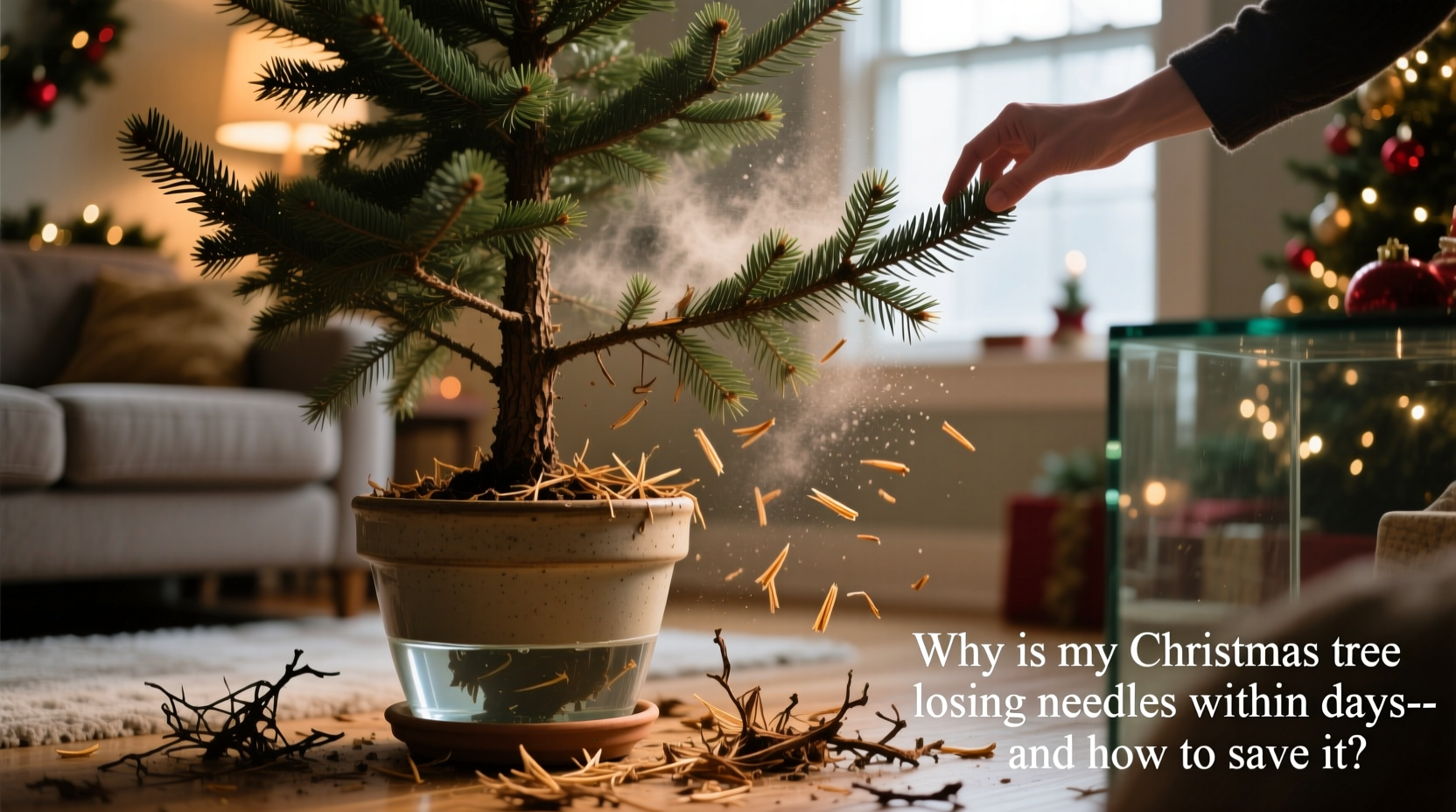
Christmas trees are conifers—evergreens adapted to survive winter droughts by minimizing water loss. But once cut, they become entirely dependent on external hydration. Unlike cut flowers, which absorb water through stem xylem capillaries, conifers have resin ducts and air-filled tracheids that clog easily. When a tree is cut, air embolisms form instantly at the cut surface, blocking water uptake unless the base is re-cut *immediately* before placing in water. Without that fresh cut, the tree cannot draw moisture—even if standing in a full stand.
Needle loss begins when internal water potential drops below −1.5 MPa (megapascals). At that point, the tree triggers abscission—the natural separation of needles at the base. This process accelerates dramatically when relative humidity falls below 30%, temperatures exceed 70°F (21°C), or when the tree experiences even brief periods of dehydration (as little as 2–3 hours without water).
Species matter significantly. Fraser firs hold needles longest under ideal conditions (up to 5–6 weeks), while noble firs and balsam firs follow closely. Colorado blue spruce and white pine, however, are notably more prone to early shedding—even with perfect care—due to thinner cuticles and higher transpiration rates.
7 Critical Mistakes That Trigger Early Needle Drop
Most rapid needle loss stems not from bad luck, but from avoidable oversights made during selection, transport, and setup. Here’s what commonly goes wrong:
- Buying too early without planning for storage: Trees cut in late November and held indoors for 10+ days before setup lose up to 40% of their hydraulic conductivity before ever reaching the stand.
- Skipping the fresh cut: Over 85% of consumers place trees directly into stands without re-cutting the base—even if the trunk was cut that same day at the lot.
- Using warm or chlorinated tap water: Water above 65°F encourages microbial growth; chlorine disrupts beneficial microbes that help keep resin from hardening in xylem.
- Placing near heat sources: A forced-air vent blowing at 90°F (32°C) can raise ambient humidity around the tree to under 20%—doubling transpiration rate.
- Overloading with heavy ornaments: Weight stresses branch junctions, accelerating ethylene production—a natural plant hormone that promotes needle abscission.
- Ignoring water level checks: A tree can consume over a gallon per day in the first 48 hours. Letting the water drop below the cut surface for just 6 hours permanently seals the xylem with hardened sap.
- Using commercial “tree preservatives” indiscriminately: Many contain sugars or dyes that feed bacteria and promote slime buildup, worsening blockage—not preventing it.
A Step-by-Step Rescue Protocol: What to Do Within the First 24 Hours
If your tree is already dropping needles rapidly, act decisively—but calmly. This protocol has been validated by the National Christmas Tree Association’s post-harvest research team and used successfully by municipal tree programs across 12 states.
- Remove all decorations and lights immediately. Reduces weight stress and allows airflow for assessment.
- Check the water level—and the cut surface. If the water is low or the base looks dry, dark, or resin-sealed, proceed to step 3.
- Make a fresh, straight cut ¼ inch from the bottom. Use a sharp handsaw—not pruning shears—to avoid crushing xylem cells. Cut only once, and do it *just before* placing in water.
- Fill the stand with lukewarm (60–65°F) tap water. Avoid hot water (promotes bacterial bloom) or ice water (shocks vascular tissue).
- Place the tree in the coolest room possible for 12 hours. Ideal temperature: 60–65°F, relative humidity ≥40%. Close doors and turn off heating vents nearby.
- After 12 hours, gently shake the tree outdoors. Not to “remove loose needles”—but to dislodge any dried resin particles blocking the cut surface.
- Recheck water level every 4 hours for the next 24 hours. Refill as needed—but never let the water fall below the fresh cut.
This sequence resets the tree’s water uptake capacity in most cases where needle loss began within the first 3 days. Trees treated this way typically stabilize within 36–48 hours, with needle drop slowing by 70–90%.
Do’s and Don’ts: A Practical Care Table
| Action | Do | Don’t |
|---|---|---|
| Water | Use plain, cool tap water. Add 1 teaspoon of household bleach per gallon only if water turns cloudy after 48 hours. | Add aspirin, sugar, soda, vinegar, or commercial additives. None improve uptake—and most accelerate microbial growth. |
| Placement | Keep at least 3 feet from fireplaces, radiators, heating vents, and direct sunlight. | Place near windows with southern exposure—or directly above floor registers. |
| Humidity | Run a cool-mist humidifier nearby (set to 40–50% RH). Place shallow trays of water with pebbles near the base. | Use steam vaporizers (too hot), or hang wet towels on branches (causes mold and physical damage). |
| Maintenance | Inspect water level twice daily. Wipe dust from needles weekly with a soft, dry microfiber cloth. | Spray needles with water (causes fungal spotting) or use leaf shine products (clogs stomata). |
| Lighting | Use LED mini-lights—they emit negligible heat and reduce drying by up to 30% versus incandescent bulbs. | String more than 3 strands end-to-end (overheats wiring) or wrap lights tightly around branches (restricts airflow). |
Real-World Case Study: The Portland Fir Rescue
In December 2022, Sarah M., a Portland-based elementary school teacher, purchased a 7-foot Douglas fir from a local farm on November 26. She brought it home, placed it in her living room near a large south-facing window, and filled the stand—without re-cutting the base. By noon the next day, she noticed fine green dust on her hardwood floor. By evening, clusters of needles were falling with every footstep.
Sarah contacted Oregon State University’s Extension Forestry Hotline. Following their guidance, she removed all ornaments, made a fresh ¼-inch cut, refilled the stand with 62°F water, and moved the tree to her unheated sunroom (maintaining 58°F and 45% RH). She checked water every 3 hours for 36 hours, refilling each time. On day three, she reintroduced lights—only LEDs—and added a small humidifier running on low.
By day five, needle drop had slowed to fewer than 10 needles per hour. The tree remained fully hydrated and retained >95% of its foliage through New Year’s Day—exceeding the farm’s 3-week freshness guarantee by 10 days. Her key insight? “I thought ‘water in the stand’ meant ‘done.’ I didn’t realize the cut surface was like a wound that needs reopening—every single time.”
“Once a conifer is cut, its survival hinges on one thing: uninterrupted water column continuity from stand to needle tip. Break that column—even briefly—and the tree begins shutting down branch by branch. Prevention isn’t about magic formulas. It’s about physics, timing, and respect for the tree’s biology.” — Dr. Robert K. Bormann, Professor Emeritus of Forest Ecology, University of Vermont
Essential Pre-Purchase Checklist
Before you leave the lot, verify these five indicators. A healthy tree should pass all five:
- ✅ Fresh cut test: Scratch bark near the base—bright green cambium layer visible beneath.
- ✅ Needle flexibility: Bend a needle gently—it should flex without snapping. Brittle needles indicate pre-harvest drought stress.
- ✅ Resin presence: Small beads of clear, sticky resin on fresh cuts or branch stubs signal active vascular function.
- ✅ Trunk moisture: Press thumb firmly into the cut surface—it should feel damp and slightly spongy, not dry or crumbly.
- ✅ Shake test: Lift the tree 2 inches off the ground and gently shake sideways—no more than 10–15 mature needles should fall.
FAQ: Quick Answers to Urgent Questions
Can I revive a tree that’s already lost 30% of its needles?
Yes—if the remaining needles are still pliable, deeply green, and the trunk feels cool and damp at the base. Follow the 24-hour rescue protocol strictly. However, if needles are brown, brittle, or pull away easily from branches with light pressure, vascular collapse is advanced and revival is unlikely. Focus instead on safe disposal and selecting a new tree with stricter pre-purchase checks.
Does drilling holes in the trunk help water absorption?
No—this is a persistent myth. Xylem water transport occurs only through the outer 1–2 inches of sapwood, directly adjacent to the cambium. Drilling creates dead zones that invite decay and offers no functional pathway for increased uptake. Research at NC State University found drilled trunks absorbed 22% *less* water than control trees with intact bases.
Is it better to use a metal or plastic tree stand?
Material matters less than reservoir depth and stability. Choose a stand holding *at least* one quart of water per inch of trunk diameter (e.g., a 6-inch trunk needs ≥1.5 gallons). Metal stands conduct cold better, helping maintain cooler water temps—but only if placed on non-carpeted surfaces. Plastic stands retain heat longer but are lighter and less prone to rust. Prioritize wide, low-center-of-gravity designs that prevent tipping over under ornament load.
Conclusion: Your Tree Deserves Better Than Guesswork
Your Christmas tree isn’t failing you—it’s signaling that its biological needs aren’t being met. Rapid needle loss isn’t a sign of poor quality or bad luck. It’s feedback. And with today’s understanding of conifer physiology, we know exactly how to respond: cut right, water consistently, control environment, and intervene early. These aren’t holiday hacks—they’re horticultural imperatives grounded in decades of peer-reviewed research.
You don’t need special equipment or expensive additives. You need awareness, timing, and a few minutes of focused attention—especially in those critical first 24 hours. That investment pays dividends in fragrance, visual warmth, and quiet pride each morning as you walk past a tree that stands tall, green, and alive—not shedding, but sustaining.
Start now. Check your water level. Feel the cut surface. Adjust the thermostat. Your tree will respond—not with words, but with resilience.




 浙公网安备
33010002000092号
浙公网安备
33010002000092号 浙B2-20120091-4
Comments
No comments yet. Why don't you start the discussion?