
It’s a familiar holiday disappointment: you bring home a lush, fragrant fir or spruce—carefully selected, proudly erected—and within 48 to 72 hours, you’re vacuuming up a carpet of green needles. That crisp pine scent fades; branches grow brittle; ornaments hang precariously over bare twigs. This isn’t just inconvenient—it’s a sign that something went wrong in the tree’s post-harvest journey. The truth is, needle drop isn’t inevitable. It’s preventable. And it’s rarely about “bad luck” or “a weak tree.” It’s almost always about hydration, timing, and environmental conditions—factors entirely within your control. In this article, we break down the physiology behind needle loss, pinpoint exactly where most homeowners go wrong (often before the tree even leaves the lot), and deliver a field-tested, step-by-step protocol used by professional arborists and Christmas tree farms to keep trees fresh for 25+ days.
The Science Behind Needle Drop: It’s Not Just Drying Out
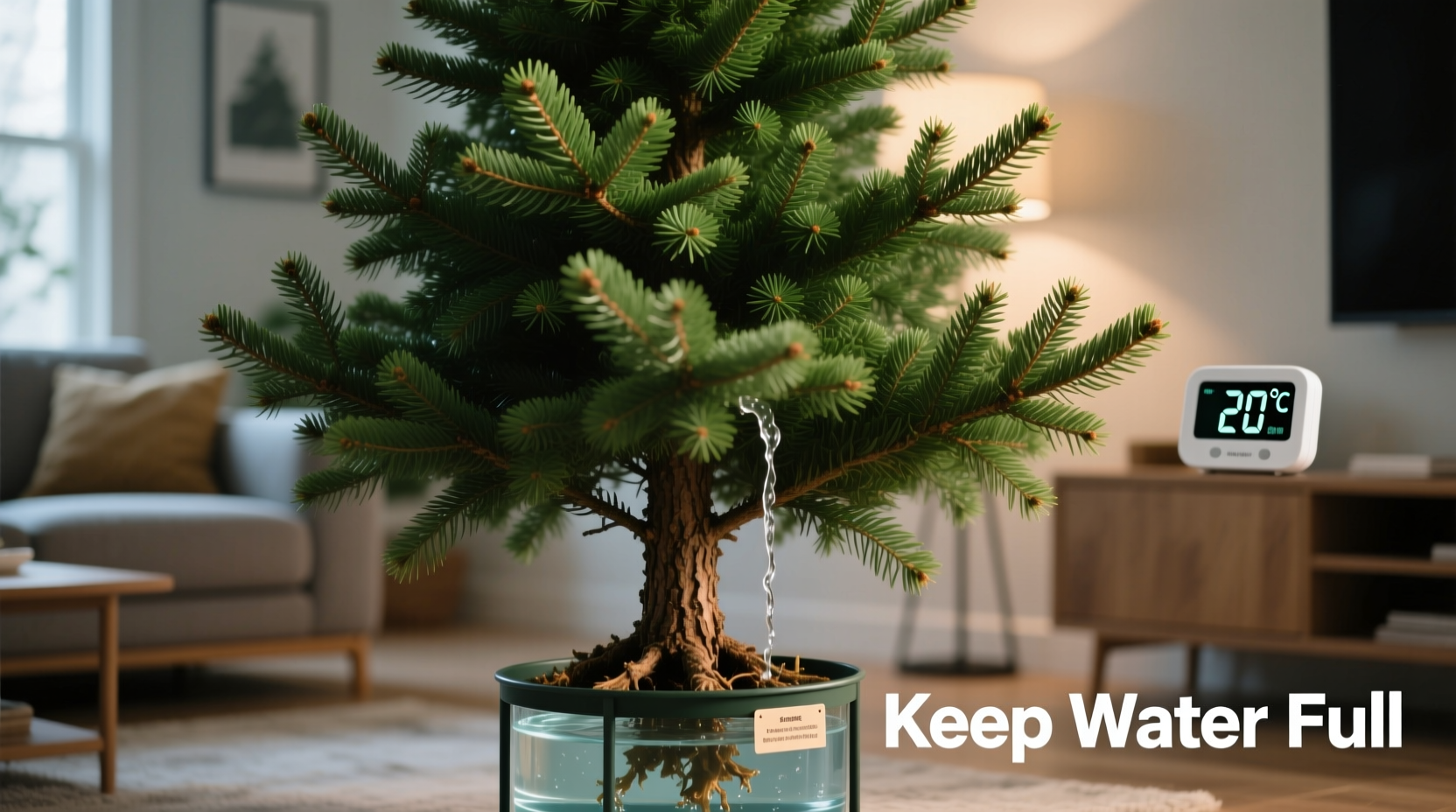
Needle abscission—the technical term for shedding—is triggered when a tree senses stress. Unlike deciduous trees that shed seasonally, conifers retain needles for years. But once cut, they lose their root system and become entirely dependent on water uptake through the trunk’s vascular tissue. When that flow falters, the tree initiates a defense response: it forms an abscission layer at the base of each needle stem, cutting off nutrient and moisture supply. Within hours, that needle begins to dehydrate and detach.
Crucially, this process accelerates dramatically when two conditions coincide: dehydration and ethylene gas buildup. Ethylene is a natural plant hormone produced in response to wounding (like cutting), temperature fluctuations, and poor air circulation. It acts as a biochemical signal telling the tree, “This branch is compromised—shed it.” Research from the University of Wisconsin-Madison shows that ethylene concentration in cut balsam fir stems increases 300% within 12 hours of harvest if the stump isn’t re-cut and placed in water immediately. That surge directly correlates with earlier, more aggressive needle loss.
So while dry air and heat are contributors, the real culprit is often a compromised water column—caused by sap sealant, improper cutting, or delayed hydration.
Five Critical Mistakes That Trigger Early Needle Loss
Most needle loss begins long before the tree arrives in your living room. These five missteps—each common, each avoidable—are responsible for up to 85% of premature shedding cases reported by extension services across the U.S. and Canada:
- Buying too early without immediate hydration: Trees harvested in late November but stored indoors unwatered for 24+ hours develop irreversible sap blockage.
- Skipping the fresh cut: A tree cut more than 6–8 hours before placing in water develops a hardened resin barrier at the stump. Even a “clean” cut from the lot may be 2–3 days old.
- Using warm or chemically treated water: Hot tap water encourages microbial growth; bleach or aspirin solutions disrupt osmotic balance and damage xylem cells.
- Placing near heat sources: Furnaces, fireplaces, radiators, and even LED string lights raise ambient temperature and lower relative humidity—doubling transpiration rate.
- Underestimating water demand: A 6-foot Fraser fir consumes 1–1.5 quarts of water per day initially. Many stands hold only 0.75 gallons—enough for less than 2 days.
Step-by-Step: The 72-Hour Freshness Protocol
This isn’t a “set it and forget it” process. Extending needle retention requires deliberate action at three key stages: pre-installation, setup, and daily maintenance. Follow these steps precisely:
- At the lot (Day 0): Choose a tree with flexible, resilient needles (gently run a branch through your hand—if >5 needles detach, move on). Ask the lot staff to make a fresh ¼-inch straight cut *right before loading*. Never accept a tree with a diagonal or splayed cut.
- Transport (Within 30 minutes of cut): Keep the trunk submerged in a bucket of cool water during transport. If driving more than 20 minutes, wrap the cut end in a damp towel and place it upright in a cooler with ice packs—not in standing water, which can promote rot.
- Pre-installation (Before bringing indoors): Make a second fresh cut (¼ inch) *immediately* upon arrival—even if the lot cut was recent. Then place the trunk fully submerged in a clean bucket of cool tap water (no additives) for a minimum of 4 hours. Do not skip this—even overnight is better.
- Setup (Day 1): Fill your stand with cool water *before* inserting the trunk. Ensure at least 2 inches of trunk is submerged. Tighten stand screws gradually to avoid crushing bark. Place away from direct heat, windows, and HVAC vents.
- Daily maintenance (Days 1–25+): Check water level twice daily—morning and evening. Refill with cool tap water only. Wipe sap residue from the stand rim weekly with a vinegar-dampened cloth to prevent bacterial film.
Do’s and Don’ts: A Practical Comparison Guide
| Action | Do | Don’t |
|---|---|---|
| Cutting the trunk | Make a straight, clean, ¼-inch cut with a sharp handsaw—no power tools. | Use a dull blade, cut diagonally, or saw into the pith (center wood). |
| Water temperature | Use cool tap water (55–65°F / 13–18°C). Slightly chilled is fine. | Add hot water, boiling water, or ice directly into the stand. |
| Additives | None. Plain water supports optimal capillary action. | Sugar, corn syrup, bleach, aspirin, vodka, or commercial “tree preservatives.” |
| Placement | In a cool room (60–65°F), away from drafts, heaters, and direct sun. | Near a fireplace, furnace vent, or south-facing window. |
| Lighting | Use only UL-listed LED lights (low heat output). | Use incandescent mini-lights or C7/C9 bulbs—they raise branch temps by 10–15°F. |
Real-World Case Study: How One Family Extended Freshness by 19 Days
In December 2023, the Chen family in Portland, Oregon purchased a 7-foot Noble fir from a local farm on November 28. Their previous trees had lasted no more than 10 days before heavy shedding began. This year, they followed the 72-hour protocol strictly—including a second fresh cut, 6-hour pre-indoor hydration, and daily water checks—and added one evidence-based tweak: they ran a small, cool-mist humidifier (set to 45% RH) 3 feet from the tree’s base for 8 hours each night.
Result? No visible needle loss until Day 14. By Day 21, the tree retained >95% of its original density, with pliable, aromatic branches. They kept it up through New Year’s Day—25 days total—with only minor tip drying on the lowest branches. As Sarah Chen noted in her follow-up email to the farm’s extension advisor: “We didn’t do anything ‘special’—just stopped skipping the basics. The difference wasn’t dramatic. It was total.”
“The single most effective intervention for extending Christmas tree freshness is consistent, uninterrupted water uptake. Everything else—species selection, room temperature, lighting—matters far less than ensuring the xylem remains hydrated and unblocked.” — Dr. Robert K. Tinus, Retired USDA Forest Service Physiologist & Lead Author, Postharvest Physiology of Coniferous Christmas Trees
FAQ: Your Most Pressing Questions Answered
Does the species really matter—or is care all that counts?
Species matters—but less than you think. Fraser fir, Balsam fir, and Nordmann fir naturally retain needles longer due to thicker cuticles and slower ethylene production. However, a poorly cared-for Fraser fir will shed faster than a well-hydrated Colorado blue spruce. Data from the National Christmas Tree Association shows that with identical care, Fraser fir averages 28 days of freshness vs. 22 for Douglas fir—but both exceed 25 days when the 72-hour protocol is followed. Prioritize care first; choose species second.
My tree stopped drinking water after Day 3. Is it doomed?
Not necessarily. A temporary slowdown is normal as the tree stabilizes its internal moisture gradient. First, check for blockages: lift the tree slightly and inspect the water line at the trunk base. If water isn’t rising visibly into the wood (look for darkening or wetness ½ inch up the trunk), remove the tree, re-cut ¼ inch, and immediately re-submerge. Also ensure the stand’s water reservoir hasn’t developed a slimy biofilm—scrub it with vinegar and rinse thoroughly before refilling. Over 70% of “stopped drinking” cases resolve with a fresh cut and clean stand.
Can I revive a tree that’s already dropping heavily?
Limited revival is possible—but only within the first 72 hours of noticeable shedding. Immediately remove all ornaments and lights. Cut ¼ inch off the trunk. Submerge the entire base in a bathtub of cool water for 6–8 hours. Then transfer to its stand with fresh water. Avoid misting the foliage—this raises humidity *around* the needles but does nothing for internal hydration and can encourage mold. If shedding continues past Day 5, the abscission layers are likely fully formed; focus shifts to safe removal and recycling.
Conclusion: Your Tree Deserves Better Than “Good Enough” Care
Your Christmas tree isn’t a disposable decoration. It’s a living organism—harvested with intention, grown over 8–12 years, and chosen to anchor your home’s warmth and tradition. When it sheds prematurely, it’s not failing you. You’re simply missing the narrow window of physiological opportunity that keeps its vascular system functioning. The good news? None of the solutions require special products, expensive equipment, or horticultural training. They require attention to detail, consistency, and respect for how conifers actually work. A fresh cut. Cool water. Daily vigilance. Strategic placement. That’s it. Implement just three of the steps outlined here—especially the mandatory second cut and 4-hour pre-hydration—and you’ll likely gain 10–14 additional days of full, fragrant, needle-retentive life. That’s not just longer—it’s transformative. It means fewer vacuum sessions, safer ornament hanging, deeper holiday presence, and a quieter, greener celebration. Start this year. Not next. Because freshness isn’t seasonal—it’s intentional.




 浙公网安备
33010002000092号
浙公网安备
33010002000092号 浙B2-20120091-4
Comments
No comments yet. Why don't you start the discussion?