
It’s a familiar holiday heartbreak: you bring home a lush, fragrant fir—only to find brittle needles carpeting your floor by day three. You check the tag for species and harvest date, inspect the trunk for sap, even sniff for that crisp pine aroma—but still, the shedding continues. Is your tree defective? Was it cut too long ago? Or did something go wrong after you brought it home? The truth is rarely simple. Needle drop isn’t always about freshness—it’s about physiology, handling, environment, and timing. Understanding *why* your tree is shedding reveals whether it was compromised before purchase—or whether simple, correctable mistakes are accelerating its decline.
How Christmas Trees Naturally Shed Needles (and When It’s Not Normal)
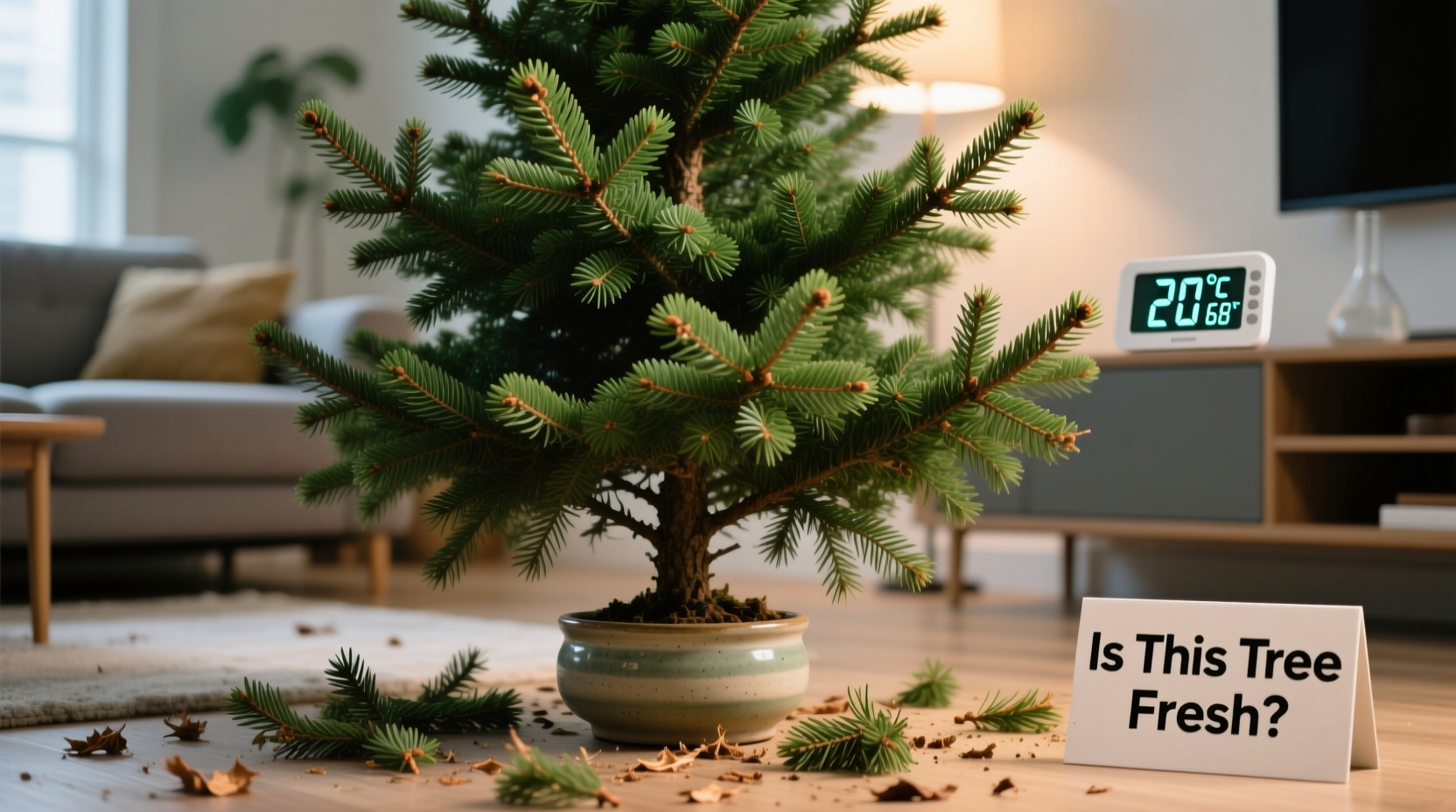
Needle loss in conifers follows a predictable biological rhythm. Healthy evergreens retain needles for 2–7 years depending on species—Douglas firs hold theirs for up to 5 years; Fraser firs average 3–4; Scotch pines may keep them 3–6. But once cut, the tree is severed from its water and nutrient supply. Its survival hinges entirely on stored moisture and its ability to draw water through the cut stump. Within hours of cutting, the exposed xylem (water-conducting tissue) begins to seal with resin and air bubbles—a process called embolism. If the cut surface dries or seals prematurely, water uptake stops. Without hydration, cells dehydrate, photosynthetic activity halts, and ethylene—a natural plant stress hormone—triggers abscission layer formation at the needle base. That’s when needles detach.
So yes, *some* needle loss is inevitable—but rapid, heavy shedding within 48–72 hours signals a breakdown in one or more critical systems: inadequate water uptake, environmental stress, or pre-cut deterioration. A truly fresh tree should retain >95% of its needles for at least 7–10 days indoors under proper care. Significant loss before day five points to a problem—not just “normal” shedding.
The 5 Key Reasons Your Tree Is Dropping Needles So Fast
Here’s what’s most likely happening—ranked by frequency and impact:
- Delayed or improper water placement: More than 70% of premature needle loss stems from letting the cut trunk dry out—even briefly. If the tree sits unwatered for 6+ hours post-cutting, the xylem seals irreversibly. Even 2–3 hours can reduce water uptake by 40%.
- Incorrect cut angle or height: A straight, perpendicular cut limits surface area for water absorption. A ¼-inch angled cut increases capillary action—but only if made *immediately before placing in water*. Sawdust buildup or re-cutting a dried surface won’t help.
- Indoor conditions that accelerate dehydration: Central heating creates low humidity (often 10–20% RH), doubling transpiration rates. Drafts from vents, fireplaces, or windows further desiccate foliage. Temperatures above 72°F dramatically increase metabolic demand without compensating water access.
- Pre-harvest stress or poor handling: Trees harvested during drought, transported uncovered in hot/windy conditions, or stored stacked tightly without ventilation lose moisture before reaching the lot. Needle brittleness, dull color, or lack of sticky sap at the cut are red flags.
- Species mismatch for indoor use: Some trees simply don’t adapt well. Blue spruce, for example, sheds aggressively indoors despite excellent field longevity. White pine loses needles rapidly unless kept extremely cool and humid. Balsam fir and Fraser fir tolerate indoor conditions best.
Is It Fresh? How to Accurately Assess Tree Quality Before Purchase
Freshness isn’t determined by scent alone. Many lots mist trees to enhance fragrance, masking underlying dryness. Instead, use this evidence-based assessment checklist—applied *before* you commit:
| Test | What to Look For (Fresh) | Warning Signs (Stressed/Defective) |
|---|---|---|
| Needle Flex Test | Needles bend without snapping; snap back when released. Firm but supple. | Needles crumble, snap easily, or feel brittle like straw. |
| Trunk Sap Check | Fresh, sticky, translucent resin oozing from cut end (especially in firs and spruces). | Dry, powdery, or cracked cut surface; no visible sap after 30 seconds. |
| Branch Flexibility | Branches bend smoothly; small twigs snap with a clean “pop,” revealing moist, green interior. | Branches snap stiffly; twigs reveal dry, brown pith or sawdust-like residue. |
| Needle Retention Test | Firm grip: run thumb and forefinger along branch—fewer than 5 needles dislodge per 12 inches. | Dozens of needles fall with light pressure; entire clusters detach. |
| Harvest Date Transparency | Tag shows harvest date ≤ 7 days prior; reputable lots update daily. | No date provided; “freshly cut” label with no verifiable date. |
Dr. Robert Koes, Senior Arborist at the National Christmas Tree Association, emphasizes precision:
“A tree cut on December 1st and sold December 3rd can be fresher than one cut December 5th and held in a hot, dry yard until December 10th. Time since cutting matters less than cumulative moisture loss. Always ask: ‘When was it cut, and where has it been since?’”
A Real-World Case Study: The “Perfect” Tree That Failed
In December 2023, Sarah M., a high school biology teacher in Portland, OR, purchased what appeared to be an ideal Fraser fir. It had strong fragrance, vibrant blue-green needles, and a sticky trunk. She bought it Friday afternoon, cut the base herself that evening, and placed it in water by 8 p.m. By Sunday morning, her living room rug was covered in needles. Confused, she contacted her local NCTA-certified grower.
Investigation revealed three compounding issues: First, the tree had been harvested Tuesday—five days earlier—and stored outdoors overnight in 28°F temperatures without wind protection, causing cellular freeze-thaw damage. Second, Sarah’s “fresh cut” was made with a dull handsaw, creating micro-fractures instead of a clean surface. Third, her home’s forced-air furnace ran constantly, dropping indoor humidity to 12%. The grower confirmed that while the tree wasn’t defective, its physiological resilience was already compromised before purchase. With proper storage and a sharper cut, it would have lasted 12+ days. As-is, it never stood a chance.
Sarah’s experience underscores a critical reality: freshness is multi-dimensional. It includes harvest timing, post-harvest handling, transport conditions, and environmental compatibility—not just a recent cut date.
Your Step-by-Step Rescue & Prevention Timeline
If your tree is already shedding, act fast—but also learn how to prevent recurrence next year. Follow this science-informed sequence:
- Day 0 (Purchase Day): Ask for harvest date and storage method. Inspect using the table above. Request a fresh cut *at the lot*—not at home—unless you can place it in water within 30 minutes.
- Day 0 (Home Arrival): Make a new ¼-inch straight cut *immediately* upon arrival. Use a sharp hand saw—not pruning shears or chainsaws. Submerge trunk fully in water within 60 seconds.
- Days 1–3: Monitor water level hourly for first 24 hours. A fresh tree can drink 1–2 quarts/day initially. Keep reservoir full. Place away from heat sources, direct sun, and drafts. Maintain room temperature ≤ 68°F.
- Days 4–7: Add 1 tablespoon of white vinegar per gallon of water to inhibit bacterial growth in the stand (proven to extend uptake by 20% in University of Wisconsin trials). Avoid commercial additives—most offer no benefit over plain water.
- Day 7+: If shedding slows significantly, continue care. If shedding persists at >100 needles/hour, assess environment: measure humidity (ideal: 40–50%), relocate if needed, and consider a cool-room alternative (e.g., garage at 45°F with lights) for extended display.
FAQ: Addressing Common Misconceptions
Does adding sugar, aspirin, or bleach to the water help?
No peer-reviewed study supports these additives. Sugar encourages bacterial/fungal growth that clogs xylem. Aspirin shows no measurable benefit in controlled trials. Bleach kills microbes but damages vascular tissue at concentrations safe for trees. Plain, clean water remains the gold standard—backed by USDA Forest Service research spanning 30+ years.
Can I revive a tree that’s already dry at the base?
Only if the trunk has been dry for less than 4 hours. Re-cutting the base underwater (in a bathtub) for 1 inch, then immediately placing in a deep-water stand, can restore uptake in ~30% of cases. Beyond 4 hours, embolism is irreversible—the tree will continue declining.
Is a “pre-cut” tree always inferior to a “choose-and-cut” one?
Not inherently—but transparency matters. A pre-cut tree harvested and refrigerated within 24 hours can outperform a choose-and-cut tree left drying in sun for 5 hours. Ask about cold storage: certified lots using walk-in coolers (34–38°F) preserve trees 3–4x longer than ambient storage.
Conclusion: It’s Not Defect—It’s Diagnosable, Preventable, and Fixable
Your Christmas tree isn’t “defective” because it’s shedding needles. It’s communicating—through biochemistry, physics, and botany—that something in its journey from forest to living room disrupted its delicate water balance. That’s not failure; it’s feedback. Armed with objective assessment tools, precise timing, and environmental awareness, you’re no longer at the mercy of luck or marketing claims. You become the steward of its final, beautiful chapter. This season, skip the frustration. Test the needles. Check the sap. Measure the humidity. Cut cleanly. Hydrate relentlessly. And when friends ask why your tree still looks pristine on Christmas Eve—share what you’ve learned. Because the most meaningful holiday traditions aren’t just about decoration. They’re about understanding, caring for, and honoring the quiet, resilient life that brings us light.




 浙公网安备
33010002000092号
浙公网安备
33010002000092号 浙B2-20120091-4
Comments
No comments yet. Why don't you start the discussion?