
A dry, brittle Christmas tree that refuses to drink water can be a holiday disappointment. Beyond the aesthetic loss of needles and drooping branches, a dehydrated tree becomes a fire hazard and loses its festive fragrance. While it may seem like your tree has simply given up, the issue often lies in preventable care mistakes or overlooked details during setup. The good news: most cases of poor water absorption can be reversed with timely intervention. Understanding why your Christmas tree isn’t drinking—and knowing how to fix it—can restore its vitality and extend its life through the entire season.
How Christmas Trees Absorb Water
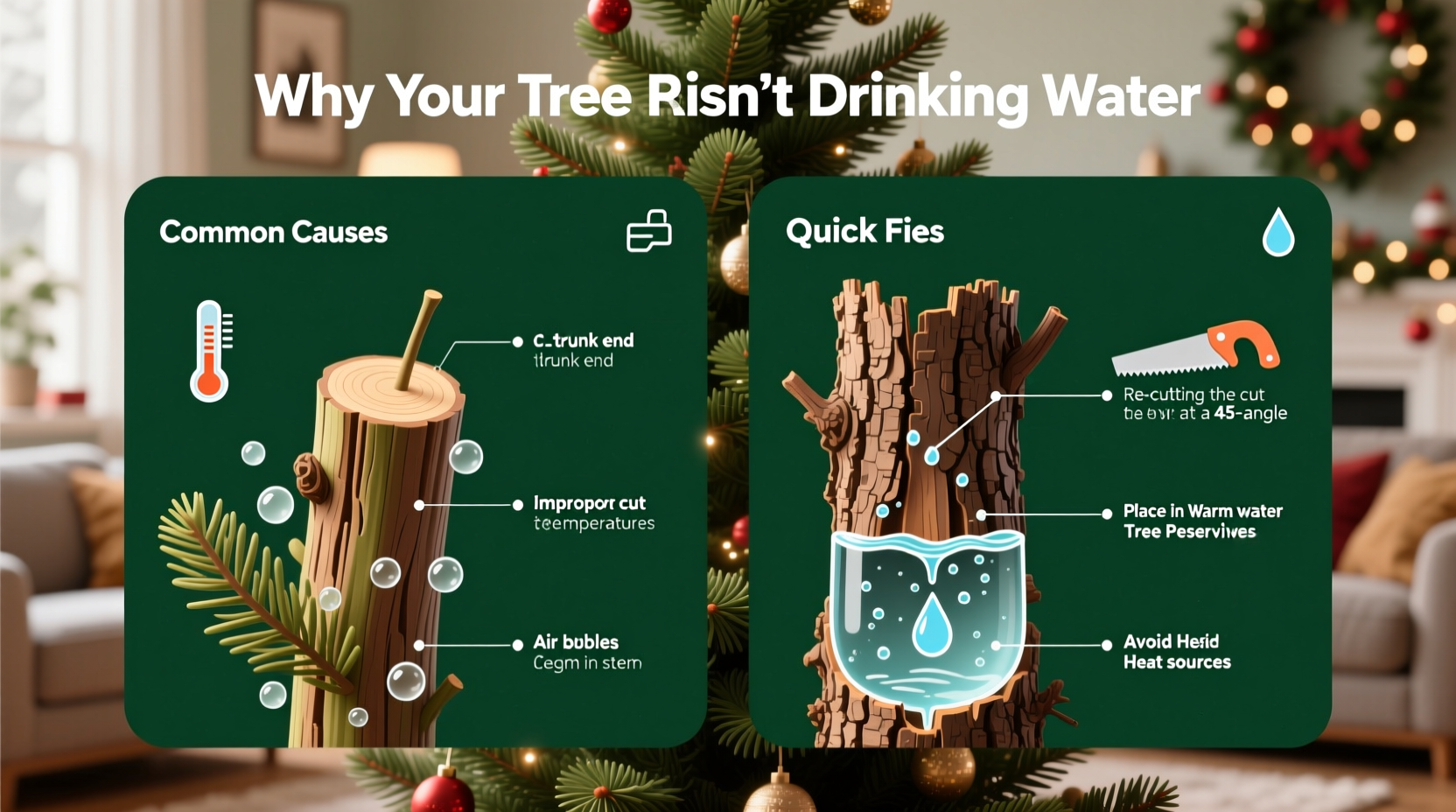
Unlike potted plants, cut Christmas trees rely entirely on their freshly cut base to draw water upward through capillary action in the xylem—the vascular tissue responsible for transporting moisture from roots to leaves. Once the trunk is severed, this system remains active only if the cut surface stays exposed to water and free of air bubbles or sealants. When a tree is first cut, sap and air rush into the exposed wood cells, forming a barrier that blocks water uptake if left unattended. This is why timing and proper cutting technique are crucial before the tree ever reaches your living room.
The process works best when the tree’s base is submerged within hours of being cut. Warm indoor temperatures accelerate moisture loss, making consistent hydration even more critical. A healthy Fraser fir, for example, can drink over a quart of water per day in the first few days after setup. If you notice stagnant water levels despite daily refills, something is interfering with this natural mechanism.
Common Causes of Poor Water Absorption
Several factors can disrupt a Christmas tree’s ability to absorb water. Identifying the root cause is essential for applying the right fix.
Dried-Out Cut Surface
If the tree sat for several hours—or even days—without water after being cut, the exposed wood cells have likely sealed over with sap and air pockets. This creates an impermeable layer that prevents capillary action. Even a delay of four to six hours in some species can significantly reduce water uptake.
Insufficient Fresh Cut
Sometimes, consumers skip re-cutting the trunk, assuming the farm’s cut is sufficient. However, transportation and storage time mean that cut needs refreshing. A shallow or angled cut also reduces surface area contact with water, limiting absorption capacity.
Clogged Stand Reservoir
Dirt, sawdust, or old sap can accumulate in the reservoir or around the clamp mechanisms, restricting water flow. Some stands have narrow openings or poorly designed bases that limit how deeply the trunk sits in water.
Low Humidity and Heat Exposure
Indoor heating systems dry out the air, increasing transpiration (moisture loss through needles). When evaporation exceeds absorption, the tree dehydrates rapidly. Placing the tree near vents, fireplaces, or sunny windows worsens this imbalance.
Using Additives That Harm the Tree
Despite popular belief, additives like sugar, aspirin, bleach, or commercial “tree preservatives” do not improve water uptake and may even encourage bacterial growth that clogs the xylem. Plain tap water is almost always the best choice.
“After 48 hours out of water, many conifers form a resinous seal that blocks rehydration unless a new cut is made.” — Dr. Robert Kelsey, Extension Forester, Oregon State University
Step-by-Step Guide to Restore Water Uptake
If your tree hasn’t absorbed water in over 24 hours, act immediately. Follow these steps to revive its hydration capacity.
- Remove the tree from the stand carefully, preserving as much of the existing water as possible for later reuse.
- Inspect the base for signs of drying, discoloration, or sap buildup. A dark, hard surface indicates sealing.
- Make a fresh horizontal cut of at least ½ inch from the bottom using a handsaw or pruning saw. Avoid chainsaws, which can crush fibers.
- Immediately place the trunk into a bucket of room-temperature water and let it soak for at least one hour before returning it to the stand.
- Clean the stand thoroughly, removing any debris, mineral deposits, or algae. Check that the water-release valves (if present) are functioning.
- Reassemble the tree in the stand and fill it completely with fresh water. Monitor the level every few hours for the next 24 hours.
- Relocate the tree away from heat sources if possible—maintain at least a 5-foot distance from radiators, vents, or fireplaces.
Do’s and Don’ts: Watering Best Practices
| Do’s | Don’ts |
|---|---|
| Recut the trunk before display | Use hot or boiling water |
| Keep reservoir full at all times | Add sugar, soda, or floral preservatives |
| Check water levels twice daily | Let the water drop below the base |
| Use room-temperature tap water | Place near heat vents or direct sunlight |
| Choose a stand with adequate capacity (1 quart per inch of trunk diameter) | Allow sawdust to accumulate in the stand |
Real Example: A Revived Douglas Fir
In December 2023, Sarah M. in Denver set up her 7-foot Douglas fir on a Friday evening. By Sunday morning, she noticed the water level hadn’t dropped despite filling the stand daily. Concerned, she touched the needles—they were stiff but slightly brittle. After reading about re-cutting, she removed the tree and inspected the base. It had a slight angle and a glossy, hardened appearance. She made a straight ¾-inch cut, placed the trunk in a bucket of water overnight, and returned it to a cleaned stand. Within six hours, the tree had absorbed nearly two quarts. Over the next week, it remained lush, fragrant, and fully hydrated until New Year’s Eve—proving that timely correction makes all the difference.
Preventive Checklist for Long-Lasting Hydration
- Buy your tree as close to setup day as possible
- Ensure a fresh cut is made before leaving the lot—or do it yourself upon arrival
- Select a stand that holds at least one gallon of water for standard trees
- Fill the stand immediately after installation
- Check water levels every 12 hours for the first three days
- Avoid drilling holes in the trunk—this does not improve absorption
- Keep room temperature below 72°F (22°C) when feasible
- Use a humidifier nearby to combat dry indoor air
- Trim lower branches that might block water access in the stand
- Never let the water fall below the base of the trunk
Frequently Asked Questions
How long should a Christmas tree take to start drinking water?
A freshly cut and properly placed tree should begin absorbing water within 2–4 hours. High-demand species like Balsam fir may drink over a quart in the first 24 hours. If no absorption occurs after 8 hours, inspect the cut and stand.
Can I save a tree that hasn’t had water for two days?
Possibly. If the trunk base is still light-colored and moist inside, a fresh cut may restore uptake. However, if the wood is dark, cracked, or feels dry throughout, the tree may be too far gone. Prevention is always better than revival.
Should I drill a hole in the trunk to help it absorb water?
No. Drilling holes does not increase water uptake and can damage the tree’s vascular structure. Research from the National Christmas Tree Association confirms that a clean, flat cut is the only effective method for ensuring hydration.
Conclusion: Keep Your Tree Alive All Season
Your Christmas tree’s refusal to drink water isn’t a lost cause—it’s a solvable problem rooted in timing, technique, and attention to detail. From making a proper fresh cut to maintaining ideal environmental conditions, small actions have a major impact on your tree’s health and longevity. With the right care, a cut tree can stay vibrant for four weeks or more, preserving both its beauty and safety. Don’t accept dry needles and empty reservoirs as inevitable. Apply these proven fixes, follow the checklist, and enjoy a truly fresh centerpiece for your holiday celebration.




 浙公网安备
33010002000092号
浙公网安备
33010002000092号 浙B2-20120091-4
Comments
No comments yet. Why don't you start the discussion?