
Nothing signals the holiday season quite like the scent of fresh pine and the sight of a vibrant, well-hydrated Christmas tree. Yet every year, thousands of households face the same quiet crisis: a dry, brittle tree shedding needles within days—despite daily watering. The culprit is rarely neglect; it’s often a subtle failure in water uptake. A healthy cut Christmas tree can consume up to a gallon of water per day—especially in the first 48 hours—but only if its vascular system remains unimpeded and conditions support absorption. When that flow stops, dehydration sets in rapidly, increasing fire risk, diminishing fragrance, and shortening display life by as much as 50%. This article cuts through seasonal myth and offers field-tested, arborist-informed answers—not just “add more water,” but why the water isn’t moving, how to diagnose the blockage, and exactly what to do to restore hydration before irreversible damage occurs.
How Christmas Trees Drink Water (and Why They Stop)
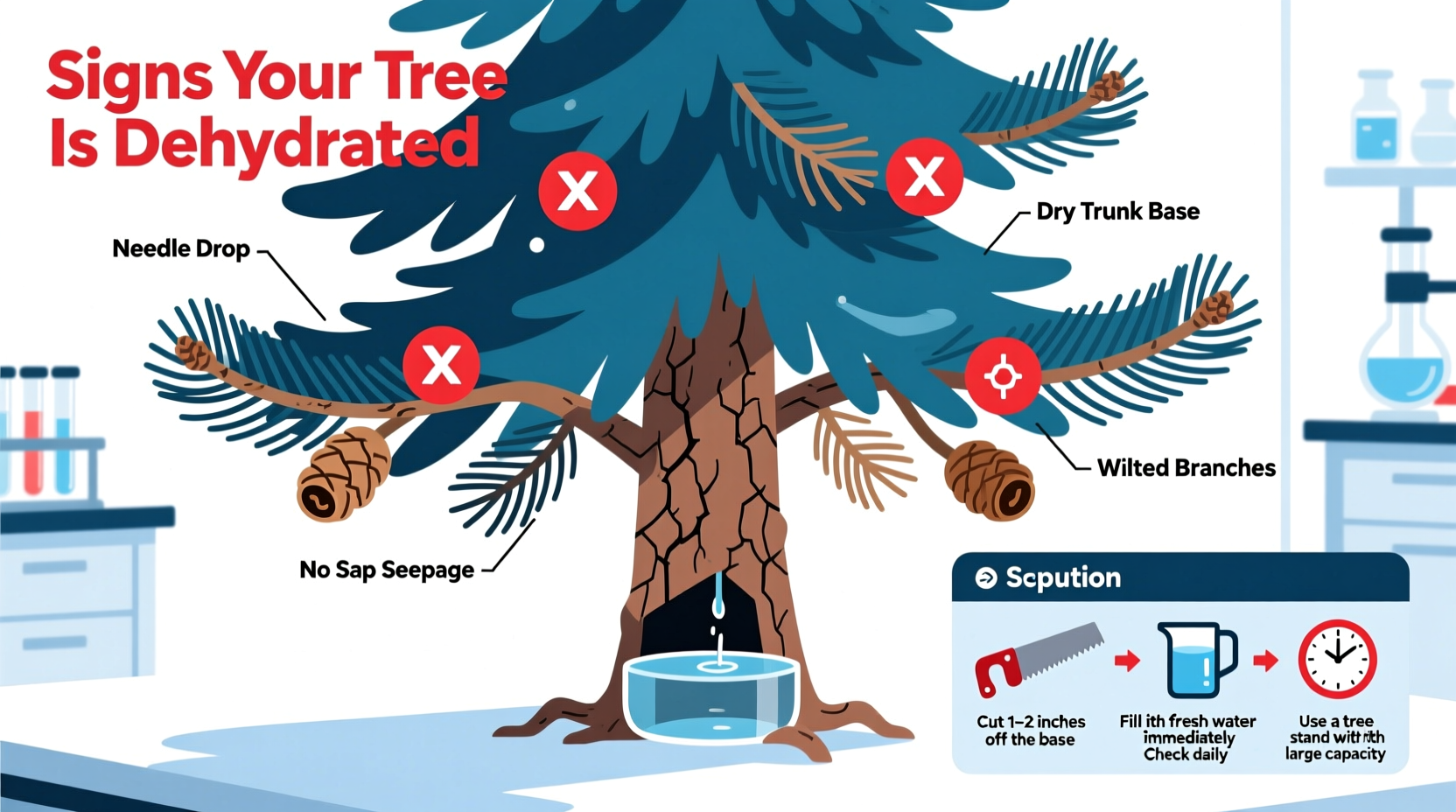
Unlike most plants, cut Christmas trees lack roots and rely entirely on capillary action—the same physics that draws water upward through narrow xylem vessels in living trees. When freshly cut, the trunk’s end contains millions of open, water-conducting pores. Submerging that cut surface in clean, cool water allows moisture to rise into branches and needles via cohesion and tension. But this system fails when one or more critical conditions are compromised.
The primary reason trees stop drinking isn’t thirst—it’s obstruction. Sap, resins, air bubbles, and microbial biofilm seal off the xylem’s entry points within hours of cutting. A study published in the Journal of Arboriculture & Urban Forestry found that untreated cut ends develop a resinous barrier within 6–9 hours, reducing water uptake by up to 73% compared to freshly recut stems. Temperature also plays a decisive role: warm room air accelerates needle transpiration, while cold water slows resin flow—creating a mismatch where demand outpaces supply. And contrary to popular belief, additives like sugar, aspirin, or commercial “tree preservatives” offer no measurable benefit—and some, like bleach or soda, actively harm vascular function.
“Water uptake isn’t about ‘feeding’ the tree—it’s about maintaining hydraulic continuity from base to tip. Once that column breaks, no amount of sugar or fertilizer will reconnect it.” — Dr. Linda K. Bunting, Extension Specialist in Urban Forestry, University of Vermont
5 Clear Signs Your Tree Isn’t Drinking Water
Don’t wait for needle drop to sound the alarm. Early indicators appear long before visible browning or shedding. Monitor these five observable signs daily during the first week:
- Stagnant water level: No measurable decrease in reservoir volume over 24 hours—even with ambient temperatures above 68°F.
- Dry, cracked, or discolored cut surface: A healthy cut should be pale yellow-green and moist. Gray, brown, or fissured wood signals blocked xylem.
- Needle brittleness at branch tips: Gently bend a lower branch tip—if needles snap crisply instead of flexing, cellular dehydration has begun.
- Loss of aromatic intensity: Fresh balsam or Fraser fir emits strong terpenes (like limonene and pinene) when hydrated. A faint or absent scent indicates declining metabolic activity.
- Trunk base feels warm to the touch: Evaporative cooling ceases when water movement stalls. A warm trunk base—especially compared to cooler surrounding air—is a thermal red flag.
The Critical 6-Hour Window: What to Do (and Not Do) After Bringing Your Tree Home
Timing matters more than almost any other factor. Research from the National Christmas Tree Association shows that trees begin forming occlusive barriers within 3–4 hours post-cut—and by 6 hours, uptake capacity drops irreversibly unless intervention occurs. Here’s the precise sequence proven to maximize hydration:
- Before transport: Request a fresh cut—no more than ¼ inch off the base—immediately before loading. Never accept a tree cut earlier that day without verification.
- During transit: Keep the trunk upright and shaded. Never lay the tree horizontally in an open truck bed—sap migrates downward and pools at the cut, accelerating sealing.
- Upon arrival (within 30 minutes): Place the trunk in room-temperature water immediately—even before bringing it indoors. Use a bucket or large container; depth must cover at least 4 inches of the base.
- Before final placement (within 2 hours): Recut the trunk—removing at least ¼ inch—using a sharp hand saw or pruning saw. Sawdust residue must be rinsed away completely before setting into the stand.
- Stand setup (within 4 hours): Fill the stand with plain, cool tap water—no additives. Ensure the water level stays 1 inch above the cut surface at all times.
- First 48-hour monitoring: Check water level every 4–6 hours. Expect rapid consumption—up to 1 quart per inch of trunk diameter in the first day.
Do’s and Don’ts: Water Management That Works
Misinformation abounds around tree care. Below is a distilled, evidence-based comparison of practices validated by university extension programs and fire safety research:
| Practice | Do | Don’t |
|---|---|---|
| Cut timing | Recut trunk within 2 hours of purchase—and again if >6 hours pass before stand placement | Assume “freshly cut” means cut today; verify time stamp or request new cut |
| Water type | Plain, cool tap water (chlorine levels are harmless; minerals support ion balance) | Add sugar, corn syrup, soda, vinegar, bleach, or commercial “preservatives” |
| Stand maintenance | Refill daily; wipe algae from reservoir walls weekly with vinegar solution | Let water drop below cut surface—even for 30 minutes—this introduces air embolisms |
| Placement | Position away from heat sources (vents, fireplaces, radiators, direct sun) | Place near forced-air registers or above heating ducts—increases transpiration 300% |
| Tree species | Choose Fraser fir, noble fir, or balsam fir—they retain moisture longest | Select Scotch pine or white pine if longevity is priority—they dehydrate fastest |
A Real-World Fix: How the Thompson Family Saved Their 9-Foot Fraser Fir
In December 2023, the Thompsons in Portland, Oregon, purchased a 9-foot Fraser fir on a Friday afternoon. By Sunday evening, the water level hadn’t budged—and the needles snapped audibly when bent. Alarmed, they followed the 6-hour protocol retroactively: they removed the tree from the stand, re-sawed ⅜ inch off the base with a handsaw (not shears), rinsed the cut thoroughly under cold running water, and placed it in a 5-gallon bucket filled with cool tap water. They left it outdoors overnight in their unheated garage (38°F). Monday morning, they transferred it to the stand—refilled with fresh water—and marked the level. Within 90 minutes, the water had dropped ¾ inch. Over the next 48 hours, consumption stabilized at 1.2 gallons per day. The tree remained supple, fragrant, and needle-retentive through New Year’s Day—nearly six weeks after purchase. Their key insight? “We treated the trunk like a cut flower—not a piece of lumber. It needed immediate rehydration *before* we even thought about lights or ornaments.”
When Hydration Fails: Troubleshooting Persistent Problems
If your tree still refuses water after recutting and proper stand setup, investigate these less obvious causes:
- Stand fit issues: A too-tight or warped stand compresses the trunk, crushing xylem vessels. Loosen bolts slightly or switch to a stand with adjustable brackets.
- Microbial clogging: Stagnant, warm water breeds bacteria and fungi that form slimy biofilms inside xylem. Replace water entirely every 3–4 days—and scrub the reservoir with diluted white vinegar (1:3 ratio).
- Trunk taper mismatch: Many stands accommodate only straight trunks. If the base tapers significantly, water contact is limited to the outer ring. Make a second, shallow horizontal cut 2 inches above the first to expose more conductive tissue.
- Pre-cut drying: Trees sold at lots without water access for >24 hours suffer irreversible embolism. Ask vendors how long trees have sat out—and avoid any with visibly dull, dusty bark or grayish cut ends.
FAQ: Practical Questions Answered
Can I revive a tree that hasn’t drunk water for three days?
Yes—if the trunk hasn’t desiccated beyond recovery. Remove from stand, recut ½ inch, submerge entire base in cool water for 12–24 hours in a cool, dark location (garage or basement works well). Then place in stand and monitor closely. Success rate drops sharply after 72 hours of dry exposure.
Does drilling holes in the trunk help water absorption?
No. Xylem vessels run vertically—not radially. Drilling creates dead-end cavities that trap air and accelerate decay. It does not increase surface area for uptake and may introduce pathogens.
Should I add hot water to “open the pores”?
No. Hot water damages cell structure and coagulates sap proteins, worsening blockage. Always use cool (not ice-cold) tap water—ideally between 35–55°F.
Conclusion: Hydration Is Habit, Not Happenstance
Your Christmas tree isn’t a passive decoration—it’s a biological system requiring attentive stewardship. Recognizing the signs of failed water uptake isn’t about perfection; it’s about responsiveness. That moment you notice stagnant water or brittle tips is your cue—not to replace the tree, but to intervene with precision: recut, rinse, submerge, and monitor. These actions take under ten minutes but extend freshness, safety, and joy for weeks. In a season defined by generosity and presence, caring for your tree with informed intention honors both the living forest it came from and the warmth it brings to your home. Start tonight: check your water level, trace the cut surface with your finger, and feel for moisture. If it’s dry—act. Because the difference between a tree that lasts through Epiphany and one that sheds by Christmas Eve isn’t luck. It’s knowledge, applied.




 浙公网安备
33010002000092号
浙公网安备
33010002000092号 浙B2-20120091-4
Comments
No comments yet. Why don't you start the discussion?