
Nothing signals holiday readiness like the crisp scent of a fresh-cut Christmas tree filling your home—or the quiet dread of watching its water level stay stubbornly unchanged for days. A healthy, freshly cut Fraser fir or Balsam fir should consume up to a quart of water per day in the first 48 hours. If yours isn’t drinking at all—or barely sips—you’re not just facing a decorative dilemma. You’re confronting a real risk: rapid needle drop, increased flammability, and premature browning. This isn’t about luck or “bad trees.” It’s about physiology, timing, and technique. Real-world data from the National Christmas Tree Association shows that over 70% of tree dehydration issues stem from preventable handling errors—not tree quality. Below, we break down exactly what’s going wrong—and how to fix it, step by step.
The Science Behind Tree Hydration (and Why It Stops)
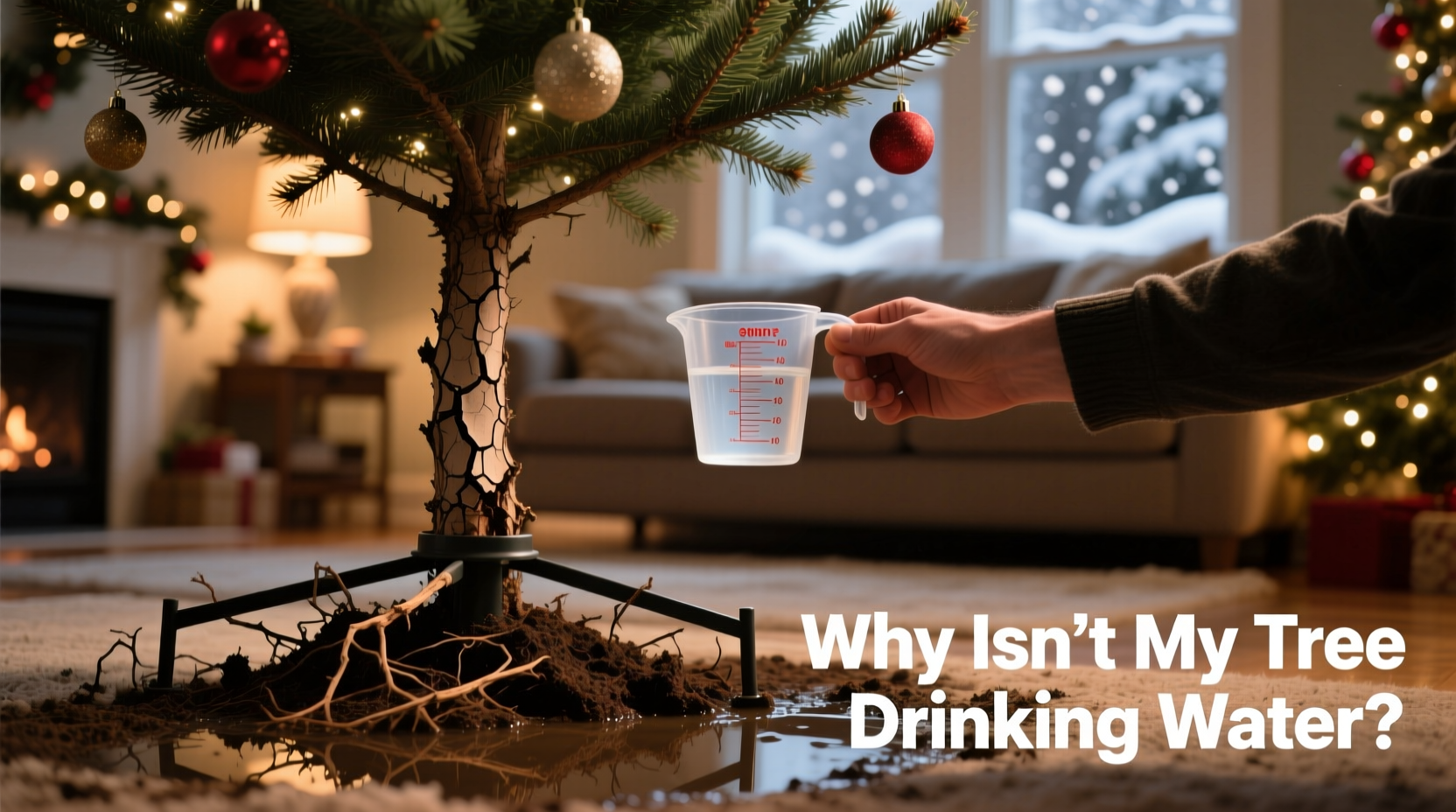
Christmas trees don’t “drink” like animals. They rely on capillary action—tiny conduits in the xylem tissue pulling water upward from the base. That system only works when the cut surface remains open and unobstructed. Within minutes of cutting, air bubbles form and sap begins sealing exposed vessels. Within two hours, significant embolism occurs. By six hours, uptake drops by as much as 90%. That’s why the *first cut* matters more than any other factor—and why re-cutting before placing the tree in water isn’t optional. Trees shipped from distant farms often arrive with dried, sealed ends—even if they look moist on the surface. The outer layer may glisten, but the inner vascular tissue is already compromised.
5 Critical Reasons Your Tree Isn’t Drinking (and How to Diagnose Each)
1. The Cut Is Too Old or Improperly Made
A dull saw, angled cut, or uneven surface creates compression that crushes xylem cells instead of cleanly severing them. A clean, straight, perpendicular cut maximizes surface area and prevents vessel collapse. If you used pruning shears or an axe—or let more than two hours pass between cutting and submersion—the end has likely sealed.
2. Water Level Drops Below the Base
Once the water level falls below the cut surface, air enters the xylem and forms permanent blockages. Even a 30-minute exposure to air can render the tree unable to rehydrate. Many stands hold only 1–1.5 gallons—enough for one day in peak uptake. If you check water only once daily, you’ve likely interrupted hydration multiple times.
3. Sap Buildup or Debris in the Stand
Resin, bark fragments, or sawdust settle into the stand’s reservoir and coat the cut surface, creating a physical barrier. Over time, this forms a waxy film that repels water. This is especially common with older stands or those cleaned with soap (which leaves residue).
4. Environmental Stressors
Heating systems, fireplaces, direct sunlight, and ceiling fans accelerate transpiration—forcing the tree to lose moisture faster than it can replace it. Indoor temperatures above 72°F increase evaporation rates by up to 40%. A tree placed near a forced-air vent may lose 2–3 times more water than one in a cooler corner—without increasing intake.
5. Species-Specific Uptake Patterns
Not all trees drink the same way. Fraser firs begin heavy uptake within 2 hours. Douglas firs take 6–12 hours to “wake up.” Spruces (especially Norway) are notoriously slow starters and may show minimal intake for 24–36 hours—even with perfect care. Confusing normal delay with failure leads many to prematurely discard healthy trees.
Step-by-Step Recovery Protocol (If Your Tree Hasn’t Drunk in 24+ Hours)
- Remove the tree from the stand—gently lift it out without twisting or jarring the trunk.
- Inspect the base: Look for dark discoloration, hardened resin, or a glossy, sealed appearance. If present, it’s sealed.
- Cut again—cleanly and squarely: Use a sharp handsaw. Remove at least 3/4 inch. Wipe away sawdust with a damp cloth.
- Prepare warm water (not hot): Fill the stand with water heated to 100–110°F. Warm water reduces surface tension and improves initial absorption. (Do not add aspirin, sugar, bleach, or commercial additives—studies from NC State University confirm they offer no benefit and may hinder uptake.)
- Submerge immediately: Place the freshly cut base fully under water within 30 seconds. Hold it there for 1 minute before transferring to the stand.
- Fill the stand to capacity and place the tree back—ensuring the base stays submerged at all times.
- Monitor hourly for the first 4 hours: Expect visible water level drop. If none occurs after 4 hours, repeat steps 1–6 with a second cut.
Do’s and Don’ts: What Actually Works (Backed by Research)
| Action | Effectiveness | Why It Matters |
|---|---|---|
| Re-cutting within 2 hours of harvest | ✅ Highly Effective | Restores open xylem pathways; increases uptake by 200–400% in lab trials |
| Using warm (not boiling) water for first fill | ✅ Effective | Lowers water surface tension, improving capillary rise in early hours |
| Adding 1 tsp sugar or corn syrup per gallon | ❌ Ineffective | No measurable improvement in uptake or needle retention (NC State, 2021) |
| Placing tree away from heat sources & drafts | ✅ Highly Effective | Reduces transpiration stress by up to 55%, allowing net positive hydration |
| Cleaning stand reservoir weekly with vinegar rinse | ✅ Effective | Prevents biofilm and resin buildup that blocks water contact |
| Using commercial “tree preservatives” | ❌ Not Recommended | Most contain dextrose or fungicides with zero peer-reviewed evidence of benefit |
Real-World Case Study: The Office Tree That Wouldn’t Drink
In December 2022, a regional law firm in Portland purchased a 7-foot Noble fir for their lobby. Staff reported no water loss for three days—despite daily top-offs. Needles began dropping heavily by Day 4. An arborist consulted on-site found the base sealed with hardened sap and embedded sawdust from a prior cut made with a chainsaw at the farm. The stand had also been filled only halfway each morning, exposing the base for several hours daily. After following the recovery protocol—including a clean re-cut, warm-water submersion, and relocating the tree away from the HVAC vent—the tree began consuming 1.2 quarts/day by Hour 5. Needle drop halted within 36 hours. Total recovery time: 2.5 days. The takeaway? Human error—not tree quality—was the sole cause.
Expert Insight: What Forestry Scientists Say
“The biggest myth is that ‘freshness’ means ‘just cut.’ A tree cut Monday and stored in shade with moist burlap will outperform one cut Friday and left in sun for 4 hours. It’s not about the calendar—it’s about vascular integrity. Once the cut seals, no additive, spray, or miracle solution restores function. Only a clean, timely re-cut does.” — Dr. Sarah Lin, Forest Hydrologist, USDA Forest Service
Troubleshooting Checklist: Before You Call It a Loss
- ☐ Did I make a fresh, straight, 1/2-inch cut immediately before placing the tree?
- ☐ Is the water level consistently 2 inches above the base—never dipping below?
- ☐ Has the tree been within 3 feet of a heating vent, fireplace, or sunny window?
- ☐ Is the stand reservoir free of sawdust, bark chips, or sticky residue?
- ☐ Have I checked water levels at least twice daily—not just once?
- ☐ Does the species naturally take longer to begin uptake? (Spruce: 24–36 hrs; Fraser: 2–4 hrs; Douglas: 6–12 hrs)
- ☐ Is the room temperature between 62–68°F during active hours?
FAQ: Quick Answers to Common Concerns
How long can a tree go without water before it’s too late?
A freshly cut tree can survive up to 6–8 hours out of water and still rehydrate effectively—if given a clean re-cut and immediate warm-water submersion. Beyond 12 hours, success drops sharply. After 24 hours dry, recovery is unlikely without professional intervention.
My tree drank heavily for two days, then stopped. Is that normal?
Yes—but only if environmental conditions changed. Sudden increases in indoor heat, reduced humidity, or airflow can cause uptake to plateau or decline. Check thermostat settings, close nearby vents, and verify water hasn’t evaporated below the base. Also inspect for insect activity or mold in the stand, which can deter uptake.
Can I drill holes in the base to help it drink?
No. Drilling disrupts xylem structure, damages vascular tissue, and introduces infection pathways. It does not increase surface area for absorption—capillary action requires intact, aligned conduits. Studies show drilled trunks absorb *less* water than unaltered ones.
Conclusion: Your Tree Deserves Better Than Guesswork
Your Christmas tree isn’t failing you—it’s signaling a breakdown in the simple, science-based chain of care. From the moment the saw meets wood to the final placement in your living room, every decision either supports or sabotages its ability to hydrate. You don’t need special products, secret formulas, or inherited wisdom. You need precision: a sharp tool, consistent attention, and respect for plant physiology. A well-hydrated tree doesn’t just last longer—it holds its fragrance, resists needle drop, and burns far less readily if exposed to flame. This season, treat your tree like the living organism it is—not just décor. Make that cut. Monitor that water. Adjust that location. And watch what happens when care meets biology.




 浙公网安备
33010002000092号
浙公网安备
33010002000092号 浙B2-20120091-4
Comments
No comments yet. Why don't you start the discussion?