
Bringing home a fresh Christmas tree is one of the most cherished holiday traditions. The scent, the sparkle, the sense of warmth—it’s all part of creating a festive atmosphere. But nothing deflates the spirit faster than walking into your living room on day three to find a carpet of pine needles scattered across the floor. If your Christmas tree is shedding needles after only two days, you're not alone—and more importantly, it's often preventable.
Needle drop isn’t always a sign of a doomed tree. While some shedding is normal, excessive loss within the first few days indicates an underlying issue, usually related to moisture loss, environmental stress, or improper handling before purchase. Understanding the root causes and acting quickly can extend your tree’s life by weeks and preserve both its appearance and aroma throughout the holidays.
Why Fresh Trees Start Dropping Needles So Quickly
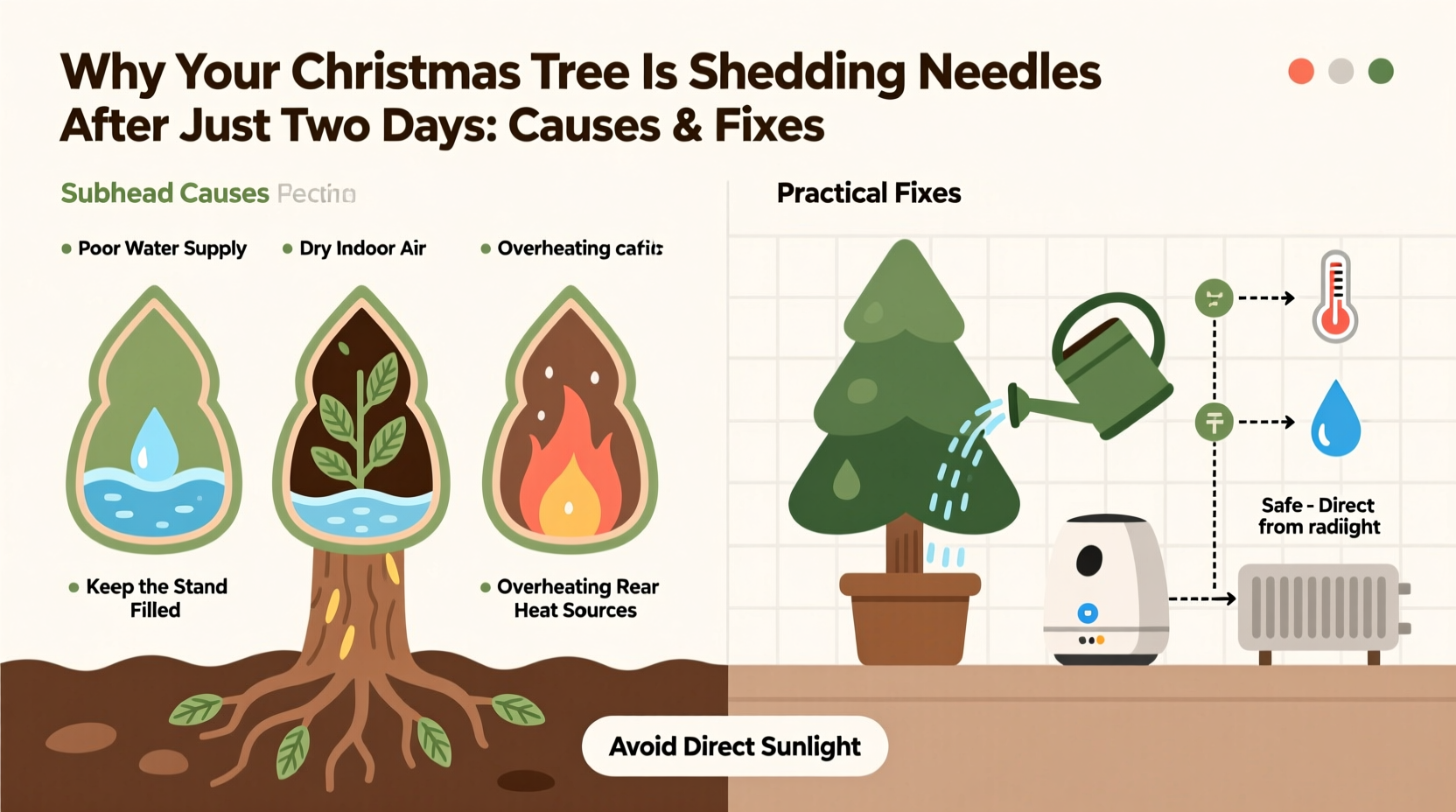
A healthy Christmas tree should retain its needles for four to six weeks when properly cared for. Rapid needle drop suggests the tree has undergone significant stress—either during transport, storage, or in your home environment. The key factor? Water absorption.
Evergreen trees continue to live after being cut, but only if they can take in water through the freshly cut base. Once that cut dries out or seals over, the tree cannot rehydrate, leading to dehydration and rapid needle loss. This process can begin within hours if the cut end is exposed to air.
Common culprits behind early shedding include:
- A trunk cut made too long before setup
- Inadequate water levels in the stand
- Exposure to heat sources like radiators or fireplaces
- Poor species selection for indoor conditions
- Pre-cut trees stored improperly at the lot
According to Dr. Bert Cregg, a horticulture professor at Michigan State University who specializes in Christmas tree physiology, “The single most important factor in keeping a tree fresh is uninterrupted water uptake. Once the cut stem seals with sap, the tree begins a downward spiral.”
“Water is non-negotiable. A mature tree can drink over a gallon in the first 24 hours. Miss that window, and no amount of misting will fix it.” — Dr. Bert Cregg, Christmas Tree Physiology Expert
How to Diagnose the Cause of Early Needle Drop
Before jumping to conclusions, assess your tree’s condition and care routine. Not all needle shedding is equal—some species naturally shed more than others, and certain signs point to specific problems.
| Symptom | Most Likely Cause | Action Step |
|---|---|---|
| Brown, dry needles falling easily from inner branches | Dehydration due to delayed watering | Check water level; recut trunk if dry |
| Green needles dropping from outer tips | Overheating from nearby lights or vents | Relocate tree away from heat sources |
| Needles brittle but still attached | Low humidity or dry indoor air | Add a humidifier or use anti-desiccant spray |
| Sticky sap on trunk, strong pine smell | Freshly cut tree with active water uptake | Maintain water—this is a good sign! |
| Entire branches detaching | Tree was already dead or severely stressed pre-purchase | Contact seller; replacement may be warranted |
If your tree fails the “bend test”—where gently bending a branch results in snapping instead of flexibility—it’s likely too far gone. But if only minor shedding occurs and the trunk remains moist, recovery is possible with immediate intervention.
Step-by-Step Guide to Revive and Protect Your Tree
If your tree is still standing and showing signs of life, follow this timeline to stabilize hydration and reduce further needle loss.
- Day 0 (Purchase Day): Recut the Base
Make a fresh horizontal cut of at least ½ inch off the bottom before placing it in water. This removes any dried sap layer and opens the vascular system for absorption. - Within 30 Minutes: Place in Water
Never let the freshly cut end dry out. Fill the stand with room-temperature water immediately. Use a stand rated for your tree’s size—most require 1+ gallons capacity. - Day 1: Monitor Water Levels
Check every 4–6 hours. The first 24 hours are critical—trees absorb the most water during this period. Refill as needed. - Day 2: Adjust Environment
Move the tree away from heat sources. Ideal placement is in a cool room, away from vents, fireplaces, and direct sunlight. Keep ceiling fans off near the tree. - Day 3: Apply Anti-Desiccant (Optional)
Spray products like Wilt-Pruf on the foliage to reduce moisture loss, especially in dry climates or heated homes. Avoid overspray on ornaments or lights. - Ongoing: Daily Checks
Inspect water daily. Top up before the reservoir runs dry. Clean the stand weekly to prevent algae buildup that can block absorption.
One homeowner in Denver reported saving her Colorado Blue Spruce using this method. After noticing heavy shedding on day two, she recut the trunk, moved the tree from beside the fireplace to a cooler hallway, and maintained consistent water. “By day five, shedding slowed dramatically. It stayed green until January 5th,” she said.
Choosing the Right Species Matters More Than You Think
Not all Christmas trees are created equal when it comes to needle retention. Some species are naturally prone to drying out faster indoors, while others excel in low-humidity environments.
Here’s a comparison of common Christmas tree types based on needle retention and ideal conditions:
| Tree Species | Needle Retention | Best For | Watch Out For |
|---|---|---|---|
| Frasier Fir | Excellent | Indoor display, warm homes | Can droop under heavy ornaments |
| Balsam Fir | Very Good | Strong fragrance lovers | Shorter shelf life if not watered fast |
| Noble Fir | Excellent | Dry climates, long season | Higher cost, less aromatic |
| Scotch Pine | Good | Budget-friendly options | Stiff needles, harder to decorate |
| White Pine | Fair | Cooler rooms, rustic look | Poor needle retention indoors |
| Colorado Blue Spruce | Fair to Good | Decorative symmetry | Sharp needles; dries faster in heat |
If you’re buying next year’s tree, opt for Frasier or Noble Firs—they consistently rank highest in post-harvest studies for moisture retention and longevity. Avoid White Pines for indoor use unless your home stays very cool.
Prevention Checklist: How to Avoid Repeat Disasters
To ensure your next Christmas tree thrives, follow this actionable checklist from selection to setup:
- ✅ Buy from a reputable lot with shaded, water-filled bins
- ✅ Ask when the tree was cut—ideally within the past week
- ✅ Perform the shake test: a few dozen old needles are fine; hundreds mean trouble
- ✅ Recut the trunk before placing in the stand—even if already cut
- ✅ Use a sturdy stand with at least 1-gallon capacity
- ✅ Keep water level above 2 inches at all times—check twice daily
- ✅ Place tree away from heat sources, direct sun, and airflow vents
- ✅ Consider using a commercial tree preservative (studies show mixed results, but many users report benefits)
- ✅ Use LED lights—they emit less heat than incandescent bulbs
- ✅ Mist foliage lightly every few days in dry environments
Frequently Asked Questions
Is it normal for a Christmas tree to shed some needles?
Yes, limited shedding of older, inner needles is normal—especially during the first few days as the tree adjusts to indoor conditions. However, if green outer needles fall in large quantities or entire branches drop, there’s a problem with hydration or temperature.
Can I save a tree that’s already shedding heavily?
You can try, but success depends on timing. If the trunk is still moist and the tree hasn’t lost structural integrity, recutting the base and submerging it in water immediately may help. However, if the cut has sealed over and the branches are brittle, revival is unlikely.
Do additives like sugar or aspirin really help?
Research from North Carolina State University shows that plain tap water performs just as well—or better—than water mixed with household additives. Sugar can promote bacterial growth, clogging the tree’s stems. Commercial preservatives formulated for Christmas trees are safer and more effective if used according to instructions.
Final Thoughts: A Fresh Tree Is Within Reach
Early needle shedding doesn’t have to ruin your holiday decor. With the right knowledge, you can diagnose the cause, take corrective action, and significantly extend your tree’s lifespan. The foundation of success lies in one simple rule: uninterrupted water access from the moment of cutting.
Next time you bring home a tree, treat it like a bouquet of flowers—because in many ways, it is. A fresh cut, clean water, and a cool environment make all the difference between a lush centerpiece and a sad pile of needles by midweek.
Start applying these strategies now—even if it’s to rescue your current tree. And when December rolls around again, approach your tree selection with confidence, knowing exactly how to keep it vibrant and fragrant for weeks.




 浙公网安备
33010002000092号
浙公网安备
33010002000092号 浙B2-20120091-4
Comments
No comments yet. Why don't you start the discussion?