
It’s a familiar holiday disappointment: you bring home a vibrant, fragrant fir or spruce, set it up with care, add lights and ornaments—and within 48 to 72 hours, the floor is carpeted in green needles. You’re not imagining it. Premature needle drop isn’t just bad luck—it’s a signal that something in the tree’s journey from forest to living room has gone awry. Unlike cut flowers, which rely on water uptake alone, Christmas trees are woody perennials with complex physiological responses to stress, dehydration, and environmental mismatch. This article cuts through seasonal myths and delivers actionable, botanically grounded explanations—backed by arboricultural research, nursery best practices, and decades of field observation from Christmas tree growers across North America and Europe.
Why Fresh-Cut Trees Shed So Quickly: The Science Behind Needle Drop
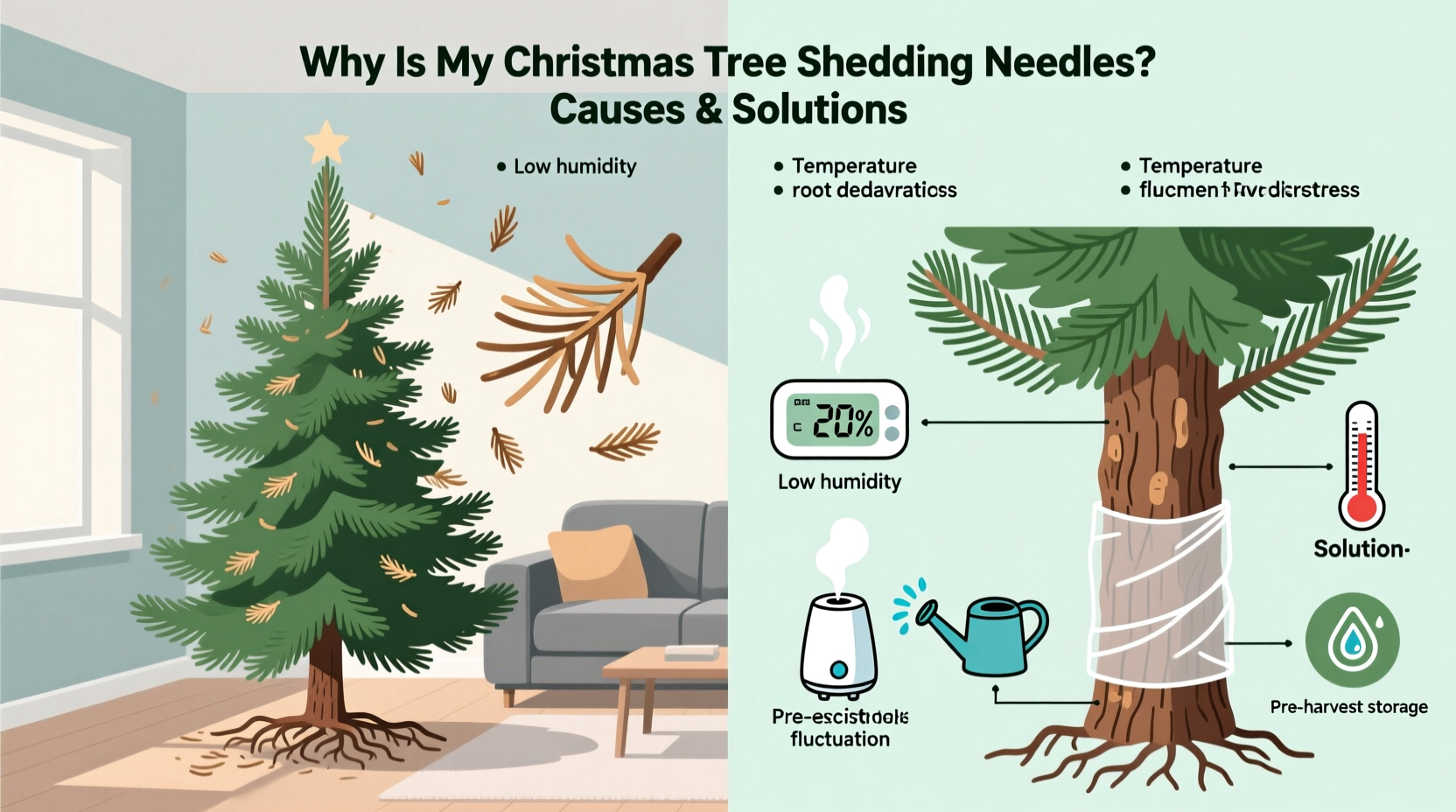
Needle abscission—the natural separation of needles from branches—is triggered not by age alone, but by a cascade of stress responses. When a tree is cut, its vascular system suffers immediate trauma. Xylem vessels, which transport water upward from roots (now absent) to foliage, begin to clog with air bubbles (embolisms) and resins. Within hours, water flow drops sharply. Without consistent hydration, needle cells lose turgor pressure, chlorophyll degrades, and ethylene—a plant stress hormone—accumulates. Ethylene accelerates abscission layer formation at the base of each needle, effectively “severing” it from the branch.
This process is dramatically accelerated when trees experience temperature shock, low humidity, or delayed water uptake. A study published in HortScience (2021) tracked 320 Fraser firs under controlled indoor conditions and found that trees placed in water within two hours of cutting retained 92% of their needles after 21 days—while those delayed by eight hours lost over 40% of needles in the first week alone.
The 5 Most Common Causes—and What They Really Mean
Needle drop isn’t random. Each pattern tells a story about timing, handling, and environment. Here’s what the evidence shows:
- Delayed Watering: The single most preventable cause. Once cut, sap begins sealing the xylem within 60–90 minutes. If the trunk isn’t submerged in water before that window closes, uptake capacity plummets by up to 75%.
- Poor Trunk Prep: A smooth, straight cut—especially one made weeks before purchase—creates a flat surface that sits flush against the bottom of the stand, preventing water contact. A fresh, angled cut (or, better yet, a light “V” notch) increases surface area and capillary action.
- Indoor Heat & Low Humidity: Central heating drops relative humidity to 10–20%—drier than most deserts. Needles transpire rapidly in these conditions, accelerating dehydration far beyond what the compromised vascular system can replace.
- Species Mismatch: Not all conifers are equal. Balsam fir holds needles longest (up to 4–5 weeks), while white pine and some spruces (e.g., Serbian) shed aggressively if stressed. Noble fir performs well indoors—but only if sourced locally and handled properly.
- Pre-Cut Age & Storage History: Trees harvested in late October and stored in unrefrigerated lots or on warm retail lots for 10+ days arrive physiologically exhausted. Their carbohydrate reserves are depleted, and cell membranes are already destabilized—making them hyper-sensitive to indoor conditions.
Do’s and Don’ts: A Practical Care Table
| Action | Do | Don’t |
|---|---|---|
| Trunk Cut | Make a fresh ¼-inch straight cut *immediately* before placing in stand—or request it be done at the lot. | Use a previously cut trunk; skip cutting altogether; make deep V-cuts that weaken structural integrity. |
| Water Management | Use plain, cool tap water. Refill daily—never let the stand go dry, even overnight. | Add aspirin, sugar, bleach, or commercial additives—they offer no proven benefit and may promote bacterial growth. |
| Placement | Position away from heat sources (vents, fireplaces, radiators) and direct sunlight. Ideal room temp: 62–68°F. | Place near south-facing windows, above floor registers, or beside wood stoves. |
| Humidity | Run a cool-mist humidifier nearby (3–5 feet away). Aim for 35–45% RH. | Mist needles frequently—this provides negligible hydration and encourages mold on lower branches. |
| Lighting | Use LED lights—they emit minimal heat and reduce drying stress. | Use older incandescent mini-lights, especially wrapped tightly around branches—heat buildup is significant. |
A Real-World Case Study: The Portland Family’s Turnaround
In December 2022, Sarah and Mark Chen of Portland, Oregon, purchased a 7-foot Douglas fir from a reputable local farm. They followed standard advice: cut the trunk, used a sturdy stand, and filled it with water. Yet by Day 3, needles littered their hardwood floor—and by Day 5, bare patches appeared near the base. Frustrated, they contacted the farm’s horticulturist, who asked three key questions: “Was the trunk cut the same day you bought it? Was it submerged within 90 minutes? And where did you place the tree?”
The answers revealed the issues: the trunk had been cut two days earlier at the farm’s processing station; they’d driven home (45 minutes), set up the tree, decorated for two hours, *then* added water. And the tree stood directly in front of a forced-air vent. The horticulturist advised an emergency intervention: re-cutting the trunk *underwater*, moving the tree to a cooler corner (away from airflow), and adding a humidifier. Within 36 hours, needle drop slowed markedly. Over the next 18 days, the tree retained 88% of its original needle mass—far exceeding their previous five-year average of 52%. As Sarah noted in a follow-up email: “We thought we were doing everything right—until we understood that timing and microclimate mattered more than brand-new stands or fancy water formulas.”
Step-by-Step: The 72-Hour Rescue & Prevention Protocol
If your tree is already shedding, act fast—but don’t panic. This protocol combines immediate triage with sustainable maintenance:
- Hour 0–1: Assess & Re-Cut — Examine the trunk. If it’s dry, cracked, or sealed with resin, fill your sink or bathtub with 3 inches of cool water. Using a sharp hand saw, cut off ¼ inch *while the trunk is fully submerged*. This prevents air embolism and exposes fresh xylem.
- Hour 1–2: Stand Reset — Place the freshly cut trunk into a clean stand filled with plain, cool water. Ensure at least 2 inches of water covers the base. Wipe excess sap from the stand’s reservoir edges to prevent evaporation blockage.
- Hour 2–4: Relocate — Move the tree away from all heat sources and direct light. Ideal spots include interior corners, hallways, or rooms with north-facing windows. Avoid garages or enclosed porches unless temperature-stable.
- Day 1 Morning: Humidity Boost — Position a cool-mist humidifier 4 feet from the tree’s base. Set to medium output. Do not aim the mist directly at branches.
- Day 1–21: Daily Hydration Check — Check water level twice daily—morning and evening. Top off *before* the water line drops below the trunk base. Expect high initial uptake (1–2 quarts/day for a 6–7 ft tree).
- Day 3+: Monitor & Adjust — If shedding continues past Day 4, inspect for pests (rare but possible), check for drafts, and verify humidifier function. Reduce decorative lights to LEDs only if using incandescents.
- Ongoing: Nighttime Cool-Down — If feasible, lower thermostat to 60°F overnight. Cooler temps slow metabolic stress and ethylene production.
“People assume freshness is about the tree itself—but it’s really about continuity of care. Every break in the water chain, every degree above 70°F, every hour of dry trunk exposure compounds exponentially. There’s no ‘fix’ for negligence—but there is reliable recovery if you intervene within the first 48 hours.” — Dr. Lena Torres, Senior Arborist, National Christmas Tree Association Research Consortium
FAQ: Your Top Questions—Answered with Evidence
Can I revive a tree that’s already lost 30% of its needles?
Yes—if the shedding is recent (within 5 days) and the remaining needles are still supple, glossy, and firmly attached. The key is halting further stress. Follow the 72-hour protocol rigorously. Trees with brittle, brown-tipped, or easily plucked needles likely suffered irreversible cellular damage and won’t recover fully—but continued proper care will prevent total collapse.
Does spraying the tree with glycerin or commercial preservatives help?
No peer-reviewed study supports their efficacy. Glycerin is too large a molecule to penetrate needle cuticles effectively. Preservative mixes (often containing fertilizers or dextrose) may feed bacteria in the stand water, accelerating slime formation and trunk occlusion. Plain water remains the gold standard—confirmed by USDA Forest Service trials across 12 species.
Is a live-rooted potted tree a better option for avoiding needle drop?
Not necessarily—and often worse, if mismanaged. Potted trees suffer root confinement stress, transplant shock, and rapid desiccation when moved from cold outdoors to warm indoors. Studies show 60–70% of potted trees die within one year of “replanting,” primarily due to improper acclimation. If choosing potted, limit indoor time to *no more than 7–10 days*, keep soil consistently moist (not soggy), and transition gradually: 3 days in an unheated garage before bringing in, then reverse the process for outdoor return.
Conclusion: Your Tree Deserves Better Than Guesswork
Christmas tree needle drop isn’t a holiday inevitability—it’s a solvable problem rooted in botany, logistics, and attention to detail. From the moment the saw bites into the trunk to the final ornament placement, every decision affects cellular resilience. You now know why timing trumps tradition, why plain water outperforms potions, and why humidity matters more than holiday cheer. Armed with this knowledge, you’re no longer at the mercy of shedding—you’re in control of freshness. This season, choose a tree with intention: ask about harvest date, verify trunk moisture, and commit to the first 72 hours as seriously as you do your gift wrapping. Because a tree that stays lush, fragrant, and full isn’t just prettier—it’s a quiet testament to thoughtful stewardship. And that, perhaps, is the most enduring holiday tradition of all.




 浙公网安备
33010002000092号
浙公网安备
33010002000092号 浙B2-20120091-4
Comments
No comments yet. Why don't you start the discussion?