
A leaning Christmas tree can quickly turn festive cheer into frustration. Whether it’s a fresh-cut evergreen or a pre-lit artificial model, an unstable tree not only looks unattractive but also poses a safety hazard—especially in homes with children or pets. Understanding the root causes of a tilt and knowing how to correct it ensures your centerpiece remains upright, safe, and beautiful throughout the holiday season.
Trees typically begin to lean due to uneven weight distribution, improper setup, or structural weaknesses in the stand. But with the right knowledge and tools, most tilting issues can be diagnosed and fixed within minutes. This guide explores common reasons behind a crooked tree, offers step-by-step stabilization techniques, and includes expert insights to help you maintain balance from setup to takedown.
Common Causes of a Leaning Christmas Tree
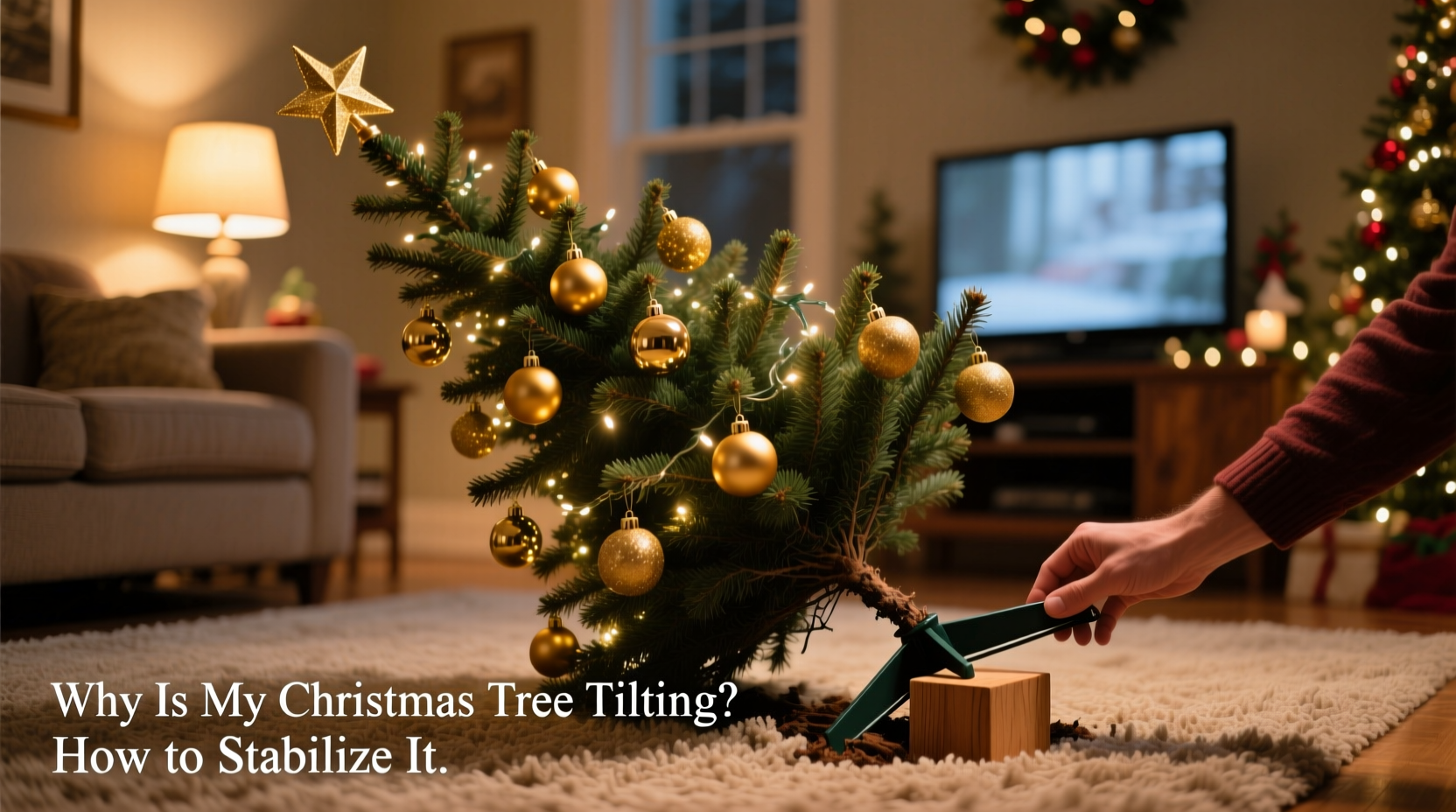
The first step in fixing a tilted tree is identifying why it's leaning in the first place. While some causes are obvious, others stem from subtle oversights during setup. Below are the most frequent culprits:
- Unlevel flooring – Many homes have slight slopes in hardwood, tile, or laminate floors. A tree placed across such gradients may gradually shift toward the lower side.
- Improperly tightened stand – If the central screw or side bolts on the stand aren’t fully secured, the trunk can shift under the weight of ornaments or lights.
- Uneven branch trimming – Fresh trees often have lopsided growth. When heavier branches extend more on one side, they pull the tree off-center.
- Overloading one side with decorations – Clustering heavy ornaments, garlands, or lights on a single quadrant creates imbalance.
- Drying trunk shrinkage – In real trees, moisture loss causes the trunk to shrink, loosening its grip in the stand over time.
- Weak or damaged stand – Older stands with bent legs or stripped screws may fail to support even moderate weight.
- Incorrect tree-to-stand ratio – A trunk that’s too narrow for the stand won’t anchor properly, leading to instability.
Addressing these issues early prevents tipping accidents and extends the life of both tree and decor.
Step-by-Step Guide to Stabilizing a Tilting Tree
Correcting a leaning tree doesn’t require professional tools—just patience and methodical adjustments. Follow this sequence to restore stability safely.
- Remove all ornaments and lights – Start by taking down decorations to reduce weight and avoid breakage during adjustment.
- Check floor levelness – Use a small spirit level on the floor beneath the stand. If the surface is sloped, place thin shims (like folded cardboard or wood scraps) under the lower legs of the stand.
- Loosen the stand clamp – Release the central bolt or side screws slightly so the trunk can be repositioned.
- Re-center the trunk – Gently push the tree upright while ensuring the base sits evenly in the stand. Have someone assist if the tree is tall or heavy.
- Tighten the stand securely – Re-engage the clamps or screws firmly. For metal stands, ensure all three (or four) bolts make full contact with the trunk.
- Test for stability – Apply light pressure from different angles. If movement occurs, double-check the tightness and consider additional reinforcement.
- Reapply decorations evenly – As you redecorate, distribute weight symmetrically. Alternate heavy and lightweight ornaments across quadrants.
For artificial trees, ensure each section is fully locked into place. Misaligned poles or loose connectors between segments are common causes of wobbling.
Do’s and Don’ts When Securing Your Tree
Mistakes during setup can undermine even the best stands. The following table outlines key practices to follow—and those to avoid—for long-term stability.
| Do’s | Don’ts |
|---|---|
| Use a stand rated for your tree’s height and weight | Use a stand designed for smaller trees |
| Check and retighten the stand weekly | Assume the stand stays secure after initial setup |
| Place the tree away from foot traffic and heat sources | Set up near radiators, vents, or high-traffic doorways |
| Balance ornament weight across all sides | Hang all heavy items on one side or lower branches |
| Use clear fishing line to tether top to wall (if needed) | Rely solely on the stand without backup support for tall trees |
Following these guidelines significantly reduces the risk of future tilting, especially during busy holiday gatherings.
Expert Insight: What Arborists and Decor Pros Recommend
Industry professionals emphasize proactive maintenance over reactive fixes. According to certified arborist Laura Nguyen, who consults with holiday display teams across the Midwest:
“Even a perfectly straight tree will shift if the stand isn’t monitored. I recommend checking the tension every 3–4 days, especially with real trees. As they dry out, the wood contracts, and what was snug on day one becomes loose by day seven.” — Laura Nguyen, ISA Certified Arborist
Interior stylist Marcus Bell adds that visual symmetry plays a role beyond safety: “A balanced tree feels calmer and more inviting. We train our clients to decorate in layers—lights first, then lighter ornaments, finishing with heavier pieces spaced strategically. It’s about physics as much as aesthetics.”
Real Example: Fixing a Family’s Leaning Fraser Fir
The Thompson family in Vermont purchased a 7.5-foot Fraser fir for their living room. By the third day, the tree leaned noticeably toward the sofa. Initially, they tried pushing it back manually, but it resumed tilting within hours.
Upon inspection, they discovered two issues: the stand’s back bolt had loosened due to trunk shrinkage, and the floor sloped slightly toward the entertainment center. They turned the tree so the heaviest branches faced uphill, placed a quarter-inch wooden shim under the low leg of the stand, and retightened all clamps. They also removed several heavy glass ornaments from the forward side and redistributed them higher and opposite the lean.
After these adjustments, the tree remained upright for the rest of the season. The family now checks the stand weekly and keeps a small level in their holiday storage bin.
When to Upgrade Your Stand or Consider Anchoring
Sometimes, stabilization means more than tightening screws. If your tree repeatedly leans despite proper care, it may be time for a better support system.
High-quality stands offer features like rubberized grips, adjustable tension levers, and wider bases for improved balance. For trees over 7 feet, especially in homes with active pets or young children, supplemental anchoring provides peace of mind.
One effective method is using nearly invisible nylon fishing line. Attach it from the upper third of the tree to hooks in the wall or ceiling joists at a 45-degree angle. Use multiple lines for 360-degree support, ensuring they’re taut but not pulling the tree out of alignment. Remove them before takedown to avoid damage.
Alternatively, commercial tree anchors—such as free-standing braces or corner stabilizers—are available for rent or purchase through home improvement stores and rental services. These are ideal for large artificial trees used annually in offices or public displays.
FAQ: Common Questions About Tree Stability
Can I use sandbags or weights to stabilize the base?
Yes, placing sandbags, decorative stones, or weighted tree skirts around the stand base adds downward force and improves resistance to tipping. Just ensure weights don’t obstruct access to water reservoirs in real trees.
Why does my artificial tree wobble even when assembled correctly?
Wobbling often stems from misaligned pole sections or worn connectors. Ensure each segment clicks fully into place and inspect for cracks or warping in plastic joints. Over time, repeated assembly can wear down connection points, so consider replacing aging components.
How do I know if my stand is strong enough?
A quality stand should support trees at least 2 feet taller than your own. Check manufacturer labels for weight and height ratings. Metal stands with multiple contact bolts generally outperform basic tripod models, especially for dense firs or spruces.
Final Checklist for a Secure, Upright Tree
Before declaring your tree finished, run through this final checklist to ensure lasting stability:
- ✅ Floor is level or compensated with shims
- ✅ Trunk is centered and clamped tightly in the stand
- ✅ All tree sections (artificial) are fully locked
- ✅ Water reservoir is full (for real trees)
- ✅ Decorations are evenly distributed in weight and volume
- ✅ No nearby heat sources accelerating drying or warping
- ✅ Weekly maintenance plan is established (tightening, watering, inspection)
- ✅ Backup support (fishing line or brace) installed for trees over 7 feet
This routine takes less than ten minutes but safeguards weeks of holiday enjoyment.
Conclusion: Keep Your Holidays Safe and Upright
A tilting Christmas tree isn’t just a cosmetic flaw—it’s a preventable risk. With proper setup, regular maintenance, and attention to balance, your tree can stand proudly from setup to takedown. Whether you’re dealing with a drooping Douglas fir or a wobbly pre-lit artificial model, the solutions are straightforward and accessible.
Take action today: inspect your tree’s stance, tighten the stand, and commit to weekly checks. Share your own stabilization hacks or challenges in the comments—your experience could help another household avoid a toppled tree and shattered ornaments. Let’s make this the safest, sturdiest holiday season yet.




 浙公网安备
33010002000092号
浙公网安备
33010002000092号 浙B2-20120091-4
Comments
No comments yet. Why don't you start the discussion?