
Every holiday season, thousands of homes light up with the warm glow of Christmas villages—miniature towns complete with glowing buildings, animated trains, flickering streetlamps, and festive music. While these displays bring joy, they also draw significant electrical power. Many homeowners are surprised when their circuit breakers trip or outlets buzz during setup. The culprit? Outlet overload caused by excessive wattage from multiple low-voltage transformers, LED strings, and motorized accessories plugged into a single circuit.
This isn’t just an inconvenience—it’s a potential fire hazard. According to the National Fire Protection Association (NFPA), decorative lighting and holiday decorations contribute to an estimated 700 home fires annually in the U.S., many linked to overloaded circuits and improper electrical use. Understanding why your Christmas village causes outlet overload—and how to prevent it—is essential for a safe, stress-free holiday season.
Understanding Electrical Load and Circuit Capacity
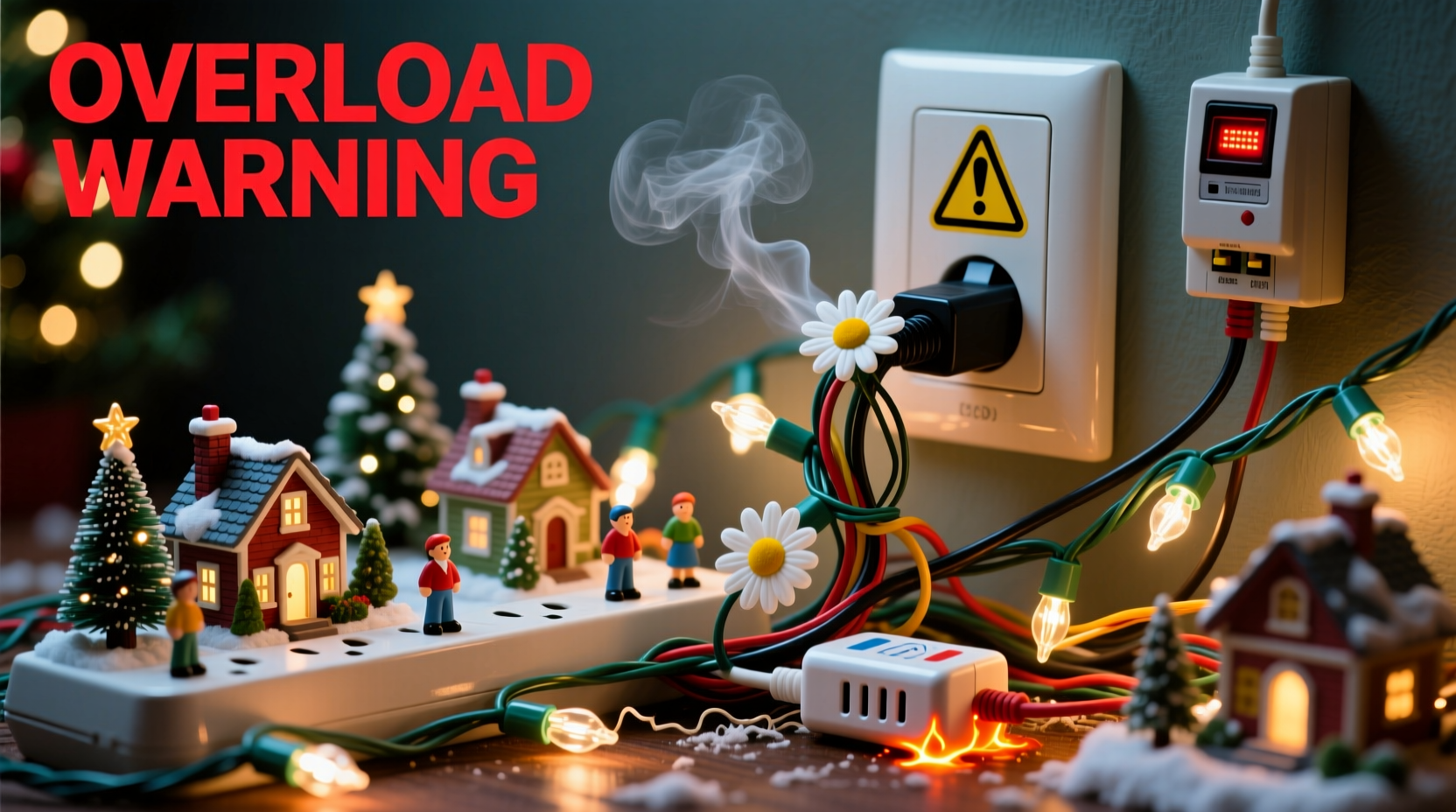
Most standard household circuits in North America operate at 15 or 20 amps and supply 120 volts. This means a 15-amp circuit can safely handle up to 1,800 watts (15 amps × 120 volts), while a 20-amp circuit supports 2,400 watts. However, electrical safety codes recommend using only 80% of a circuit’s capacity for continuous loads—those running for three hours or more. That brings the safe limit down to 1,440 watts for a 15-amp circuit and 1,920 watts for a 20-amp one.
Christmas village components, though individually low-wattage, add up quickly. A typical lit building might use 5–10 watts; a rotating Ferris wheel, 8 watts; a train set, 15 watts; and snowfall effects, another 10 watts. Multiply that across 20–30 pieces, and you're easily approaching 300–500 watts—before adding string lights, figurines, or sound modules. When combined with other devices on the same circuit (like TVs, lamps, or kitchen appliances), the total load can exceed safe limits.
Common Causes of Outlet Overload in Christmas Villages
Several design and usage habits contribute to circuit strain during the holidays. Recognizing these patterns helps identify risks before they become dangerous.
- Daisy-chaining power strips: Connecting multiple power strips together increases resistance and heat buildup, reducing efficiency and increasing fire risk.
- Using under-rated extension cords: Lightweight indoor cords not rated for continuous use can overheat when carrying sustained loads.
- Mixing high-draw appliances on the same circuit: Running a space heater or microwave alongside your village can push the circuit past its limit even if the village alone seems safe.
- Ignoring transformer heat: Multiple plug-in transformers generate heat. Clustering them blocks airflow and increases failure risk.
- Using non-UL-listed or damaged accessories: Counterfeit or worn-out items may lack proper insulation or current regulation.
One often-overlooked issue is “phantom load” from older transformers. Even if a building isn’t illuminated, some transformers draw standby power. Over dozens of units, this idle consumption adds up silently.
“Holiday displays are among the most common seasonal causes of residential circuit overloads. The danger isn’t usually one big device—it’s the cumulative effect of small ones.” — James Rutherford, Licensed Electrician and NFPA Safety Consultant
Step-by-Step Guide to a Safe Christmas Village Setup
Follow this sequence to build a stunning display without compromising electrical safety.
- Map Your Circuits: Identify which outlets share a circuit using your home’s breaker panel. Plug a lamp into each outlet and turn off breakers one by one to test. Label outlets accordingly.
- Calculate Total Wattage: List every village component, note its wattage, and sum the total. Include motors, lights, and sound units. Don’t forget controllers or timers.
- Select a Dedicated Circuit: Ideally, use a 20-amp circuit reserved solely for holiday displays. Avoid sharing with high-draw appliances.
- Use High-Quality Power Distribution: Choose a heavy-duty, UL-listed power strip with surge protection and individual switches. Never daisy-chain.
- Space Out Transformers: Position transformers with at least two inches of clearance on all sides for ventilation. Avoid stacking or enclosing them.
- Test Gradually: Turn on components one group at a time. Monitor for warmth, buzzing sounds, or dimming lights—early signs of overload.
- Install a Timer: Use a programmable timer to limit operation to 6–8 hours daily, reducing heat buildup and energy use.
Do’s and Don’ts: Managing Power Wisely
| Do | Don’t |
|---|---|
| Use UL-listed power strips with built-in circuit breakers | Plug into multi-outlet adapters or daisy-chain strips |
| Check cord ratings—use 16 AWG or thicker for long runs | Use lightweight, frayed, or coiled extension cords |
| Group components by location and control via separate switches | Run everything from one wall outlet without distribution planning |
| Label transformers and cords for easy troubleshooting | Hide cords under rugs or furniture where heat can’t escape |
| Inspect all wiring annually for cracks, brittleness, or corrosion | Use outdoor-rated components indoors without checking voltage compatibility |
Real Example: How One Family Prevented a Hazard
The Thompson family in Columbus, Ohio, had been setting up their elaborate Christmas village for over a decade. In 2022, they expanded the layout to include a second tier with synchronized music, additional trains, and fiber-optic snow trees. On the first night of operation, the living room circuit tripped repeatedly. They initially assumed a faulty breaker, but after calling an electrician, discovered the root cause: their 15-amp circuit was handling 1,980 watts—well above the 1,440-watt safe limit.
The electrician helped them redistribute the load. Three animated buildings and the train controller were moved to a garage circuit. They replaced a flimsy power strip with a commercial-grade 12-outlet hub and added a timer. By staggering startup times and improving ventilation around transformers, they reduced peak draw and eliminated tripping. The display now runs smoothly for six weeks each year, with no electrical issues.
Expert Tips for Long-Term Safety and Efficiency
As your collection expands, proactive maintenance becomes critical. Seasonal storage affects performance and safety. Here are key practices from industry professionals:
- Upgrade to LED-compatible transformers: Modern LED systems draw significantly less power. If your village uses incandescent bulbs, consider retrofitting with LED equivalents—many consume 70–80% less wattage.
- Use smart plugs with energy monitoring: Devices like the Kasa KP115 or Eve Energy let you track real-time power usage via smartphone apps, helping identify hidden draws.
- Label and organize cords: Use colored tags or shrink tubing to mark which cord powers which building. This speeds troubleshooting and reduces accidental overloads during reassembly.
- Store transformers loosely: Never coil cords tightly around transformers. Heat damage weakens insulation over time. Instead, loosely loop cords and store in ventilated bins.
- Schedule annual inspections: Before setup, check for cracked casings, discolored outlets, or loose prongs. Replace suspect items immediately.
“The best Christmas displays aren’t the brightest—they’re the ones that run safely from December 1 to January 6 without a single trip or tingle.” — Maria Delgado, Home Electrical Safety Advocate, Consumer Technology Association
FAQ
Can I use a GFCI outlet for my Christmas village?
Yes, and it’s recommended—especially if the display is near carpet, pets, or children. GFCI (Ground Fault Circuit Interrupter) outlets detect imbalances in current and shut off power within milliseconds, reducing shock and fire risk. However, avoid using GFCIs in areas prone to moisture unless the outlet is specifically rated for damp locations. Note: Some sensitive transformers may cause nuisance tripping on GFCIs; if this occurs, consult an electrician about dedicated non-GFCI circuits.
How do I know if my circuit is overloaded?
Warning signs include flickering lights (especially when other devices turn on), warm outlets or faceplates, buzzing from power strips, or frequently tripped breakers. Use a plug-in watt meter to measure actual draw. If readings exceed 80% of your circuit’s capacity, redistribute the load.
Is it safe to leave my Christmas village on overnight?
It’s not recommended. Unattended electrical displays increase fire risk. Use a timer to turn the village off automatically after bedtime (e.g., 10 PM) and back on in the morning. Never leave it running while sleeping or away from home.
Conclusion: Enjoy the Magic Without the Risk
A Christmas village should inspire wonder, not worry. With thoughtful planning, modern tools, and respect for electrical limits, you can create a dazzling display that’s both beautiful and safe. Start by auditing your current setup—calculate wattage, inspect cords, and map circuits. Upgrade outdated components, distribute loads wisely, and never underestimate the cumulative effect of small draws.
Each year, your collection may grow, but so should your commitment to safety. By following these guidelines, you protect not only your home but also the memories made around your glowing miniature town. Let the lights shine bright—just make sure they’re shining safely.




 浙公网安备
33010002000092号
浙公网安备
33010002000092号 浙B2-20120091-4
Comments
No comments yet. Why don't you start the discussion?