
Cold brew coffee has earned its place as a summer staple and year-round favorite for good reason: it’s naturally sweet, low in acidity, and smooth on the palate. But if your homemade batch tastes harsh or unexpectedly bitter, something in your process may be off. Unlike hot brewing methods, cold brew should not produce bitterness when done correctly. The problem usually lies in variables like grind size, steeping time, water quality, or bean selection. Understanding these factors—and adjusting them strategically—can transform your cold brew from sharp and astringent to silky and satisfying.
Understanding Cold Brew Chemistry
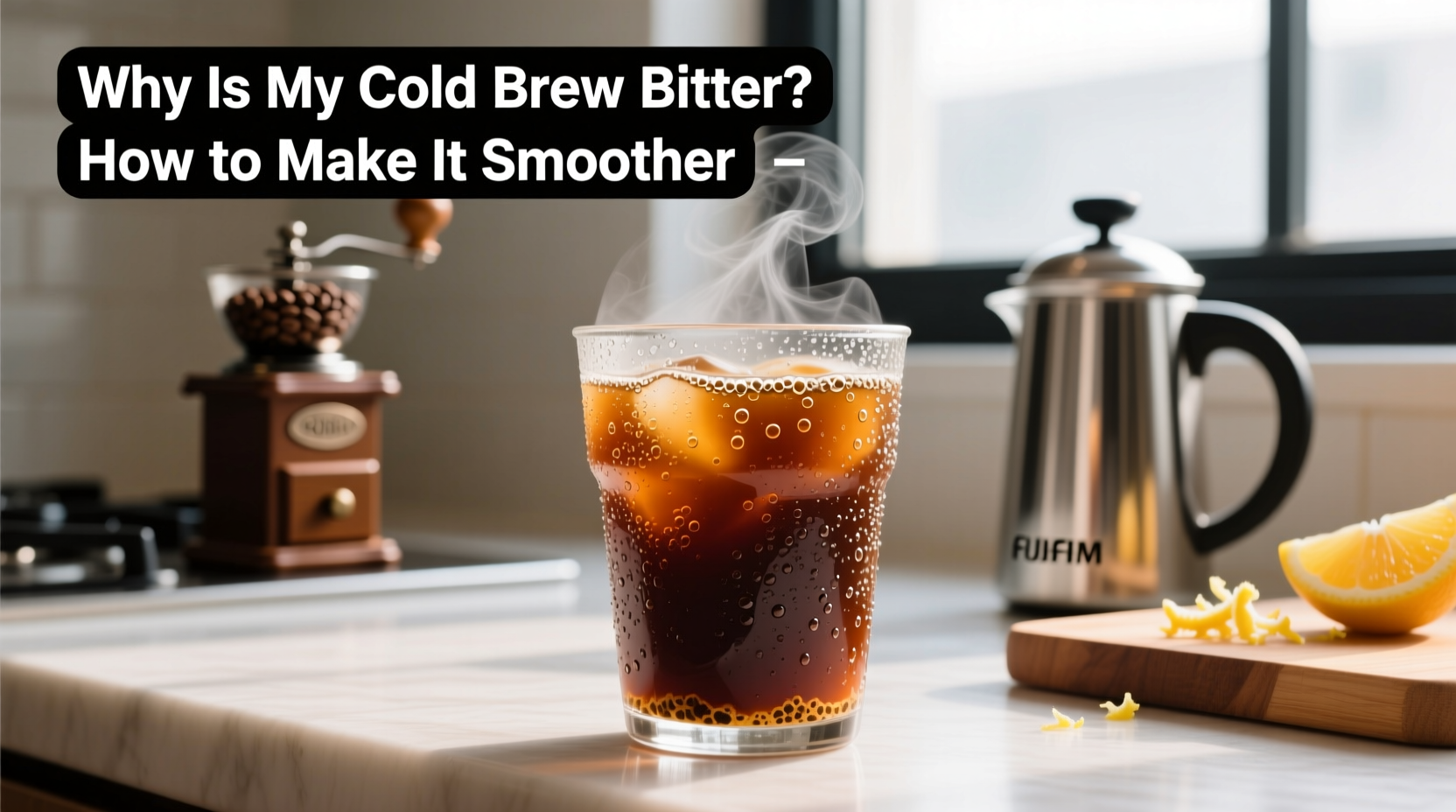
Cold brew is made by steeping coarsely ground coffee in room-temperature or cold water for 12 to 24 hours. Because heat isn’t used, the extraction of compounds happens slowly and selectively. This method pulls fewer acidic and bitter compounds than hot brewing, which relies on high temperatures to rapidly extract oils, acids, and solids.
The key chemical difference lies in solubility. Bitter-tasting alkaloids like caffeine and certain polyphenols are less soluble at lower temperatures. However, prolonged steeping can still over-extract undesirable flavors, especially if the grind is too fine. When coffee particles are small, they offer more surface area for water to interact with, increasing the risk of extracting bitter notes even in cold water.
“Cold brew’s appeal is its inherent smoothness. If it’s bitter, you’re likely over-extracting due to grind size or time.” — Dr. Michelle Wu, Coffee Extraction Researcher, University of California, Davis
Additionally, the type of beans and roast level influence flavor. Dark roasts contain more carbonized compounds formed during extended roasting, which contribute to smoky, charred, or bitter notes—even in cold brew. Light to medium roasts often yield cleaner, fruitier profiles that translate beautifully into a smooth cold concentrate.
Common Causes of Bitter Cold Brew (And How to Fix Them)
Bitterness in cold brew rarely comes from a single mistake. It’s usually a combination of suboptimal choices in preparation. Here are the most frequent culprits:
1. Grind Size Too Fine
Using finely ground coffee—like what you’d use for espresso—creates excessive surface area. Even in cold water, this leads to faster and deeper extraction of bitter compounds. A coarse grind, similar to breadcrumbs or sea salt, slows down extraction and promotes balance.
2. Over-Steeping
While cold brew needs time, leaving it to steep longer than 24 hours almost always results in bitterness. After 18–24 hours, most desirable sugars and aromatic compounds have been extracted. Beyond that, tannins and other harsh elements begin to dominate.
3. Using Low-Quality or Over-Roasted Beans
Pre-ground supermarket coffee or beans roasted beyond second crack often contain burnt particles. These don’t magically become pleasant in cold water—they simply dissolve slower. Opt for freshly roasted specialty beans with roast dates clearly labeled.
4. Poor Water Quality
Water makes up over 90% of your final drink. Chlorine, minerals, or impurities in tap water can amplify bitterness or create off-flavors. Use filtered or bottled water with balanced mineral content (around 75–150 ppm total dissolved solids).
5. Incorrect Coffee-to-Water Ratio
Too much coffee relative to water creates a concentrated brew that may taste intense or bitter, especially when diluted improperly. Standard ratios range from 1:4 to 1:8 (coffee to water) for concentrate, then diluted 1:1 with water or milk before serving.
Step-by-Step Guide to Smoother Cold Brew
Follow this precise method to consistently produce smooth, non-bitter cold brew at home:
- Weigh your ingredients: Use a digital scale. Start with 1 cup (about 100g) of whole coffee beans and 4 cups (950ml) of cold, filtered water.
- Grind coarse: Set your burr grinder to a coarse setting. If using a blade grinder, pulse briefly and shake between pulses for more even results.
- Combine in a pitcher or jar: Add grounds and water to a large glass container. Stir gently with a non-metal spoon to ensure all grounds are saturated.
- Steep at room temperature or in the fridge: Room temp (around 20°C/68°F) extracts slightly faster. For milder flavor, refrigerate. Cover with a lid or cheesecloth.
- Steep for 16–18 hours: This is the sweet spot. Avoid exceeding 20 hours unless using very coarse grind and low ratio.
- Strain thoroughly: Line a fine-mesh sieve with a coffee filter or cheesecloth. Pour the mixture slowly. Let gravity do the work—don’t press down on the grounds, as this forces out silt and bitterness.
- Dilute before serving: Mix one part concentrate with one part cold water, milk, or plant-based alternative. Adjust to taste.
- Serve over ice: Use chilled glasses and fresh ice to preserve flavor integrity.
Optimizing Your Beans and Equipment
The foundation of great cold brew starts before brewing—even before grinding. Bean origin, roast profile, and freshness play decisive roles.
For smoothness, consider beans from Latin America (e.g., Colombia, Guatemala) or East Africa (Ethiopia, Kenya). These often have bright acidity when hot-brewed but develop floral, chocolatey, or fruity sweetness in cold extraction. Avoid heavily roasted “espresso blend” beans unless specifically formulated for balance.
Roast date matters. Ideally, use beans within 2–6 weeks of roasting. Too fresh (under 5 days) and CO₂ off-gassing can interfere with even extraction. Too old, and the coffee loses aromatic complexity, leaving flat, woody notes that read as bitter.
| Factor | Best Choice for Smooth Cold Brew | Avoid |
|---|---|---|
| Grind Size | Coarse (like coarse sea salt) | Fine or medium-fine |
| Steep Time | 16–18 hours | Over 24 hours |
| Water | Filtered, balanced mineral content | Chlorinated tap water |
| Coffee Type | Light to medium roast, specialty-grade | Dark roast, pre-ground, stale beans |
| Brew Temperature | Room temp or refrigerated | Warm or hot environments |
Real Example: From Bitter to Balanced
Jessica, a home barista in Portland, struggled for months with her cold brew tasting like “charcoal water.” She used pre-ground dark roast coffee, steeped it for 24 hours in the fridge, and strained it through a paper towel. Her tap water was high in chlorine.
After consulting a local roaster, she switched to freshly ground medium-roast Ethiopian beans, adjusted her steep time to 16 hours, and began using filtered water. She also upgraded to a French press for easier straining. Within one batch, her cold brew transformed—delivering notes of blueberry and honey instead of ash and bitterness.
Her feedback: “I didn’t realize how much the grind and water mattered. Now I look forward to my morning glass like it’s a treat.”
Checklist: Achieve Smoother Cold Brew in 7 Steps
- ☑ Use freshly roasted, light to medium roast beans
- ☑ Grind coarse just before brewing
- ☑ Measure coffee and water precisely (start with 1:6 ratio)
- ☑ Use filtered water with neutral pH and moderate minerals
- ☑ Steep for no longer than 18 hours
- ☑ Strain slowly with a proper filter (paper > metal)
- ☑ Dilute with cold water or milk before serving
FAQ
Can I fix already bitter cold brew?
You can mitigate bitterness but not eliminate it. Try diluting further with water or milk. Adding a small pinch of salt (0.1g per cup) can suppress bitter perception. Avoid adding sugar, which may enhance bitterness over time. For future batches, adjust grind size and steep time.
Does cold brew have more caffeine if it’s bitter?
Not necessarily. Caffeine is highly soluble, so most is extracted early. Bitterness comes more from tannins and polyphenols released during over-steeping. A strong-tasting brew isn’t always higher in caffeine—it might just be unbalanced.
Is French press cold brew more bitter?
Potentially. Metal filters allow fine particles and oils to pass through, which can add body but also increase perceived bitterness. For cleaner, smoother results, use a paper filter after brewing or opt for a dedicated cold brew maker with multi-stage filtration.
Final Tips for Long-Term Success
Making consistently smooth cold brew is less about luck and more about control. Small adjustments compound into dramatic improvements. Keep a simple log: note your bean type, grind setting, steep time, and water source. Rate each batch on a 1–10 smoothness scale. Over time, you’ll identify your ideal formula.
Store your concentrate in a sealed glass container in the refrigerator for up to 10 days. Flavor degrades gradually, becoming flatter and more astringent over time. Never reuse spent grounds—this leads to muddy, bitter extraction.
“The best cold brew tastes like it barely touched coffee—silky, refreshing, with depth but no bite.” — Carlos Mendez, Champion Barista and Cold Brew Advocate
Conclusion
Bitter cold brew isn’t inevitable—it’s a signal. Your coffee is telling you that the extraction went too far, the beans weren’t right, or the water lacked care. By refining your technique with attention to grind, time, and ingredients, you can unlock cold brew’s true potential: a naturally sweet, aromatic, and velvety drink that needs no sugar to shine.




 浙公网安备
33010002000092号
浙公网安备
33010002000092号 浙B2-20120091-4
Comments
No comments yet. Why don't you start the discussion?