
Essential oil diffusers are a cornerstone of modern aromatherapy, transforming quiet spaces into calming sanctuaries with just a few drops of lavender or eucalyptus. But when your diffuser stops producing mist—despite being powered on and filled—it can be frustrating, especially if you rely on it for sleep, stress relief, or air purification. The good news? Most issues have simple fixes. This comprehensive guide walks through the most common reasons your diffuser isn’t misting, how to diagnose them, and what to do next—so you can get back to enjoying the benefits of your favorite essential oils.
Understanding How Your Diffuser Works
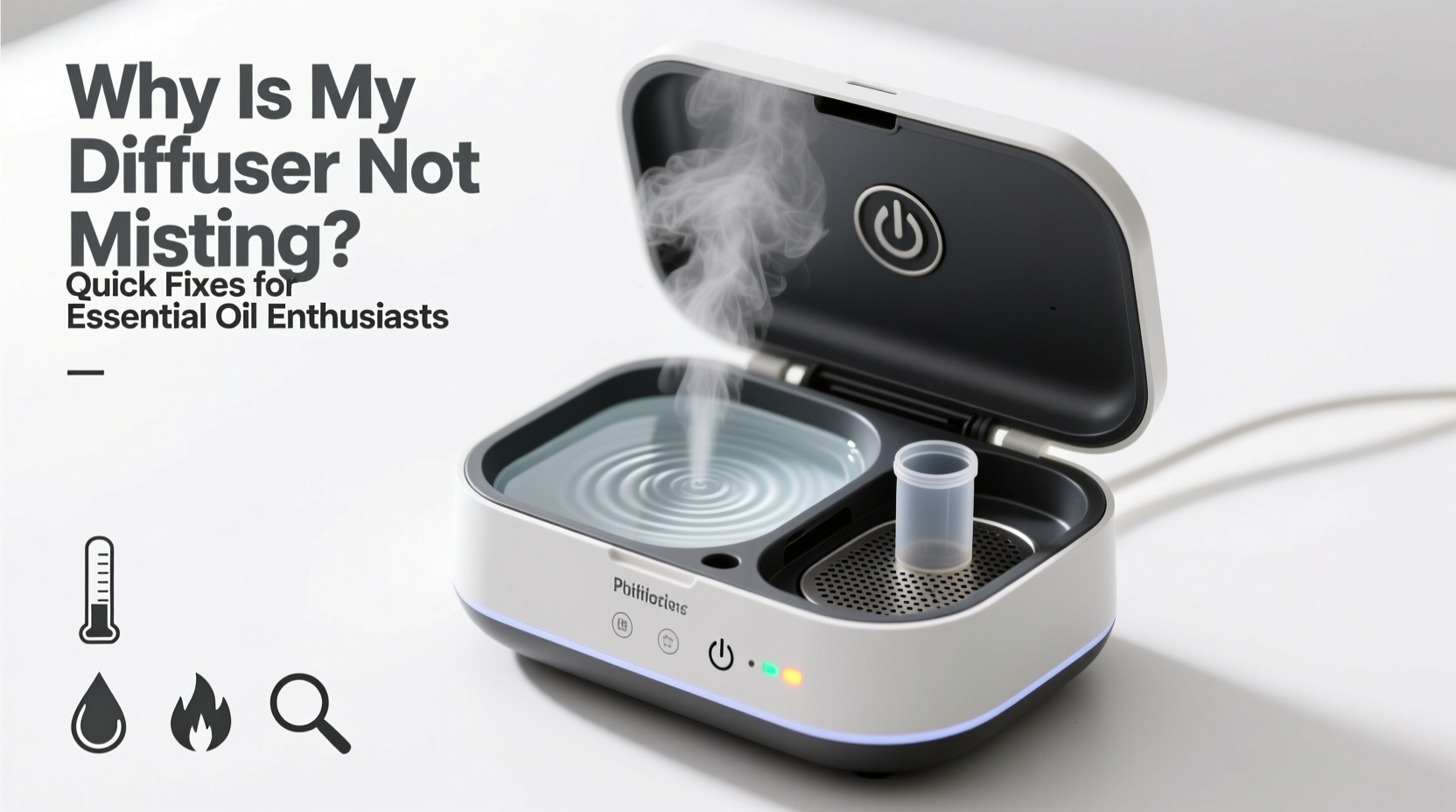
Before diving into troubleshooting, it helps to understand the basic mechanics of a typical ultrasonic diffuser—the most common type used in homes today. These units use high-frequency vibrations (ultrasonic waves) to break water and essential oils into a fine, breathable mist. A small diaphragm beneath the water surface vibrates rapidly, creating micro-bubbles that burst at the surface and release the mist into the air.
Unlike heat-based or fan-driven diffusers, ultrasonic models don’t require filters or heating elements. However, they depend heavily on clean water, proper maintenance, and functioning internal components. Any disruption—mineral buildup, low water levels, or power issues—can stop mist production entirely.
“Many diffuser failures stem from overlooked maintenance rather than hardware defects. A little routine care prevents 90% of misting problems.” — Dr. Lena Torres, Holistic Wellness Practitioner & Aromatherapy Educator
Step-by-Step Troubleshooting: Why Isn’t My Diffuser Misting?
When your diffuser powers on but produces no mist, follow this systematic approach to identify and resolve the issue. Start with the simplest checks and move toward more involved solutions.
1. Verify Water Level and Quality
The most frequent cause of mist failure is improper water level. Ultrasonic diffusers require water to reach a specific fill line—usually marked inside the reservoir. Too little water means the sensor won’t activate the nebulizer. Too much, and water may leak into internal circuits, triggering safety shutoffs.
- Check that water covers the internal sensor (typically near the base).
- Use distilled or purified water whenever possible. Tap water contains minerals that form deposits over time, impairing performance.
- Avoid using only essential oils without water—this can damage the diaphragm.
2. Inspect for Mineral Buildup or Residue
Over time, mineral deposits from tap water accumulate on the transducer (the vibrating plate at the bottom). This layer acts as a barrier, reducing vibration efficiency and eventually blocking mist output entirely.
Symptoms of mineral buildup:
- Weak or intermittent mist
- Faint clicking sounds during operation
- Visible white residue inside the reservoir
To clean:
- Unplug the unit and empty remaining water.
- Add equal parts white vinegar and distilled water to the reservoir.
- Let sit for 30 minutes (or run the diffuser for 5–10 minutes if safe per manufacturer instructions).
- Scrub gently with a soft brush or cotton swab, focusing on the base.
- Rinse thoroughly with clean water.
- Wipe dry and refill with fresh water and oils.
3. Check Power Source and Connections
If the diffuser doesn’t turn on at all, the problem may be electrical:
- Test the outlet with another device to confirm it’s working.
- Inspect the USB cable for frays or bends. Try a different cable or adapter.
- Ensure the magnetic connection (if applicable) is fully seated.
- Some models shut off automatically after 4 hours. Confirm timer settings aren’t limiting runtime.
4. Examine the Transducer Plate
The transducer is the heart of your diffuser. Located at the bottom of the water tank, it’s a small metal or ceramic disc that vibrates to create mist. If damaged, cracked, or coated in grime, it won’t function properly.
Look for:
- Scratches or cloudiness on the surface
- Pitting or corrosion
- Loose positioning within the base
If the transducer appears intact but still fails, it may need replacement. Some manufacturers sell replacement parts; others recommend replacing the entire unit for safety.
5. Review Environmental Factors
Believe it or not, where you place your diffuser affects its performance:
- High humidity: In already moist environments (like bathrooms), mist may be less visible, giving the impression it’s not working.
- Cold rooms: Cooler air reduces vapor dispersion. The mist might be there but dissipate quickly.
- Drafts or fans: Airflow can scatter mist before it accumulates visibly.
Try running the diffuser in a smaller, enclosed room with moderate temperature and low airflow to test output.
Do’s and Don’ts of Diffuser Maintenance
Prevention is key. Regular upkeep keeps your diffuser operating efficiently and extends its lifespan. Refer to the table below for best practices.
| Do’s | Don’ts |
|---|---|
| Use distilled water to minimize mineral deposits | Never use tap water exclusively over long periods |
| Clean the reservoir weekly with vinegar or citric acid | Don’t submerge the base in water |
| Run a cleaning cycle monthly if used daily | Avoid abrasive scrubbers that scratch the transducer |
| Keep the exterior dry and wipe spills immediately | Don’t mix thick resins (like frankincense) without diluting in water first |
| Store in a cool, dry place when not in use | Never leave water sitting in the tank for days |
Real-Life Example: Sarah’s Silent Diffuser
Sarah had been using her ultrasonic diffuser nightly for three months to help with insomnia. One evening, she turned it on and noticed no mist—only the soft LED glow. She checked the water level (fine), refilled it (no change), and tried a different outlet (still silent).
After reading about mineral buildup, she decided to deep-clean the unit. She soaked the reservoir in a vinegar solution for 40 minutes, then gently scrubbed the base with a toothbrush. After rinsing and drying, she refilled it with distilled water and a few drops of lavender. Within seconds, the familiar cool mist returned.
Sarah now cleans her diffuser every two weeks and uses only distilled water. “I didn’t realize how much tap water was affecting it,” she said. “Now it runs like new.”
Troubleshooting Checklist: Is Your Diffuser Ready to Mist?
Use this checklist whenever your diffuser underperforms. Tick each box as you verify the condition.
- ✅ Water level is between minimum and maximum lines
- ✅ Distilled or filtered water is used (not hard tap water)
- ✅ Essential oils were added after water, not before
- ✅ No visible mineral crust or oil residue on the transducer
- ✅ Unit has been cleaned within the last 7–14 days
- ✅ Power source is functional (try different outlet or cable)
- ✅ LED lights turn on (confirms power reception)
- ✅ Room conditions aren’t suppressing mist visibility (humidity, drafts)
- ✅ Device hasn’t exceeded auto-shutoff timer
- ✅ No recent spills or submersion that could damage electronics
When Cleaning Isn’t Enough: Signs It’s Time to Replace
Even with diligent care, diffusers wear out. The transducer has a finite lifespan—typically 3,000 to 5,000 hours of use. If you’ve followed all troubleshooting steps and still see no mist, consider these red flags:
- No sound or vibration despite being powered on
- LED lights flicker or fail to stay lit
- Burning smell or overheating during use
- Visible cracks in the reservoir or base
- Water leaks from the bottom
In such cases, repair is often impractical. Modern diffusers are cost-effective and designed as sealed units. Continuing to use a malfunctioning device risks electrical hazards or inconsistent oil dispersion.
Frequently Asked Questions
Can I use lemon juice instead of vinegar to clean my diffuser?
Yes, diluted lemon juice (citric acid) works well as a natural descaler. Mix one tablespoon of lemon juice with one cup of warm water, let sit for 20–30 minutes, then rinse thoroughly. Avoid concentrated citrus oils during cleaning cycles, as they can degrade plastic components over time.
Why does my diffuser make noise but no mist?
A humming or buzzing sound without mist usually indicates the transducer is receiving power but is blocked by debris, damaged, or operating without sufficient water contact. First, ensure the water level covers the sensor. Then perform a deep clean. If the noise persists without mist, the transducer may be failing.
How often should I replace my diffuser?
With proper care, most ultrasonic diffusers last 1–3 years. Daily users should consider replacement every 18–24 months. Signs of declining performance—intermittent mist, longer startup times, or weak output—are indicators it’s nearing end-of-life.
Conclusion: Restore Calm, One Mist at a Time
Your essential oil diffuser is more than a decorative gadget—it’s a tool for wellness, relaxation, and environmental harmony. When it stops misting, the disruption goes beyond function; it affects your routine, mood, and sense of comfort. Fortunately, most issues are fixable with simple diagnostics and regular maintenance.
By understanding how your diffuser operates, recognizing early warning signs, and following a consistent care routine, you can prevent most problems before they start. Whether it’s switching to distilled water, scheduling monthly vinegar soaks, or simply checking the power cord, small actions yield lasting results.




 浙公网安备
33010002000092号
浙公网安备
33010002000092号 浙B2-20120091-4
Comments
No comments yet. Why don't you start the discussion?