
Dogs are intuitive, expressive animals whose behaviors often reflect their physical health, emotional state, or environmental cues. While occasional odd behavior is normal, a persistent habit like staring at a blank wall can be unsettling for pet owners. This seemingly bizarre fixation may signal underlying issues ranging from neurological disorders to boredom. Understanding why your dog is fixated on a wall isn't just about curiosity—it's about ensuring their well-being. This article explores the most common causes of wall-staring in dogs, how to identify potential red flags, and what practical steps you can take to address the behavior.
Understanding Canine Behavior: What Normal vs. Abnormal Looks Like
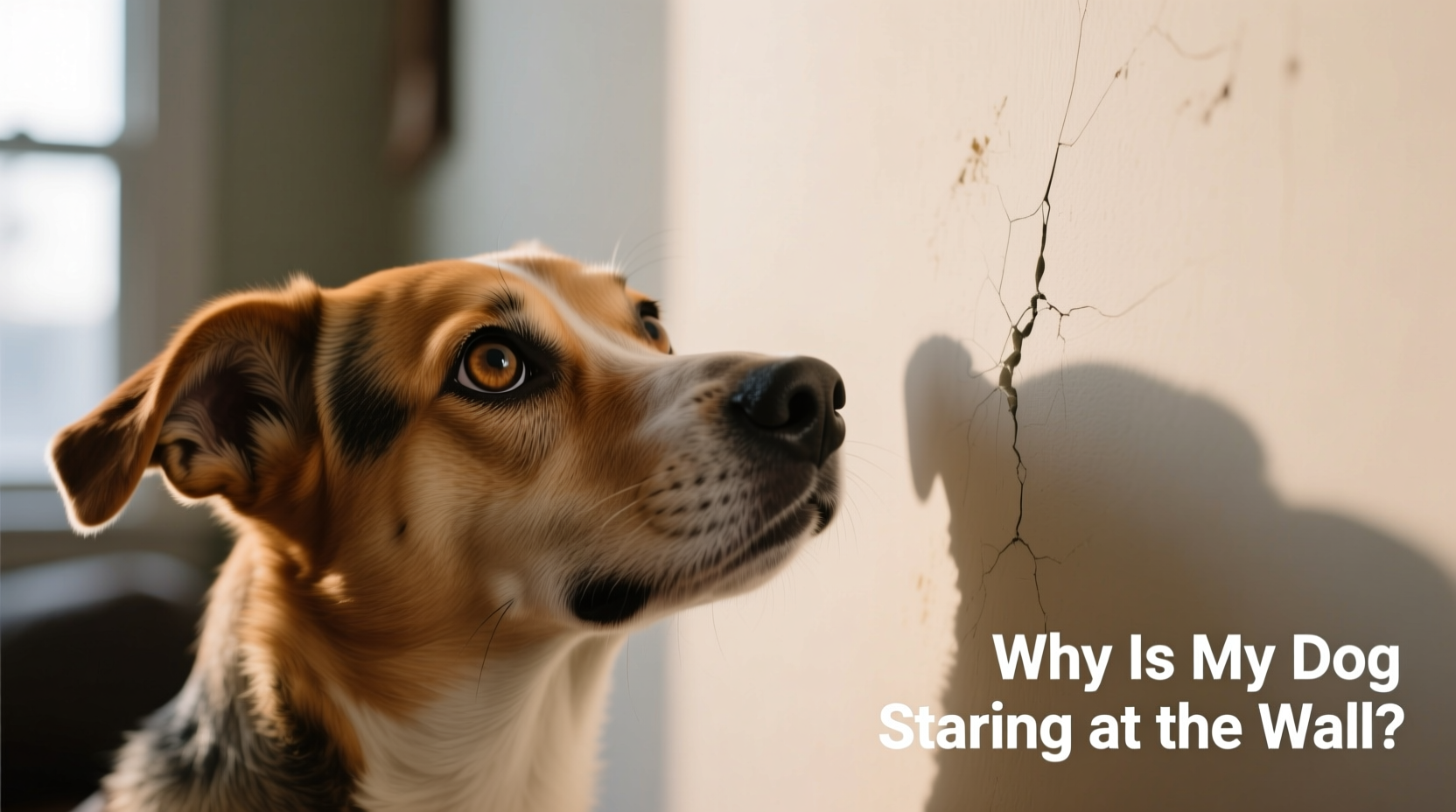
Dogs communicate through body language, vocalizations, and repetitive actions. Brief moments of stillness or focused attention—like watching a shadow move across the floor or listening to a sound behind a wall—are part of normal canine perception. However, when this focus becomes prolonged, unresponsive, or occurs frequently without an obvious trigger, it crosses into abnormal territory.
Abnormal behaviors in dogs often fall into two categories: medical and behavioral. Medical causes stem from physiological changes in the brain or sensory systems, while behavioral ones relate to stress, anxiety, or learned habits. Wall-staring can originate from either—or both—making a thorough assessment essential.
Medical Causes Behind Wall-Staring in Dogs
One of the most concerning reasons for obsessive wall-gazing is an underlying medical condition. The brain governs all behavior, so disruptions in neurological function can manifest as repetitive, aimless actions.
Epilepsy and Seizure Activity
Focal (partial) seizures are a leading medical cause of wall-staring in dogs. Unlike full-body convulsions, these seizures affect only a portion of the brain and may present subtly: a dog might freeze, stare intently at a spot, twitch one eye, or appear “zoned out” for seconds to minutes. Afterward, they may shake their head, lick their lips, or act disoriented.
“Focal seizures are often mistaken for behavioral quirks because they’re not dramatic. But if your dog zones out multiple times a day, especially around the same time, consult a vet immediately.” — Dr. Lena Reyes, Veterinary Neurologist
Vestibular Disease
This condition affects the balance system, often causing dizziness, head tilting, and unusual visual tracking. A dog may stare at a wall because they perceive movement where there is none, similar to vertigo in humans. Older dogs are more prone to idiopathic vestibular disease, but infections or tumors can also trigger it.
Cognitive Dysfunction Syndrome (CDS)
Commonly seen in senior dogs (typically over 10 years old), CDS is akin to dementia in humans. Symptoms include confusion, altered sleep cycles, house-soiling, and repetitive behaviors such as pacing or staring into space. Dogs with CDS may stand motionless in corners or gaze at walls for extended periods, seemingly unaware of their surroundings.
Sensory Issues: Vision and Hearing Loss
Dogs rely heavily on sight and sound. As vision deteriorates due to cataracts or retinal degeneration, shadows and light patterns may become distorted, drawing undue attention. Similarly, hearing loss can make dogs hyper-focus on visual stimuli, sometimes misinterpreting reflections or drafts moving curtains as points of interest on a wall.
Behavioral and Environmental Triggers
Not all wall-staring stems from illness. Sometimes, the cause is psychological or rooted in the dog’s environment.
Boredom and Lack of Stimulation
Dogs are intelligent animals that require mental engagement. Without adequate exercise, training, or interactive toys, they may develop compulsive habits to occupy themselves. Staring at a wall could be a self-soothing ritual or a response to under-stimulation, much like pacing in zoo animals.
Anxiety and Obsessive-Compulsive Behaviors
Stressful environments—such as homes with frequent loud noises, conflict, or changes in routine—can lead to anxiety-driven behaviors. Some dogs develop compulsions like tail-chasing, licking their paws, or fixating on inanimate objects. Wall-staring in these cases often follows a predictable pattern and may escalate under pressure.
Learned Attention-Seeking
If a dog receives any form of reaction—positive or negative—when staring at a wall, they may repeat the behavior to elicit attention. Even scolding can reinforce the action, as the dog learns that \"doing something weird\" results in interaction.
Environmental Stimuli You Can’t See
What seems like empty space to you might be rich with sensory input for your dog. Possible hidden triggers include:
- High-frequency sounds from electrical devices or pests inside walls
- Subtle air currents from vents creating movement in dust or hair
- Shadows cast by trees or passing vehicles outside
- Smells seeping through cracks or baseboards (rodents, mold, food residue)
Dogs have up to 300 million olfactory receptors (humans have about 6 million), making them acutely aware of odors imperceptible to us.
How to Diagnose the Cause: A Step-by-Step Approach
Pinpointing why your dog stares at walls requires systematic observation and professional input. Follow this timeline to gather evidence and determine next steps.
- Document the behavior: Note the time, duration, frequency, and context of each episode. Use a journal or voice memo app.
- Check for responsiveness: Call your dog’s name or offer a treat during an episode. If they don’t respond, it may indicate a seizure or dissociative state.
- Inspect the environment: Look for drafts, sounds, lights, or smells near the wall. Turn off electronics to test for auditory triggers.
- Review health history: Consider age, past injuries, medications, and recent changes in diet or routine.
- Schedule a veterinary exam: Include blood work, neurological screening, and possibly an MRI if seizures are suspected.
- Consult a veterinary behaviorist: If medical causes are ruled out, a specialist can assess for anxiety or compulsive disorders.
Effective Fixes and Management Strategies
Treatment depends entirely on the root cause. Below are targeted solutions based on diagnosis.
| Probable Cause | Recommended Fix | Avoid |
|---|---|---|
| Epilepsy / Focal Seizures | Veterinary-prescribed anticonvulsants (e.g., phenobarbital, levetiracetam) | Delaying diagnosis; using human medications |
| Cognitive Dysfunction | Supplements (e.g., Senilife, antioxidants), structured routine, night lights | Ignoring early signs; major environmental changes |
| Boredom | Daily puzzle toys, training sessions, off-leash play | Leaving dog alone for long hours |
| Anxiety | Desensitization training, pheromone diffusers (Adaptil), consistent schedule | Punishing the behavior; inconsistent rules |
| Environmental Trigger | Seal gaps, repair insulation, eliminate pests, block reflective surfaces | Assuming the wall is “blank” |
Enrichment Plan for Mentally Stimulated Dogs
Prevention is key. A mentally engaged dog is less likely to develop compulsive behaviors. Implement a daily enrichment routine:
- Rotate toys weekly to maintain novelty
- Use snuffle mats or Kongs filled with frozen treats
- Practice obedience drills or learn new tricks for 10–15 minutes daily
- Introduce scent games (hide treats indoors)
- Provide safe outdoor exploration time
Mini Case Study: Max, the Border Collie Who Couldn’t Look Away
Max, a 7-year-old Border Collie, began staring at the living room wall every evening around 7 PM. His owner, Sarah, initially thought he was reacting to squirrels outside. But Max didn’t bark—he stood rigid, eyes fixed, for up to five minutes at a time. Concerned, she recorded a video and visited her veterinarian.
Blood tests were normal, but the vet noticed Max’s pupils were dilated post-episode and recommended a neurology referral. An MRI revealed no structural abnormalities, but an EEG indicated mild focal seizure activity. Max was prescribed low-dose levetiracetam. Within three weeks, the episodes decreased by 80%. Sarah also added a dusk-to-dawn light near the wall to reduce shadow contrast, which further minimized triggers.
Today, Max has only rare, brief episodes and lives a full life with proper medication and environmental management.
FAQ: Common Questions About Wall-Staring in Dogs
Is it normal for dogs to stare at walls occasionally?
Yes, brief moments of focus—especially if triggered by sound, light, or smell—are normal. The concern arises when the behavior is repetitive, prolonged, or accompanied by other symptoms like disorientation or tremors.
Can anxiety really make a dog stare at a wall?
Absolutely. Just as humans may zone out when stressed, dogs can develop repetitive behaviors as coping mechanisms. Anxiety-related staring is often predictable (e.g., during storms or when left alone) and may co-occur with pacing or excessive licking.
Should I stop my dog from staring at the wall?
Do not physically interrupt them during an episode, especially if they seem unresponsive—this could trigger confusion or even a full seizure. Instead, gently call their name or clap softly after the episode ends. Focus on identifying and removing the cause rather than suppressing the symptom.
Final Checklist: What to Do If Your Dog Stares at Walls
- ✅ Record the behavior on video
- ✅ Track frequency, duration, and timing
- ✅ Rule out visible triggers (shadows, sounds, pests)
- ✅ Schedule a full veterinary check-up
- ✅ Request neurological evaluation if episodes are unresponsive
- ✅ Increase mental and physical stimulation daily
- ✅ Consult a veterinary behaviorist if no medical cause is found
Conclusion: Take Action with Confidence
Seeing your dog stare blankly at a wall can be alarming, but it’s rarely without explanation. Whether the cause is medical, behavioral, or environmental, answers are within reach with careful observation and professional guidance. Early intervention not only improves quality of life but can prevent minor issues from becoming chronic conditions. Don’t dismiss the behavior as “just weird”—your dog is communicating in the only way they can. By responding with empathy, diligence, and informed action, you ensure they remain healthy, happy, and truly understood.




 浙公网安备
33010002000092号
浙公网安备
33010002000092号 浙B2-20120091-4
Comments
No comments yet. Why don't you start the discussion?