
Espresso should be rich, balanced, and aromatic—not harsh or overwhelmingly bitter. Yet many home baristas and even experienced coffee lovers struggle with shots that taste burnt or astringent. While factors like bean quality and machine temperature matter, one of the most overlooked culprits behind bitter espresso is the grinder. In fact, more than 70% of extraction issues stem from improper grinding. The grinder sets the foundation for extraction, and when it's misused or misunderstood, the result is often over-extracted, bitter coffee. Understanding the role your grinder plays—and avoiding common pitfalls—can transform your daily espresso from disappointing to exceptional.
The Science Behind Bitter Espresso: Over-Extraction Explained
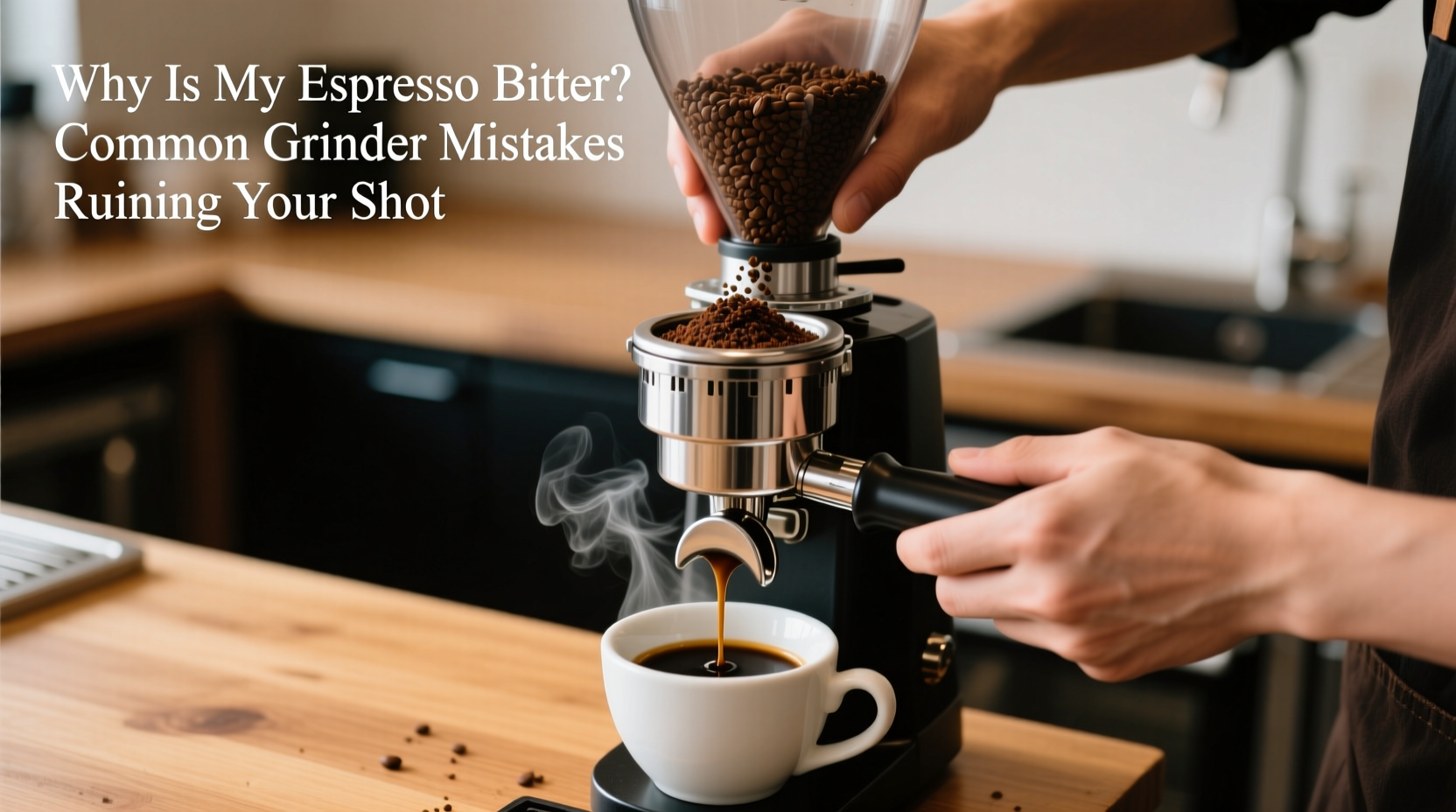
Bitterness in espresso typically arises from over-extraction, a condition where too many compounds are pulled from the coffee grounds during brewing. When water spends too much time in contact with overly fine particles, it extracts undesirable bitter-tasting elements like lignins and tannins. This doesn't mean all bitterness is bad—espresso naturally contains some bitter notes—but when they dominate, masking sweetness and acidity, something has gone wrong.
Over-extraction is not always about brew time alone. It’s influenced by particle size distribution, dose, tamping pressure, and water temperature. However, the starting point for all these variables is the grind. If your grinder produces inconsistent particle sizes, you end up with a mix of fines (which extract quickly) and boulders (which under-extract). The fines become over-extracted and bitter, while boulders contribute sourness. The resulting shot is both bitter and unbalanced—a classic sign of poor grind quality.
“Grind consistency is the single most important factor in achieving balanced espresso. Without it, even the best beans and machines can’t save your shot.” — James Hoffmann, World Barista Champion and coffee educator
Common Grinder Mistakes That Ruin Your Shot
Even high-end grinders can lead to bitter espresso if used incorrectly. Here are the most frequent errors that compromise grind quality and extraction.
1. Using a Blade Grinder Instead of a Burr Grinder
Blade grinders chop beans with a spinning blade, producing wildly inconsistent particle sizes. Some grounds are dust-fine, others are chunky. This inconsistency leads to uneven extraction: fines over-extract and taste bitter, while larger pieces under-extract and taste sour. For espresso, this variability makes dialing in nearly impossible.
2. Incorrect Grind Setting: Too Fine
Many assume that finer grinds automatically improve espresso strength. But going too fine increases surface area dramatically, accelerating extraction. If your shot takes longer than 30 seconds to produce 30ml of liquid, you’re likely over-extracting. This extended contact time pulls out excessive bitter compounds.
Adjust your grind setting incrementally. A good starting point for most grinders is 18–22 seconds for a double shot (18g in, 36g out). If the shot runs too long, coarsen the grind slightly. Patience and small adjustments are key.
3. Poor Dosing and Distribution
Inconsistent dosing—using different amounts of coffee each time—makes it impossible to maintain consistent extraction. Similarly, uneven distribution of grounds in the portafilter leads to channeling, where water finds paths of least resistance through the puck. These channels allow water to rush through certain areas, over-extracting them while bypassing others.
Always weigh your dose (e.g., 18g for a double shot) and use a distribution tool or gentle tapping technique to level the grounds before tamping.
4. Worn or Misaligned Burrs
Over time, grinder burrs wear down, especially with frequent use. Worn burrs lose their sharp edges, generating heat and producing more fines and clumping. This leads to clogging, static, and uneven particle distribution—all contributing to bitterness.
If your grinder requires increasingly finer settings to achieve the same shot time, or if you notice increased heat or noise, it may be time to replace the burrs. Most consumer-grade burr grinders need burr replacement every 500–1000 hours of use.
5. Lack of Grinder Calibration
Grinders, especially entry-level models, often have “false” zero points or inconsistent step changes between settings. What one manufacturer calls “setting 15” might be vastly different from another. Without proper calibration, you're guessing rather than dialing in.
Calibrate your grinder by performing a grind size test: adjust in small increments and measure shot time. Map out which settings yield 25–30 second extractions. Keep this chart taped near your grinder for quick reference.
Do’s and Don’ts: Espresso Grinder Best Practices
| Do’s | Don’ts |
|---|---|
| Use a calibrated burr grinder with fresh, sharp burrs | Use a blade grinder for espresso |
| Weigh your dose and tamp consistently | Scoop coffee beans directly into the hopper without cleaning |
| Clean your grinder monthly to remove oil buildup | Grind stale or oily beans that can clog the burrs |
| Dial in your grind after changing beans or environment | Make large grind adjustments; always tweak incrementally |
| Store beans properly to preserve freshness | Leave beans in the hopper for days; they absorb moisture and degrade |
Step-by-Step Guide: How to Fix Bitter Espresso Caused by Grinder Issues
Follow this systematic approach to diagnose and correct bitterness rooted in grinding problems.
- Start Fresh: Empty old grounds from the grinder and wipe the hopper and burr chamber. Old, stale coffee oils can taint new batches.
- Weigh Your Dose: Use a scale to measure exactly 18g of freshly roasted beans. Consistency begins here.
- Set an Initial Grind: Begin with a medium-fine setting. If unsure, start at the manufacturer’s recommended espresso setting.
- Pull a Test Shot: Aim for a 1:2 ratio (18g in, 36g out). Time the shot from pump activation to 36g collected.
- Evaluate the Result:
- If the shot takes longer than 30 seconds and tastes bitter → grind coarser.
- If the shot finishes in under 20 seconds and tastes sour → grind finer.
- Adjust Incrementally: Change the grind setting by one notch at a time. Wait for 2–3 purge shots to clear old grounds before retesting.
- Check Distribution: Use a WDT (Weiss Distribution Technique) tool or gentle shake to ensure even dispersion before tamping.
- Repeat Until Balanced: A well-dialed shot should take 25–30 seconds, produce a steady, honey-like stream, and taste sweet, balanced, and complex.
Real Example: From Bitter Mess to Balanced Shot
Mark, a home barista in Portland, loved his semi-automatic machine but hated the bitter taste of his espresso. He assumed the issue was his beans or machine pressure. After switching roasters multiple times with no improvement, he posted a video of his setup online. A community member immediately noticed his grinder: a $40 blade model.
Following advice, Mark invested in a mid-range conical burr grinder. He started weighing doses, cleaned the machine thoroughly, and began dialing in using the 18g → 36g method. Within two days, his shot time dropped from 42 seconds to 28, and the bitterness vanished. “I had no idea the grinder made such a difference,” he said. “Now my espresso has chocolate, fruit, and a clean finish. I wasted months blaming the wrong equipment.”
Essential Maintenance Checklist for Optimal Grind Quality
- ✅ Clean grinder burrs monthly with brush and grinder tablets
- ✅ Replace burrs every 500–1000 hours of use (or as recommended)
- ✅ Empty hopper daily; store beans separately in an airtight container
- ✅ Calibrate grind settings every time you switch beans
- ✅ Use a WDT tool to prevent clumping and ensure even tamping
- ✅ Keep grinder away from moisture and steam (don’t place under espresso machine)
- ✅ Weigh every dose until consistency becomes habitual
Frequently Asked Questions
Why does my espresso taste bitter even with fresh beans?
Fresh beans are essential, but they won’t save a poorly ground shot. Bitterness from fresh beans usually indicates over-extraction due to too fine a grind, excessive brew time, or uneven particle distribution. Revisit your grind setting and distribution technique before assuming bean quality is the issue.
Can a dirty grinder cause bitterness?
Absolutely. Oily residue from stale grounds builds up on burrs and deflectors, altering grind path and introducing rancid flavors. Old coffee can also clump, leading to channeling and uneven extraction. Regular cleaning prevents this and maintains flavor clarity.
How do I know if my grinder burrs are worn out?
Signs include needing progressively finer settings for the same shot time, increased heat during grinding, inconsistent particle size, and visible chipping or dullness on the burrs. If your grinder struggles to produce fine enough grounds despite being set to its finest setting, replacement is likely needed.
Conclusion: Take Control of Your Espresso Experience
Bitter espresso isn’t inevitable—it’s a signal that something in your process needs adjustment. More often than not, the root cause lies in the grinder. By upgrading from blade to burr, maintaining your equipment, and dialing in with precision, you reclaim control over extraction and flavor. Great espresso isn’t about expensive machines alone; it’s about consistency, care, and understanding the critical role of the grind. The difference between a harsh, unpleasant shot and a silky, nuanced one often comes down to a single turn of the grind ring.




 浙公网安备
33010002000092号
浙公网安备
33010002000092号 浙B2-20120091-4
Comments
No comments yet. Why don't you start the discussion?