
If your face turns red every time you wash it, you're not alone — but it's not normal. That post-wash flush might seem like a sign of cleanliness, but more often than not, it’s your skin sounding an alarm. Redness after cleansing typically signals irritation, barrier damage, or an allergic reaction to ingredients lurking in your facial cleanser. While some mild temporary warmth can be harmless, persistent redness, stinging, tightness, or visible blood vessels are warning signs that something in your routine needs to change.
The modern skincare market is flooded with cleansers labeled “gentle,” “dermatologist-tested,” or “for sensitive skin,” yet many still contain aggressive surfactants, synthetic fragrances, and preservatives that compromise the skin’s protective barrier. Understanding what’s behind that post-wash redness means looking beyond marketing claims and diving into ingredient labels. This article breaks down the most common culprits, explains how they affect your skin, and offers actionable steps to restore calm and prevent future flare-ups.
How Cleansers Work — And Where They Go Wrong
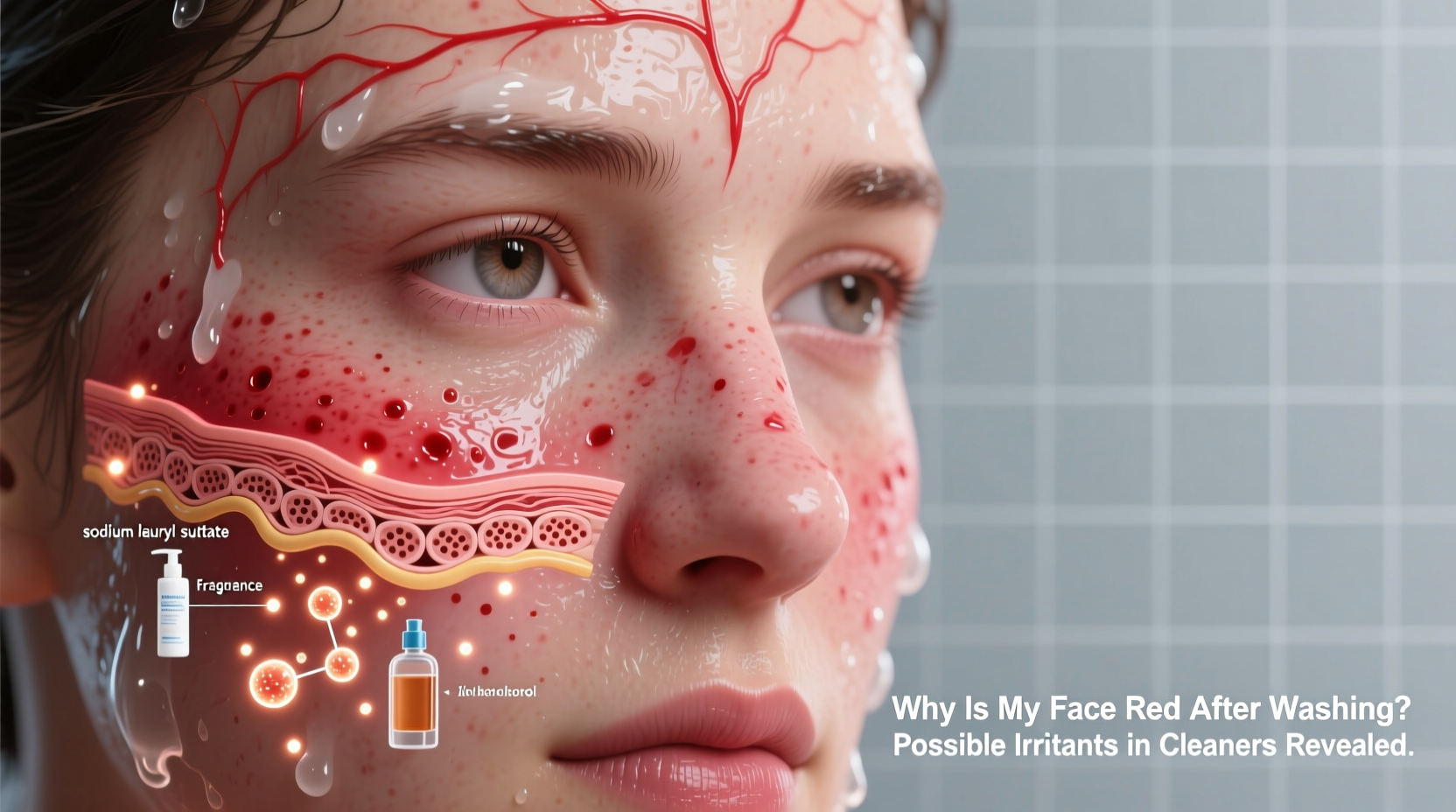
Cleansers are designed to remove oil, sweat, makeup, pollutants, and bacteria from the skin’s surface. They do this using surfactants — molecules with one end that binds to water and another that binds to oil. When rinsed, they carry away impurities. However, not all surfactants are created equal. Harsh ones strip away too much sebum, disrupt the skin’s natural pH (which sits around 4.7), and compromise the lipid barrier, leaving skin vulnerable.
A compromised barrier cannot retain moisture effectively or defend against environmental aggressors. This leads to increased trans-epidermal water loss (TEWL), dryness, inflammation, and yes — redness. The result? A cycle where your skin reacts more severely each time you cleanse, especially if active ingredients like acids or retinoids are also in your routine.
Top Irritants Hiding in Your Cleanser
Many people assume fragrance is the only offender, but several less obvious ingredients can trigger redness, especially in those with sensitive, rosacea-prone, or eczema-affected skin. Below are the most common irritants found in facial cleansers.
1. Sulfates (Sodium Lauryl Sulfate, Sodium Laureth Sulfate)
Sulfates are powerful foaming agents that create rich lather. While satisfying to use, they’re extremely degreasing and can dissolve essential lipids in the stratum corneum. SLS, in particular, is known to cause irritation even at low concentrations. Studies show it can induce inflammatory responses in as little as 24 hours of repeated exposure.
2. Synthetic Fragrances and Parfum
Fragrance — listed simply as \"parfum\" or \"fragrance\" on labels — is one of the top allergens in cosmetics. It can contain dozens of undisclosed chemicals, some of which are known sensitizers. Even \"natural\" fragrances derived from essential oils (like lavender, citrus, or peppermint) can be problematic due to their volatile compounds, which may dilate blood vessels and worsen redness.
3. Alcohol (Denatured Alcohol, Ethanol, Isopropyl Alcohol)
Drying alcohols are sometimes added to cleansers for a quick-drying finish or to stabilize formulations. While effective at cutting through oil, they evaporate quickly and dehydrate the skin. Repeated use weakens the barrier, making skin more reactive to other products.
4. Formaldehyde-Releasing Preservatives
Preservatives like DMDM hydantoin, imidazolidinyl urea, and quaternium-15 slowly release formaldehyde to prevent microbial growth. Unfortunately, formaldehyde is a known sensitizer and carcinogen in high doses. Even in trace amounts, it can trigger contact dermatitis in susceptible individuals.
5. Propylene Glycol
Often used as a humectant or solvent, propylene glycol helps other ingredients penetrate the skin. However, in higher concentrations or on compromised skin, it can cause stinging, itching, and redness. It’s particularly irritating to those with eczema.
6. Essential Oils and Plant Extracts
Despite their natural origin, ingredients like tea tree oil, eucalyptus, menthol, and citrus extracts are highly bioactive and can provoke inflammatory responses. Their inclusion in “clean” or “natural” cleansers doesn’t make them safer — in fact, they’re frequent triggers for rosacea flares.
“Just because an ingredient is plant-derived doesn’t mean it’s gentle. Many botanicals are potent allergens. Skin tolerance depends on formulation, concentration, and individual reactivity.” — Dr. Lena Torres, Board-Certified Dermatologist
Do’s and Don’ts: Cleanser Ingredient Guide
| Do Use (Gentle Alternatives) | Don't Use (Known Irritants) |
|---|---|
| Cocamidopropyl betaine (mild surfactant) | Sodium lauryl sulfate (SLS) |
| Glycerin (humectant) | Fragrance / Parfum |
| Sodium cocoyl isethionate (bar soap base) | Denatured alcohol |
| Allantoin (soothing agent) | DMDM hydantoin |
| Niacinamide (barrier-supporting) | Essential oils (e.g., peppermint, lemon) |
| Centella asiatica (anti-inflammatory) | Menthol or cooling agents |
Step-by-Step: How to Identify and Replace Problematic Cleansers
If you're experiencing post-wash redness, follow this methodical approach to identify and eliminate irritants:
- Stop using all active treatments — Pause serums with acids, retinoids, or vitamin C. These can compound irritation and make diagnosis harder.
- Check your cleanser’s ingredient list — Use apps like INCI Decoder or Think Dirty to translate complex names. Look for any of the irritants listed above.
- Switch to a minimalist, fragrance-free formula — Choose a non-foaming cream or balm cleanser with five to ten recognizable ingredients.
- Wash with lukewarm water only — Avoid hot water, which increases blood flow and exacerbates redness.
- Lukewarm rinse, pat dry — Never rub your face with a towel. Gently press moisture away.
- Reintroduce one product at a time — After 7–10 days of calm skin, gradually add back other products to isolate triggers.
- Keep a symptom journal — Note when redness occurs, how long it lasts, and any new products used.
Real Example: Recovering from Cleanser-Induced Redness
Marissa, a 34-year-old teacher from Portland, began noticing persistent redness along her cheeks and chin after switching to a popular “clarifying” gel cleanser. She assumed it was helping her acne until the flushing became constant, accompanied by burning when she applied moisturizer. After consulting a dermatologist, she learned the cleanser contained sodium laureth sulfate, fragrance, and menthol — a triple threat for sensitive skin.
She switched to a ceramide-based cream cleanser, eliminated all scented products, and avoided hot showers. Within two weeks, her redness subsided. Her skin no longer felt tight, and her acne improved without harsh actives. “I thought I needed to ‘feel’ the cleanse working,” she said. “But now I realize calm skin is healthy skin.”
When Redness Signals a Larger Condition
Occasional redness may resolve with a gentler routine, but chronic flushing could indicate an underlying condition such as:
- Rosacea: Characterized by persistent central facial redness, visible capillaries, and episodic flare-ups triggered by heat, stress, or irritants.
- Seborrheic Dermatitis: Causes red, scaly patches often around the nose, eyebrows, and scalp. Linked to yeast overgrowth and immune response.
- Atopic Dermatitis (Eczema): Leads to dry, itchy, inflamed skin that’s easily irritated by soaps and detergents.
- Contact Dermatitis: An allergic or irritant reaction to a specific ingredient, often developing within hours of exposure.
If redness persists beyond four weeks of using a gentle routine, consult a dermatologist. They may recommend patch testing or prescribe topical treatments like azelaic acid or low-potency corticosteroids to reduce inflammation.
Building a Soothing, Non-Irritating Routine
Once you’ve identified and removed the offending cleanser, focus on rebuilding your skin barrier. A supportive routine includes:
- Double cleansing at night (if wearing makeup/sunscreen): Start with an oil-based balm to dissolve SPF, followed by a water-based milky cleanser.
- pH-balanced formulas: Aim for cleansers with a pH between 4.5 and 5.5 to support the acid mantle.
- Barrier-repair ingredients: Look for ceramides, cholesterol, fatty acids, and squalane in moisturizers.
- Minimalist philosophy: Fewer products mean fewer chances for irritation.
“The skin is not dirty by default. Over-cleansing under the assumption that ‘clean’ means stripped is one of the biggest mistakes people make.” — Dr. Alan Kim, Cosmetic Dermatologist
FAQ: Common Questions About Post-Wash Redness
Can a cleanser cause permanent redness?
While occasional redness is temporary, chronic use of harsh cleansers can lead to persistent inflammation, broken capillaries, and conditions like telangiectasia (visible blood vessels). Early intervention prevents long-term damage.
Is foam a sign of effectiveness?
No. Lather comes from surfactants, not cleaning power. Rich foam often indicates stronger detergents that increase irritation risk. Cream and balm cleansers may not foam but are equally effective at removing impurities.
Should I stop washing my face if it turns red?
No, but adjust your method. Cleanse once daily (preferably at night), use lukewarm water, and choose a non-irritating formula. Skipping cleansing can lead to clogged pores and breakouts, worsening inflammation.
Final Checklist: Is Your Cleanser Safe for Sensitive Skin?
- ✅ Free of synthetic fragrance and essential oils?
- If it smells strongly floral, citrusy, or minty, it’s likely irritating.
- ✅ No sulfates or alcohol denat.?
- Check the first five ingredients — these should not appear.
- ✅ Non-foaming or low-lather texture?
- Cream, milk, or balm cleansers are gentler than gels or foams.
- ✅ Contains barrier-supporting ingredients?
- Look for ceramides, glycerin, or panthenol.
- ✅ Tested on sensitive or rosacea-prone skin?
- Brands like Vanicream, CeraVe, and Avene specialize in non-irritating formulas.
Conclusion: Calm Skin Starts With the Right Cleanse
Redness after washing isn’t a badge of thorough cleansing — it’s a signal that your skin is under stress. By identifying hidden irritants in your cleanser and switching to a truly gentle, barrier-supportive formula, you can stop the cycle of inflammation and restore balance. Pay attention to how your skin feels 10 minutes after washing: it should feel hydrated, soft, and neutral — not tight, warm, or pink.
Your skin’s health begins with simplicity. Read labels, avoid marketing hype, and prioritize ingredients over foam. Once you make the switch, you may find that clearer, calmer skin was never about doing more — but about stripping less.




 浙公网安备
33010002000092号
浙公网安备
33010002000092号 浙B2-20120091-4
Comments
No comments yet. Why don't you start the discussion?