
The moment you finish applying your makeup, everything looks flawless. But within hours—sometimes minutes—your foundation begins to break apart right across the bridge of your nose. You’re not imagining it. This common issue, often called “foundation separation” or “pilling,” isn’t just frustrating—it can make even the most expensive products look cheap. The good news? It’s not inevitable. Understanding why it happens is the first step toward stopping it for good.
Foundation separation on the nose occurs when your base product cracks, slides, or forms visible lines, especially in the creases around the sides of the nose and down the center. Unlike general fading or oxidation, separation implies a physical breakdown of the formula, often due to skin texture, oil production, or incompatible layering. Fixing it requires more than just blotting or reapplying. It demands a strategic approach from skincare through setting.
Why Your Foundation Separates on the Nose: The Root Causes
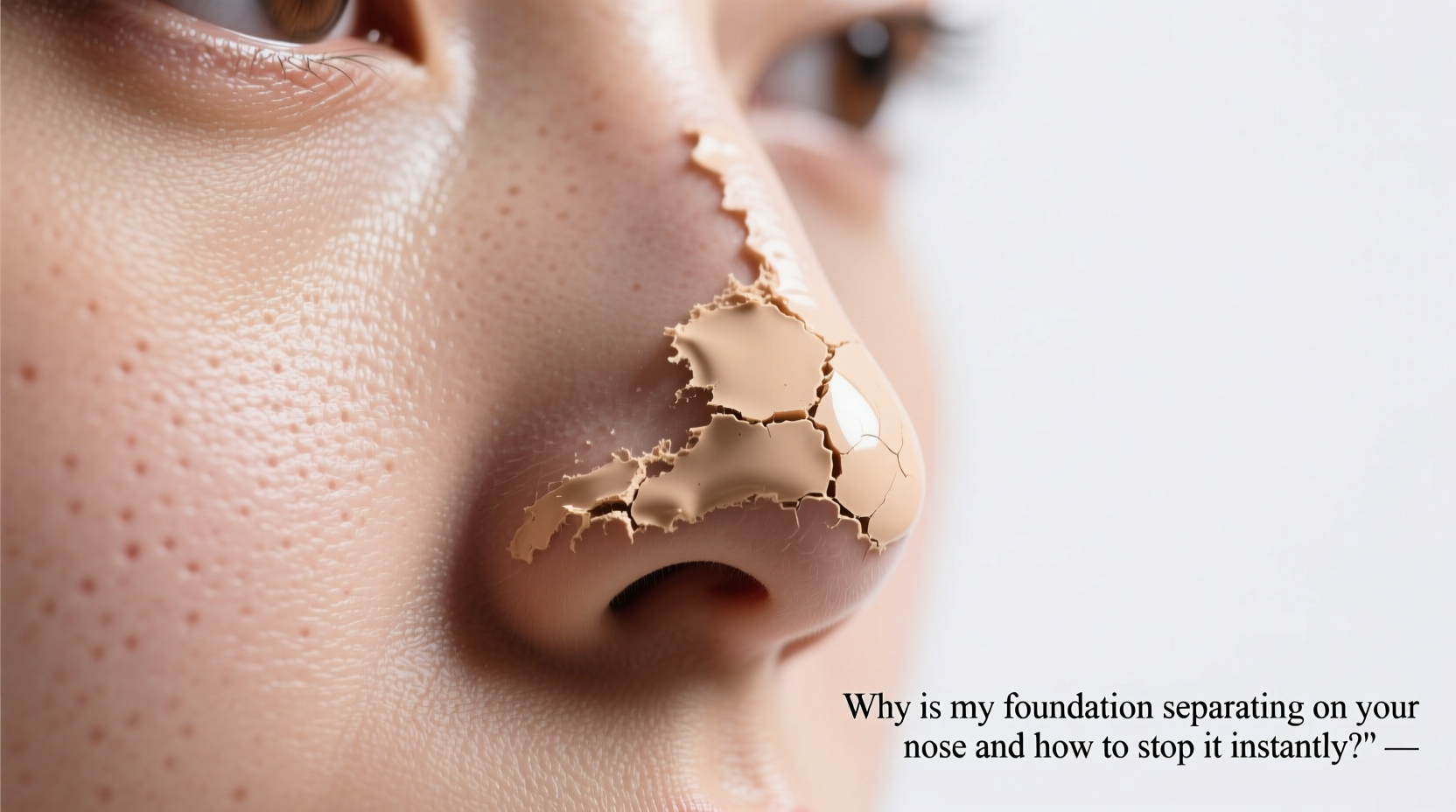
The nose is one of the most challenging areas to keep foundation intact. It’s anatomically prominent, has larger pores, and tends to produce more sebum than other parts of the face. But oil alone doesn’t explain everything. Several interrelated factors contribute to foundation breakdown:
- Excess Sebum Production: The T-zone, especially the nose, contains a high concentration of oil glands. When sebum rises to the surface, it disrupts the bond between foundation and skin, causing the product to slide and separate.
- Dry Patches Underneath: Ironically, dryness can also be a culprit. If your nose has flaky skin beneath the foundation, the product may cling unevenly, creating patchiness and pilling when blended over rough texture.
- Pore Size and Skin Texture: Enlarged pores trap foundation, leading to caking. As oils accumulate, they push the product out, resulting in visible separation along the sides of the nose.
- Incompatible Product Layering: Mixing water-based and silicone-based products (e.g., a silicone primer under a water-based foundation) can cause repulsion, leading to pilling or balling up.
- Overuse of Skincare Actives: Ingredients like glycolic acid, vitamin C, or retinoids can increase skin turnover, leaving behind dead cells that mix with foundation and create clumps.
- Improper Setting Technique: Skipping powder or applying too much can both lead to issues. Without setting, foundation moves with oil; with too much powder, it cakes and cracks.
Instant Fixes: How to Stop Foundation Separation Midday
You’re already experiencing separation—what now? These real-time techniques can rescue your makeup without starting over.
- Blot, Don’t Wipe: Use an oil-absorbing sheet or folded tissue to gently press (not rub) excess oil from your nose. Rubbing spreads oil and smears foundation further.
- Re-Prime Strategically: Dab a tiny amount of mattifying primer only on the affected area. A silicone-based formula works best here to smooth texture without disturbing surrounding makeup.
- Spot-Correct with Concealer: Using a clean fingertip or small brush, lightly press a dot of concealer over the separated zone. Blend only the edges to merge it with existing foundation.
- Set with Translucent Powder: Use a micro-fiber puff or small brush to press loose powder onto the nose. Avoid sweeping motions—pressing ensures better adhesion.
- Lock It With Setting Spray: Hold a hydrating setting spray 8–10 inches away and mist once. Let it air-dry. This reactivates the foundation slightly and fuses layers together.
These steps take less than two minutes and can extend wear by several hours. The key is minimal intervention—adding too much product will only worsen the texture.
Prevention Strategy: Build a Long-Wearing Base Routine
To stop separation before it starts, rethink your entire routine. Lasting foundation begins long before the first drop of product hits your skin.
Skin Prep: The Foundation of Flawless Makeup
Clean, balanced skin is non-negotiable. Wash your face with a gentle cleanser that removes debris without stripping natural oils. Follow with a lightweight, oil-free moisturizer—preferably one labeled “non-comedogenic.” Allow it to absorb completely (at least 5 minutes) before moving to the next step.
If you use active serums (like niacinamide or hyaluronic acid), apply them first, then seal with moisturizer. Skipping this order can leave actives sitting on the surface, increasing friction and pilling.
Primer: Your Secret Weapon
A targeted primer fills pores and creates a uniform canvas. For oily noses, choose a mattifying or pore-blurring formula with silica or dimethicone. Apply only where needed—a pea-sized amount for the entire nose is plenty.
“Primer isn’t about covering flaws—it’s about creating a stable surface for foundation to adhere to. Think of it as the drywall before paint.” — Lena Torres, Celebrity Makeup Artist
Foundation Application: Less Is More
Use a damp beauty sponge or dense buffing brush to apply foundation. Start with a thin layer and build coverage only where necessary. Thick layers are more prone to cracking and sliding. Focus on blending outward from the center of the face to avoid dragging product into nose creases.
Setting: Lock It In Without Caking
After foundation, set your nose with a light dusting of translucent powder. Use a small fluffy brush or pressing motion with a puff. For extra longevity, try the “bake and blend” method: apply a heavier layer of powder under the eyes and along the sides of the nose, wait 2 minutes, then gently blend away the excess.
Product Compatibility: The Hidden Culprit Behind Pilling
Even with perfect technique, the wrong combination of products can sabotage your results. Many women unknowingly layer incompatible formulas, leading to foundation that balls up or separates within minutes.
| Layer | Compatible Base | Incompatible Mix | Result |
|---|---|---|---|
| Moisturizer | Water-based | Silicone-based primer | Slippery base, poor adhesion |
| Primer | Silicone-based | Water-based foundation | Pilling, separation |
| Foundation | Water-based | Silicone-heavy sunscreen | Repulsion, balling |
| Setting Spray | Alcohol-free, hydrating | Matte spray over dewy base | Cracking, dullness |
The rule of thumb: stick to one base type per layer. If your primer is silicone-based, opt for a silicone-friendly foundation. Water-based layers should follow water-based ones. When in doubt, do a patch test on your jawline or nose and wait 10 minutes to check for pilling.
Real-Life Example: From Frustration to Flawless
Marissa, a 32-year-old marketing executive, struggled daily with her foundation separating on her nose by 11 a.m., despite using high-end products. She blamed her “oily skin” and tried blotting constantly, which only made her makeup look thinner and patchier.
After consulting a dermatologist and a makeup artist, she discovered two issues: her vitamin C serum was pilling under her silicone primer, and she was applying too much foundation on her nose. By switching to a water-based serum, allowing it to fully absorb, and using a stippling brush for sheerer coverage, her foundation stayed intact past 6 p.m.—even during summer humidity.
Her biggest takeaway? “I didn’t need stronger products. I needed smarter layering.”
Step-by-Step Morning Routine to Prevent Nose Separation
Follow this proven sequence every morning for long-lasting, seamless foundation:
- Cleanse: Use a pH-balanced facial wash. Rinse thoroughly and pat dry.
- Tone (Optional): Apply an alcohol-free toner to balance skin’s pH.
- Apply Actives: Use serums (vitamin C, niacinamide) and allow 3–5 minutes to absorb.
- Moisturize: Choose an oil-free, fast-absorbing moisturizer. Wait 5 minutes.
- Prime: Apply a pea-sized amount of pore-minimizing primer to the nose and T-zone.
- Foundation: Use a damp sponge to stipple on a thin layer. Build only on areas needing coverage.
- Conceal: Spot-conceal blemishes or dark spots after foundation.
- Set: Press translucent powder onto the nose with a puff. Blend edges.
- Lock: Mist with a hydrating setting spray. Let dry naturally.
This routine takes under 15 minutes but dramatically improves foundation longevity. Consistency matters more than speed—rushing leads to trapped moisture and poor adhesion.
FAQ: Common Questions About Foundation Separation
Does wearing sunscreen cause foundation to separate?
It can—if the sunscreen is incompatible. Chemical sunscreens with high alcohol content or heavy silicones can pill under foundation. Use a lightweight, makeup-friendly SPF labeled “for under makeup” and let it absorb for at least 5 minutes before priming.
Can I use powder foundation on my nose to avoid separation?
Yes. If your nose is particularly oily, consider spot-applying a matte powder foundation only on that area after your liquid base. It adds extra oil control without affecting the rest of your face’s finish.
Is there a difference between foundation oxidation and separation?
Yes. Oxidation refers to your foundation darkening due to reaction with skin oils or air. Separation means the product physically breaks apart, forming lines or flakes. Both can happen simultaneously, but they require different fixes—oxidation needs pH-stable formulas, while separation needs better prep and layering.
Final Checklist: Prevent Foundation Separation on Your Nose
- ✅ Exfoliate your nose 1–2 times per week to remove dead skin
- ✅ Use a mattifying primer specifically on the nose area
- ✅ Let each skincare layer absorb fully before adding the next
- ✅ Avoid mixing silicone and water-based products unless compatible
- ✅ Apply foundation thinly and blend outward from the center
- ✅ Set with a pressing motion, not sweeping
- ✅ Carry blotting papers and a mini translucent powder for touch-ups
- ✅ Reapply setting spray midday if needed
Conclusion: Take Control of Your Makeup Longevity
Foundation separation on the nose isn’t a flaw in your skin—it’s a mismatch in your routine. With the right prep, compatible products, and smart application, you can achieve a smooth, lasting finish that survives workdays, events, and everything in between. The solution isn’t about buying more products; it’s about understanding how they interact. Start with one change—maybe adjusting your primer or letting moisturizer sink in longer—and build from there. Flawless doesn’t have to be fleeting.




 浙公网安备
33010002000092号
浙公网安备
33010002000092号 浙B2-20120091-4
Comments
No comments yet. Why don't you start the discussion?