
If you’ve ever applied foundation only to notice it starts cracking, sliding, or forming unflattering patches across your nose within hours, you’re not alone. This common issue—foundation separation—is particularly frustrating for those with oily skin. The nose is one of the oiliest areas on the face, making it a hotspot for makeup breakdown. But understanding the root causes and implementing targeted solutions can transform your makeup routine from problematic to flawless.
Foundation separation occurs when your makeup lifts, cracks, or forms visible lines, often around the sides of the nose or across the bridge. It’s not just about poor product choice; it’s a combination of skin behavior, application technique, and environmental factors. For individuals with oily skin, sebum production exacerbates these issues, breaking down makeup faster and creating an uneven appearance.
This guide dives deep into the science behind why foundation separates on the nose, specifically in oily skin types, and provides practical, dermatologist-backed strategies to prevent it. From skincare prep to setting techniques, you’ll find actionable steps to maintain a fresh, seamless look all day.
The Science Behind Foundation Separation on Oily Skin
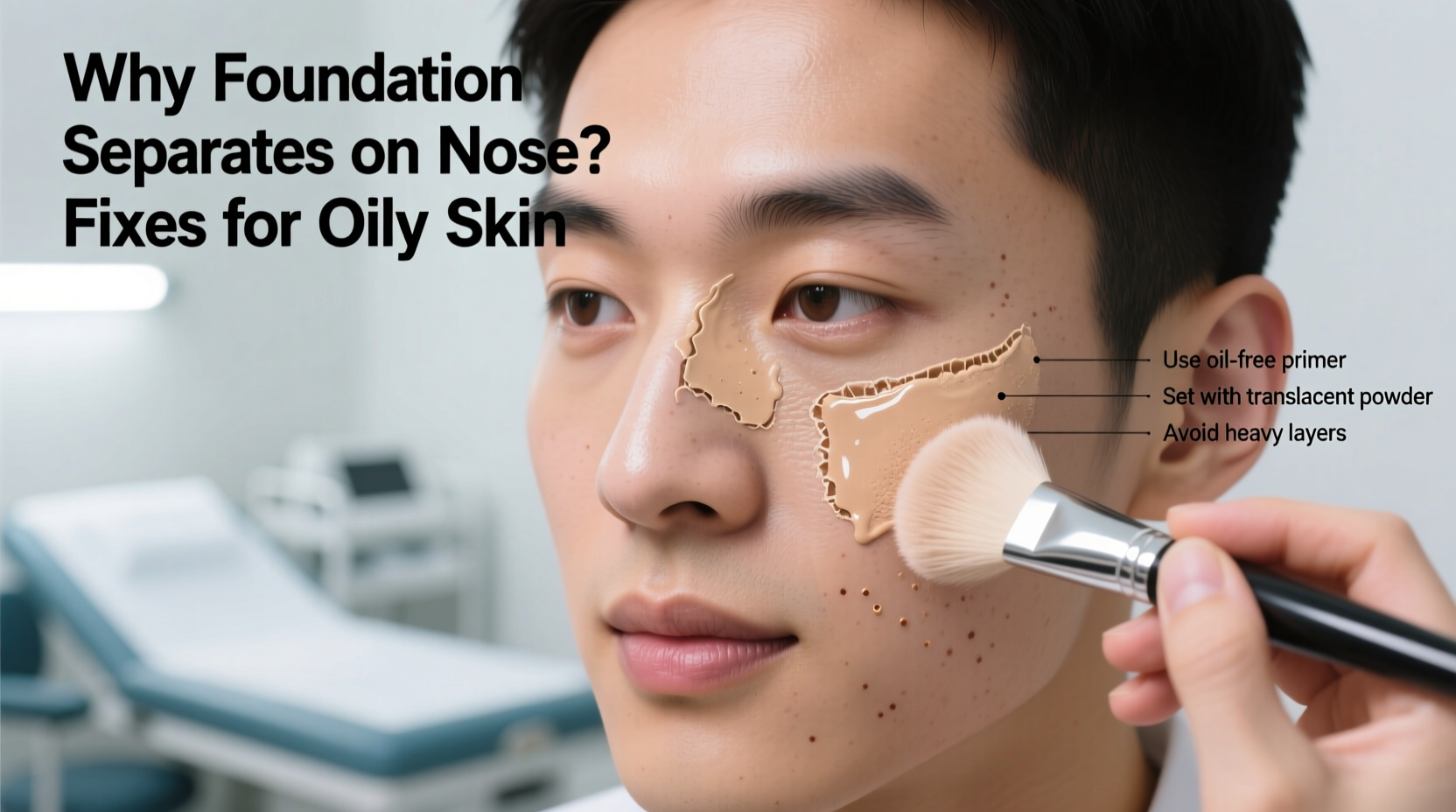
Oily skin produces excess sebum due to overactive sebaceous glands. While sebum helps protect and moisturize the skin, too much of it creates a slippery surface that prevents foundation from adhering properly. The T-zone—especially the nose—is typically where oil accumulates most, making it the first area where makeup begins to slide or separate.
When oil mixes with foundation, it disrupts the emulsion of the product. Foundations are carefully balanced mixtures of water, oil, and pigments. Excess sebum interferes with this balance, causing the formula to break down. This results in caking, pilling (tiny rolled-up bits of makeup), or oxidation, which darkens the foundation over time.
Movement also plays a role. The nose is a dynamic facial zone—constantly flexing during expressions like smiling or squinting. Repeated motion can cause foundation to crease and crack, especially if the formula lacks flexibility or if too many layers are applied without proper blending.
“Oil doesn’t just make makeup shiny—it actively destabilizes the formulation. That’s why controlling sebum early in the routine is critical for longevity.” — Dr. Lena Patel, Board-Certified Dermatologist
Skincare Prep: The Foundation of Long-Lasting Makeup
What happens before you apply foundation matters more than most realize. Skipping proper skincare or using incompatible products can sabotage even the most expensive makeup. For oily skin, the goal is to create a clean, matte, yet hydrated base that allows foundation to adhere evenly.
Cleansing: Start with a Clean Slate
Begin with a gentle foaming or gel cleanser formulated for oily skin. Look for ingredients like salicylic acid, glycolic acid, or tea tree oil, which help dissolve excess oil and clear pores without over-drying. Avoid harsh soaps that strip the skin, as this can trigger rebound oil production.
Toning: Balance pH and Minimize Shine
A toner isn’t just an optional step—it helps restore the skin’s natural pH after cleansing and removes any residual impurities. Choose alcohol-free toners with niacinamide or witch hazel, which regulate oil and tighten pores. Apply with a cotton pad or by patting gently with fingertips.
Hydration: Yes, Even for Oily Skin
Dehydrated skin often produces more oil to compensate for lack of moisture. Use a lightweight, non-comedogenic gel or serum-based moisturizer. Ingredients like hyaluronic acid attract water without clogging pores, while mattifying agents such as silica keep shine at bay.
Choosing the Right Foundation and Primer
Not all foundations behave the same on oily skin. The wrong formula can sink into pores, oxidize quickly, or separate under oil. Here’s how to select products that work *with* your skin type, not against it.
Look for Oil-Control Formulas
Matte, long-wear, or transfer-resistant foundations are ideal for oily complexions. These typically have higher pigment concentration and film-forming polymers that resist breakdown. Common finishes include satin-matte or velvet—avoid dewy or luminous finishes unless you’re prepared for touch-ups.
Ingredients like dimethicone provide a smooth, silicone-based barrier that repels oil. Clay, kaolin, or talc help absorb excess sebum throughout the day. Water-based formulas may feel lighter but tend to wear off faster unless properly set.
Don’t Skip the Primer
A good primer is essential for oily skin. It evens texture, blurs pores, and creates a grip for foundation. Pore-filling primers with silicone (like dimethicone or cyclopentasiloxane) form a protective layer that shields makeup from oil.
For extra control, consider a mattifying primer with salicylic acid or lactic acid to gently exfoliate and reduce oil buildup over time.
| Product Type | Best For Oily Skin | Avoid If... |
|---|---|---|
| Foundation Finish | Matte, long-wear | Dewy, sheer, cream-based |
| Primer Type | Silicone-based, mattifying | Hydrating, oil-based |
| Texture | Lightweight liquid or mousse | Heavy creams or sticks |
| Key Ingredients | Dimethicone, clay, niacinamide | Mineral oil, lanolin, fragrance |
Application Techniques That Prevent Separation
How you apply foundation is just as important as the product itself. Poor technique—such as applying too thickly or skipping blending—can lead to separation, especially in textured areas like the nose.
Use the Right Tools
A damp beauty sponge offers the most seamless finish. It blends foundation into the skin rather than sitting on top. For oily areas, stippling (dabbing motion) works better than dragging, which can displace product and cause patchiness.
Brushes can work too, but opt for dense, flat-top kabuki brushes that press product into the skin. Avoid fluffy powder brushes for foundation—they don’t provide enough coverage or adhesion.
Less is More
Build coverage gradually. Applying a heavy layer increases the chance of caking and separation. Start with a pea-sized amount and add more only where needed. Focus on evening tone, not masking every imperfection.
Concealer After Foundation
Always apply concealer *after* foundation. Doing so prevents lifting when blending. Spot-conceal blemishes or redness around the nose instead of layering concealer under foundation, which adds unnecessary bulk.
Setting Strategies for All-Day Wear
Setting your makeup correctly locks everything in place and absorbs excess oil before it breaks down your foundation. Skipping this step—or doing it incorrectly—is a leading cause of midday separation.
Step-by-Step Setting Routine
- Blot First: After applying foundation, gently blot the nose with a tissue or oil-absorbing sheet. This removes surface oil without disturbing makeup.
- Powder Strategically: Use a small, dense brush to apply translucent setting powder only where needed—primarily the sides and tip of the nose. Avoid over-powdering, which leads to dryness and cracking.
- Bake (Optional): For longer wear, “bake” the nose area by applying a thicker layer of powder and letting it sit for 1–2 minutes before dusting off. Best reserved for special occasions, not daily use.
- Seal with Setting Spray: Finish with an oil-control or mattifying setting spray. Hold the bottle 8–10 inches away and mist in an “X” and “T” pattern. This melts powders together and creates a flexible, breathable shield.
Reapplication should be minimal. If shine returns, blot first, then use a pressed powder or blotting paper. Never layer more liquid foundation on top—it will only pill and worsen separation.
Real-Life Example: Maria’s Morning Routine Fix
Maria, a 29-year-old marketing executive with combination-oily skin, struggled with her foundation separating by 11 a.m., especially on the sides of her nose. She blamed her $50 foundation until she reviewed her routine with a makeup artist.
She was using a hydrating gel moisturizer followed by a dewy primer and a radiant-finish foundation—great for dry skin, but counterproductive for her oily T-zone. She also skipped setting powder, fearing a cakey look.
After switching to a mattifying primer, a long-wear matte foundation, and adding light powdering on the nose, her makeup lasted through client meetings and lunch without touch-ups. Her key insight? “I thought hydration meant avoiding all mattifying products. Now I know balance is the goal.”
Frequently Asked Questions
Why does foundation separate only on my nose and not elsewhere?
The nose has a high concentration of sebaceous glands and moves frequently with facial expressions. This combination of oil and motion makes it prone to separation. Other areas may stay intact simply because they produce less oil or move less.
Can skincare really affect how my foundation wears?
Absolutely. Using overly rich moisturizers, skipping toner, or not allowing products to absorb can cause pilling and separation. Skincare sets the stage—oil-control serums and lightweight hydration make a significant difference.
Is there a way to fix separated foundation without removing my entire makeup?
Yes. Gently blot the area with a tissue to remove excess oil. Use a tiny brush to blend out cracks with a bit of moisturizer or face oil, then reapply a thin layer of foundation and set with powder. Avoid layering heavily, as this worsens the issue.
Expert Checklist: Prevent Nose Separation in 7 Steps
- Wash face with an oil-controlling cleanser
- Apply alcohol-free toner with niacinamide
- Use a lightweight, non-greasy moisturizer
- Prime the T-zone with a mattifying or pore-blurring primer
- Choose a long-wear, matte foundation suitable for oily skin
- Apply with a damp sponge using stippling motions
- Set with translucent powder and finish with mattifying setting spray
Conclusion: Take Control of Your Makeup Longevity
Foundation separation on the nose isn’t a flaw in your skin—it’s a solvable challenge rooted in preparation, product selection, and technique. Oily skin doesn’t mean you’re doomed to midday touch-ups or patchy makeup. With the right routine, you can achieve a polished, lasting finish that stays put from morning meetings to evening plans.
The key is consistency: treat your skin properly, choose compatible products, and refine your application habits. Small changes—like swapping a dewy primer for a mattifying one or learning to blot instead of pile on powder—can make a dramatic difference.




 浙公网安备
33010002000092号
浙公网安备
33010002000092号 浙B2-20120091-4
Comments
No comments yet. Why don't you start the discussion?