
If you’ve ever been startled by a sudden knock or thud coming from your refrigerator, you’re not alone. Many homeowners experience this unsettling sound at some point. The good news? In most cases, it’s not a sign of imminent failure. Refrigerators are complex appliances with moving parts, temperature shifts, and fluid dynamics—all of which can produce unfamiliar sounds. But understanding the difference between normal operation and a potential problem is key to avoiding unnecessary stress or costly repairs.
This article breaks down the science behind fridge noises, identifies the most common causes of knocking sounds, and provides practical steps to diagnose and resolve the issue. Whether your fridge knocks once a day or every few hours, you’ll walk away knowing exactly what to do—and when, if ever, to call a professional.
How Refrigerators Work: A Quick Primer
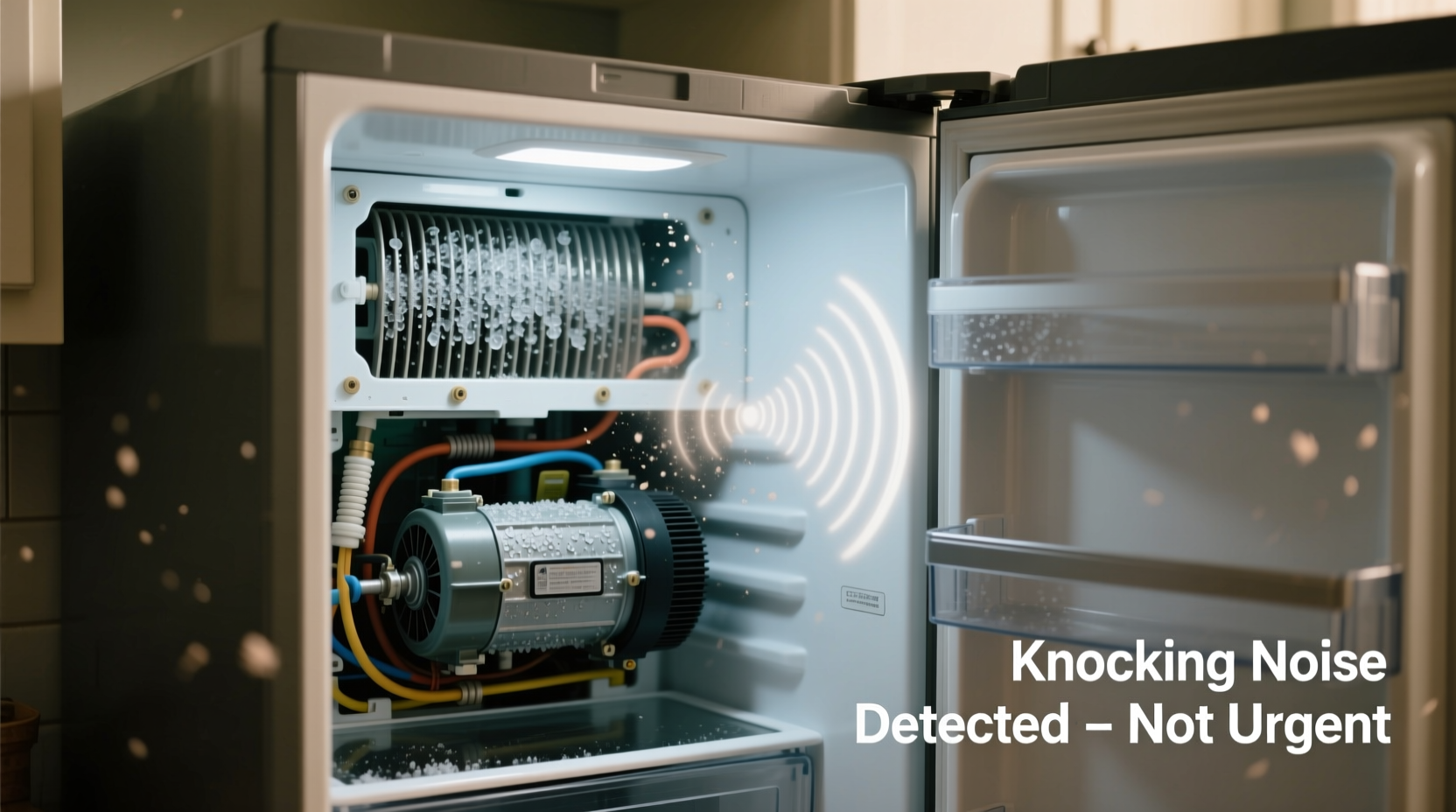
To understand why your fridge might be making knocking noises, it helps to know how it operates. Modern refrigerators use a closed-loop cooling system that includes a compressor, condenser coils, evaporator coils, and refrigerant—a chemical coolant that cycles through these components to absorb and release heat.
The process works like this: the compressor pressurizes the refrigerant, sending it through the condenser coils (usually on the back or bottom) where it releases heat and turns into a liquid. That liquid then moves to the evaporator coils inside the fridge, where it expands, cools, and absorbs warmth from the interior. This cycle repeats continuously to maintain a stable internal temperature.
Because this system involves pressure changes, thermal expansion, and mechanical movement, it naturally produces sounds. Some are expected—like humming, buzzing, or clicking. Others, like knocking, can seem alarming but may still fall within the range of normal behavior.
Common Causes of Knocking Noises in Fridges
Not all knocking noises are created equal. The timing, frequency, and context of the sound often reveal its source. Below are the most frequent culprits:
- Thermal Expansion and Contraction: As internal components heat up and cool down during the cooling cycle, plastic panels, shelves, and metal parts expand and contract. This movement can cause a light knocking or popping noise—especially noticeable at night when the house is quiet.
- Defrost Cycle Activity: Frost-free fridges automatically defrost every 6–12 hours. During this phase, heating elements melt ice buildup on the evaporator coils. As the metal warps slightly from temperature changes, it can emit a knocking or cracking sound.
- Water Valve Operation: If your fridge has a water dispenser or ice maker, the solenoid valve opens briefly to allow water flow. This can create a sharp “knock” or “thud,” particularly if the plumbing has slight backpressure.
- Compressor Cycling On/Off: When the compressor starts or stops, it creates vibrations. These can travel through the floor or cabinetry and be perceived as a knock, especially if the fridge isn’t level or is placed on a resonant surface.
- Fan Motor Issues: Evaporator and condenser fans help circulate air. If a fan blade hits debris or becomes unbalanced due to wear, it can generate rhythmic tapping or knocking.
- Loose Components: Over time, screws, brackets, or drain pans can loosen. Vibration from the compressor or fans may cause them to rattle or knock intermittently.
When Should You Be Concerned?
While many knocking sounds are harmless, certain patterns or characteristics signal deeper issues. Use the following checklist to assess whether your fridge needs professional attention.
✅ Normal Signs (No Panic Needed)
- Noise occurs once per cooling cycle
- Sound is soft and brief (like a tap or pop)
- Knocking happens only during defrost or ice production
- Temperature remains stable
- No visible leaks or excessive frost
⚠️ Warning Signs (Investigate Further)
- Knocking is loud, metallic, or repetitive
- Noise persists even when compressor is off
- Fridge struggles to cool or runs constantly
- You notice oil residue or refrigerant leaks
- Vibrations are strong enough to move the unit
“Most knocking noises in modern fridges are due to material flexing or water valves. It’s only concerning if it’s accompanied by performance issues.” — David Lin, Appliance Repair Technician with 15 years of field experience
Step-by-Step Guide to Diagnosing the Knock
Follow this logical sequence to identify and potentially fix the source of the knocking without calling a technician.
- Observe the Timing: Note when the knock occurs. Is it right after the fridge kicks on? During ice-making? Every few hours? Write down a log for 24 hours.
- Check the Level: Use a bubble level on the top shelf. If the fridge isn’t level, it can amplify vibrations. Adjust the front leveling legs until balanced.
- Inspect for Loose Parts: Pull the fridge out and examine the back. Gently wiggle the drain pan, condenser fan cover, and any visible brackets. Tighten loose screws.
- Listen at the Back: With the fridge running, place your ear near the rear panel. Determine if the noise is coming from the compressor area, fan, or water valve.
- Turn Off Water Supply: If you have an ice maker, shut off the water line. If the knocking stops, the issue is likely the inlet valve.
- Clean the Condenser Coils: Dust buildup forces the compressor to work harder, increasing vibration. Use a coil brush to clean them every 6 months.
- Test the Fan Motors: Open the freezer and listen. If you hear scraping or uneven spinning from the evaporator fan, it may need replacement.
Troubleshooting Table: Knock Type vs. Likely Cause
| Knock Description | Most Likely Cause | Action Required |
|---|---|---|
| Single soft pop after cooling starts | Thermal expansion of plastic liner | None – normal operation |
| Sharp thud during ice-making | Water inlet valve closing | Check water pressure; replace valve if noisy |
| Rhythmic tapping from inside back wall | Evaporator fan obstruction | Clear ice/debris; inspect blade |
| Deep metallic knock when compressor starts | Mounting bolts loose or worn | Inspect compressor mounts; tighten or replace |
| Random knocking with no cooling | Failed start relay or compressor | Call technician |
Mini Case Study: The Midnight Knock
Sarah from Portland noticed a loud knocking sound from her refrigerator every night around 2 a.m. It wasn’t constant—just one or two thuds, then silence. At first, she worried about a failing compressor. She recorded the sound and brought it to a local repair shop.
The technician asked when the noise occurred. Sarah mentioned it always happened after the ice maker refilled. A quick test confirmed it: when the water valve opened, the sudden pressure change caused a “water hammer” effect in the supply line, resulting in a sharp knock.
The fix? Installing a water hammer arrestor on the fridge’s water line. Cost: $18. Noise gone permanently. This case illustrates how a seemingly mysterious sound often has a simple, inexpensive solution once properly diagnosed.
Preventive Checklist: Keep Your Fridge Quiet
Maintaining your refrigerator reduces both noise and breakdown risk. Add these tasks to your home maintenance routine:
- ✅ Clean condenser coils every 6 months
- ✅ Check door seals for cracks or gaps annually
- ✅ Ensure fridge is level using a bubble level
- ✅ Inspect water line connections for leaks or stiffness
- ✅ Replace water filter every 6 months (if applicable)
- ✅ Vacuum dust from under and behind the unit quarterly
- ✅ Listen monthly for new or changing sounds
FAQ: Common Questions About Fridge Knocking
Is a knocking fridge dangerous?
In most cases, no. Knocking caused by thermal expansion, water valves, or minor vibrations poses no safety risk. However, if the noise is accompanied by burning smells, oil leaks, or complete cooling failure, unplug the unit and contact a technician immediately.
Can a knocking noise mean my fridge is dying?
Not necessarily. While a failing compressor can make knocking or banging sounds, it usually comes with other symptoms: poor cooling, constant running, or failure to start. Isolated knocking without performance issues is rarely a death knell for the appliance.
Should I replace the water inlet valve if it’s noisy?
If the knock coincides with ice maker filling and is sharp and sudden, yes. Water inlet valves wear out over time. Replacement is relatively simple and costs $30–$80 for the part. Consider doing it yourself if you're comfortable with basic plumbing.
Final Thoughts: Stay Calm and Investigate
Hearing a knock from your refrigerator doesn’t mean disaster is imminent. In fact, most knocking noises are benign byproducts of normal operation. Thermal shifts, water flow, and mechanical cycling all contribute to the symphony of sounds a modern fridge produces. The real skill lies in distinguishing background noise from warning signs.
By observing patterns, performing simple checks, and understanding your appliance’s behavior, you can often resolve concerns without spending a dime. And when in doubt, a quick call to a qualified technician for a diagnostic visit is far more cost-effective than premature replacement.
Your fridge works hard to keep your food safe. In return, it deserves a little attention—before small quirks become big problems.




 浙公网安备
33010002000092号
浙公网安备
33010002000092号 浙B2-20120091-4
Comments
No comments yet. Why don't you start the discussion?