
Air drying is often seen as the gentlest way to dry hair—no heat, no damage, just natural results. Yet many people find that their hair emerges from the process puffier, rougher, and more frizzy than expected. This paradox frustrates even those with well-maintained routines. The truth is, frizz isn’t random; it’s a predictable response to environmental conditions, hair structure, and post-wash habits. Understanding the science behind why your hair frizzes when air dried unlocks the door to lasting smoothness.
The Science of Frizz: Why Hair Rebels After Air Drying
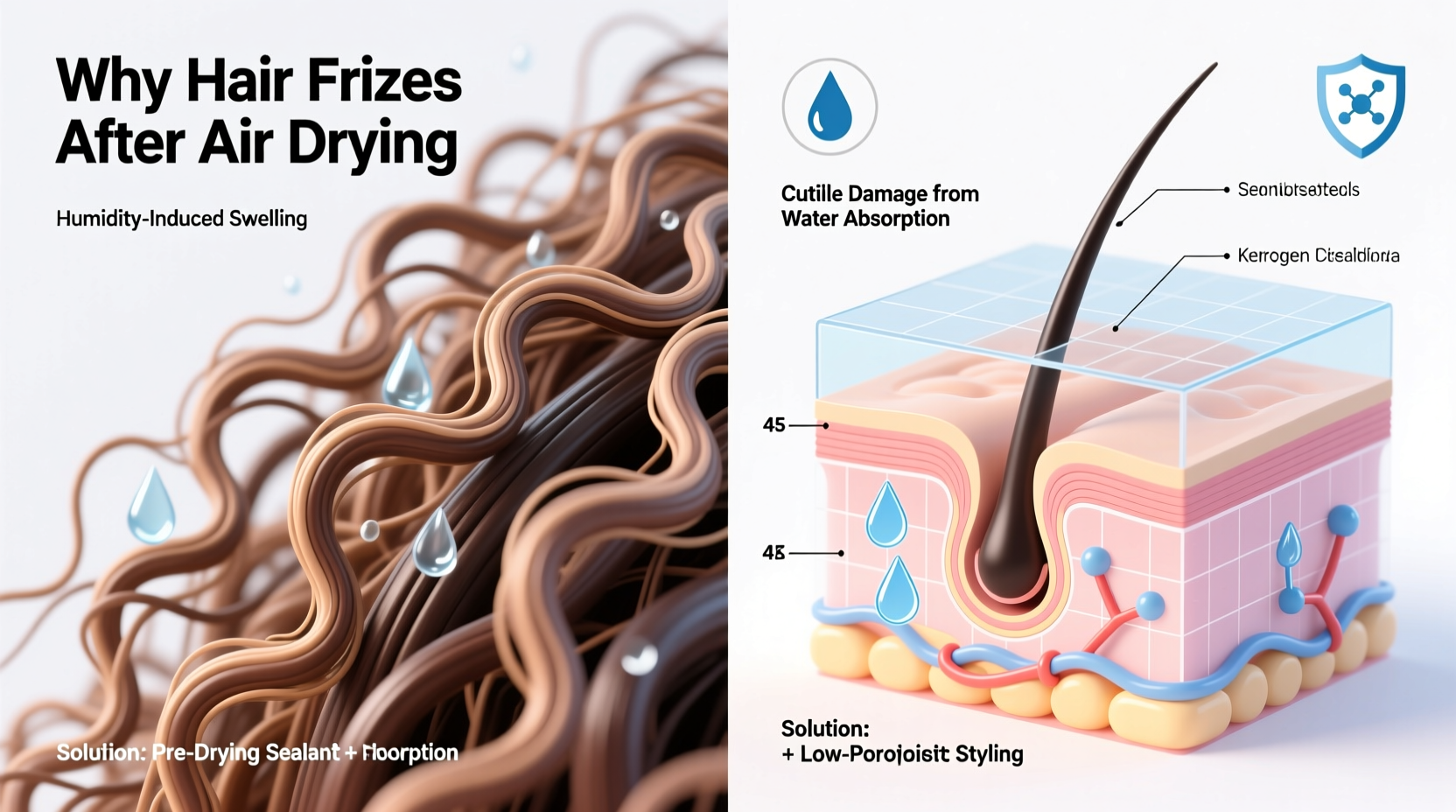
Frizz occurs when the hair cuticle—the outermost layer of the hair shaft—lifts and allows moisture from the air to penetrate the cortex. When this happens, the hair swells, distorts its shape, and creates an uneven surface that reflects light poorly, giving hair a dull, fuzzy appearance.
Hair is hygroscopic, meaning it absorbs water from the environment. Humidity is the most common culprit, but even indoor air with moderate moisture levels can trigger frizz in susceptible hair types. During air drying, hair remains wet longer than with blow-drying, prolonging exposure to humid air and increasing the chance for cuticle disruption.
Keratin, the protein that makes up most of your hair, contains cysteine bonds that maintain structural integrity. When water penetrates the cortex, hydrogen bonds form and break repeatedly during wet-to-dry transitions. If not managed properly, this leads to misaligned fibers and irregular texture—what we perceive as frizz.
“Hair doesn’t frizz because it’s damaged—it frizzes because it’s reacting to its environment. The key is controlling that interaction.” — Dr. Rebecca Lee, Trichologist and Hair Structure Researcher
This means frizz isn’t exclusive to dry or curly hair. Even fine, straight hair can exhibit frizz if the cuticle is compromised or humidity is high. However, curly, wavy, and coily textures are more prone due to their asymmetrical cuticle patterns and increased surface area.
Key Factors That Worsen Air-Dry Frizz
Several factors amplify frizz during air drying. Recognizing them helps you adjust your routine effectively.
1. High Porosity Hair
Hair with high porosity has gaps or holes in the cuticle layer, allowing rapid absorption of moisture. While this sounds beneficial, it causes hair to swell quickly in humid conditions and lose moisture just as fast, leading to inconsistent texture and persistent frizz.
2. Rough Towel Drying
Using a regular cotton towel to dry hair creates friction that lifts the cuticle. Microscopic damage accumulates over time, increasing surface roughness and inviting frizz. A 2020 study published in the *International Journal of Trichology* found that cotton towels cause significantly more cuticle abrasion than microfiber or silk alternatives.
3. Skipping Leave-In Conditioners or Sealants
After washing, hair is in its most vulnerable state. Without a protective barrier, water evaporates unevenly, causing some strands to contract faster than others—a recipe for kinks and puffiness. Products that coat the hair help regulate moisture loss and reduce static.
4. Environmental Humidity
When relative humidity exceeds 60%, the air holds enough moisture to saturate exposed hair. Without anti-humidity ingredients (like silicones or humectant regulators), hair will absorb ambient water and expand.
Science-Backed Solutions for Smoother Air-Dried Hair
Frizz control isn’t about eliminating moisture—it’s about managing how your hair interacts with it. These evidence-based strategies address the root causes of frizz while supporting hair health.
1. Use a Microfiber Towel or Cotton T-Shirt
Replace rough terrycloth towels with gentler materials. Microfiber and soft cotton t-shirts absorb water efficiently without disturbing the cuticle. Gently squeeze or scrunch hair instead of rubbing.
2. Apply a Leave-In Conditioner Immediately After Washing
Leave-in conditioners provide hydration and form a protective film. Look for formulas containing cationic agents like behentrimonium methosulfate, which bind to negatively charged hair surfaces, smoothing the cuticle and reducing static.
3. Incorporate Humidity-Resistant Styling Products
Products with dimethicone, cyclomethicone, or natural oils (like argan or jojoba) create a breathable barrier against moisture. A 2018 study in the *Journal of Cosmetic Science* showed that lightweight silicones reduced frizz by up to 72% in high-humidity environments without weighing hair down.
4. Try the \"Plopping\" Technique
Plopping involves wrapping damp hair in a cotton t-shirt or microfiber cloth after applying products. This technique helps align curls, speeds up drying time slightly, and minimizes contact with fabrics that cause friction. It also encourages uniform product distribution.
“Plopping isn’t just a trend—it leverages capillary action and compression to improve curl definition and reduce frizz formation.” — Natasha Chen, Curl Specialist and Formulation Chemist
5. Rinse With Cool Water
Finishing your wash with a cool water rinse helps seal the cuticle. Cooler temperatures cause the hair shaft to contract slightly, flattening the cuticle and creating a smoother surface that resists moisture intrusion.
Do’s and Don’ts of Air Drying: A Quick Reference Table
| Do | Don’t |
|---|---|
| Use a wide-tooth comb or fingers to detangle while hair is saturated with conditioner | Brush dry or partially dry hair, especially with fine-tooth combs |
| Apply styling products to soaking wet hair for even distribution | Wait until hair is half-dry to apply creams or gels |
| Scrunch out excess water gently | Rub hair vigorously with a towel |
| Use products with humectants in moderation (e.g., glycerin) in low-humidity climates | Use heavy glycerin-based products in high humidity |
| Avoid touching hair while it dries to prevent disrupting curl formation | Frequent touching or twisting damp hair |
Step-by-Step Guide to Frizz-Free Air Drying
Follow this science-aligned routine for consistently smoother results:
- Shampoo and Condition Properly: Use a sulfate-free shampoo to avoid stripping natural oils. Follow with a moisturizing conditioner, focusing on mid-lengths to ends. Let it sit for 3–5 minutes before rinsing.
- Rinse With Cool Water: Finish your rinse with cool water to help seal the cuticle and lock in moisture.
- Detangle Under Water: While still in the shower, use your fingers or a wide-tooth comb to gently detangle hair under the conditioning product.
- Squeeze Out Water: Press water out with your palms—never rub. Then, use a microfiber towel or cotton t-shirt to blot excess moisture.
- Apply Leave-In Products: On soaking wet hair, apply a leave-in conditioner followed by a curl cream or anti-frizz serum. Use the “praying hands” method to smooth product down the hair shaft without disturbing curl clumps.
- Plop (Optional): Place hair in the center of a cotton t-shirt, gather the fabric at the nape, and tie it at the crown. Leave for 20–30 minutes, then release.
- Let It Dry Undisturbed: Avoid touching or manipulating hair while drying. Movement disrupts hydrogen bond reformation and leads to uneven texture.
- Final Touch-Up: Once fully dry, scrunch lightly to remove any crunch from gels. If needed, apply a pea-sized amount of oil to tame flyaways.
Mini Case Study: From Chronic Frizz to Defined Curls
Samantha, a 34-year-old teacher with type 3A curls, struggled with frizz every time she air dried her hair. Despite using expensive shampoos and avoiding heat, her hair would puff up within hours of drying. She kept her routine consistent but made one change based on trichological advice: she replaced her cotton towel with a microfiber one, started plopping, and switched to a silicone-containing curl cream.
Within two weeks, she noticed tighter curl definition and less volume at the crown. After a month, her hair maintained its shape even on humid days. A follow-up consultation with a dermatologist confirmed improved cuticle integrity due to reduced mechanical stress and better moisture management.
Her transformation wasn’t due to a miracle product—but to understanding how each step interacted with hair biology.
Frequently Asked Questions
Can drinking more water reduce hair frizz?
While internal hydration supports overall hair health, drinking water does not directly reduce frizz. Frizz is primarily caused by external moisture absorption and cuticle disruption, not dehydration of the hair itself. Topical care and environmental protection are far more impactful.
Is frizz a sign of damaged hair?
Not always. While damaged hair (from bleaching, heat, or chemical processing) is more prone to frizz due to lifted cuticles, even healthy hair can frizz in humid conditions. The presence of frizz should prompt an evaluation of your routine and environment—not necessarily a diagnosis of damage.
Are natural oils enough to fight frizz?
Natural oils like coconut, argan, or olive oil can help seal moisture and add shine, but they lack the humidity-blocking properties of silicones. In high humidity, oils alone may not prevent swelling. For best results, combine oils with silicones or polymers that form a protective barrier.
Checklist: Your Frizz-Control Action Plan
- ✔ Replace cotton towels with microfiber or a cotton t-shirt
- ✔ Use a leave-in conditioner after every wash
- ✔ Apply a humidity-resistant styling product (with silicones or film-formers)
- ✔ Detangle only when hair is wet and coated with conditioner
- ✔ Rinse with cool water to seal the cuticle
- ✔ Try plopping to enhance curl definition and reduce drying time
- ✔ Avoid touching hair while it dries
- ✔ Store hair products in a cool, stable environment to maintain efficacy
Conclusion: Master Your Hair’s Reaction to Air Drying
Frizz after air drying isn’t inevitable—it’s a signal that your hair’s environment and routine are out of sync. By respecting the science of hair structure and moisture interaction, you can transform your air-dried results from fuzzy to sleek. Small changes, like switching your towel or adjusting product application order, yield outsized benefits. Smoothness isn’t about perfection; it’s about consistency, knowledge, and working with your hair’s nature, not against it.




 浙公网安备
33010002000092号
浙公网安备
33010002000092号 浙B2-20120091-4
Comments
No comments yet. Why don't you start the discussion?