
Frizz is the arch-nemesis of sleek, straight hair. You spend time flat-ironing your strands, only for them to puff up into a halo within minutes—especially on humid days. The frustration is real, but so are the solutions. Understanding why this happens and how to combat it requires more than just swapping products; it demands a shift in routine, technique, and mindset about what truly protects hair from environmental stressors like humidity.
The truth is, straightening doesn’t eliminate frizz—it temporarily reshapes it. Without proper preparation and protection, humidity will always win. But with the right knowledge and tools, you can significantly extend the life of your smooth style, even in muggy conditions.
The Science Behind Frizz: Why Humidity Ruins Straight Hair
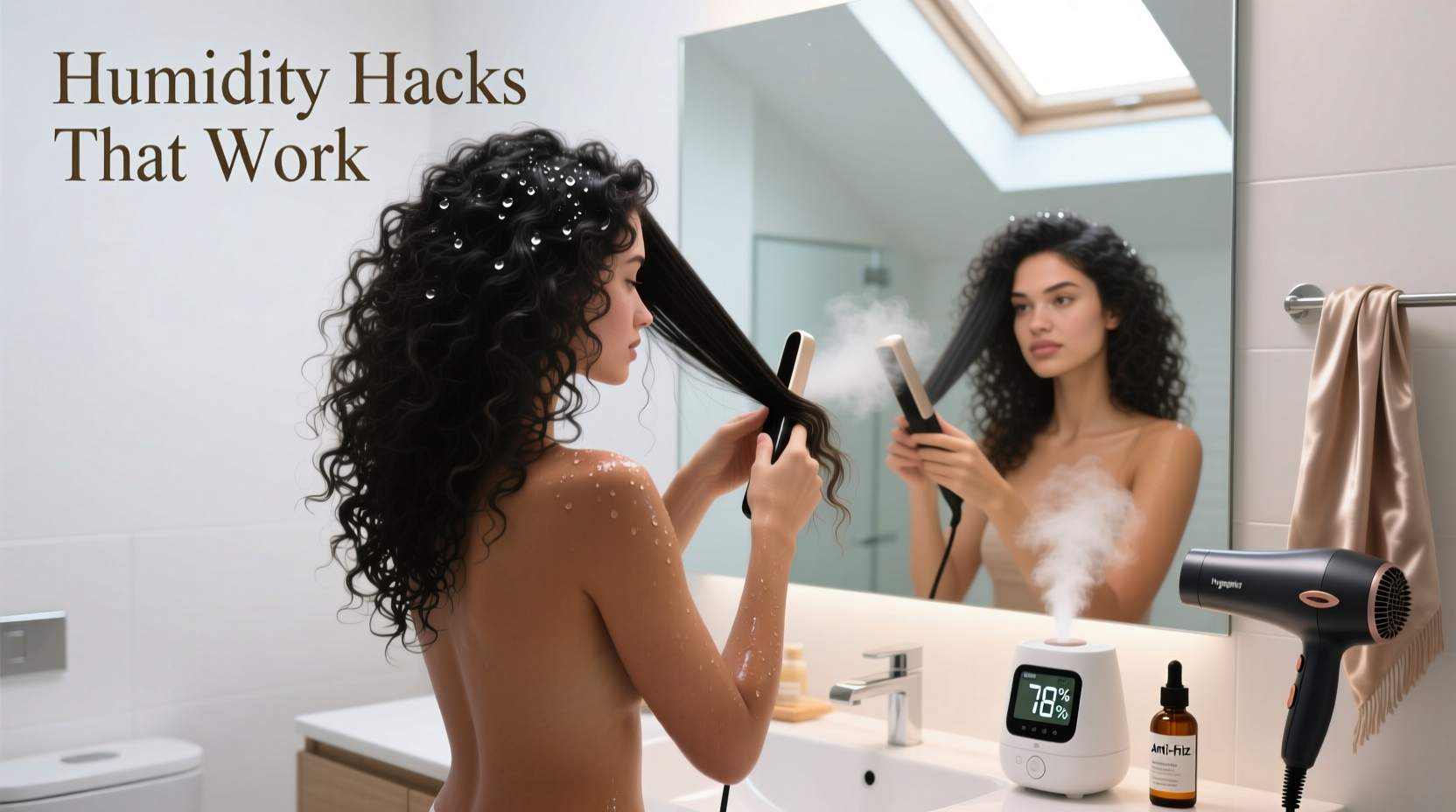
Human hair is hygroscopic, meaning it absorbs moisture from the air. Each strand has a cuticle layer that acts as a protective shield. When humidity levels rise, water molecules penetrate the hair shaft, causing the cortex (inner layer) to swell. This swelling lifts the cuticle, creating roughness and volume—what we perceive as frizz.
Straightening works by breaking and reforming hydrogen bonds in the keratin structure using heat. However, these bonds are temporary and vulnerable to moisture. As soon as your hair reabsorbs water vapor from humid air, those bonds begin to revert, undoing the smoothing effect.
“Humidity doesn’t just cause frizz—it reactivates the natural curl pattern encoded in your hair’s cortex.” — Dr. Lisa Chen, Trichologist & Hair Structure Researcher
This explains why tightly curled or wavy hair types often experience more dramatic frizz: their natural texture fights to return once exposed to moisture. Even if you have naturally straight hair, porous or damaged strands can still absorb excess moisture, leading to flyaways and loss of shine.
Why Your Flat Iron Isn’t Enough: Common Mistakes That Invite Frizz
Many people assume that higher heat equals longer-lasting results. In reality, improper technique or product misuse can worsen frizz over time. Here are common pitfalls:
- Skipping heat protectant: Exposing bare hair to high temperatures damages the cuticle, increasing porosity and moisture absorption.
- Using dirty or unclean hair: Product buildup prevents even heat distribution and weakens the smoothing effect.
- Flat ironing damp hair: Residual moisture turns to steam under heat, causing internal damage and immediate frizz.
- Not sealing the style: Failing to lock in the look with anti-humidity products leaves hair defenseless.
- Touching hair too much: Hands transfer oils and disrupt alignment, encouraging static and puffiness.
Proven Humidity Hacks to Keep Hair Smooth All Day
Controlling frizz in humid environments isn’t about fighting nature—it’s about working smarter with chemistry and timing. These strategies target different stages of styling to build lasting defense.
1. Pre-Straighten Prep: Set the Foundation
Smooth results start before the flat iron ever touches your hair. Begin with freshly washed, thoroughly dried hair. Towel-drying aggressively creates friction that lifts cuticles—instead, gently squeeze out water with a microfiber towel or old cotton T-shirt.
Apply a lightweight leave-in conditioner or smoothing cream from mid-lengths to ends. Avoid heavy oils near the roots, which can weigh hair down and reduce heat conductivity.
2. Use the Right Heat Tools and Settings
Match your flat iron temperature to your hair type:
| Hair Type | Recommended Temperature | Notes |
|---|---|---|
| Fine or Damaged | 300–350°F (150–175°C) | Higher heat increases breakage risk |
| Medium/Normal | 350–375°F (175–190°C) | Ideal balance of efficacy and safety |
| Thick or Coarse | 375–400°F (190–205°C) | May require two passes max |
| Kinky/Curly | Up to 425°F (218°C) | Use sparingly; consider keratin alternatives |
Ensure your flat iron plates are clean and ceramic or tourmaline-coated for even heat distribution and reduced static.
3. Technique Matters: How You Straighten Affects Longevity
Section hair into four quadrants and work systematically. Clamp each section close to the roots (but not on scalp), then glide slowly down to the ends. For stubborn areas, make a second pass—but never more than twice.
Finish with a cool shot: After final pass, run the iron over hair one last time without heat. This helps \"set\" the new shape by cooling the keratin structure rapidly, making it less reactive to moisture.
4. Seal With Anti-Humidity Products
Immediately after straightening, apply a humidity-resistant serum or spray. Look for key ingredients:
- Dimethicone or cyclomethicone: Silicones that coat the hair, blocking moisture.
- Polyquaternium-55 or PVP: Film-forming agents that resist humidity-induced swelling.
- Hydrolyzed proteins: Strengthen hair internally, reducing porosity.
A light mist of flexible-hold hairspray focused on the underside layers adds invisible armor without stiffness.
Real-Life Example: From Daily Frizz Battle to All-Day Smoothness
Meet Sarah, a marketing executive in Miami who struggled with frizz every summer. Despite straightening her thick, wavy hair daily, it would balloon by 10:30 a.m., no matter the product. She tried everything—from coconut oil to DIY vinegar rinses—but nothing lasted past lunchtime.
After consulting a trichologist, she overhauled her routine: washing less frequently with a sulfate-free shampoo, using a silicone-based primer before blow-drying, straightening on fully dry hair at 375°F, and finishing with a humidity-fighting mist containing PVP.
The result? Her hair stayed sleek for over 48 hours—even during outdoor events in 80% humidity. The change wasn’t one miracle product, but a system designed to counteract moisture at every stage.
Step-by-Step Guide: The 7-Step Routine for Frizz-Free Straight Hair in Humidity
Follow this sequence for maximum smoothness retention:
- Wash with a smoothing shampoo and deep-condition weekly. Focus on hydration without heaviness.
- Rinse with cool water to seal the cuticle and enhance shine.
- Towel-dry gently, then apply a heat protectant + humidity barrier cream.
- Blow-dry completely using a nozzle attachment to align cuticles.
- Divide into sections and straighten with correct heat settings.
- Run a final cool pass with the flat iron to set the style.
- Seal with a lightweight serum and anti-frizz spray. Avoid touching afterward.
For extra protection in extreme humidity, wrap hair loosely in a silk scarf or sleep on a silk pillowcase overnight to minimize friction.
Do’s and Don’ts: Quick Reference Table
| Do’s | Don’ts |
|---|---|
| Use a heat protectant with silicones | Apply oils before heat styling—they can burn |
| Let hair cool completely after straightening | Flip or run fingers through hair immediately after styling |
| Store hair in low-humidity areas when possible | Leave hair uncovered in damp bathrooms or cars |
| Refresh with a travel flat iron if needed | Re-straighten wet or damp hair |
| Use dry shampoo at roots to absorb sweat and oil | Overuse sprays that build up and attract dirt |
FAQ: Your Top Frizz Questions Answered
Can I prevent frizz without using silicones?
Yes, though results may vary. Natural alternatives like argan oil, shea butter, or plant-based film formers (e.g., acacia gum) offer some protection but are generally less effective in high humidity. If avoiding silicones, prioritize lowering hair porosity through protein treatments and minimizing manipulation.
How long should straightened hair last in humid weather?
With proper prep and sealing, expect 24–48 hours of smoothness. Factors like sweating, wind exposure, and hair texture affect longevity. Touch-ups with a mini flat iron can extend wear, but repeated heating increases damage risk.
Does drinking water affect hair frizz?
Internal hydration supports overall hair health, but it doesn’t directly reduce external frizz. However, well-hydrated hair is less brittle and better able to retain its cuticle integrity, indirectly improving resistance to environmental stress.
Conclusion: Take Control of Frizz, One Strand at a Time
Frizzy hair after straightening isn’t a personal failing—it’s a predictable reaction to moisture, physics, and sometimes, flawed technique. But armed with the right knowledge, tools, and habits, you can dramatically improve your results. It’s not about achieving perfection; it’s about consistency, protection, and understanding your hair’s unique needs.
Start small: pick one mistake from this guide—like skipping heat protectant or straightening damp hair—and fix it today. Then layer in additional steps until your routine becomes second nature. Over time, you’ll notice fewer bad hair days, less styling time, and greater confidence, regardless of the weather forecast.




 浙公网安备
33010002000092号
浙公网安备
33010002000092号 浙B2-20120091-4
Comments
No comments yet. Why don't you start the discussion?