
Washing your hair one day only to find it greasy and flat the next can be frustrating—especially when you're using quality products and following a regular routine. Oily hair isn't just a cosmetic concern; it often signals an imbalance in your scalp's natural oil production. While sebum is essential for moisturizing and protecting your hair, overproduction leads to that unappealing slickness, limp strands, and frequent shampooing. Understanding the root causes behind this rapid oil buildup is the first step toward long-term control. From hormonal shifts to product misuse, several factors contribute to oily hair. More importantly, sustainable solutions go beyond frequent washing—they involve adjusting habits, selecting appropriate products, and sometimes reevaluating lifestyle choices.
Understanding Sebum: The Science Behind Oily Hair
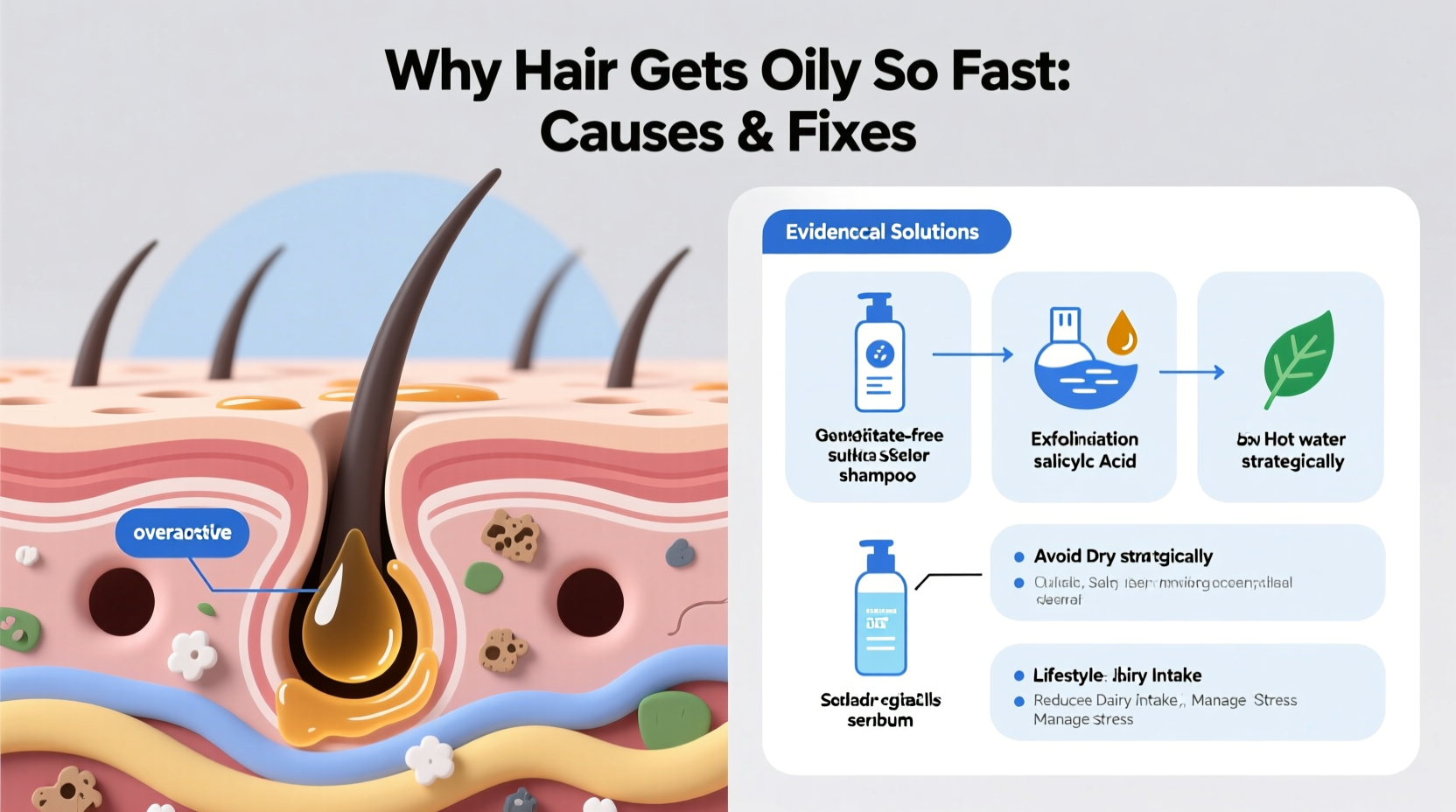
Sebum is an oily substance produced by sebaceous glands located in your scalp. Its primary function is to lubricate the skin and hair, preventing dryness and protecting against environmental damage. However, when these glands become overactive, they produce excess sebum that travels down the hair shaft, causing visible oiliness within hours or a single day after cleansing.
The rate of sebum production varies from person to person and is influenced by genetics, hormones, age, and external stimuli. For instance, androgens—male sex hormones present in both men and women—play a significant role in stimulating sebaceous gland activity. This explains why many people experience oilier hair during puberty, menstruation, pregnancy, or periods of high stress.
Interestingly, research shows that individuals with finer hair may notice oiliness more quickly, not because they produce more oil, but because their hair has less surface area to distribute it. In contrast, coarser or curlier hair types tend to retain moisture longer and show oil less visibly.
“Sebum is necessary for healthy hair, but imbalance—whether too much or too little—can lead to scalp issues. The goal isn’t elimination, but regulation.” — Dr. Lena Patel, Dermatologist & Hair Health Specialist
Common Causes of Rapid Oil Buildup After Washing
Oily hair the day after washing rarely stems from a single cause. Instead, it’s usually the result of overlapping internal and external factors. Identifying which ones apply to you is crucial for targeted correction.
Hormonal Fluctuations
Hormones like testosterone and dihydrotestosterone (DHT) directly influence sebum production. Life stages such as puberty, pregnancy, perimenopause, and conditions like polycystic ovary syndrome (PCOS) can trigger increased oiliness. Even short-term stress raises cortisol levels, which in turn stimulates sebaceous glands.
Overwashing or Underwashing
Paradoxically, washing your hair too frequently can worsen oiliness. Stripping the scalp of its natural oils prompts it to compensate by producing more sebum. Conversely, infrequent washing allows oil and dead skin cells to accumulate, creating a feedback loop that encourages further overproduction.
Using Incompatible Hair Products
Heavy conditioners, silicones, and styling products that coat the scalp can clog follicles and trap oil. Applying conditioner from roots to ends, especially on fine hair, weighs hair down and accelerates greasiness. Some sulfate-free shampoos also fail to remove buildup effectively, leading to residue accumulation that mimics oiliness.
Poor Scalp Hygiene and Lifestyle Habits
Touching your hair frequently transfers facial oils and dirt to the scalp. Wearing hats or helmets regularly without cleaning them breeds bacteria and increases oil retention. Additionally, diets high in refined sugars and saturated fats have been linked to increased sebum production due to insulin spikes and inflammation.
Medications and Medical Conditions
Certain medications—including some antidepressants, antipsychotics, and hormone therapies—can alter sebum output. Skin conditions like seborrheic dermatitis (commonly known as dandruff) involve yeast overgrowth that irritates the scalp and boosts oil secretion.
Effective Solutions to Reduce Daily Oiliness
Managing oily hair requires a balanced approach focused on regulating sebum rather than eliminating it entirely. Here are proven strategies to extend the time between washes and maintain fresh-looking hair.
Choose the Right Shampoo
Opt for clarifying or purifying shampoos containing salicylic acid, tea tree oil, or pyrithione zinc. These ingredients help unclog follicles, reduce microbial buildup, and gently exfoliate the scalp. Use them 1–2 times per week, alternating with a mild, sulfate-free formula to prevent over-drying.
Adjust Your Washing Technique
Focus shampoo application on the scalp, massaging thoroughly with fingertips (not nails) to lift oil and debris. Rinse completely—residue invites faster re-oiling. Condition only the mid-lengths to ends, avoiding the roots entirely unless your hair is extremely dry.
Incorporate Dry Shampoo Strategically
Dry shampoo absorbs excess oil and adds volume between washes. Apply it at night before bed to allow maximum absorption, targeting the roots at the crown and part line. Choose alcohol-free versions with rice starch or kaolin clay to minimize scalp irritation.
Limit Heat Styling and Physical Contact
Flat irons, curling wands, and blow dryers can stimulate blood flow and temporarily increase sebum production. Minimize heat use and avoid touching your hair during the day to reduce oil transfer.
Maintain a Scalp-Friendly Diet
Foods rich in omega-3 fatty acids (like salmon, chia seeds, and walnuts), antioxidants (berries, leafy greens), and zinc (pumpkin seeds, lentils) support balanced oil production. Limit dairy and high-glycemic foods, which may exacerbate sebum output through hormonal pathways.
“Patients who reduced sugar intake and added omega-3s reported noticeable improvements in scalp oiliness within six weeks.” — Dr. Arjun Mehta, Trichologist
Step-by-Step Guide to Resetting Your Hair Care Routine
If your current regimen isn’t working, follow this structured plan to recalibrate your scalp health over 2–4 weeks:
- Week 1: Clarify and Assess
Use a clarifying shampoo twice to remove product buildup and excess oil. Observe how quickly oil returns. Note any itching, flaking, or sensitivity. - Week 2: Optimize Product Use
Switch to a lightweight, pH-balanced shampoo. Apply conditioner only to ends. Introduce dry shampoo for second-day freshness. - Week 3: Refine Technique
Wash every other day or every two days. Focus on thorough scalp massage and rinsing. Avoid hot water, which strips natural oils and triggers rebound oiliness. - Week 4: Stabilize and Maintain
Establish a consistent schedule based on your scalp’s response. Incorporate a weekly scalp treatment with apple cider vinegar (diluted 1:3 with water) to restore pH balance.
Do’s and Don’ts: A Quick Reference Table
| Do’s | Don’ts |
|---|---|
| Wash with lukewarm water | Use very hot water |
| Condition only the ends | Apply conditioner to the scalp |
| Use dry shampoo at night | Rely solely on dry shampoo daily |
| Massage scalp gently with fingertips | Scratch with nails or use harsh brushes |
| Eat anti-inflammatory foods | Consume excessive sugary or greasy foods |
| Change pillowcases 2x per week | Leave sweat-soaked hair unwashed overnight |
Real-Life Example: Sarah’s Journey to Less Oily Hair
Sarah, a 28-year-old graphic designer, struggled with oily roots by noon the day after washing. She washed her fine, straight hair daily with a popular sulfate-free shampoo, applied conditioner from root to tip, and used a creamy leave-in product for shine. Despite her efforts, her hair looked dull and greasy by midday.
After consulting a trichologist, she made key changes: she switched to a salicylic acid shampoo twice a week, stopped applying conditioner to her roots, and began using dry shampoo at night. She also started changing her pillowcase every three days and reduced her intake of dairy-based lattes and pastries.
Within three weeks, Sarah noticed her hair stayed fresher for nearly two full days. By week six, she was washing only every other day with consistent volume and manageability. Her case highlights how small, consistent adjustments—particularly around product placement and lifestyle—can yield dramatic results.
Frequently Asked Questions
Can oily hair lead to hair loss?
Not directly. However, chronic oil buildup combined with poor hygiene can clog hair follicles and contribute to inflammation, potentially weakening hair over time. Severe seborrheic dermatitis, if untreated, may also impact hair growth. Regular cleansing and proper care reduce these risks.
Is it bad to never wash oily hair?
Yes. Allowing oil, sweat, and pollutants to accumulate can irritate the scalp, promote fungal growth, and disrupt the skin barrier. Even oily scalps need regular cleansing—just with the right frequency and products. Going too long without washing often worsens the problem.
Does drinking more water help with oily hair?
Indirectly. Proper hydration supports overall skin and scalp health, helping regulate oil production. Dehydrated skin may signal the body to produce more sebum to compensate. While water alone won’t stop oiliness, it’s a foundational element of balanced physiology.
Final Thoughts and Action Plan
Oily hair one day after washing is a common yet manageable issue. It’s rarely about poor hygiene alone—it’s usually a combination of biological tendencies, product misuse, and lifestyle patterns. The solution lies not in washing more, but in washing smarter. By understanding your scalp’s needs, choosing non-comedogenic products, refining your technique, and supporting your body from within, you can break the cycle of daily shampooing.
Start today: evaluate your current routine, eliminate root-coating products, and introduce one change at a time. Track your progress over two weeks. Small shifts compound into lasting results. Healthy hair isn’t defined by how often you wash it, but by how well you care for the foundation—the scalp.




 浙公网安备
33010002000092号
浙公网安备
33010002000092号 浙B2-20120091-4
Comments
No comments yet. Why don't you start the discussion?