
If you wash your hair in the evening only to find it limp, shiny, and clinging to your scalp by morning, you're not alone. Greasy hair after just one day is a common frustration—especially for those with fine or oily hair types. While sebum production plays a role, the real culprit might be hiding in plain sight: product buildup. Over time, shampoos, conditioners, styling products, and even hard water minerals accumulate on the scalp and strands, disrupting natural oil balance and accelerating greasiness. Understanding the root causes and implementing targeted fixes can transform your hair from flat to fresh within days.
The Science Behind Oily Hair
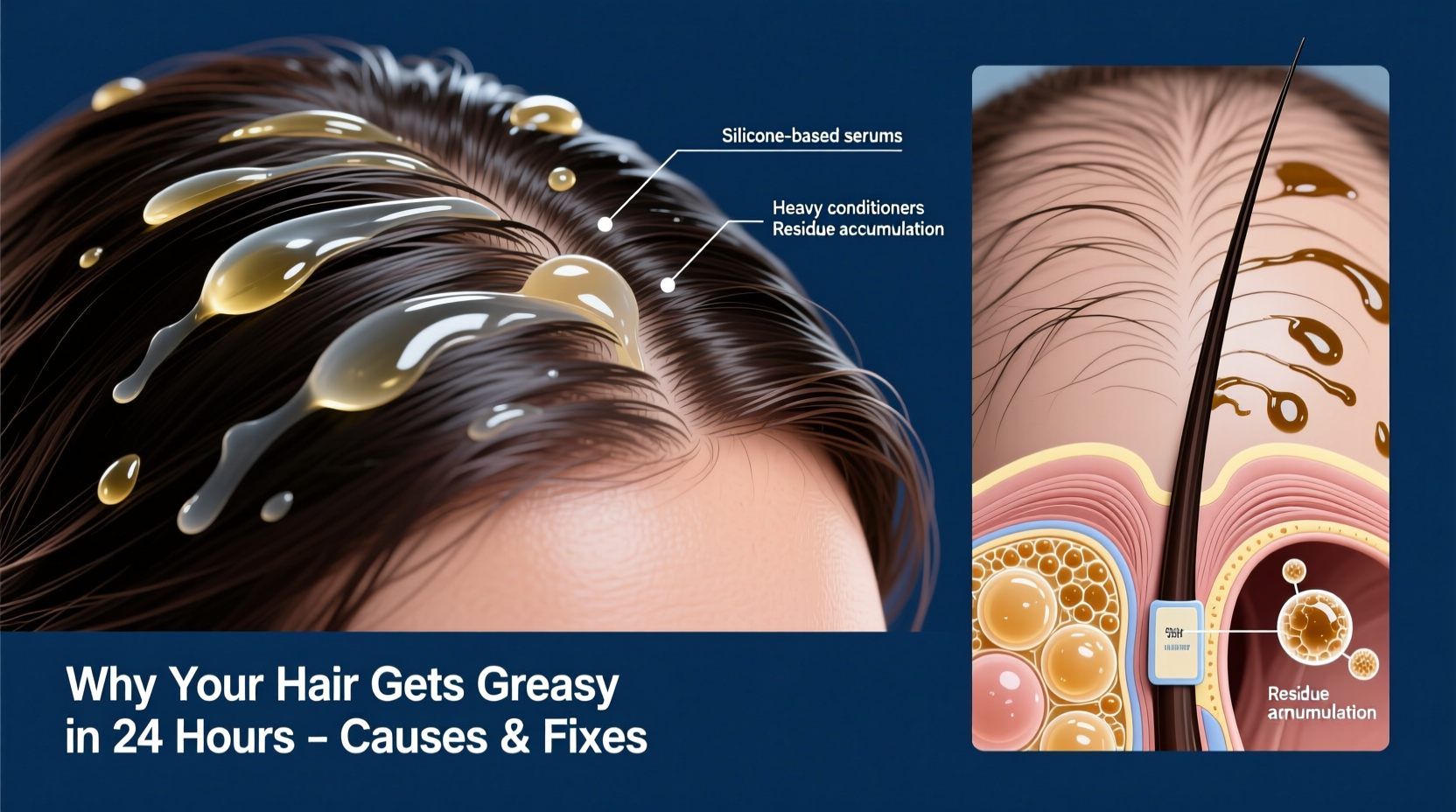
Sebaceous glands in the scalp produce sebum, an oily substance that naturally conditions and protects hair. For some, these glands are hyperactive due to genetics, hormonal fluctuations, stress, or diet. However, excessive greasiness after one wash isn’t always about overproduction—it’s often about poor distribution and residue interference.
When product buildup coats the scalp, it creates a barrier that traps sebum. Instead of spreading evenly down the hair shaft, oils pool at the roots, making hair look slick and dirty prematurely. Additionally, clogged follicles may trigger the scalp to produce more oil in compensation, creating a vicious cycle.
“Product buildup alters the scalp’s microenvironment, leading to both increased oil perception and actual overproduction.” — Dr. Lena Patel, Trichologist and Scalp Health Specialist
Common Causes of One-Day Greasiness
Greasy hair isn’t just about skipping washes. Multiple factors interact to accelerate oil reappearance:
- Overuse of heavy conditioners: Applying conditioner all over the scalp instead of just mid-lengths to ends adds weight and attracts oil.
- Residue from silicones and waxes: Found in many stylers, these ingredients coat hair but don’t dissolve in water, building up over time.
- Hard water minerals: Calcium and magnesium deposits dull hair and prevent proper cleansing.
- Overwashing: Stripping the scalp too frequently signals it to produce more oil to compensate.
- Inadequate rinsing: Leftover shampoo or conditioner feeds buildup and weighs hair down.
- Hormonal changes: Puberty, pregnancy, menopause, or PCOS can increase sebum output.
How Product Buildup Accelerates Greasiness
Modern hair products contain complex formulations designed for shine, hold, and heat protection—but many come at a cost. Non-water-soluble ingredients like dimethicone, amodimethicone, and synthetic polymers cling to hair and resist regular cleansing.
This invisible film prevents moisture absorption, disrupts scalp pH, and blocks follicles. As a result, natural oils can’t distribute properly and accumulate at the roots. You may notice symptoms beyond greasiness, including:
- Dullness despite clean washing
- Itchiness or flakiness (often mistaken for dandruff)
- Reduced volume and bounce
- Difficulty holding styles
Buildup tends to worsen gradually, so you might not notice until your hair feels perpetually oily—even right after washing.
Identifying Buildup vs. Natural Oil Production
Telling the difference is crucial. Natural sebum spreads smoothly and gives hair a healthy sheen. Buildup-related greasiness often feels sticky, looks patchy, and resists brushing. A simple test: run fingers along your scalp after 24 hours. If they feel gritty or leave a filmy residue, buildup is likely the issue.
Effective Fixes for Greasy Hair and Buildup
Correcting greasy hair requires both immediate action and long-term strategy. The goal is to cleanse thoroughly without over-drying, rebalance oil production, and prevent future accumulation.
1. Use a Clarifying Shampoo Weekly
A clarifying shampoo removes mineral deposits, silicones, and excess oils. Unlike daily formulas, these contain stronger surfactants (like sodium laureth sulfate) that lift stubborn residues. Limit use to once a week to avoid stripping.
2. Incorporate a Scalp Exfoliant
Just like facial skin, the scalp benefits from exfoliation. Use a physical scrub or chemical exfoliant (with salicylic acid or glycolic acid) once every 7–10 days to unclog follicles and improve circulation.
3. Try a Vinegar Rinse
An apple cider vinegar (ACV) rinse helps dissolve buildup and restore scalp pH. Mix 1 part ACV with 3 parts water. After shampooing, pour over hair, massage into the scalp, and rinse after 3–5 minutes. It leaves no smell when fully rinsed.
4. Switch to Sulfate-Free or Co-Wash Alternatives Carefully
While sulfate-free shampoos are gentler, they often lack the cleansing power needed to combat buildup. Conversely, co-washing (conditioner-only washing) can worsen greasiness if used too frequently. Reserve co-washing for second-day refresh, not primary cleansing.
5. Install a Shower Filter
If you live in a hard water area, a shower filter reduces mineral content, improving lather and reducing metallic deposits on hair. Look for filters with KDF or chelating agents.
Step-by-Step Detox Routine for Greasy Hair
Follow this 7-day reset plan to clear buildup and recalibrate oil production:
- Day 1: Clarify – Wash with a clarifying shampoo. Lather twice, focusing on the scalp. Rinse thoroughly.
- Day 2: Assess – Observe how quickly oil returns. Note texture and volume.
- Day 3: Scalp Exfoliate – Apply a gentle scrub or liquid exfoliant. Massage for 2 minutes, then shampoo.
- Day 4: Apple Cider Vinegar Rinse – Use diluted ACV after regular shampooing.
- Day 5–6: Wash as Needed – Use a lightweight, balancing shampoo. Avoid heavy conditioners.
- Day 7: Repeat Clarify (if needed) – Only if greasiness persists. Otherwise, wait until next week.
After this routine, maintain with weekly clarifying washes and mindful product selection.
Do’s and Don’ts: Managing Greasy Hair
| Do’s | Don’ts |
|---|---|
| Use dry shampoo at the roots between washes | Apply conditioner directly to the scalp |
| Wash with lukewarm water (hot water increases oil production) | Overwash daily with harsh shampoos |
| Choose lightweight, water-based styling products | Use silicone-heavy serums or pomades daily |
| Brush hair gently from roots to ends to distribute oils | Touch hair frequently (transfers oil from hands) |
| Use a microfiber towel or cotton T-shirt to dry | Rub hair vigorously with a terrycloth towel |
Real-Life Example: Sarah’s Hair Transformation
Sarah, a 28-year-old graphic designer, struggled with greasy roots and dry ends for years. She washed her hair daily with a sulfate-free shampoo, applied a rich conditioner from root to tip, and used a smoothing serum every morning. Despite her routine, her hair looked oily by noon.
After consulting a trichologist, she learned her “gentle” products were causing severe buildup. Her conditioner and serum contained heavy silicones that weren’t being removed. She started using a clarifying shampoo weekly, switched to a lightweight mousse, and applied conditioner only to her ends. Within two weeks, her hair stayed fresh for two full days, and her scalp felt less itchy.
“I thought I was being kind to my hair,” Sarah said. “But I was actually suffocating my scalp. Once I stopped piling on products, everything changed.”
Expert-Recommended Products and Ingredients
Not all products contribute to greasiness. The key is choosing formulas that cleanse effectively without residue:
- Look for: Water-soluble silicones (ending in -cone *PEG* or -oxyl), pyrithione zinc (balances scalp), tea tree oil (antimicrobial).
- Avoid: Dimethicone, mineral oil, petrolatum, and lanolin unless specifically needed for dry ends—and even then, apply sparingly.
“The right shampoo should leave your scalp feeling clean, not tight or squeaky. That’s the sign of effective yet balanced cleansing.” — Jamal Wright, Celebrity Stylist and Formulation Consultant
Frequently Asked Questions
Can dry shampoo cause buildup?
Yes. Many dry shampoos contain starches, propellants, and fragrance that accumulate on the scalp. Use them sparingly and follow up with a thorough wash every few days to prevent compaction.
How do I know if I have product buildup?
Signs include hair that feels coated, lacks shine despite being oily, becomes harder to style, or smells musty even after washing. A strand test: if hair snaps easily and feels rough despite conditioning, buildup may be blocking moisture.
Is it bad to wash greasy hair every day?
It depends. If you’re using a gentle, low-residue shampoo and your scalp tolerates it, daily washing is acceptable. However, frequent use of strong cleansers can irritate the scalp and increase oil production over time. Aim to extend time between washes gradually.
Checklist: Eliminate Greasy Hair & Buildup
Use this checklist to reset your hair care routine:
- ☑ Perform a clarifying wash this week
- ☑ Review ingredient labels on current products—eliminate heavy silicones
- ☑ Start applying conditioner only from mid-lengths to ends
- ☑ Try an ACV rinse or scalp exfoliant
- ☑ Reduce touching hair throughout the day
- ☑ Invest in a shower filter if you have hard water
- ☑ Schedule weekly clarifying washes moving forward
Conclusion: Take Control of Your Hair Health
Greasy hair after one day isn’t inevitable. More often than not, it’s a sign of product buildup disrupting your scalp’s natural rhythm. By identifying hidden culprits in your routine and adopting smarter cleansing habits, you can break the cycle of constant washing and achieve longer-lasting freshness. Small changes—like adjusting where you apply conditioner or adding a monthly scalp treatment—can yield dramatic results.




 浙公网安备
33010002000092号
浙公网安备
33010002000092号 浙B2-20120091-4
Comments
No comments yet. Why don't you start the discussion?