
Hamsters are among the most popular small pets, prized for their compact size, low maintenance, and endearing quirks. However, many owners are startled when they hear their hamster sprinting on its wheel or darting around the cage in the middle of the night. This frantic nighttime activity can seem alarming—especially if you’re hearing it through a quiet bedroom wall—but it’s often completely natural. Understanding the biological, environmental, and behavioral reasons behind this behavior is essential for responsible pet ownership. This article explores why hamsters run so much at night, how to differentiate between healthy activity and signs of distress, and what you can do to support your pet's well-being.
The Nocturnal Nature of Hamsters
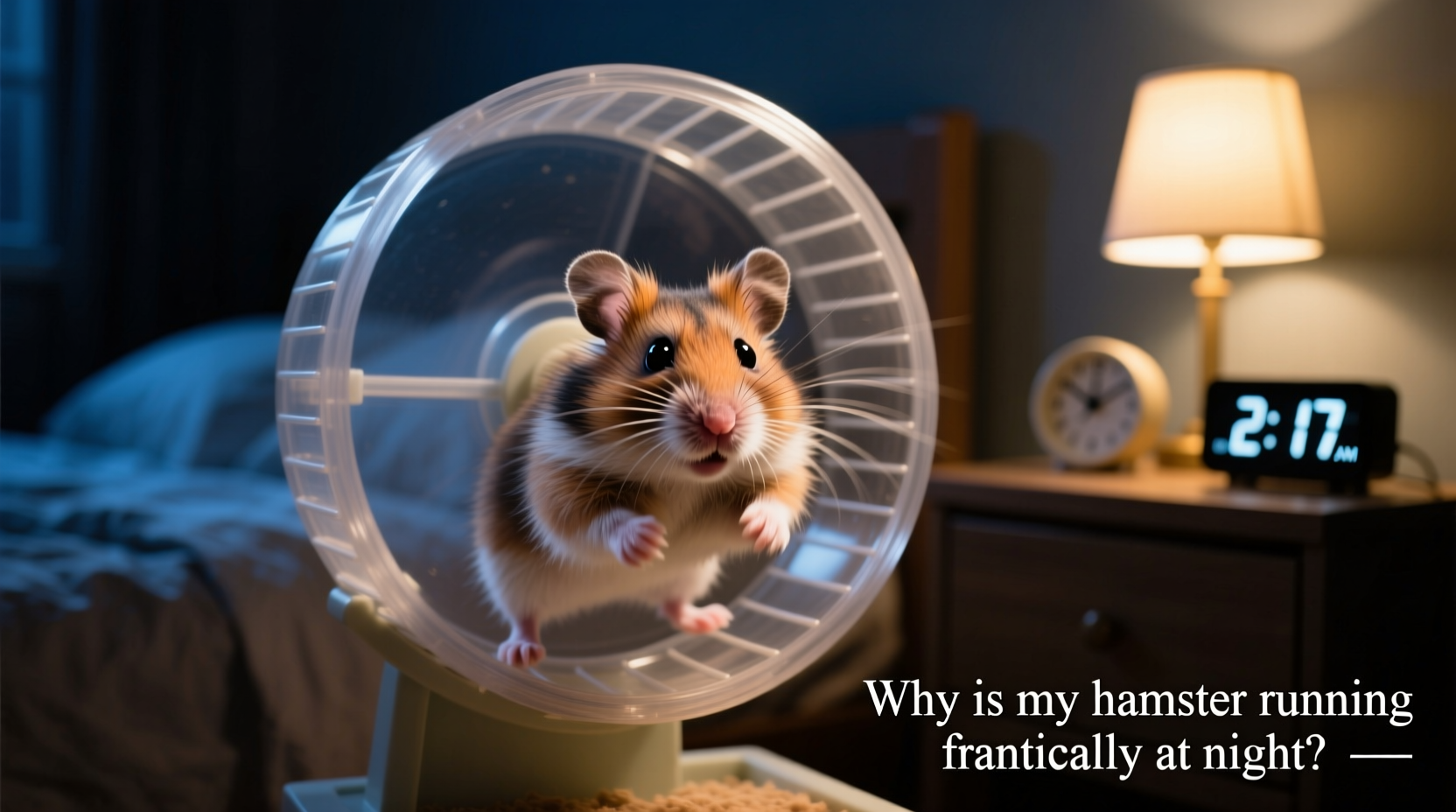
One of the primary reasons your hamster runs frantically at night lies in its natural circadian rhythm. Most hamsters are crepuscular or nocturnal, meaning they are most active during twilight hours or throughout the night. In the wild, Syrian hamsters—the most common pet variety—are solitary creatures that emerge from their burrows after dusk to forage, explore, and avoid daytime predators. This evolutionary trait remains strong in domesticated hamsters, even when raised in captivity.
Unlike humans, who operate on a diurnal schedule (active during the day), hamsters enter a state of rest during daylight hours. You may notice your pet sleeping deeply during the day, only to wake up with sudden bursts of energy once the lights go out. This shift isn’t just a preference—it’s hardwired into their biology. Their eyes are adapted to low light, and their metabolism supports high-energy nighttime activity.
Why Running Is Essential for Hamster Health
Running isn’t just a quirky habit—it’s a vital component of a hamster’s physical and mental health. In the wild, hamsters can travel several miles each night in search of food and nesting materials. Captive environments drastically reduce available space, making exercise equipment like wheels crucial substitutes for natural movement.
A hamster running frantically on its wheel is typically not stressed but fulfilling an instinctual need. Without adequate outlets for energy, hamsters can develop obesity, muscle atrophy, and behavioral issues such as bar-chewing or excessive grooming. A properly sized wheel allows them to engage in repetitive locomotion safely, which also helps regulate sleep cycles and reduce anxiety.
However, the type of wheel matters. Wire or mesh-surfaced wheels can injure tiny feet and tails, while undersized wheels force hamsters into unnatural postures that may lead to spinal strain. Experts recommend solid-surface wheels with a minimum diameter of 8 inches for Syrians and 6.5 inches for dwarfs.
“Exercise is non-negotiable for hamsters. A lack of physical activity can lead to both physical deterioration and psychological distress.” — Dr. Lena Torres, Small Mammal Veterinarian
When Frantic Running Might Signal a Problem
While nighttime running is generally normal, certain patterns may indicate underlying issues. The key is observing the context and consistency of the behavior. Here are signs that frantic running could point to something more serious:
- Non-stop running for hours without breaks – Healthy hamsters alternate between running, eating, drinking, and grooming. Marathon sessions lasting 3+ hours without pause may suggest obsessive-compulsive tendencies.
- Running with visible injury or limping – If your hamster appears to favor one leg or avoids using the wheel altogether after a period of intense use, check for cuts, swelling, or bumblefoot (a bacterial foot infection).
- Vocalizations during running – Squeaks, cries, or teeth grinding while running may signal pain or fear.
- Daytime hyperactivity – If your hamster is consistently active and agitated during daylight hours, it could be a sign of disrupted sleep, poor cage placement, or illness.
Environmental stressors such as loud noises, bright lights at night, or cage proximity to other pets can also trigger anxious behavior. Some hamsters may run excessively due to boredom, especially if enrichment items like tunnels, chew toys, or dig boxes are missing.
Case Study: Bella the Over-Exercising Dwarf Hamster
Maria adopted a Roborovski dwarf hamster named Bella and noticed she ran on her wheel almost every night from 10 PM to 2 AM without stopping. Concerned, Maria recorded video and brought it to her vet. Upon inspection, Bella showed no physical injuries, but her wheel was only 5 inches in diameter—too small for even a tiny dwarf breed. The vet explained that the cramped space forced Bella into a hunched posture, making each stride inefficient and prompting her to run longer to satisfy her instincts. After replacing the wheel with a larger, silent model and adding cardboard tubes and paper bedding for digging, Bella’s running decreased to 45-minute intervals with regular breaks. Her overall demeanor became calmer, and she began exploring more during her active periods.
Optimizing Your Hamster’s Environment for Balanced Activity
Captivity cannot replicate the vast territories hamsters navigate in nature, but thoughtful enclosure design can help mimic natural behaviors and prevent compulsive running. Consider the following adjustments to promote healthier nighttime activity:
Step-by-Step Guide to Creating a Hamster-Friendly Night Space
- Choose the right wheel – Replace any wire or flying saucer-style wheels with a wide, solid-surface model. Ensure your hamster can run with a straight back.
- Add enrichment items – Include paper-based bedding for burrowing, wooden chew toys, tunnels made of toilet rolls or ceramic, and hiding spots to stimulate exploration.
- Position the cage wisely – Place the enclosure in a quiet area away from TVs, speakers, or foot traffic. Sudden noises at night can startle your hamster and trigger panic-like running.
- Maintain a consistent light-dark cycle – Avoid leaving room lights or electronics on overnight. Use blackout curtains if ambient light disrupts natural rhythms.
- Provide fresh food before bedtime – Offer a small portion of fresh veggies or treats in the evening to encourage natural foraging behavior alongside wheel use.
Do’s and Don’ts of Hamster Exercise Management
| Do | Don’t |
|---|---|
| ✔ Provide a solid, appropriately sized running wheel | ✖ Use wire-bottomed or mesh wheels |
| ✔ Allow free roam time in a secure playpen 2–3 times per week | ✖ Leave your hamster unattended during free roam |
| ✔ Monitor running duration and behavior trends | ✖ Assume all nighttime noise is harmless |
| ✔ Clean the wheel weekly to ensure smooth rotation | ✖ Place noisy wheels directly against walls shared with bedrooms |
Frequently Asked Questions
Is it normal for my hamster to run for hours every night?
Yes, it’s normal for hamsters to run for extended periods at night, especially if they have access to a suitable wheel. Many hamsters cover the equivalent of 5–9 kilometers (3–6 miles) nightly. As long as your pet takes breaks, eats normally, and shows no signs of injury, prolonged running is typically healthy.
Should I stop my hamster from running at night?
No—you should not interfere with natural nocturnal activity. Removing the wheel or trying to restrict movement can lead to stress, obesity, and behavioral problems. Instead, focus on optimizing the environment. If noise is an issue, consider placing the cage in a less adjacent room or using a quieter wheel with ball bearings.
Can hamsters get addicted to their wheels?
While “addiction” isn’t accurate in the human sense, some hamsters develop stereotypic behaviors—repetitive actions with no apparent purpose—due to limited stimulation or inadequate space. Signs include running in fixed patterns without stopping, ignoring food, or continuing despite exhaustion. Enrichment and veterinary consultation can help address these issues.
Final Thoughts and Next Steps
Your hamster’s frantic nighttime running is likely a sign of good health, not distress. It reflects a natural instinct to stay active when the world is quiet and predators are fewer. By understanding their biological rhythms and providing a stimulating, safe environment, you give your pet the best chance at a long, happy life.
That said, vigilance matters. Just because a behavior is common doesn’t mean it’s always benign. Regular observation, proper equipment, and timely vet visits make all the difference between thriving and merely surviving in captivity.




 浙公网安备
33010002000092号
浙公网安备
33010002000092号 浙B2-20120091-4
Comments
No comments yet. Why don't you start the discussion?