
Many hamster owners wake up to the sound of a spinning wheel or notice their pet darting around the cage in repetitive loops during the night. While this behavior may seem odd—or even concerning—it’s actually quite common among small rodents. Hamsters are naturally nocturnal, and their nighttime activity often includes running in circles, whether on a wheel or within their enclosure. But when does normal behavior cross into signs of stress, boredom, or illness? Understanding the underlying reasons behind this habit is essential for ensuring your pet's well-being.
This article explores the biological, psychological, and environmental factors that influence why your hamster runs in circles at night. From natural instincts to potential welfare concerns, you’ll gain insight into what your pet might be communicating—and how to support a healthier, more balanced routine.
The Nocturnal Nature of Hamsters
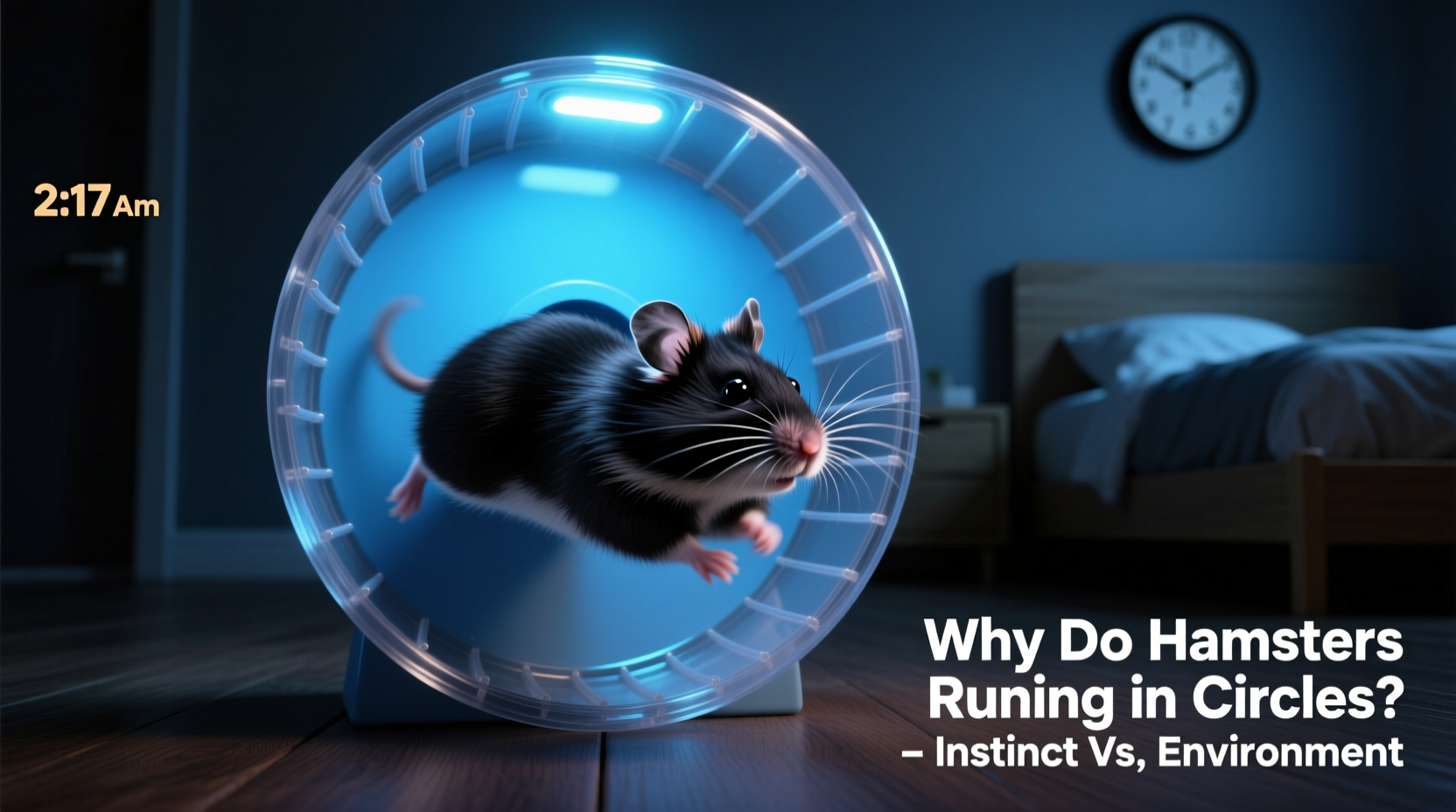
Hamsters are crepuscular and nocturnal animals, meaning they are most active during twilight hours and throughout the night. In the wild, this behavior helps them avoid predators while maximizing foraging time under cover of darkness. Even in captivity, their internal clock remains tuned to this rhythm. As a result, it’s entirely normal for your hamster to become energetic after dusk and remain active through the early morning hours.
Running is one of the most instinctive behaviors for hamsters. In their natural habitat, Syrian hamsters can travel up to five miles per night searching for food and exploring territory. Dwarf species also exhibit high levels of movement despite their smaller size. When confined to a cage, they compensate by running laps—often on a wheel, along walls, or in circular paths across the floor of their enclosure.
Is Circular Running Normal or a Sign of Stress?
Occasional circling, especially on a well-fitted wheel, is perfectly healthy. However, persistent, frantic, or aimless running without rest may indicate underlying issues. The key lies in observing context: duration, speed, environment, and accompanying behaviors all provide clues.
Repetitive behaviors like pacing or looping are known as stereotypies in animal science. These actions serve no obvious purpose but emerge from restricted environments, lack of stimulation, or chronic stress. In laboratory and captive settings, stereotypic behaviors—including bar-biting, over-grooming, and route-tracing—are widely documented in rodents subjected to inadequate living conditions.
“Stereotypic behaviors in hamsters are not random—they’re coping mechanisms. They signal that an animal’s needs aren’t being met, even if basic survival requirements are covered.” — Dr. Lena Torres, Animal Behavior Researcher, University of Edinburgh
To determine whether your hamster’s circular running is benign or problematic, consider the following indicators:
- Frequency: Is the running continuous for hours with no breaks?
- Intensity: Does your hamster appear frantic, wide-eyed, or disoriented?
- Rest periods: Are there moments of grooming, eating, or nesting between bursts?
- Wheel use: Is the wheel appropriately sized and silent, or does it cause injury or strain?
- Other symptoms: Are there signs of weight loss, fur loss, or aggression?
Common Causes of Excessive Nighttime Running
Not all circular motion is equal. Below are several reasons your hamster might be running in circles at night—ranging from harmless to concerning.
1. Natural Exercise and Energy Release
Healthy hamsters need substantial physical activity. A properly sized exercise wheel (at least 8 inches for Syrians, 6–7 inches for dwarfs) encourages natural running behavior. If your hamster uses the wheel smoothly, takes breaks, and shows no signs of distress, this is normal and beneficial.
2. Boredom or Lack of Enrichment
A barren cage with minimal toys, tunnels, or exploration options leads to mental stagnation. Without cognitive stimulation, hamsters may resort to repetitive motions to occupy themselves. This is particularly true in setups with only a wheel and bedding.
3. Anxiety or Environmental Stressors
Noises, bright lights, sudden movements, or nearby pets can trigger anxiety. Hamsters may respond by running in circles as a displacement behavior—an attempt to cope with overwhelming stimuli. Similarly, cages placed in high-traffic areas or near televisions may keep them in a constant state of alertness.
4. Medical Conditions
In some cases, neurological issues such as inner ear infections, strokes, or vestibular disease can cause disorientation and uncontrolled circling. If your hamster tilts its head, walks lopsidedly, or runs in tight circles even when picked up, consult a veterinarian immediately.
5. Poor Wheel Design or Cage Layout
Wire-spoked wheels, too-small wheels, or those mounted on uneven surfaces can cause discomfort and unnatural gait patterns. Some hamsters develop preferences for certain paths due to cage design—for example, repeatedly skirting the edge because central areas feel exposed.
Actionable Checklist: Improving Your Hamster’s Nighttime Routine
If you're concerned about your hamster’s circular running, use this checklist to assess and improve their environment:
- ✅ Provide a solid-surface, appropriately sized exercise wheel (no wire rungs).
- ✅ Offer daily enrichment: cardboard tubes, chew toys, dig boxes, and rotating puzzles.
- ✅ Ensure at least 300–450 square inches of floor space (larger is better).
- ✅ Place the cage in a quiet, low-light area away from loud appliances or foot traffic.
- ✅ Introduce varied terrain: tunnels, platforms, and hiding spots to encourage diverse movement.
- ✅ Monitor diet—overfeeding or sugary treats can increase hyperactivity.
- ✅ Observe for signs of illness: head tilt, lethargy, labored breathing, or discharge.
- ✅ Schedule regular interaction during evening hours to build trust and reduce fear-based behaviors.
Comparing Healthy vs. Problematic Running Behaviors
| Behavior | Healthy Indicators | Warning Signs |
|---|---|---|
| Duration | Intermittent bursts with rest periods | Non-stop running for several hours |
| Movement Pattern | Smooth, coordinated wheel use or exploratory circling | Frenzied, jerky, or off-balance motion |
| Physical Condition | Good fur, bright eyes, normal appetite | Matted fur, weight loss, eye discharge |
| Environmental Response | Calms down when approached gently | Ignores stimuli, appears “zoned out” |
| Social Interaction | Engages with handler, eats from hand | Bites cage bars, avoids contact |
Real-Life Example: Addressing Repetitive Behavior in a Pet Hamster
Sophie, a college student in Portland, adopted a Syrian hamster named Milo. Within weeks, she noticed he ran nonstop on his wheel every night—sometimes for three hours straight—followed by brief pauses before resuming. Concerned, she recorded his behavior and consulted a local exotic pet vet.
After evaluation, the vet ruled out medical causes but noted Milo’s cage was undersized and lacked enrichment. He had only a small wire wheel, a plastic house, and sawdust bedding. Sophie upgraded him to a large bin cage with deep bedding for burrowing, added multiple hideouts, replaced the wheel with a silent 9-inch solid model, and introduced cardboard mazes and safe chew sticks.
Within ten days, Milo’s running became more rhythmic and less obsessive. He spent more time digging, chewing, and exploring new objects. His nighttime activity remained high—which is normal—but the frantic energy diminished significantly. Sophie now rotates enrichment weekly and reports a much calmer, more engaged pet.
Step-by-Step Guide to Reducing Unhealthy Circles
If your hamster exhibits signs of stress-related circling, follow these steps to promote healthier behavior:
- Assess the Environment (Day 1)
Check cage size, wheel type, noise levels, lighting, and available enrichment. Note any deficiencies. - Upgrade Key Elements (Days 2–3)
Replace inadequate wheels, expand floor space, add tunnels and dig zones, and remove potential stressors. - Introduce Enrichment Gradually (Days 4–7)
Add one new item every two days—such as a paper towel roll, wooden chew block, or scent trail—to avoid overwhelming your hamster. - Monitor and Record Behavior (Ongoing)
Keep a simple log noting duration of running, rest intervals, eating habits, and mood changes. - Consult a Veterinarian (If No Improvement by Day 10)
Persistent circling, especially with physical symptoms, warrants professional diagnosis.
Frequently Asked Questions
Is it bad if my hamster runs all night?
Not necessarily. Hamsters are nocturnal and require significant exercise. As long as the running is intermittent, the wheel is safe, and your pet shows no signs of exhaustion or injury, nightly activity is normal. However, continuous, frantic running without rest may indicate poor welfare and should be addressed.
Can a hamster run itself to death?
While extremely rare, hamsters can suffer from overexertion, especially if they have underlying heart conditions or are forced to run on unsafe wheels. More commonly, excessive running reflects psychological distress rather than physical intent. Providing a balanced environment reduces the risk of harmful repetition.
Why does my hamster run in circles but not use the wheel?
This could mean the wheel is uncomfortable, too small, or poorly positioned. Alternatively, your hamster may prefer ground-level exploration. Try adjusting the wheel height, cleaning it for smoother rotation, or offering alternative exercise options like obstacle courses.
Conclusion: Observing Behavior with Empathy and Insight
Your hamster’s nighttime running isn’t just noise—it’s communication. Whether expressing natural energy, responding to boredom, or signaling discomfort, circular motion offers valuable insight into their world. By recognizing the difference between healthy activity and stress-induced repetition, you empower yourself to create a richer, more fulfilling life for your small companion.
Great hamster care goes beyond food and water. It involves thoughtful habitat design, consistent observation, and a willingness to adapt based on behavior. When you see your hamster running in circles, don’t just listen to the sound of the wheel—look deeper. What is your pet trying to tell you?




 浙公网安备
33010002000092号
浙公网安备
33010002000092号 浙B2-20120091-4
Comments
No comments yet. Why don't you start the discussion?