
Heart Rate Variability (HRV) has emerged as one of the most insightful biomarkers of overall health, stress resilience, and nervous system function. If you've been tracking your HRV using wearables like Oura Ring, Whoop, or Garmin, and consistently see low numbers, you're not alone — but it's worth paying attention to. A low HRV doesn't just reflect poor sleep or fatigue; it signals that your autonomic nervous system may be under strain. Understanding the root causes and knowing how to respond can make a significant difference in your long-term well-being.
What Is Heart Rate Variability?
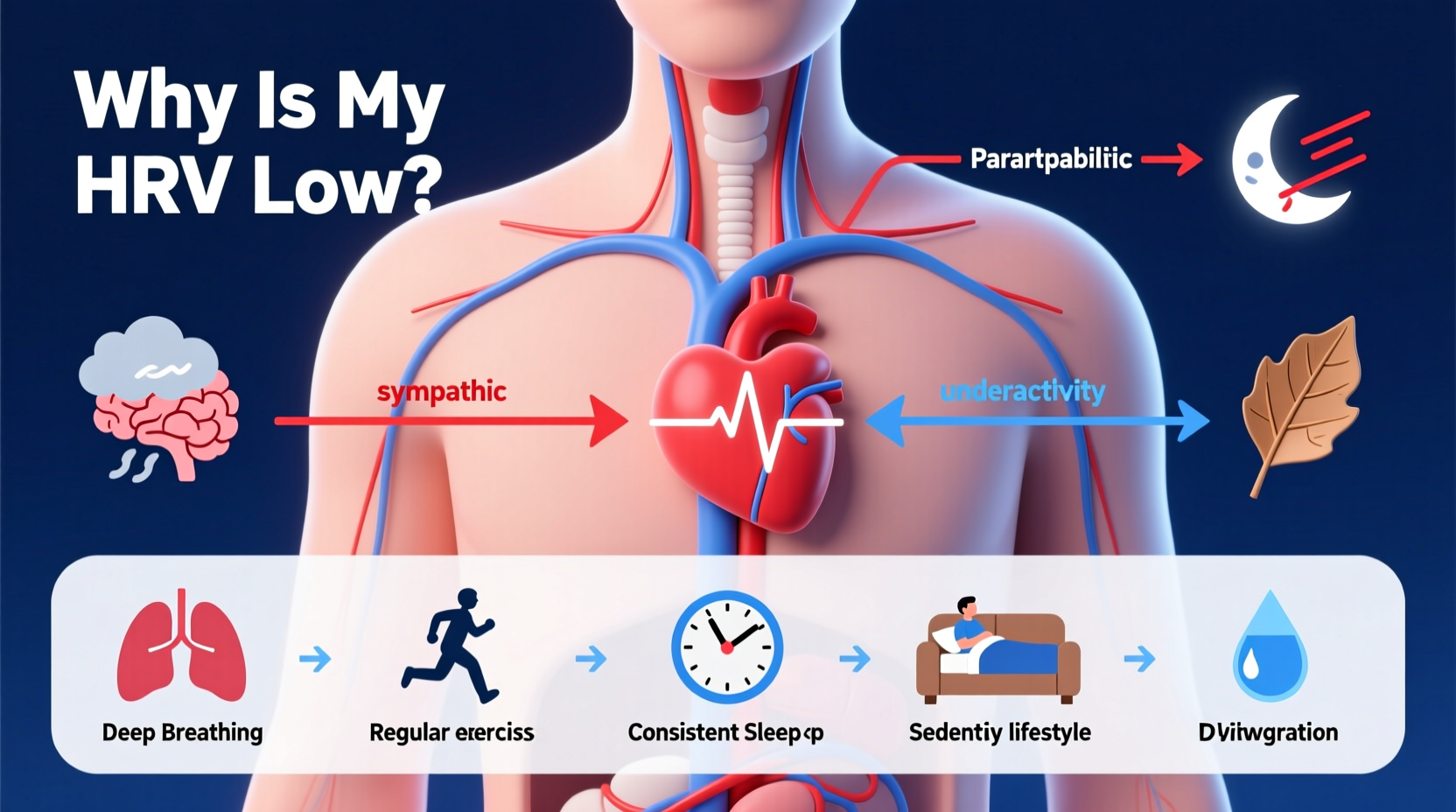
HRV measures the variation in time between successive heartbeats. Contrary to what many assume, a higher HRV is generally better. It indicates that your parasympathetic (\"rest and digest\") system is dominant, allowing your body to adapt efficiently to stress, recover faster, and maintain balance. A low HRV suggests sympathetic (\"fight or flight\") dominance — your body is in survival mode, even if you don’t feel stressed.
HRV is influenced by both internal and external factors, including sleep quality, physical exertion, emotional state, diet, hydration, and environmental stressors. It’s highly individual, so comparing your HRV to others isn’t useful. Instead, focus on your personal baseline and trends over time.
Common Causes of Low HRV
A single day of low HRV is normal and expected after intense training, poor sleep, or emotional stress. However, chronically low HRV can point to deeper issues. Here are the most frequent contributors:
- Poor Sleep Quality or Duration: Inadequate or fragmented sleep disrupts autonomic balance, reducing HRV significantly.
- Overtraining or Insufficient Recovery: Excessive physical stress without adequate rest suppresses parasympathetic activity.
- Chronic Stress or Anxiety: Psychological stress elevates cortisol and adrenaline, keeping the nervous system in high alert.
- Dehydration: Even mild dehydration reduces blood volume and strains cardiovascular regulation.
- Poor Nutrition: Diets high in processed foods, sugar, and trans fats promote inflammation, which negatively impacts HRV.
- Alcohol Consumption: Alcohol disrupts sleep architecture and depresses parasympathetic tone, often leading to lower HRV the next day.
- Infections or Illness: Your body’s immune response increases physiological stress, lowering HRV before symptoms appear.
- Caffeine Overuse: Especially later in the day, caffeine can delay recovery and reduce HRV overnight.
“HRV is one of the earliest warning signs that something is off — often showing up before fatigue, mood changes, or performance drops become noticeable.” — Dr. Andrew Huberman, Neuroscientist, Stanford University
How to Improve Your HRV: Science-Backed Strategies
Improving HRV isn’t about chasing a number — it’s about enhancing your body’s ability to recover and adapt. The following evidence-based approaches target the root causes of low HRV.
1. Prioritize High-Quality Sleep
Sleep is the foundation of HRV recovery. Aim for 7–9 hours of uninterrupted sleep with consistent bed and wake times. Create a sleep-conducive environment: cool, dark, and quiet. Avoid screens at least one hour before bed and consider using blue light filters.
2. Practice Controlled Breathing
Slow, rhythmic breathing activates the vagus nerve and boosts parasympathetic activity. Try this simple technique: inhale for 4 seconds, exhale for 6 seconds, repeat for 5–10 minutes daily. Devices like the Oura Ring or breathwork apps can guide your practice.
3. Manage Physical Load Wisely
Balance intense workouts with active recovery or complete rest days. Use HRV as a feedback tool: if your HRV is significantly below baseline, consider scaling back intensity. Incorporate low-impact activities like walking, yoga, or swimming on recovery days.
4. Reduce Alcohol and Caffeine Intake
Even moderate alcohol consumption can suppress HRV for up to 48 hours. Limit intake and avoid drinking within three hours of bedtime. Similarly, cap caffeine early in the day — ideally before noon — to prevent interference with nighttime recovery.
5. Stay Hydrated and Eat Anti-Inflammatory Foods
Drink water consistently throughout the day. Pair hydration with electrolytes if you sweat heavily. Focus on whole foods: leafy greens, fatty fish rich in omega-3s, berries, nuts, and olive oil all support nervous system health and reduce systemic inflammation.
Actionable Checklist to Boost HRV
Use this checklist daily or weekly to build habits that support higher HRV:
- ✅ Get 7–9 hours of quality sleep each night
- ✅ Practice slow, deep breathing for 5–10 minutes daily
- ✅ Avoid alcohol or limit to 1–2 drinks, max 2x per week
- ✅ Stop caffeine by 12 PM
- ✅ Drink at least half your body weight (lbs) in ounces of water
- ✅ Eat a colorful, plant-rich diet with healthy fats
- ✅ Take at least one full rest day per week
- ✅ Spend time in nature or engage in mindfulness practices
- ✅ Check your HRV trend weekly, not daily
- ✅ Address chronic stress through therapy, journaling, or social connection
Real-Life Example: Recovering From Burnout
Jamie, a 38-year-old software engineer, noticed her HRV had dropped from a baseline of 65 ms to below 40 ms for two consecutive weeks. She wasn’t sick, but felt mentally drained and irritable. After reviewing her habits, she realized she’d been pulling late-night coding sessions, surviving on coffee, and skipping workouts due to fatigue — a vicious cycle.
She implemented a structured recovery plan: strict 10 PM bedtime, eliminated caffeine after 10 AM, started daily 10-minute box breathing, and walked 30 minutes each morning. Within 10 days, her HRV climbed back into the mid-60s, and she reported improved focus and emotional stability. Her case illustrates how lifestyle tweaks — not drastic interventions — can restore autonomic balance.
Do’s and Don’ts for HRV Optimization
| Do | Don’t |
|---|---|
| Track HRV consistently at rest (e.g., first thing in the morning) | Compare your HRV to others’ numbers |
| Use HRV as a guide for workout intensity | Train hard when HRV is significantly below baseline |
| Prioritize sleep and stress management | Ignore persistent low HRV over multiple weeks |
| Experiment with cold exposure (e.g., cold showers) cautiously | Rely solely on supplements without fixing lifestyle first |
Frequently Asked Questions
Is low HRV dangerous?
Chronically low HRV is associated with increased risk of cardiovascular disease, depression, and reduced longevity. While occasional dips are normal, persistently low values warrant lifestyle review and possibly medical consultation, especially if accompanied by fatigue, anxiety, or poor performance.
Can medications affect HRV?
Yes. Beta-blockers, antidepressants, and stimulants can influence HRV. If you’re on medication and tracking HRV, discuss trends with your doctor rather than making changes independently.
How long does it take to improve HRV?
Some people see improvements in as little as 3–5 days with better sleep and stress reduction. For others, especially those recovering from burnout or chronic stress, it may take several weeks of consistent effort. Patience and consistency are key.
Take Control of Your Recovery Today
Your HRV is more than a metric — it’s a mirror reflecting your body’s internal state. A low reading isn’t a failure; it’s feedback. By addressing sleep, stress, nutrition, and recovery, you empower your nervous system to regain balance. Start small: pick one habit from the checklist, track your HRV weekly, and observe the changes. Over time, these choices compound into greater resilience, energy, and well-being.




 浙公网安备
33010002000092号
浙公网安备
33010002000092号 浙B2-20120091-4
Comments
No comments yet. Why don't you start the discussion?