
Cloudy ice isn’t just a visual flaw—it’s a clue. If you’ve ever poured a cocktail or iced coffee only to notice your ice looks foggy, milky, or uneven, you’re not alone. But behind that cloudiness lies a simple science story: impurities, trapped air, and the way water freezes. For home baristas and craft drink enthusiasts, clear ice isn’t about vanity—it’s about control, purity, and elevating every sip. Whether you're serving cold brew over ice or shaking up a Negroni, understanding why your ice turns cloudy—and how to fix it—can transform your drink experience.
The Science Behind Cloudy Ice
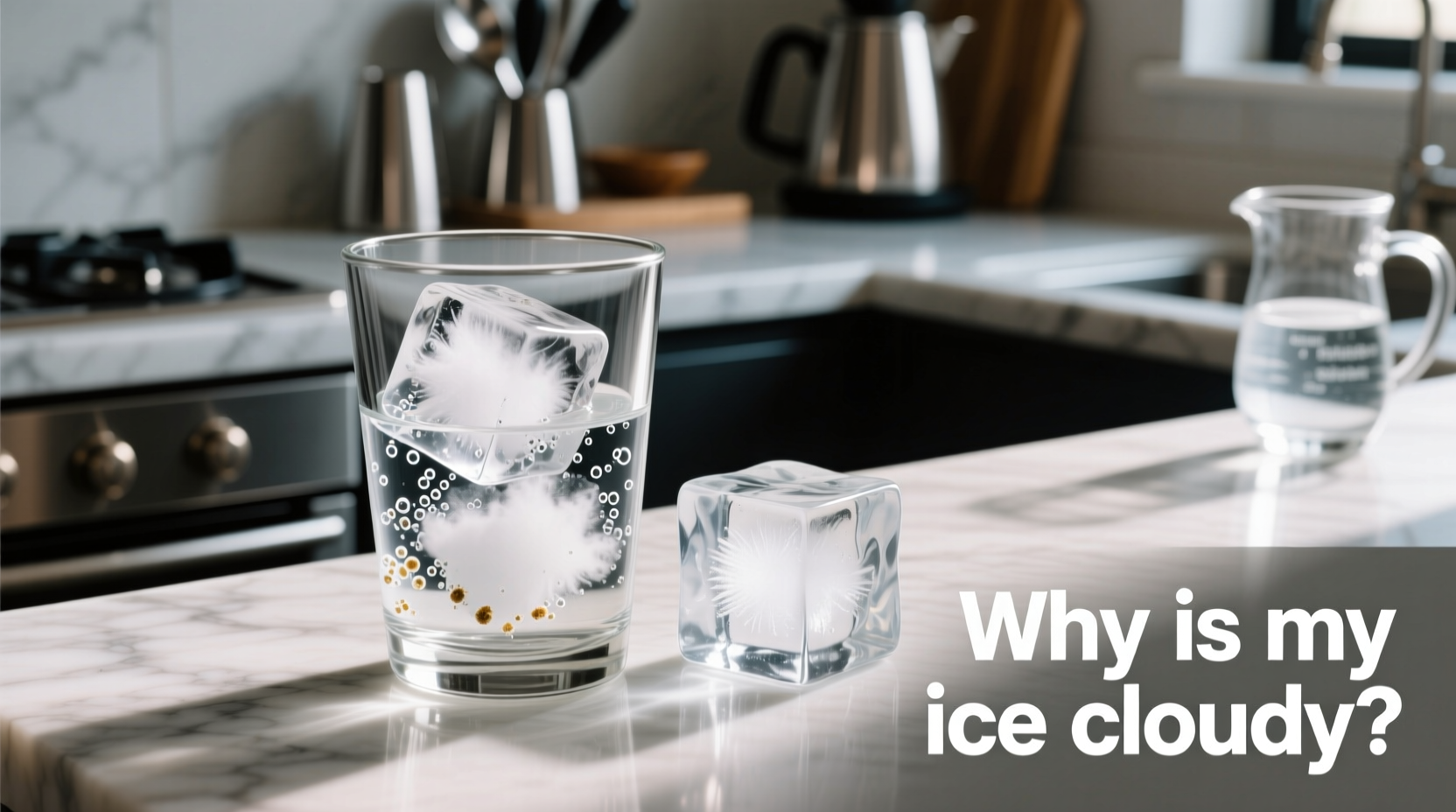
When water freezes in a standard freezer tray, it doesn’t freeze evenly. Freezing starts at the outside edges and moves inward. As the outer layer solidifies, it traps dissolved minerals, gases (like oxygen and nitrogen), and microscopic impurities inside the cube. These suspended particles scatter light, creating the familiar white, hazy center we see in most home-frozen ice.
Additionally, tap water contains minerals such as calcium and magnesium. While safe to drink, these contribute to cloudiness when frozen rapidly. The faster the freeze, the more chaotic the crystallization process becomes, increasing the chance of imperfections.
“Clear ice isn’t just for show—it reflects purity and intentional freezing. In professional bars, it’s a mark of craftsmanship.” — James Reed, Beverage Director, Portland Craft Mixology Group
In contrast, clear ice forms when water freezes slowly from one direction, typically top to bottom, allowing impurities and air to be pushed downward and out of the forming crystal structure. This directional freezing mimics natural processes seen in glaciers and lake ice, producing dense, transparent cubes ideal for slow dilution and elegant presentation.
Why Clear Ice Matters for Home Baristas
For those who take their coffee or cocktails seriously, ice quality directly affects flavor, temperature control, and aesthetics. Cloudy ice melts faster due to its porous, less-dense structure, leading to quicker dilution—especially problematic when serving premium cold brew, espresso tonics, or spirit-forward drinks like an Old Fashioned.
Clear ice, on the other hand, is denser and purer. It melts slower, chills effectively without overwhelming the drink, and enhances the visual appeal of your beverage. When serving guests or perfecting your morning ritual, these details matter.
How to Make Clear Ice at Home: A Step-by-Step Guide
You don’t need a $300 ice machine to make crystal-clear ice. With a few adjustments to your technique and tools, you can produce bar-quality cubes using common household items.
- Choose the right water. Start with purified water—distilled or reverse osmosis (RO) water works best. Avoid mineral-rich spring or hard tap water.
- Boil the water twice. Boiling removes dissolved gases. Let the water cool completely after each boil to prevent thermal shock in containers.
- Use directional freezing. Place an insulated cooler (like a Styrofoam or plastic cooler) in your freezer. Fill it with water, leaving space at the top. The insulation slows freezing, allowing it to occur gradually from the top down.
- Freeze for 18–24 hours. The longer, slower freeze pushes impurities to the bottom of the block.
- Cut or chip away the clear portion. Once frozen, remove the block. The top two-thirds should be crystal clear. Discard the cloudy bottom third, which contains concentrated impurities.
- Shape into cubes. Use a serrated knife or ice pick to break the clear ice into smaller pieces. For perfect cubes, use a sharp chef’s knife and score the surface first.
Do’s and Don’ts of Making Clear Ice
| Do | Don’t |
|---|---|
| Use distilled or purified water | Use unfiltered tap water |
| Boil water before freezing (once or twice) | Freeze water straight from the tap |
| Freeze slowly using an insulated cooler | Rush freezing in a metal tray |
| Discard the cloudy bottom portion | Use the entire frozen block |
| Store ice in sealed containers | Leave ice exposed in open trays |
Real Example: From Home Brewer to Café-Quality Iced Coffee
Sarah, a home barista from Denver, loved her daily cold brew but noticed it tasted “flat” by the second sip. After researching, she realized her store-bought ice was melting too fast, watering down her carefully balanced concentrate. She switched to making her own clear ice using a small Styrofoam cooler and double-boiled filtered water. Within a week, she noticed a dramatic difference: her drinks stayed colder longer, diluted more slowly, and looked professional when served in glassware. “It’s not just about looks,” she said. “The taste lasts. My cold brew now tastes like it came from a specialty café.”
This shift didn’t require expensive gear—just attention to detail. Her method now includes preparing a new ice block every Sunday, cutting six large cubes per batch, and storing them wrapped in parchment inside a sealed container.
Alternative Methods for Clear Ice
If a cooler method seems too involved, several simpler alternatives exist:
- Insulated ice trays: Some modern silicone trays are designed with lids or insulation to promote top-down freezing.
- Reverse osmosis + slow freezer setting: If your freezer has a “slow freeze” mode (common in high-end models), use it with purified water for improved clarity.
- Ice molds with directional design: Certain brands (e.g., Tovolo, W&P) offer molds that simulate directional freezing by limiting contact points.
- Commercial countertop ice makers: Devices like the Opal Nugget Ice Maker or portable clear ice machines automate the process but come at a higher cost.
While these options vary in complexity and price, even basic improvements—like switching to bottled distilled water—can noticeably reduce cloudiness.
Frequently Asked Questions
Can I make clear ice without boiling the water?
Yes, but results will vary. Using distilled water without boiling can yield moderately clear ice, especially if frozen slowly. However, boiling helps remove dissolved gases that contribute to cloudiness, so skipping this step may leave slight haziness.
Why does restaurant ice look so much clearer than mine?
Professional establishments often use commercial ice machines that circulate water during freezing, ensuring only pure water freezes while contaminants are washed away. These machines also produce denser, slower-melting ice. At home, replicating this requires mimicking the slow, directional process.
Is cloudy ice unsafe to use?
No. Cloudy ice is perfectly safe to consume. The cloudiness comes from trapped air and minerals, not bacteria or contamination. However, if your ice smells or tastes odd, it may have absorbed freezer odors or been stored improperly.
Checklist: How to Achieve Clear Ice at Home
Follow this simple checklist each time you prepare ice:
- ☐ Use distilled or reverse-osmosis filtered water
- ☐ Boil the water once, let cool; repeat for best results
- ☐ Pour cooled water into a clean, insulated cooler (no lid)
- ☐ Place cooler in freezer undisturbed for 18–24 hours
- ☐ Remove block and inspect: clear on top, cloudy at bottom
- ☐ Cut off and discard the cloudy base (last 1–2 inches)
- ☐ Shape remaining clear ice into cubes or spheres
- ☐ Store in airtight container to preserve freshness
Elevate Your Drink Game with Intentional Ice
Great beverages aren’t just about ingredients—they’re about execution. Just as a barista grinds beans fresh and steams milk precisely, controlling your ice quality completes the picture. Clear ice isn’t a luxury; it’s a sign of care. It shows you value the full experience: the chill, the dilution rate, the aroma, and the visual harmony of a well-crafted drink.
Whether you're pouring a single-origin cold brew over a single large cube or stirring a gin martini with precision, starting with clear ice sets the tone. It signals intentionality. And over time, these small refinements compound into a ritual that feels both satisfying and elevated.
The next time you notice cloudy ice in your glass, don’t just shrug it off. See it as an invitation—an opportunity to refine your method, deepen your understanding, and take pride in the details that define true craftsmanship.




 浙公网安备
33010002000092号
浙公网安备
33010002000092号 浙B2-20120091-4
Comments
No comments yet. Why don't you start the discussion?