
Cloudy ice isn’t just unattractive—it can be a sign of underlying issues with your water supply, filtration system, or ice maker maintenance. While many assume clear ice is only possible in bars or specialty machines, the truth is that most home ice makers are capable of producing pristine cubes with the right adjustments. Understanding the science behind cloudiness and taking targeted corrective steps can transform your everyday ice from hazy and brittle to transparent and dense.
The milky appearance in ice cubes is not usually due to contamination but rather the way water freezes and what it contains. By identifying the root causes and applying proven fixes, you can enjoy restaurant-quality ice straight from your refrigerator.
The Science Behind Cloudy Ice
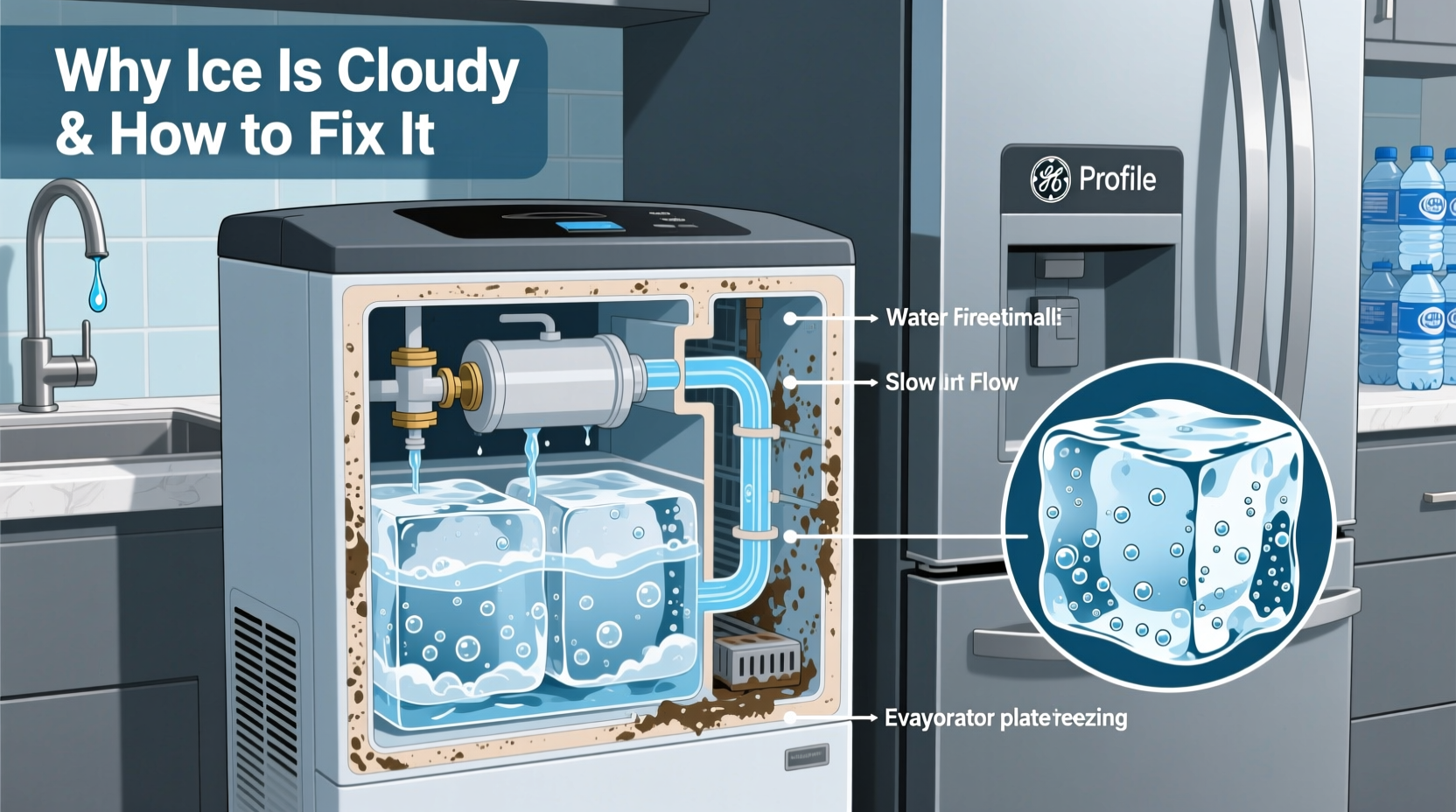
When water freezes rapidly—as it does in most household ice makers—it traps air bubbles and impurities in the center of the cube. This creates the familiar white, cloudy core. In nature, lakes freeze slowly from the top down, allowing dissolved gases to escape upward. Home ice trays or built-in ice makers don’t replicate this slow process, leading to uneven freezing and trapped particles.
Water contains dissolved minerals like calcium, magnesium, and trace metals. As freezing begins at the outer edges of the cube, these impurities are pushed toward the center. The final point of solidification becomes a concentrated pocket of minerals and microscopic air bubbles, scattering light and giving the ice its opaque look.
“Rapid freezing is the primary culprit behind cloudy ice. Slower, directional freezing allows for purer, clearer results.” — Dr. Alan Reeves, Materials Scientist specializing in phase transitions
Additionally, chlorine, sediment, or organic compounds in municipal water supplies can contribute to discoloration and off-flavors, even if they’re within safe drinking limits. These substances become more noticeable once frozen and concentrated.
Common Causes of Cloudy Ice and How to Diagnose Them
Not all cloudy ice stems from the same issue. Identifying the specific cause helps determine the best solution. Below are the five most frequent contributors:
- Unfiltered tap water: Municipal water often contains chlorine, fluoride, and hard minerals that lead to cloudiness.
- Clogged or expired water filter: Many refrigerators have internal filters that degrade over time, reducing effectiveness.
- Low water pressure: Insufficient flow can disrupt proper filling and freezing cycles, causing irregular crystal formation.
- Air in the water line: After filter changes or plumbing work, trapped air leads to bubbly ice.
- Poor ventilation or high freezer temps: If the freezer isn’t cold enough (ideally 0°F / -18°C), freezing takes longer and inconsistently, worsening cloudiness.
Step-by-Step Diagnosis Process
- Inspect the water filter: Locate your fridge’s filter (usually in the grille or interior wall) and check the replacement date. Most manufacturers recommend changing it every six months.
- Flush the system: After replacing the filter, dispense 3–5 gallons of water to purge air and residual contaminants.
- Check freezer temperature: Use a standalone thermometer to verify the actual temperature inside the freezer compartment.
- Examine ice texture: Crumbly, soft, or fast-melting ice suggests mineral buildup or poor freezing efficiency.
- Smell and taste test: Metallic, chemical, or musty flavors indicate bacterial growth, old filters, or pipe leaching.
Solutions to Restore Clear Ice Production
Once you’ve identified likely causes, implement targeted fixes. Some require minor effort; others may involve equipment upgrades—but all contribute to better ice quality.
1. Replace or Upgrade the Water Filter
Most refrigerator filters use carbon block technology to reduce chlorine, sediment, and some heavy metals. However, they don’t remove all dissolved solids (TDS), especially hard minerals like calcium. For significantly clearer ice, consider upgrading to a reverse osmosis (RO) system.
| Filter Type | Reduces Cloudiness? | Lifespan | Cost Range |
|---|---|---|---|
| Standard Carbon (Fridge) | Moderate | 6 months | $30–$50 |
| Enhanced Carbon + Ion Exchange | Good | 6 months | $40–$70 |
| Reverse Osmosis (Under-sink) | Excellent | 6–12 months (system) | $200–$500+ |
| Distilled Water (Manual Fill) | Best | N/A | $1–$2 per gallon |
If installing an RO system isn't feasible, using distilled water manually filled into portable ice trays can produce flawless cubes for special occasions.
2. Clean the Ice Maker and Water Lines
Mineral deposits and biofilm accumulate over time, especially in humid environments or areas with hard water. Mold spores and bacteria can thrive in dark, damp reservoirs, affecting both clarity and safety.
“We’ve seen ice makers harbor coliform bacteria after just one year without cleaning—even with filtered water.” — Sarah Lin, Home Appliance Hygiene Specialist
To clean effectively:
- Turn off the water supply and unplug the refrigerator.
- Remove the ice bin and wash with warm water and mild dish soap. Avoid abrasive cleaners.
- Wipe down the ice mold and sensors with a soft cloth dampened with vinegar or a manufacturer-approved cleaner.
- Flush the water line by mixing 1 part white vinegar with 3 parts water, then running it through the dispenser until cleared.
- Reassemble and run several cycles, discarding the first two batches of ice.
3. Optimize Freezing Conditions
Clear ice forms when freezing starts on one side and progresses gradually across the cube. Standard ice makers freeze too quickly and from all sides simultaneously. While you can’t change the fundamental design of most models, you can improve conditions:
- Ensure the freezer door seals tightly—replace worn gaskets promptly.
- Keep the condenser coils clean (vacuum every 6 months) to maintain efficient cooling.
- Avoid overloading the freezer; restricted airflow impacts temperature stability.
- Place the refrigerator away from heat sources like ovens or direct sunlight.
Some high-end refrigerators now feature “slow freeze” or “gourmet ice” modes that mimic directional freezing. If you frequently entertain or value premium ice, upgrading to such a model may be worthwhile.
Mini Case Study: From Hazy Cubes to Crystal Clarity
Mark T., a homeowner in Denver, Colorado, complained about consistently cloudy and fast-melting ice despite having a three-year-old French-door refrigerator with a built-in filter. His tap water was moderately hard (140 ppm calcium carbonate), and he rarely used the dispenser, so he assumed the system was low-maintenance.
After testing his ice against boiled-and-cooled filtered water frozen in a tray (which produced clearer results), he suspected either the filter or internal buildup. He replaced the expired filter and flushed the line, which improved taste slightly but didn’t eliminate cloudiness. Next, he cleaned the ice maker assembly and discovered visible mineral crust around the ejection arms.
Following a full cleaning cycle and switching to bottled distilled water temporarily, his next batch showed dramatic improvement. He later installed an under-counter reverse osmosis system connected to the fridge, reducing total dissolved solids from 180 ppm to under 10 ppm. Today, his ice is consistently clear, harder, and melts slower—proving that layered solutions yield the best outcome.
Prevention Checklist: Keep Your Ice Clear Long-Term
Maintaining clear ice isn’t a one-time fix. It requires ongoing attention. Use this checklist monthly or quarterly:
- ✅ Replace water filter every 6 months (set phone reminder)
- ✅ Clean ice bin and mold with vinegar solution
- ✅ Check freezer temp with external thermometer
- ✅ Inspect door seal for cracks or gaps
- ✅ Flush water lines if ice tastes stale or smells odd
- ✅ Consider using filtered or RO-treated water exclusively
- ✅ Monitor ice production rate—slower output may signal clogs
Frequently Asked Questions
Is cloudy ice safe to drink?
Yes, cloudy ice is generally safe if made from potable water. The cloudiness comes from trapped air and harmless minerals. However, if accompanied by strange odors, slimy texture, or black specks, it may indicate mold or bacterial growth, and the unit should be cleaned immediately.
Does boiling water make clearer ice?
Boiling water once can reduce dissolved air and some volatile compounds, potentially improving clarity. Double-boiling (cooling between boils) removes even more gases. However, boiling doesn’t remove non-volatile minerals like calcium—so while it helps, it won’t match the results of reverse osmosis or distillation.
Why does store-bought bagged ice look clearer than mine?
Commercial ice producers use large-scale machines that freeze water slowly from one direction, allowing impurities to be pushed out before final solidification. They also often use filtration systems far beyond typical home units. Some brands even cut out the cloudy center before packaging.
Final Steps Toward Perfect Ice
Producing clear ice at home is achievable with consistent care and smart upgrades. Start by diagnosing whether the issue lies in your water source, filtration, or appliance maintenance. Replace old filters, clean regularly, and consider investing in better water treatment if your area has hard or heavily treated municipal water.
Remember, clear ice isn’t just about aesthetics—it reflects purity, density, and slower melt rates, enhancing everything from cocktails to daily hydration. Small changes compound over time, turning a frustrating flaw into a quiet victory of home optimization.




 浙公网安备
33010002000092号
浙公网安备
33010002000092号 浙B2-20120091-4
Comments
No comments yet. Why don't you start the discussion?