
Cloudy ice is a common frustration for homeowners who expect crystal-clear cubes in their drinks. While it may seem like a minor cosmetic issue, consistently foggy or opaque ice often signals underlying problems with your water supply or filtration system. The good news: in most cases, the cause is preventable—and fixable—with proper understanding and maintenance.
Ice clarity reflects water purity. When ice forms from tap water containing excess minerals, sediment, or dissolved gases, those impurities become trapped during freezing, scattering light and creating a hazy appearance. Over time, this not only affects aesthetics but can impact taste and even damage your ice maker. Addressing the root causes starts with evaluating your water source and the performance of your filtration system.
Understanding Why Ice Turns Cloudy
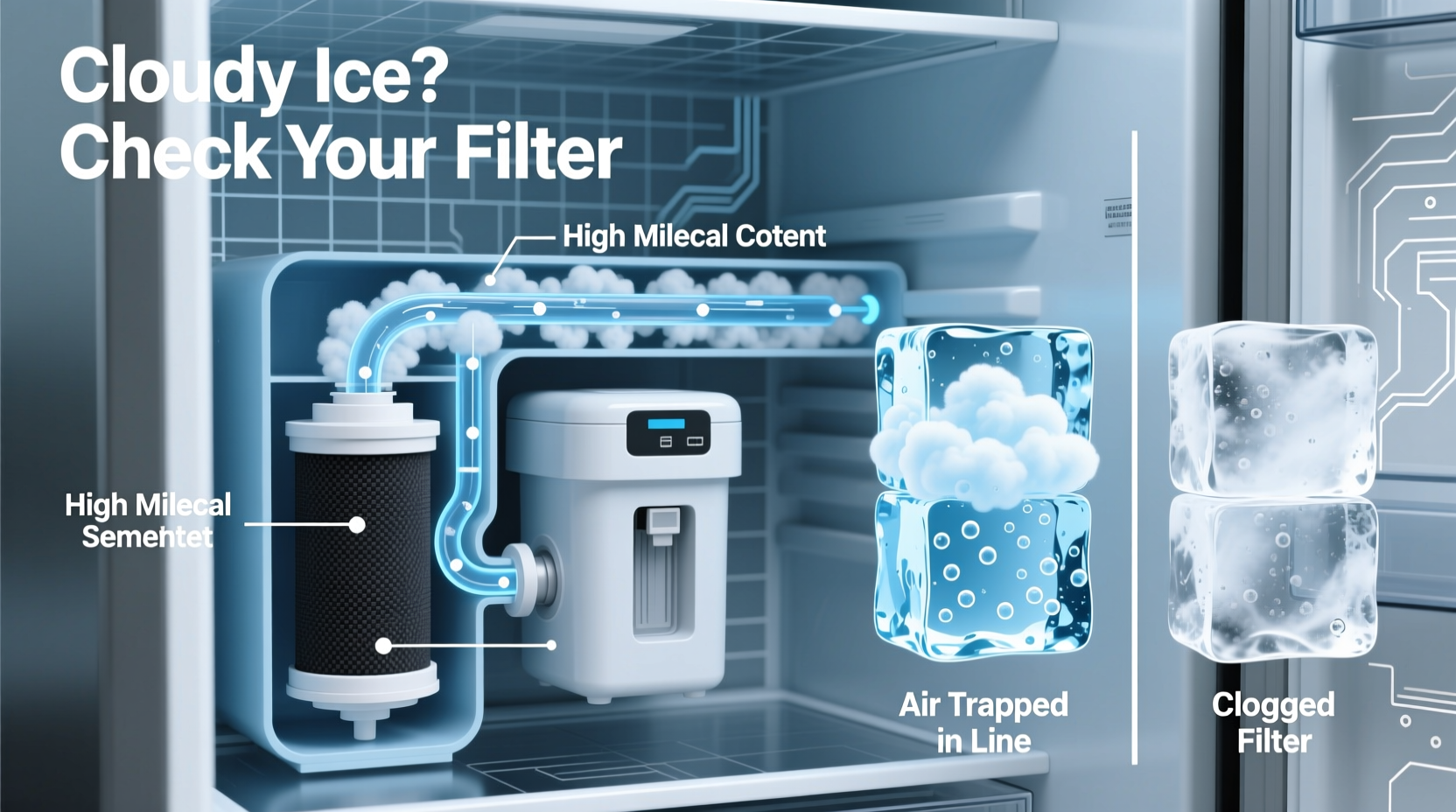
The science behind cloudy ice lies in how water freezes. As water cools, it begins to form crystals from the outside in. Pure water freezes first, pushing impurities—such as calcium, magnesium, chlorine byproducts, and microscopic particles—toward the center. When these contaminants are concentrated in the middle of the cube, they create visible cloudiness.
Dissolved air also plays a role. Tap water naturally contains oxygen and nitrogen. During rapid freezing in standard ice makers, these gases don’t have time to escape before being locked inside the ice structure. This trapped air creates tiny bubbles that scatter light, making the ice appear white or foggy.
In some homes, municipal water treatment adds chlorine or chloramine for disinfection. While safe to drink, these chemicals contribute to off-flavors and can react with organic compounds in plumbing systems, further degrading ice quality. Well water users may face additional challenges due to higher mineral content (hardness), iron, or sulfur compounds.
How Water Filters Impact Ice Clarity
Your refrigerator’s built-in water filter is the first line of defense against cloudy ice. However, not all filters perform equally. Most standard models use activated carbon to reduce chlorine, sediment, and volatile organic compounds (VOCs). But they often fall short on removing dissolved minerals like calcium and magnesium—the primary culprits behind hard water scaling and hazy ice.
Over time, even effective filters degrade. A clogged or expired filter loses its ability to capture contaminants, allowing more particulates into the ice-making cycle. Manufacturers typically recommend replacing filters every six months, but households with high water usage or poor inlet water quality may need replacements sooner.
It's important to note that many refrigerator filters are designed primarily for taste and odor improvement, not comprehensive purification. If your goal is truly clear ice, you may need an upgraded filtration solution beyond the stock model.
“Most people don’t realize that their fridge filter isn’t removing hardness minerals. That’s why ice stays cloudy—even after regular changes.” — Dr. Alan Reyes, Water Quality Engineer
Choosing the Right Water Filter Solution
Not all filtration technologies are created equal. To effectively eliminate the causes of cloudy ice, consider upgrading to systems that target both chemical and physical impurities. Here’s a breakdown of common options:
| Filtration Type | Removes Cloud-Causing Contaminants? | Lifespan | Best For |
|---|---|---|---|
| Standard Carbon Filter | Partial (chlorine, sediment) | 6 months | Basic taste improvement |
| Reverse Osmosis (RO) | Yes (minerals, metals, microbes) | 6–12 months (multi-stage) | Homes with hard or well water |
| Water Softener + Carbon | Yes (calcium/magnesium via ion exchange) | Years (salt-based), 6–12 mo (carbon) | Areas with extreme hardness |
| Ultrafiltration (UF) | Partial (sediment, bacteria) | 12+ months | Balanced protection without waste |
For optimal results, reverse osmosis systems are widely regarded as the gold standard. RO forces water through a semi-permeable membrane, removing up to 99% of dissolved solids—including the minerals responsible for cloudiness. When paired with pre- and post-carbon filters, RO delivers restaurant-quality ice suitable for premium beverages.
However, RO systems require under-sink installation and generate wastewater, so they’re better suited for dedicated drinking lines rather than direct fridge hookups unless retrofitted. Some modern refrigerators now support RO integration via compatible inlet kits.
Step-by-Step Guide to Clearer Ice
Follow this practical timeline to diagnose and resolve cloudy ice issues:
- Inspect the current filter: Check the model number and expiration date. Replace if older than six months or if water tastes stale.
- Flush the system: After installing a new filter, dispense 2–3 gallons of water to purge air and loose carbon fines.
- Test your water source: Use a home hardness test strip or send a sample to a local lab. Look for TDS (Total Dissolved Solids) levels above 100 ppm, which indicate potential cloudiness risks.
- Evaluate filtration upgrade needs: Based on test results, determine whether a carbon-only filter suffices or if RO/softening is necessary.
- Install enhanced filtration: For whole-house improvement, install a point-of-entry softener; for kitchen-specific clarity, add an under-sink RO system feeding the fridge line.
- Maintain consistently: Stick to a replacement schedule and clean the ice bin monthly with warm water and baking soda to prevent microbial buildup.
Real Example: A Homeowner’s Fix in Austin, TX
Sarah M., a homeowner in Austin, noticed her Samsung French-door refrigerator was producing increasingly cloudy ice over several months. Initially, she assumed it was normal—but guests began commenting on the “chalky” texture and faint metallic taste.
She replaced the factory-installed filter twice within four months, with minimal improvement. Frustrated, she contacted a local water testing service, which revealed a TDS level of 240 ppm, primarily from calcium carbonate due to central Texas limestone aquifers.
After consulting a plumber, Sarah installed a reverse osmosis system under her sink, rerouting the refrigerator’s water line to the RO outlet. Within one cycle, the ice became visibly clearer. After two weeks, she reported “glass-like cubes” and a noticeable improvement in coffee and cocktail flavor.
Her experience highlights a critical point: standard filters can't compensate for regionally hard water. Long-term clarity requires matching filtration strength to local conditions.
Common Mistakes That Worsen the Problem
- Using expired or counterfeit filters: Generic or off-brand cartridges may lack proper certification and fail to reduce key contaminants.
- Neglecting system flushing: Skipping the initial flush leaves carbon dust in the lines, contributing to early cloudiness.
- Ignoring inlet valve sediment: Debris in the household water line can bypass filters entirely if the shutoff valve isn’t cleaned.
- Storing ice too long: Even clear ice absorbs odors and sublimates over time, forming frost and surface haze.
Additionally, some users mistakenly believe boiling water before freezing will solve the issue. While boiling removes chlorine and some gases, it concentrates non-volatile minerals—potentially worsening cloudiness unless followed by filtration.
FAQ: Frequently Asked Questions
Does cloudy ice mean my water is unsafe?
Not necessarily. Cloudiness caused by minerals or trapped air doesn’t automatically indicate health risks. However, if accompanied by odd smells, discoloration, or gastrointestinal effects, get your water tested for bacteria or heavy metals.
Can I make clear ice without a reverse osmosis system?
Yes, but with limitations. Using high-quality carbon-block filters, frequent changes, and directional freezing methods (like boiling and slow-freezing in insulated coolers) can yield clearer results. These are temporary fixes compared to permanent RO installation.
Why does only my ice look cloudy, but my water is clear?
Clear liquid water doesn’t reveal dissolved solids until freezing concentrates them. Think of saltwater—it looks clear but leaves residue when evaporated. Same principle applies when freezing pushes impurities into the center of each cube.
Checklist: Action Plan for Crystal-Clear Ice
- ☑ Replace water filter (use manufacturer-approved model)
- ☑ Flush 2–3 gallons through dispenser post-replacement
- ☑ Test incoming water for hardness and TDS
- ☑ Clean ice bin and storage tray with non-abrasive cleaner
- ☑ Inspect water supply line for kinks or debris
- ☑ Consider upgrading to reverse osmosis or whole-house filtration
- ☑ Schedule biannual maintenance reminders
Conclusion: Take Control of Your Ice Quality
Cloudy ice isn’t just a visual flaw—it’s a signal. It tells you that your water carries more than just H₂O. By addressing filtration gaps and aligning your system with your water’s actual composition, you can enjoy not only clearer ice but better-tasting drinks, reduced appliance wear, and greater peace of mind.
The investment in proper filtration pays off quickly in improved beverage quality and extended appliance life. Whether you live in a hard-water region, rely on well water, or simply demand perfection in your cocktails, taking action today ensures every cube meets your standard.




 浙公网安备
33010002000092号
浙公网安备
33010002000092号 浙B2-20120091-4
Comments
No comments yet. Why don't you start the discussion?