
There’s nothing more frustrating during the holiday season than stepping outside in the morning to find your cheerful inflatable Santa or giant snowman completely flat on the lawn. One night it's proudly inflated, glowing with festive lights, and by dawn, it's a limp pile of vinyl. While this issue is common, it’s not inevitable. Understanding the root causes behind overnight deflation—and knowing how to fix them—can save you time, money, and seasonal disappointment.
Inflatable decorations are designed for durability, but they operate under simple physics: air pressure, temperature changes, and material integrity dictate their performance. When something goes wrong, it’s rarely random. More often, it’s due to a combination of environmental factors, mechanical wear, or overlooked setup details. This guide breaks down the most frequent reasons inflatables lose air overnight and provides actionable, tested solutions to keep your holiday display looking its best.
How Inflatable Decorations Work: The Basics
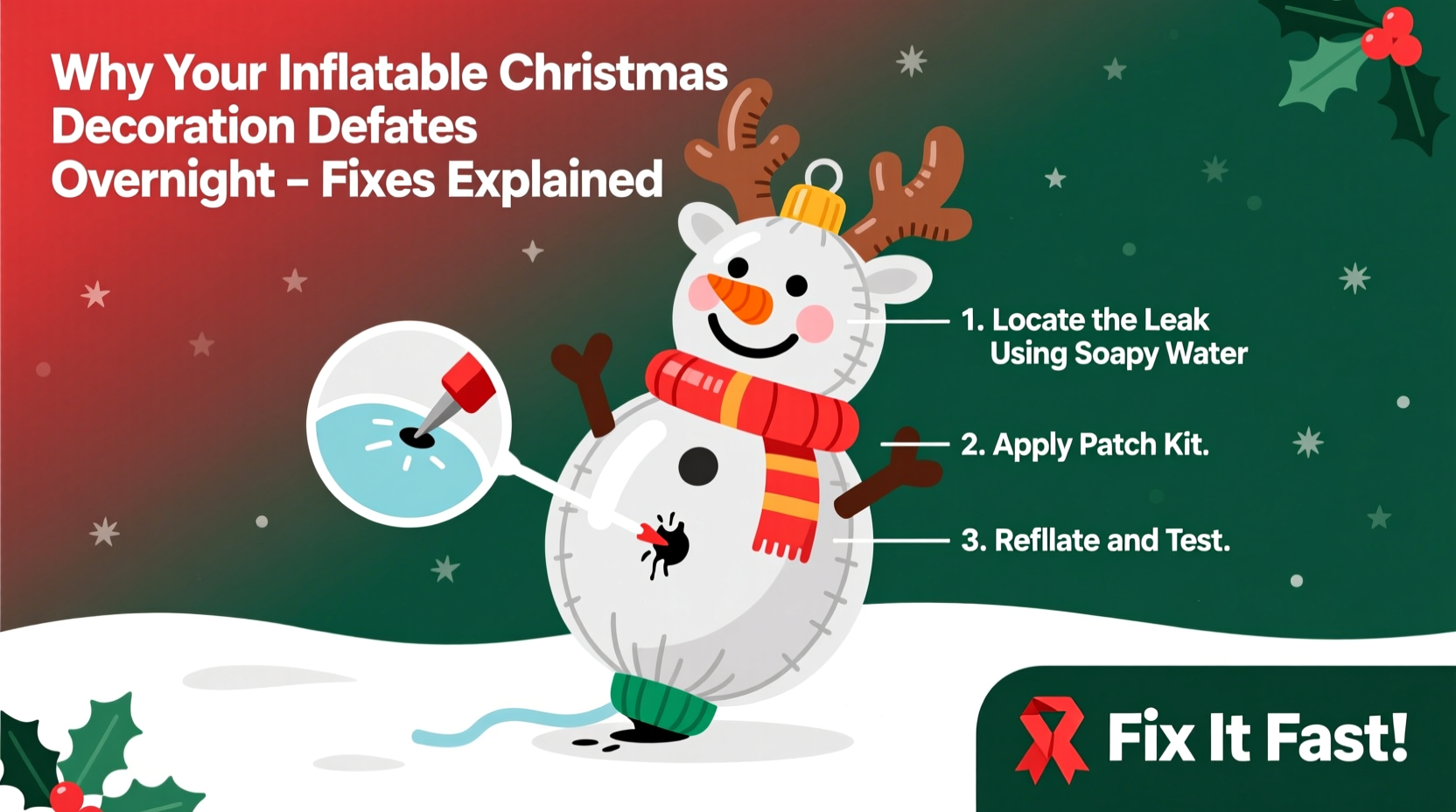
Inflatable Christmas decorations rely on an internal fan unit to maintain constant airflow. Unlike balloons that trap air in a sealed chamber, most holiday inflatables use a continuous-flow system. The fan runs continuously (or intermittently, depending on the model), pushing air into the interior cavity to keep the shape rigid. A one-way valve or sealed seam prevents rapid escape, but small leaks or pressure imbalances can still cause visible sagging.
This design allows for quick setup and compact storage, but it also makes inflatables sensitive to temperature shifts, wind exposure, and minor punctures. Because the fan compensates for small air losses, gradual leaks may go unnoticed until colder temperatures amplify the problem—especially overnight.
Top 5 Reasons Your Inflatable Deflates Overnight
1. Temperature Changes Cause Air Contraction
Air contracts when cooled. Outdoor temperatures often drop significantly at night, especially in late November and December. If your inflatable was fully inflated during the day at 50°F (10°C) and drops to 30°F (-1°C) by morning, the internal air volume can decrease by up to 10%. This contraction creates slack, making the decoration appear deflated—even if no air has escaped.
The fan may not run fast enough to compensate for this change, particularly on models with lower-powered motors. Once daytime temperatures rise, the decoration may reinflate partially or fully, creating the illusion that it “fixed itself.”
2. Small Punctures or Seam Leaks
Vinyl materials are durable but not indestructible. Over time, sharp twigs, pet claws, or even repeated folding can create tiny holes—sometimes too small to see with the naked eye. These micro-leaks allow air to escape slowly, and over several hours, the cumulative loss becomes noticeable.
Seams are another weak point. Heat-sealed joints can degrade due to UV exposure or moisture infiltration. If the decoration sits directly on wet grass or snow, prolonged dampness can weaken adhesive bonds, leading to slow separation.
3. Fan Motor or Power Issues
The fan is the heart of any inflatable. If it stops running—even briefly—the air inside begins to dissipate. Common electrical issues include:
- Loose outlet connection due to wind or animal interference
- Tripped GFCI outlet from moisture exposure
- Damaged power cord from foot traffic or lawn equipment
- Internal motor failure caused by overheating or age
If the fan shuts off at night and doesn’t restart until morning, your decoration will deflate completely, even without any leaks.
4. Wind Exposure and Flapping Stress
Strong winds don’t just blow decorations over—they create constant flapping motion that strains seams and connections. This repetitive stress can widen existing micro-tears or loosen attachment points between the fan housing and the body. Over time, this leads to increased air leakage, especially during windy nights.
Additionally, wind can force open temporary gaps in the inflation port, allowing air to escape faster than the fan can replace it.
5. Improper Anchoring or Ground Conditions
If an inflatable isn’t securely staked, shifting ground conditions can twist or pull the base. Uneven settling—especially on soft, thawing soil or icy patches—can misalign the fan unit or stretch the vinyl, creating new leak paths. Poor anchoring also increases exposure to wind damage, compounding other risks.
“Many customers assume their inflatable has a major tear, but in over 60% of cases we see, the real culprit is temperature-related contraction combined with a slightly underperforming fan.” — Mark Reynolds, Holiday Display Technician, Northlight Décor Support Team
Step-by-Step Guide to Diagnose and Fix Deflation
Follow this systematic approach to identify and resolve the cause of overnight deflation:
- Inspect for Visible Damage
Run your hands along seams, corners, and high-stress areas. Look for pinpricks, frayed edges, or discoloration indicating past repairs. Use a flashlight at night to spot escaping air as a faint whistle or flutter. - Test the Fan Operation
Unplug and reconnect the unit. Listen for consistent humming. If the fan cycles on and off erratically or emits a burning smell, it may need replacement. - Check Electrical Connections
Ensure the outlet is live and the extension cord is rated for outdoor use. Test with another device. Avoid daisy-chaining multiple cords, which can cause voltage drops. - Perform a Soapy Water Leak Test
Mix dish soap and water in a spray bottle. Inflate the decoration and spray suspected areas. Bubbles will form where air escapes. Mark these spots for repair. - Evaluate Placement and Anchoring
Relocate the decoration to a sheltered area if possible. Use at least four stakes (included or aftermarket) driven deep into stable ground. Add guy ropes for extra stability in windy zones.
Practical Fixes and Repair Methods
Once you’ve identified the issue, apply the appropriate fix:
Sealing Small Holes and Leaks
For punctures under ½ inch, use a vinyl repair kit designed for pool liners or inflatables. Clean the area thoroughly, dry completely, and apply the patch with firm pressure. Allow 24 hours to cure before reinflation.
For seam splits, use waterproof seam sealer (like Tear-Aid or Aquaseal) applied with a small brush. Reinforce with an overlapping patch for heavy-duty repairs.
Upgrading Fan Performance
If your fan struggles to maintain pressure, consider upgrading to a higher-CFM (cubic feet per minute) replacement unit compatible with your model. Some third-party fans offer better cold-weather performance and include thermal overload protection.
Insulating Against Temperature Swings
To reduce contraction effects, position your inflatable near a heat source like house siding or a covered porch—without blocking vents or creating fire hazards. You can also wrap the base with insulating foam pipe insulation to reduce radiant cooling from the ground.
Do’s and Don’ts: Inflatable Care Checklist
| Action | Recommended? | Reason |
|---|---|---|
| Use duct tape for emergency patches | ✅ Yes (temporary) | Better than nothing, but degrades quickly in sun and cold |
| Leave decoration up during storms | ❌ No | High winds and ice increase damage risk |
| Store while damp | ❌ No | Promotes mold and weakens seams |
| Use a timer to cycle the fan | ✅ Yes | Saves energy; ensure it runs during coldest hours |
| Place on sharp gravel or ice | ❌ No | Increases puncture risk |
| Inspect annually before setup | ✅ Yes | Catches small issues early |
Real Example: The Case of the Flat Frosty
Debra M. in Wisconsin set up her 8-foot inflatable snowman in early December. Each night, it deflated completely, despite appearing intact. She replaced the fan twice, suspecting mechanical failure. But the problem persisted.
After consulting a local holiday display specialist, she performed a soapy water test and discovered two tiny holes near the base—caused by a hidden garden stake she hadn’t removed. She patched the holes with a pool liner repair kit and relocated the display to a cleared area. She also added an outdoor-rated timer to run the fan from 4 PM to 9 AM, ensuring peak inflation during evening viewing hours.
Result: Frosty stayed fully inflated for the rest of the season, drawing compliments from neighbors and passing motorists alike.
Preventative Maintenance Tips for Long-Term Use
Extend the life of your inflatable decorations with these proactive habits:
- Clean Before Storage: Wipe down with mild soap and water. Never use harsh detergents or pressure washers.
- Dry Thoroughly: Allow at least 24 hours of air drying in a garage or shed before packing away.
- Store Properly: Fold loosely in a breathable cotton bag or cardboard box. Avoid plastic bins that trap moisture.
- Label Repairs: Note any patches or weak areas on the storage container so you can inspect them next year.
- Rotate Displays: If you own multiple inflatables, alternate usage each season to reduce wear on any single unit.
“The key to reliable performance isn’t just fixing problems—it’s preventing them. A five-minute inspection before setup saves hours of frustration later.” — Lena Pruitt, Seasonal Décor Consultant, HomeJoy Living
FAQ: Common Questions About Inflatable Deflation
Can cold weather permanently damage my inflatable?
No, cold alone won’t destroy the material, but repeated freezing and thawing can make vinyl brittle over time. Avoid folding or handling inflatables in sub-freezing temps to prevent cracking.
Is it safe to leave my inflatable on all night?
Yes, if it’s labeled for outdoor and continuous use. Ensure the fan is clear of debris and the power cord is protected from foot traffic and moisture. Use a GFCI outlet for safety.
Why does my decoration reinflate by afternoon?
This is typically due to thermal expansion. As daytime temperatures rise, the trapped air expands, restoring volume. If the fan is still working, it will help rebuild internal pressure. This pattern confirms temperature—not a major leak—as the primary factor.
Conclusion: Keep Your Holidays Uplifted
An inflatable that deflates overnight isn’t doomed—it’s signaling for attention. Whether it’s a subtle leak, an aging fan, or simply the physics of winter air, every cause has a solution. By understanding how these decorations function and applying careful diagnostics and maintenance, you can ensure your festive figures stand tall from Thanksgiving through New Year’s Day.
Don’t let a flat Santa ruin your holiday spirit. Take action now: inspect, repair, reinforce, and enjoy a display that brings joy—not confusion—to your season.




 浙公网安备
33010002000092号
浙公网安备
33010002000092号 浙B2-20120091-4
Comments
No comments yet. Why don't you start the discussion?