
There’s nothing more frustrating during the holiday season than setting up a cheerful inflatable Santa or snowman only to find it limp and half-deflated by morning. These festive yard displays are designed to bring joy — not constant maintenance. Yet, repeated deflation is a common issue that affects countless households each winter. The good news? Most causes are preventable, and many fixes are simple enough for anyone to handle.
Understanding why your inflatable keeps losing air begins with recognizing how these decorations work. They rely on an internal fan system to maintain pressure, and any compromise in structure, environment, or power can lead to gradual or sudden collapse. This guide breaks down the most frequent culprits behind recurring deflation and provides actionable solutions so you can enjoy a reliably inflated display from Thanksgiving through New Year’s.
Common Causes of Repeated Deflation
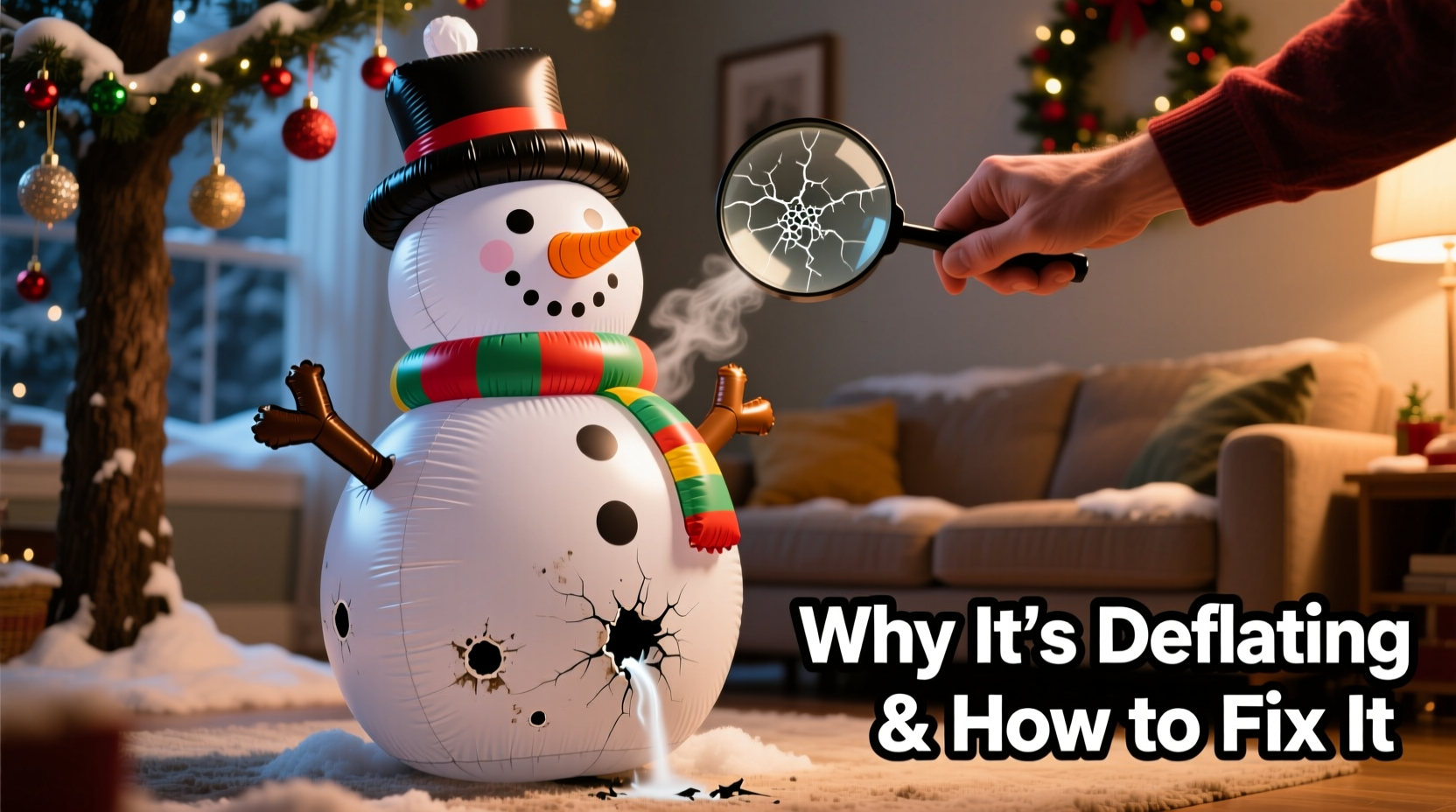
Inflatable decorations are engineered to be durable, but they're not immune to wear, environmental stress, or design flaws. When yours keeps going flat, it's rarely due to a single factor — often, it's a combination of issues working together. Identifying the root cause is essential before attempting repairs.
- Small punctures or seam leaks: Even tiny holes — invisible to the naked eye — can let air escape slowly over time.
- Temperature fluctuations: Cold air contracts, reducing internal pressure. Warm interiors cool overnight, leading to temporary sagging.
- Fan motor failure or obstruction: If the blower isn’t running continuously or is blocked, airflow stops and the unit collapses.
- Poor electrical connection: Loose plugs, damaged cords, or tripped GFCI outlets cut power intermittently.
- Improper anchoring: Wind stress can stretch seams or shift the unit, causing misalignment and air loss.
- Material fatigue: After multiple seasons, vinyl or polyester layers degrade, becoming brittle and prone to micro-tears.
Unlike permanent structures, inflatables depend on constant airflow to maintain shape. A well-functioning fan should cycle air rapidly enough to offset minor leakage. But when the balance tips — whether from damage, cold, or power loss — deflation becomes inevitable.
Step-by-Step Guide to Diagnose and Fix Air Loss
Before replacing or discarding your inflatable, follow this systematic approach to identify and resolve the problem. Many issues can be corrected at home with minimal tools and cost.
- Inspect for visible damage: Lay the unit flat and inflate it indoors. Run your hands along seams, corners, and high-stress areas. Look for pinholes, frayed stitching, or thinning fabric.
- Conduct a soap test: Mix dish soap with water and apply it to suspected areas using a spray bottle or sponge. Bubbles will form where air escapes, revealing even microscopic leaks.
- Check the fan unit: Ensure the blower is securely attached and running continuously. Listen for irregular sounds — grinding, stuttering, or silence between cycles indicates a failing motor.
- Test the power supply: Plug the decoration into a different outlet, preferably one not on a timer or GFCI circuit. Use a multimeter to verify consistent voltage delivery.
- Examine anchor points: Strong winds place lateral stress on the base. Confirm stakes or sandbags are secure and the unit isn’t leaning or twisting.
- Monitor temperature impact: Observe the decoration at different times of day. If it sags at night but reinflates by noon, thermal contraction is likely the culprit — not a leak.
If the fan runs but the unit still deflates, focus on sealing leaks. For units that stop inflating entirely, suspect electrical or mechanical failure. Each scenario requires a tailored response.
Repair Techniques for Leaks and Structural Damage
Most inflatable decorations are made from PVC-coated polyester or laminated vinyl — materials that respond well to patching. Commercial repair kits exist, but household alternatives can be equally effective when applied correctly.
To fix a confirmed leak:
- Deflate the unit completely and clean the area around the hole with rubbing alcohol.
- Cut a patch slightly larger than the damaged zone from heavy-duty vinyl tape or a scrap of compatible material.
- Apply waterproof adhesive (such as Aquaseal or E6000) to both surfaces and press firmly. Allow 12–24 hours to cure before reinflation.
- For seam splits, reinforce with heat-activated seam tape using a warm iron (no steam) and a pressing cloth to avoid melting.
Some users report success with duct tape or packing tape, but these are short-term fixes. Exposure to UV rays and moisture degrades adhesion within days. Opt for marine-grade sealants or outdoor-rated patches designed for pool liners or air mattresses.
| Repair Method | Best For | Durability | Notes |
|---|---|---|---|
| Vinyl Repair Kit | Punctures under 1 inch | High | Includes adhesive and matching fabric patches |
| Heat-Activated Seam Tape | Split seams | Very High | Requires iron; follow manufacturer temp guidelines |
| Marine Epoxy | Cracked connectors or rigid joints | Moderate | Rigid when dry; use only on non-flex zones |
| Duct Tape (Temporary) | Emergency field fixes | Low | Remove and replace properly within 48 hours |
When the Fan Is the Problem
The internal blower is the heart of any inflatable decoration. If it fails, no amount of patching will keep the unit upright. Common signs of fan trouble include:
- Intermittent operation (cycles on/off unpredictably)
- Unusual noises (grinding, clicking, or whining)
- No airflow despite being plugged in
- Overheating or burning smell
Many modern inflatables have non-removable or proprietary fans, making replacement difficult. However, third-party universal blowers are available online. Measure your unit’s air intake diameter and match it to a compatible model with similar CFM (cubic feet per minute) output. Install using weatherproof connectors and silicone sealant to prevent moisture ingress.
“Most inflatable failures I see stem from overlooked fan maintenance. Dust buildup and moisture inside the motor housing account for nearly 40% of ‘mysterious’ shutdowns.” — Derek Langston, Seasonal Lighting Technician with 12 years of experience
Environmental and Setup Factors That Contribute to Failure
Even a perfectly sealed, fully functional inflatable can struggle in suboptimal conditions. External forces play a major role in performance and longevity.
Wind is the top environmental threat. Gusts create pressure differentials that strain seams and increase internal turbulence. Secure your decoration with reinforced tethers and ground stakes placed at 45-degree angles. Avoid mounting near walls or fences where wind tunneling occurs.
Moisture compromises both electronics and fabric. Snow accumulation adds weight, while rain can seep into electrical connections. Position the blower unit facing downward to discourage water entry, and use a drip loop in the power cord to prevent runoff from reaching the outlet.
Temperature swings affect air density. A fully inflated decoration at noon may lose 10–15% volume overnight as temperatures drop. This is normal and usually resolves itself once daytime heating resumes. Avoid over-inflating during warm hours to prevent stress on cold mornings.
Mini Case Study: The Recurring Snowman Collapse
A homeowner in Minnesota reported their 8-foot inflatable snowman deflating every two nights. Initial inspection revealed no visible damage. The fan ran normally, and power tested stable. However, further observation showed the unit reinflated each morning without intervention.
Using a thermal camera, a technician noted significant cooling at the base after sunset. The solution? The owner added a secondary insulating skirt made from bubble wrap around the lower section. This reduced radiant heat loss and stabilized internal pressure. The snowman remained fully inflated for the remainder of the season — proving that sometimes, the issue isn’t mechanical, but thermal.
Preventive Maintenance Checklist
Extend the life of your inflatable and prevent future deflation with regular care. Follow this checklist each season:
- ✅ Clean the surface with mild soap and water before storage
- ✅ Inspect seams and fan housing for cracks or wear
- ✅ Store in a cool, dry place away from rodents and sharp objects
- ✅ Keep folded loosely in a breathable cotton bag — never plastic
- ✅ Test inflation and fan function before outdoor deployment
- ✅ Use a surge protector and outdoor-rated extension cord
- ✅ Trim nearby tree branches or obstacles that could abrade the surface
Frequently Asked Questions
Can temperature changes really cause deflation?
Yes. Cold air contracts, reducing internal pressure. A decoration inflated at 50°F (10°C) may appear 10–15% smaller at 30°F (-1°C). As long as the fan continues running, it should compensate. True deflation occurs when the unit doesn’t reinflate during warmer periods.
Is it safe to leave an inflatable out in the rain or snow?
Most modern inflatables are weather-resistant but not waterproof. Light rain is generally fine, but prolonged exposure to standing water or heavy snow can lead to moisture intrusion, mold, and added structural stress. Monitor forecasts and consider temporary removal during storms.
How long should an inflatable decoration last?
With proper care, most quality inflatables last 5–7 seasons. Lower-cost models may degrade after 2–3 years due to thinner materials and weaker seams. Regular inspection and prompt repairs significantly extend lifespan.
Final Thoughts and Call to Action
Recurrent deflation doesn’t mean your inflatable is doomed. In most cases, the issue is diagnosable and fixable with basic tools and attention to detail. Whether it’s a pinhole leak, a struggling fan, or environmental stress, targeted action can restore reliability and preserve your holiday spirit.
Taking the time to understand your decoration’s behavior — when it deflates, how quickly, and under what conditions — transforms guesswork into effective maintenance. Apply the steps outlined here, invest in preventive habits, and don’t hesitate to upgrade components like fans or cords when needed.




 浙公网安备
33010002000092号
浙公网安备
33010002000092号 浙B2-20120091-4
Comments
No comments yet. Why don't you start the discussion?