
Homebrewed kombucha should be crisp, tangy, and effervescent. When your bottles come out flat, it’s more than a disappointment—it’s a sign something went wrong in the fermentation process. While kombucha brewing seems simple, achieving consistent carbonation requires attention to detail, timing, and environment. Many home fermenters assume that bottling with a little sugar is enough, but real fizz depends on multiple factors aligning perfectly. This guide breaks down the most common reasons your kombucha isn’t carbonating and delivers actionable, science-backed fizz hacks that actually work.
Why Carbonation Fails: The Core Issues
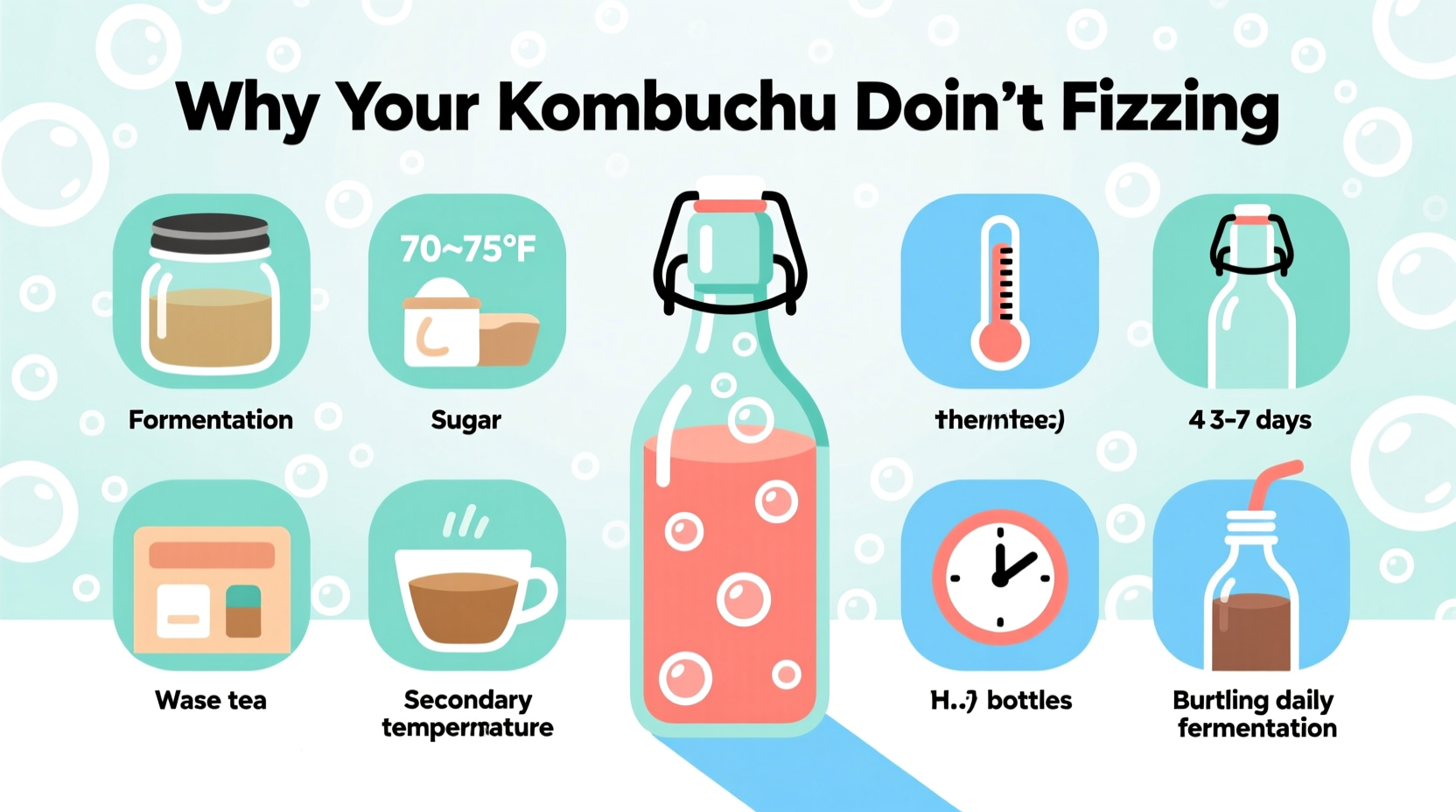
Carbonation in kombucha happens during the second fermentation (also known as “bottle conditioning”). During this phase, yeast consumes added sugar and produces carbon dioxide (CO₂). Because the bottles are sealed, CO₂ dissolves into the liquid, creating bubbles. If any part of this process is disrupted, you end up with flat kombucha.
The most frequent causes of poor carbonation include:
- Insufficient sugar: Yeast needs food. Too little sugar means no gas production.
- Inactive or insufficient yeast: Over-fermenting the first stage can kill off yeast needed for carbonation.
- Poor sealing: Oxygen leaks prevent pressure buildup. Swing-top bottles with intact gaskets are essential.
- Cold temperatures: Fermentation slows dramatically below 68°F (20°C).
- Over-chilling too soon: Refrigerating before full carbonation halts the process permanently.
- Too much oxygen in the bottle: Headspace over 1 inch reduces CO₂ concentration and pressure.
Fizz Hacks That Actually Work
Not all carbonation tips are equal. Some popular hacks—like adding fruit juice without adjusting sugar—are ineffective or even risky. Below are methods tested by experienced brewers and supported by fermentation science.
1. Use the Right Sugar Type and Amount
Sugar type matters. Refined white sugar dissolves quickly and is easily consumed by yeast. However, raw honey, maple syrup, or coconut sugar may contain compounds that inhibit fermentation or feed undesirable microbes.
For consistent results, use 1/4 to 1/2 teaspoon of white sugar per 16 oz (500ml) bottle. Alternatively, add 1/2 ounce (15ml) of fruit juice like apple, grape, or pineapple, which provides both sugar and flavor.
“Sucrose is the most reliable fuel for kombucha’s secondary fermentation. Complex sugars slow yeast activity and reduce fizz predictability.” — Dr. Laura Chen, Microbiologist & Fermentation Researcher
2. Add Fresh Yeast if Needed
If your SCOBY has been fermenting for over 14 days, the yeast population may be depleted. To revive carbonation potential, add a small amount of fresh culture:
- Include 1–2 tablespoons of unflavored starter tea from a recent batch.
- Or, add a piece of active SCOBY (about the size of a quarter).
- Commercial options like champagne yeast (in tiny amounts) can also boost fizz—but use cautiously, as they’re aggressive and may over-carbonate.
3. Optimize Temperature and Timing
Yeast thrives between 72°F and 78°F (22–26°C). At these temperatures, carbonation typically develops within 2–5 days. Cooler environments extend this timeline significantly.
Avoid placing bottles near air conditioners, drafty windows, or cold basements. Instead, store them in a consistently warm spot—like the top of a refrigerator or inside a pantry away from exterior walls.
4. Burp Bottles Strategically
“Burping” means briefly opening the bottle to release excess pressure. This prevents explosions while allowing fermentation to continue. It’s especially useful when using fruit or high-sugar additives.
After day 3 of second fermentation, gently open each bottle just enough to hear a soft hiss. Reseal immediately. Repeat every 24 hours until desired fizz is reached, then refrigerate.
5. Choose the Right Bottles
Glass bottles designed for carbonation are non-negotiable. Mason jars, reused soda bottles, or plastic containers often fail to hold pressure safely.
| Bottle Type | Safe for Carbonation? | Notes |
|---|---|---|
| Swing-top (Grolsch-style) | Yes | Best choice—reusable, secure seal, pressure-tested |
| Plastic soda bottles (PET) | Yes (with caution) | Can be used once or twice; squeeze test to check pressure |
| Mason jars | No | Lids aren't pressure-rated—risk of breakage |
| Wine bottles with cork | Risky | Corks may eject under pressure; not recommended |
| Reusable kombucha brand bottles | Yes | Designed for pressure—ideal for beginners |
Step-by-Step Guide to Guaranteed Carbonation
Follow this sequence to maximize your chances of fizzy kombucha every time:
- Complete primary fermentation properly: Brew for 7–10 days at 75°F (24°C). Taste daily after day 6. Stop when tartness balances sweetness—over-fermenting kills carbonation potential.
- Prepare flavorings and sugar: Have fruit, juice, herbs, or sugar ready. Measure precisely: 1/4 tsp sugar or 1 tbsp juice per 16 oz bottle.
- Add starter tea: Mix in 10% starter liquid from a previous batch or include a small SCOBY fragment to ensure active yeast.
- Bottle carefully: Use clean, sterilized swing-top bottles. Fill to 1–2 inches below the rim. Seal tightly.
- Ferment in a warm, dark place: Store bottles at 72–78°F for 3–5 days. Avoid direct sunlight.
- Check daily from day 3: Gently open one bottle to test fizz. If soft, reseal and wait 24 hours. If strong fizz, proceed to next step.
- Refrigerate promptly: Once carbonated, chill all bottles to halt fermentation and preserve fizz.
“Many people don’t realize that kombucha stops carbonating in the fridge. If it’s flat when chilled, it will stay flat.” — Rebecca Tran, Home Fermentation Educator & Author
Real Example: From Flat to Fizzy in One Batch
Samantha had brewed kombucha for months with inconsistent results. Her first batches were always flat, despite adding ginger and juice. She followed online advice to “just wait longer,” but after 10 days, her bottles remained still—and two even exploded.
She reviewed her process and identified three flaws: she was using mason jars, fermenting at 65°F, and letting her primary ferment go 14 days. After switching to swing-top bottles, moving her brew to a warmer cupboard, and shortening primary fermentation to 8 days, her next batch developed noticeable fizz by day 4. By day 6, it was sparkling. No explosions, no flat brew—just consistent, drinkable kombucha.
Her key takeaway: temperature and timing matter more than exotic ingredients.
Common Mistakes That Kill Carbonation
Avoid these pitfalls to protect your fizz:
- Using chlorinated tap water: Chlorine can harm yeast and bacteria. Always dechlorinate water by boiling or using a filter.
- Adding sulfites: Dried fruits or wines may contain preservatives that stop fermentation dead.
- Refrigerating too early: Even if bottles feel firm, chilling before full CO₂ saturation leads to flat results.
- Overfilling bottles: Too little headspace restricts gas buildup and increases explosion risk.
- Ignoring mold or contamination: A compromised SCOBY or moldy batch affects microbial balance and fermentation power.
Carbonation Checklist
Before sealing your bottles, run through this checklist to ensure optimal conditions for fizz:
- ✅ Primary fermentation lasted 7–10 days (not longer)
- ✅ Added 1/4–1/2 tsp sugar or 1 tbsp fruit juice per 16 oz bottle
- ✅ Included starter tea or SCOBY fragment for active culture
- ✅ Used proper carbonation-safe bottles (swing-top or PET)
- ✅ Sealed bottles tightly with no visible cracks or worn gaskets
- ✅ Stored bottles in a warm area (72–78°F / 22–26°C)
- ✅ Left 1–2 inches of headspace in each bottle
- ✅ Planned to check carbonation starting on day 3
Frequently Asked Questions
How long does it take kombucha to carbonate?
Typically 2–7 days, depending on temperature and sugar content. At 75°F (24°C), expect noticeable fizz by day 3–4. Colder environments may require up to 10 days. Always burp and test before refrigerating.
Can I carbonate kombucha without adding sugar?
No. The second fermentation relies on added sugar to produce CO₂. While residual sugar from the first ferment exists, it’s rarely enough for significant carbonation. Without additional sugar or juice, kombucha will remain flat.
Why did my kombucha bottle explode?
Over-carbonation usually causes explosions. This happens when too much sugar is added, temperatures are too high, or bottles are left fermenting too long without burping. Always use pressure-rated bottles, control sugar amounts, and monitor daily after day 3.
Final Tips for Consistently Bubbly Kombucha
Great kombucha isn’t luck—it’s consistency. Track your variables: temperature, fermentation time, sugar type, and bottle type. Keep a simple log to identify what works and what doesn’t. Over time, you’ll develop an intuitive sense of when your brew is ready.
Remember: patience pays off, but so does precision. Don’t assume more sugar means more fizz—balance is key. And never skip the starter tea; it’s the engine of your secondary fermentation.




 浙公网安备
33010002000092号
浙公网安备
33010002000092号 浙B2-20120091-4
Comments
No comments yet. Why don't you start the discussion?