
Kombucha is beloved for its bright acidity, subtle sweetness, and effervescent finish. But when that pleasant tang turns into an overpowering sourness, it can make the drink unpalatable—especially for new fermenters. If you've opened your latest batch only to be met with a vinegar-like punch, you're not alone. Overly sour kombucha is one of the most common issues home brewers face. The good news? It's both preventable and fixable.
Sourness in kombucha comes from organic acids produced during fermentation—mainly acetic acid and gluconic acid. While these compounds are beneficial and contribute to kombucha’s health profile, their concentration depends heavily on fermentation time, temperature, SCOBY health, and sugar levels. Understanding how each factor influences flavor empowers you to dial in your process and consistently produce balanced, enjoyable kombucha.
What Causes Kombucha to Become Too Sour?
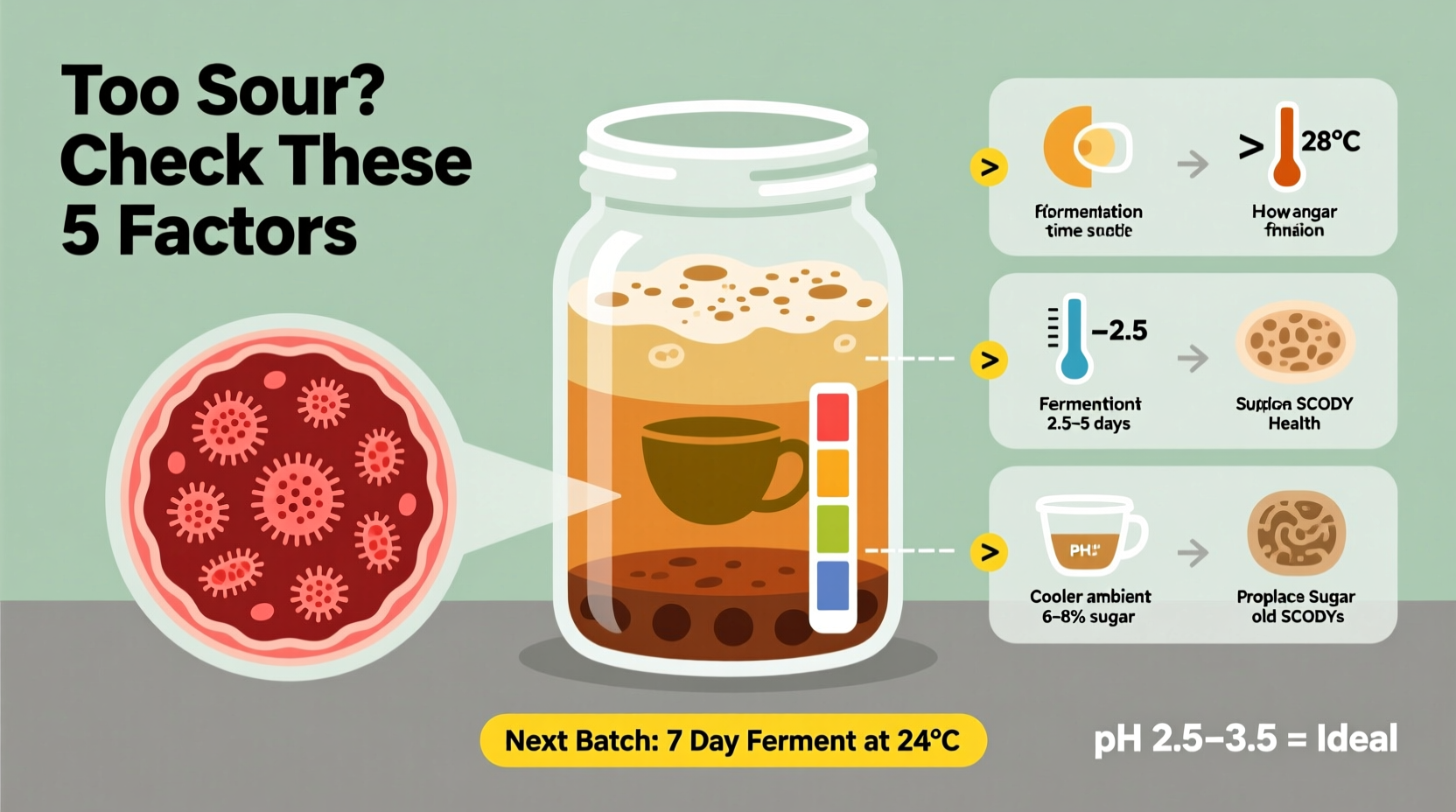
The primary driver of excessive sourness is over-fermentation. When kombucha ferments for too long or at too high a temperature, the symbiotic culture of bacteria and yeast (SCOBY) consumes nearly all available sugar, converting it into acids. This results in a sharp, vinegary taste reminiscent of apple cider vinegar rather than a mildly tart, refreshing beverage.
Several key variables contribute to this imbalance:
- Fermentation duration: Most kombucha batches reach optimal balance between 7–14 days. Going beyond this window increases acid production significantly.
- Room temperature: Warmer environments accelerate microbial activity. At temperatures above 80°F (27°C), fermentation speeds up dramatically, shortening the ideal brewing window.
- SCOBY maturity and quantity: A large or overly active SCOBY processes sugar faster, increasing acid output. Multiple SCOBYs stacked together can intensify fermentation.
- Sugar-to-tea ratio: Too little sugar means less food for the culture early on, but once depleted, the existing acids dominate the flavor. Conversely, excess sugar may delay sourness—but won’t stop it indefinitely.
- Pitching temperature: Adding a SCOBY to tea that hasn’t cooled sufficiently can stress or damage the culture, leading to erratic fermentation patterns later.
How Fermentation Works: A Quick Science Breakdown
To control sourness, it helps to understand what happens inside your jar. After brewing sweetened tea and cooling it, you introduce the SCOBY along with starter liquid (previously fermented kombucha). This creates an acidic environment that discourages mold while encouraging the growth of beneficial microbes.
In the first few days, yeasts in the SCOBY break down sucrose into glucose and fructose, then convert those sugars into ethanol and carbon dioxide. As alcohol accumulates, acetic acid bacteria (primarily Acetobacter species) begin converting ethanol into acetic acid—the compound responsible for vinegar’s bite.
This two-phase process means kombucha naturally becomes more acidic over time. The longer it ferments, the more ethanol gets transformed into acetic acid, raising the overall titratable acidity (TA) of the brew. Gluconic acid and lactic acid also form, contributing to complexity but adding to perceived sourness when unbalanced.
“Kombucha isn't meant to taste like vinegar. There’s a sweet-tart equilibrium that defines quality fermentation.” — Dr. Elena Ruiz, Microbiologist & Fermentation Scientist
Commercial kombuchas typically maintain a pH between 2.5 and 3.2. Homebrewed versions often fall within this range but can dip below 2.5 if left too long, making them excessively sour. Using pH strips or a digital meter can help monitor progress objectively.
Step-by-Step Guide to Balancing Your Next Batch
Correcting sour kombucha starts with adjusting your approach—not discarding your SCOBY or giving up on brewing. Follow this timeline-based method to regain control over flavor development:
- Day 1: Brew and Cool Tea
Use 1 gallon of filtered water, 8–10 tea bags (black, green, white, or oolong), and 1 cup of granulated cane sugar. Dissolve sugar fully while boiling, then steep tea for 10–15 minutes. Remove tea bags and let the liquid cool completely to room temperature (ideally 68–75°F / 20–24°C). - Day 1: Add Starter Liquid and SCOBY
Once cooled, pour in 1–2 cups of raw, unflavored kombucha from a previous batch (or store-bought unpasteurized). This lowers the initial pH and protects against contamination. Gently place your healthy SCOBY on top. - Days 2–6: Monitor Temperature and Cover Jar
Store the jar in a warm, dark location away from direct sunlight. Keep consistent airflow but cover with a tight-weave cloth or coffee filter secured with a rubber band. Check daily for signs of mold (fuzzy spots) or pellicle formation (a new thin layer forming on the surface). - Day 5: Begin Daily Tasting
Insert a clean straw just below the surface and draw up a small sample. Assess sweetness versus sourness. At this stage, it should still have noticeable sweetness with a hint of tartness. - Days 6–10: Determine Peak Flavor
Continue tasting every 24 hours. The ideal point arrives when the kombucha has lost about half its initial sweetness and developed a crisp, fruity tang without harsh acidity. This varies by climate and SCOBY strength. - Day 7–14: Bottle When Balanced
Once the desired balance is reached, remove the SCOBY and reserve 2 cups of liquid as starter for your next batch. Transfer the rest to bottles for either immediate refrigeration (to halt fermentation) or secondary fermentation (for carbonation). - Refrigerate Promptly
Cold temperatures slow microbial activity drastically. Refrigerating your kombucha stops further acid development and preserves flavor stability.
Do’s and Don’ts for Controlling Sourness
| Do’s | Don’ts |
|---|---|
| Use pH strips to track acidity (target: 2.8–3.2) | Leave kombucha fermenting longer than 14 days without monitoring |
| Taste daily after day 5 | Brew near heat sources like ovens or radiators |
| Maintain consistent room temperature (68–75°F) | Add extra sugar late in fermentation to “fix” sourness |
| Keep a log of fermentation time and conditions | Use metal utensils or containers (can harm SCOBY) |
| Store starter liquid and SCOBY in glass at room temp between batches | Assume all sourness is bad—some is natural and desirable |
Mini Case Study: From Vinegar to Vibrant Kombucha
Sarah, a home brewer in Austin, Texas, struggled for months with overly sour kombucha. Her kitchen routinely hit 82°F (28°C) in summer, and she followed online guides suggesting \"ferment until no sweetness remains.\" By day 10, her batches were undrinkably sharp.
After tracking her process, she realized two problems: ambient heat was accelerating fermentation, and she wasn’t tasting early enough. She adjusted by moving her jar to a cooler interior closet, began tasting on day 5, and started bottling around day 7. She also began using pH strips and aimed for a reading of 3.0.
The difference was immediate. Her next batch had a bright, balanced profile—tangy but refreshingly drinkable. She now shares her logs with a local fermentation group and mentors others facing similar issues.
Rescuing and Repurposing Overly Sour Kombucha
If you already have a batch that’s too sour, don’t pour it out. Excessively acidic kombucha still has value:
- Dilute and drink: Mix 1 part sour kombucha with 2 parts water or juice for a tangy refresher.
- Use as a salad dressing base: Combine with olive oil, mustard, honey, and herbs for a probiotic-rich vinaigrette.
- Create a cleaner: Its acidity makes it effective for non-toxic surface cleaning. Pair with essential oils for scent.
- Make shrubs (drinking vinegar): Simmer with fruit and sugar to create a syrup used in cocktails or sodas.
- Feed compost or plants: Diluted 1:10 with water, it can support soil microbiology.
Checklist: Prevent Sour Kombucha in Your Next Brew
- ✅ Brew sweet tea with 1 cup sugar per gallon
- ✅ Cool tea completely before adding SCOBY
- ✅ Use 1–2 cups starter liquid to acidify the batch
- ✅ Ferment in a stable environment (68–75°F / 20–24°C)
- ✅ Begin tasting on day 5 and continue daily
- ✅ Monitor pH; aim to bottle between 2.8 and 3.2
- ✅ Bottle or refrigerate by day 10–12 unless intentionally making vinegar
- ✅ Reserve 2 cups of finished kombucha for next batch
- ✅ Keep detailed notes on time, temperature, and taste
FAQ: Common Questions About Sour Kombucha
Can I add sugar to sour kombucha to make it sweeter?
Not directly. Adding sugar to an already-fermented batch will restart fermentation if live cultures remain, potentially causing overcarbonation or bottle explosions. Instead, blend sour kombucha with fresh juice or use it in mixed drinks where sweetness is added separately.
Is overly sour kombucha safe to drink?
Yes. High acidity actually makes it safer by inhibiting harmful pathogens. However, excessive consumption of very acidic beverages may irritate sensitive stomachs or erode tooth enamel over time. Moderation is advised.
Can I use sour kombucha as starter liquid for my next batch?
Absolutely. In fact, using a slightly sour batch as starter ensures a low initial pH, which protects against mold. Just avoid using moldy or contaminated batches under any circumstances.
Conclusion: Master the Balance, Enjoy the Brew
Sour kombucha isn’t a failure—it’s feedback. Each batch teaches you more about your SCOBY, your environment, and your personal taste preferences. With attention to timing, temperature, and sensory evaluation, you can consistently craft kombucha that’s vibrant, balanced, and uniquely yours.
Don’t fear the sour; learn from it. Adjust one variable at a time, keep records, and trust your palate. Whether you prefer lightly tangy or robustly fermented, the power to shape your brew lies in your hands.




 浙公网安备
33010002000092号
浙公网安备
33010002000092号 浙B2-20120091-4
Comments
No comments yet. Why don't you start the discussion?