
Kombucha has earned its place in kitchens worldwide as a beloved fermented beverage praised for its tangy taste and potential health benefits. Yet many home brewers face the same frustrating issue: their kombucha turns out too sour. While some tartness is expected, excessive acidity can make each sip unpleasant. The primary culprit? Fermentation timing. Understanding how time influences the brewing process allows you to regain control over flavor, ensuring your kombucha remains balanced, refreshing, and enjoyable.
The sourness of kombucha results from organic acids produced during fermentation—mainly acetic acid and gluconic acid. These compounds develop gradually as the symbiotic culture of bacteria and yeast (SCOBY) consumes sugar. The longer fermentation continues, the more sugar is converted into acids, increasing tartness. This natural progression means that even slight variations in time can significantly impact taste. But timing isn't the only factor; temperature, batch size, starter liquid ratio, and SCOBY health all interact to shape the final product.
How Fermentation Transforms Sweet Tea Into Kombucha
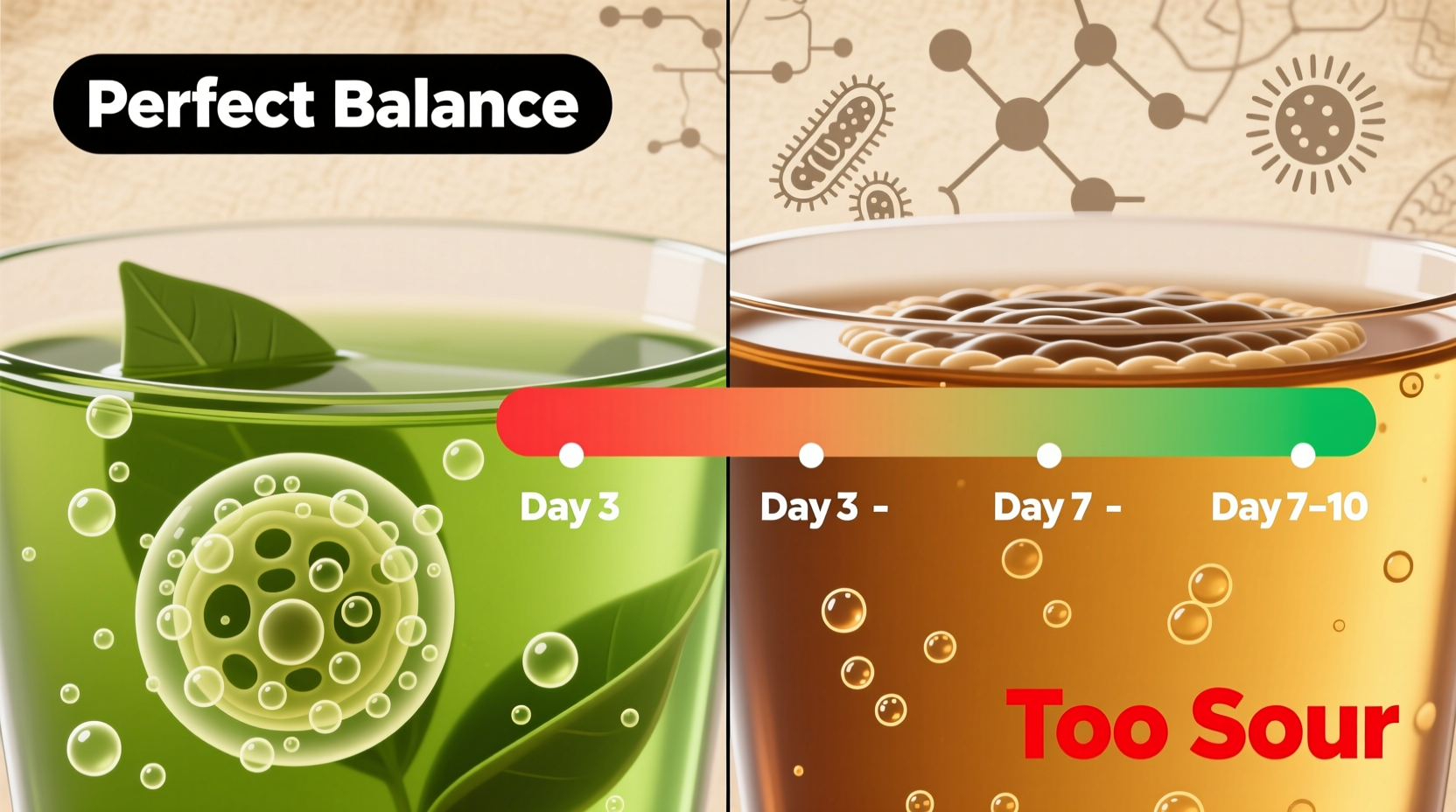
Fermenting kombucha begins with sweetened tea inoculated with a SCOBY and starter liquid from a previous batch. During the initial 1–3 days, yeast within the culture breaks down sucrose into glucose and fructose, then ferments these sugars into ethanol and carbon dioxide. As alcohol levels rise slightly, acetic acid bacteria begin converting ethanol into acetic acid—the compound responsible for vinegar-like sharpness.
This two-phase process unfolds over 7 to 14 days under typical room conditions (68–78°F or 20–25°C). Early on, kombucha retains noticeable sweetness. Over time, sweetness diminishes while acidity increases. By day 7, most batches reach a pleasant balance. Extending beyond 10–12 days often leads to pronounced sourness. Without careful monitoring, it's easy to overshoot this window—especially in warmer environments where microbial activity accelerates.
“Fermentation is not just about waiting—it’s about observing. A well-timed brew reflects attention to subtle changes in aroma, clarity, and taste.” — Dr. Lena Torres, Microbiologist & Fermentation Scientist
The Role of Time in Sourness Development
Fermentation duration directly correlates with acid production. Each additional day gives bacteria more opportunity to convert alcohol into acetic and other organic acids. While this enhances preservation and probiotic content, unchecked fermentation risks overpowering the palate.
A useful rule of thumb: kombucha becomes noticeably more acidic every 24–48 hours after day 5. For example:
- Days 5–6: Mildly tart, still sweet, light effervescence.
- Days 7–9: Balanced profile, ideal for most palates.
- Days 10–12: Pronounced sourness, reduced sweetness, sharper finish.
- Day 13+: Very sour, potentially vinegary; may lack drinkability for casual consumers.
Inconsistent timing often stems from misunderstanding visual cues. Cloudiness, sediment, and surface film formation are normal and don’t reliably indicate readiness. Taste testing remains the gold standard. Begin sampling at day 6 using a clean straw to draw liquid from above the SCOBY. If sweetness lingers, continue fermenting. When the desired balance is achieved, bottle immediately to halt further acid development.
Environmental Factors That Accelerate Fermentation
Time alone doesn’t dictate sourness—temperature plays an equally critical role. Warmer environments speed up microbial metabolism, shortening the effective fermentation timeline. At 80°F (27°C), kombucha may become overly sour in just 7 days, whereas at 68°F (20°C), the same batch might take 12–14 days to reach equivalent acidity.
Seasonal shifts often catch brewers off guard. A kombucha that tasted perfect in winter may turn sharply acidic in summer without any change in routine. To maintain consistency:
- Monitor ambient temperature near your brewing station.
- Avoid placing jars in direct sunlight or near heat sources.
- Use a thermometer strip or smart sensor for real-time tracking.
Cooler spaces slow fermentation, allowing finer control. If your kitchen runs hot, consider brewing in a basement or temperature-stable closet. Conversely, if fermentation stalls below 68°F, gently warming the area (without exceeding 80°F) helps maintain activity.
Step-by-Step Guide to Perfect Fermentation Timing
Follow this structured approach to consistently produce well-balanced kombucha:
- Day 1: Brew black or green tea, dissolve ¾–1 cup sugar per gallon, cool completely, then transfer to a clean jar. Add SCOBY and 1–2 cups starter liquid (from prior batch or raw store-bought kombucha).
- Days 2–5: Cover with breathable cloth, secure with a rubber band, and store in a stable environment away from contaminants. No tasting needed yet.
- Day 6: Begin daily taste tests. Insert a clean straw below the surface, draw a small sample, and assess sweetness versus tartness.
- Days 7–9: Continue tasting daily. Look for a crisp, apple-like acidity with residual sweetness. This is the optimal bottling window for most recipes.
- Bottling: Once desired flavor is reached, remove SCOBY, reserve 1–2 cups of liquid as starter for next batch, and transfer remainder to sealed bottles. Add fruit juice or flavorings if desired.
- Secondary Fermentation (Optional): Leave bottles at room temperature for 2–5 days to build carbonation, then refrigerate to slow further fermentation.
Refrigeration halts acid production but does not reverse existing sourness. Therefore, precise timing during primary fermentation is essential.
Do’s and Don’ts of Managing Kombucha Acidity
| Do | Don’t |
|---|---|
| Taste test daily starting on day 6 | Assume fermentation is done based on time alone |
| Keep consistent records (start date, temp, taste notes) | Place brew in fluctuating temperatures (e.g., near oven or AC unit) |
| Use adequate starter liquid (10–15% of total volume) | Reuse weak or mold-damaged SCOBYs that may ferment unevenly |
| Store finished kombucha promptly in the refrigerator | Leave bottled kombucha at room temperature indefinitely |
| Adjust batch size seasonally—smaller in summer, larger in winter | Ignore signs of over-acidification like strong vinegar smell or biting aftertaste |
Rescuing and Repurposing Overly Sour Kombucha
If your kombucha has already turned too sour, don’t discard it. Excessively tart batches retain beneficial acids and cultures, making them valuable beyond drinking.
Mix equal parts over-soured kombucha with fresh juice, herbal tea, or sparkling water to rebalance flavor. Alternatively, use it as a base for salad dressings, marinades, or detox tonics. Its high acidity makes it excellent for tenderizing meat or preserving vegetables in quick-pickling applications.
You can also blend it into smoothies, where fruit sweetness masks sharpness while adding probiotics. One home brewer, Sarah M., shared her experience:
“I left a batch fermenting for 14 days during a heatwave. It was undrinkably sour. Instead of throwing it away, I mixed it with pineapple juice and ginger for a second fermentation. The result was a fizzy, tropical refresher I now prefer over my original recipe.”
This mini case study illustrates how understanding fermentation dynamics turns mistakes into innovation.
Checklist: Preventing Overly Sour Kombucha
- ✅ Start tasting at day 6 using a clean straw
- ✅ Track ambient temperature daily
- ✅ Label jars with start date and target bottling range (e.g., “Taste Day 6–9”)
- ✅ Use 10–15% starter liquid to ensure proper pH drop early on
- ✅ Refrigerate completed batches promptly to stop acid development
- ✅ Maintain a logbook noting time, temperature, flavor outcome, and adjustments
- ✅ Scale batch size according to seasonal temperatures
Frequently Asked Questions
Can I fix kombucha that’s already too sour?
Yes. Dilute it with fruit juice, sweet tea, or still/sparkling water to restore balance. You can also use it in cooking, cleaning solutions, or DIY skincare due to its mild antimicrobial properties.
Does a thicker SCOBY mean faster fermentation?
Not necessarily. While multiple layers indicate an active culture, fermentation speed depends more on temperature, sugar availability, and microbial balance than SCOBY thickness. An older, dense SCOBY may actually ferment slower if less surface area contacts the liquid.
Is sour kombucha still safe to drink?
Generally yes. High acidity inhibits harmful pathogens, so over-fermented kombucha is usually safe unless contaminated by mold or off smells (like rotten eggs or ammonia). If in doubt, trust your senses—if it looks, smells, or tastes distinctly wrong, discard it.
Mastering Balance Through Observation and Control
Producing kombucha with ideal flavor hinges on recognizing that fermentation is dynamic, not fixed. Clock-based schedules offer guidance, but sensory evaluation provides truth. By aligning time with environmental awareness and consistent tasting, you gain precision over one of nature’s most elegant biochemical processes.
Every batch teaches something new. Some will be sweeter, others tangier—but each contributes to deeper understanding. With practice, you’ll intuitively sense when fermentation peaks, transforming what once seemed unpredictable into a reliable craft.




 浙公网安备
33010002000092号
浙公网安备
33010002000092号 浙B2-20120091-4
Comments
No comments yet. Why don't you start the discussion?