
Kombucha is beloved for its tangy, slightly effervescent flavor—a balance between sweet, sour, and fizzy that makes it refreshing and gut-friendly. But when your brew turns into something resembling straight vinegar, it’s time to reassess your fermentation process. A sharply acidic taste isn’t always a sign of failure; sometimes, it's just overdone. The good news? You don’t need advanced equipment or lab-grade precision to fix it. With a few practical adjustments to temperature, timing, and SCOBY care, you can regain control over your brew and produce kombucha that’s balanced, flavorful, and enjoyable.
Understanding the Science Behind Vinegar-Like Kombucha
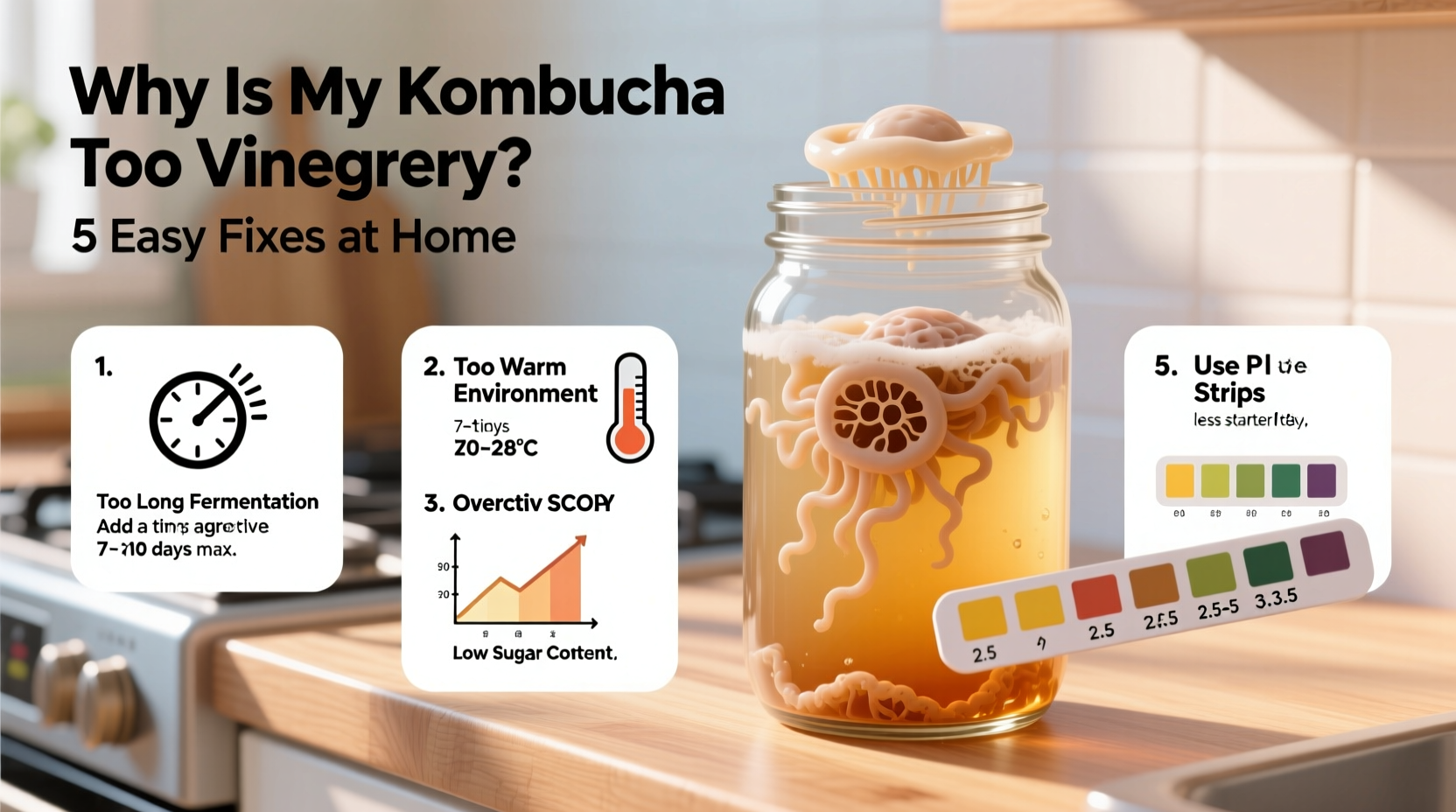
Kombucha becomes vinegary due to the natural activity of acetic acid bacteria (AAB) present in the SCOBY—Symbiotic Culture Of Bacteria and Yeast. During fermentation, yeast converts sugar into alcohol, and then acetic acid bacteria convert that alcohol into acetic acid. This is what gives kombucha its signature tartness. However, when this second phase dominates too long, acetic acid accumulates, overpowering other flavors and making the drink overly sour.
The key to balanced kombucha lies in managing this two-stage fermentation:
- Alcohol production: Yeasts break down sucrose into glucose and fructose, then ferment them into ethanol.
- Acid formation: Acetobacter species oxidize ethanol into acetic acid, especially in the presence of oxygen.
If the second stage continues unchecked, your kombucha crosses from pleasantly tart into sharp and unpleasantly acidic. This doesn’t mean it’s spoiled—it’s still safe to consume—but it may not be enjoyable as-is.
Common Causes of Overly Acidic Kombucha
Several factors contribute to excessive sourness. Identifying which one applies to your setup is the first step toward correction.
1. Fermentation Time Is Too Long
This is the most frequent culprit. Many beginners assume longer fermentation equals better kombucha, but after 7–10 days (depending on conditions), the acidity spikes rapidly. Beyond day 10, especially in warm environments, kombucha often becomes overwhelmingly sour.
2. High Ambient Temperature
Kombucha ferments best between 68°F and 78°F (20°C–25°C). Above that range, microbial activity accelerates. At 80°F+ (27°C+), fermentation speeds up dramatically, shortening the window for optimal flavor by several days. In summer months or near heat sources, kombucha can turn vinegary in as little as 5–6 days.
3. Too Much Starter Tea or Low Sugar Content
Starter tea (previously brewed kombucha) lowers the pH quickly, creating an environment where acid-producing bacteria thrive early. While necessary for safety, using more than 10–15% starter tea relative to batch size can push acidity faster. Similarly, under-sweetening the tea reduces available food for yeast, leading to premature alcohol conversion and quicker acid development.
4. Old or Overactive SCOBY
Mature SCOBYs, especially those used repeatedly without rest, tend to be dominated by acetic acid bacteria. They’re efficient at producing acid but less balanced in overall fermentation. Multiple layers or thick, leathery SCOBYs often indicate high bacterial dominance.
5. Poor Oxygen Control During Secondary Fermentation
While primary fermentation requires airflow (covered with cloth), secondary bottling should limit oxygen exposure. Leaving bottles open or loosely capped allows continued oxidation of alcohol into acetic acid, increasing sourness even after the main ferment ends.
| Factor | Effect on Acidity | Solution |
|---|---|---|
| Fermentation >10 days | High | Reduce to 6–9 days; taste test early |
| Temperature >78°F (25°C) | Very High | Cool location or use fermentation jacket |
| Starter tea >15% of volume | Moderate-High | Use 10% starter tea |
| Low sugar (<1 cup per gallon) | High | Stick to standard ratios |
| Old/dense SCOBY | Moderate | Rotate SCOBYs or refresh culture |
Step-by-Step Fixes for Less Sour Kombucha
Correcting over-acidification involves adjusting your brewing rhythm and environment. Follow this timeline-based approach to refine your process.
- Day 0 – Brew Sweet Tea: Use 1 cup of white sugar per gallon of water and 8–10 tea bags (black, green, or oolong). Avoid herbal teas alone—they lack nutrients needed for balanced SCOBY function.
- Day 0 – Cool & Inoculate: Let tea cool to room temperature (never hot), then add 10% starter tea and your SCOBY. For a 1-gallon jar, that’s about 1.5 cups of starter.
- Days 1–3 – Monitor Temp: Place the jar in a stable spot away from direct sunlight and heating vents. Ideal: 72°F–76°F (22°C–24°C).
- Days 4–6 – Begin Tasting: Using a clean straw, siphon a small sample daily. Look for a balance: slightly sweet, mildly tart. If it tastes like apple cider vinegar already, stop fermentation now.
- Day 6–9 – Bottle or Refrigerate: Once desired tartness is reached, remove the SCOBY and reserve 1.5 cups of kombucha as starter for next batch. Transfer the rest to bottles for optional second ferment or refrigerate immediately.
- Days 9+ – Evaluate: If consistently too sour, shorten future batches by 1–2 days and recheck temperature.
Real Home Brewer Example: From Vinegar to Balanced Brew
Sarah, a home fermenter in Austin, Texas, struggled for months with kombucha so sour she could only use it in salad dressings. Her kitchen regularly hit 82°F in summer, and she was fermenting for 10–12 days “to make sure it’s strong.” After tracking her process, she realized two issues: high heat and extended time.
She moved her brewing station to a cooler interior closet and began tasting on day 5. By day 7, the kombucha had lost most of its sweetness but wasn’t yet harsh. She bottled half and left the other half to continue fermenting. The day-9 sample confirmed her suspicion—it was twice as sour.
Adjusting to a 6–7 day cycle and keeping the jar wrapped in a damp towel (evaporative cooling), Sarah now produces consistently balanced kombucha. She also started reserving younger SCOBYs from earlier batches, which helped maintain microbial balance.
“Many people think sour equals potent, but great kombucha is about harmony—not how much it puckers your mouth.” — Dr. Lydia Chen, Fermentation Scientist and Author of *The Art of Cultured Drinks*
Preventive Checklist for Balanced Fermentation
- ✅ Use exactly 1 cup of sugar per gallon of tea
- ✅ Add only 10% starter tea (e.g., 1.5 cups for 1 gallon)
- ✅ Maintain fermentation temperature between 70°F–76°F
- ✅ Start tasting at day 5, then every 24 hours
- ✅ Limit primary fermentation to 6–9 days max
- ✅ Store extra SCOBYs in a \"hotel\" with starter tea, not in active brews
- ✅ Seal bottles tightly during second ferment to reduce further acidification
What to Do If Your Batch Is Already Too Sour
Don’t throw it out. Overly acidic kombucha still has value:
- Dilute and Drink: Mix 1 part sour kombucha with 1–2 parts water or juice to mellow the taste.
- Use in Cooking: Substitute for vinegar in marinades, sauces, or salad dressings.
- Rebalance with Second Ferment: Add fruit, ginger, or sweet herbs during bottling. Natural sugars and flavors can offset acidity.
- Create Kombucha Vinegar: Let it keep fermenting until fully converted. Strain and use as a probiotic-rich cleaning agent or detox tonic (diluted).
You can also blend a small amount of over-fermented kombucha into new batches to lower pH safely without overdoing acidity.
Frequently Asked Questions
Can I fix over-fermented kombucha by adding sugar?
Not directly. Once fermentation completes, yeast is dormant and won’t reprocess added sugar unless you reintroduce nutrients and warmth. However, sweetening to taste when serving (like mixing with juice) works well for palatability.
Is vinegary kombucha harmful?
No. Excess acetic acid doesn’t make kombucha unsafe. In fact, it inhibits mold and pathogens. As long as there’s no mold, off smells (like rotten eggs), or signs of contamination, it’s safe to consume or repurpose.
How do I know when to stop fermentation?
Taste is the best indicator. When the liquid goes from sweet-tart to sharply sour, it’s time to stop. Visually, the SCOBY may sink or develop brown strands (yeast sediment), but these are normal. Trust your palate over strict timelines.
Final Thoughts and Next Steps
Mastering kombucha isn’t about perfection—it’s about observation, adjustment, and consistency. A vinegary batch isn’t a failure; it’s feedback. By understanding the relationship between time, temperature, and microbial balance, you gain control over your brew’s outcome.
The simplest changes often yield the biggest improvements: shorten your ferment, monitor your kitchen climate, and taste early and often. These habits transform unpredictable results into reliable, delicious kombucha tailored to your taste.




 浙公网安备
33010002000092号
浙公网安备
33010002000092号 浙B2-20120091-4
Comments
No comments yet. Why don't you start the discussion?