
After eagerly installing the latest Windows 11 update, many users find themselves staring at a sluggish laptop—programs take longer to open, files load slowly, and even basic tasks feel like a chore. This frustrating slowdown isn’t just in your head; it’s a common side effect of major operating system updates. The good news: most post-update performance issues can be resolved with targeted fixes that don’t require advanced technical skills.
Windows 11 updates often include new features, background services, and compatibility adjustments that can strain older hardware or trigger inefficient resource use. Background processes may run unchecked, startup times increase, and disk usage spikes. But before you consider buying a new machine, try these proven solutions. With a few strategic tweaks, you can reclaim your laptop’s speed and get back to seamless productivity.
Why Windows 11 Updates Slow Down Laptops
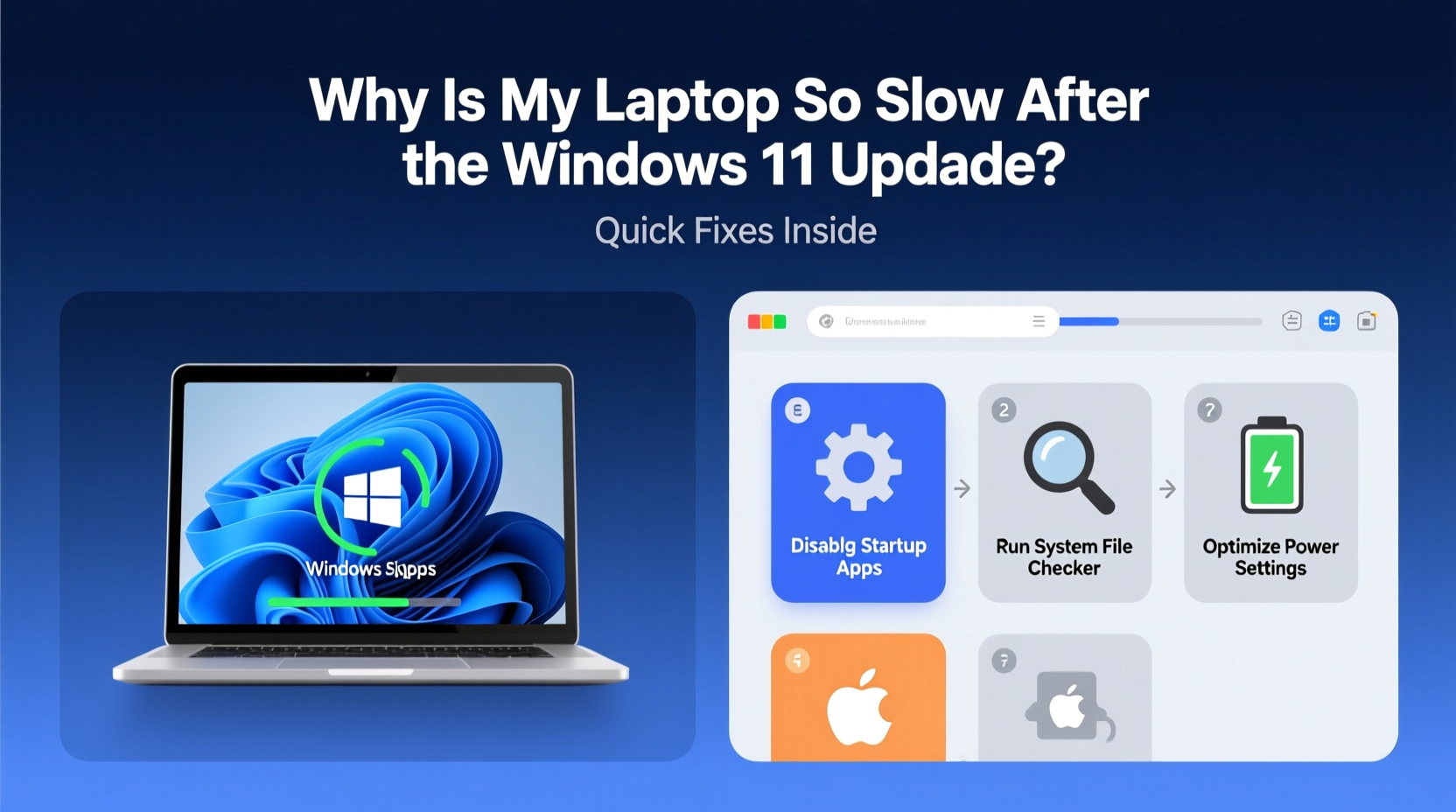
Understanding the root causes of post-update lag is the first step toward fixing it. Windows 11 updates aren't just cosmetic—they introduce changes to core system architecture, security protocols, and user interface elements. These changes can impact performance, especially on machines that were already operating near capacity.
- New background services: Updates often install additional telemetry, cloud sync, or security monitoring tools that consume CPU and RAM.
- Driver conflicts: Outdated or incompatible drivers may struggle with updated system components, causing crashes or high resource usage.
- Feature bloat: Visual effects like transparency, animations, and live tiles look modern but tax older GPUs and processors.
- Disk overload: Temporary update files, cached data, and fragmented storage can clog your drive, especially if you're using a traditional HDD.
- Startup congestion: More programs launch automatically after an update, increasing boot time and memory pressure.
Microsoft acknowledges that some systems experience temporary performance dips after major updates. In fact, according to internal telemetry reports cited by engineering leads, “initial post-update CPU utilization can spike up to 30% higher than baseline for up to 72 hours as background optimization runs.”
“Performance hiccups after OS updates are expected during the adaptation phase. The system is recalibrating indexing, permissions, and service configurations.” — David Chen, Senior Systems Engineer at Microsoft (via Windows Insider Blog)
Quick Fixes to Restore Laptop Speed
You don’t need to reset your entire system to fix slowdowns. Start with these fast, low-risk interventions that target the most common culprits.
1. Restart Your Laptop
It sounds obvious, but skipping a reboot after an update leaves critical processes hanging. A full restart clears temporary files, reloads drivers properly, and allows pending configuration tasks to complete.
2. Check for Pending Updates
Sometimes, what feels like a completed update is actually incomplete. Additional patches or driver updates might still be queued. Go to Settings > Windows Update and click “Check for updates” again. Install any follow-up patches immediately.
3. Disable Startup Programs
Too many apps launching at boot can cripple startup speed. Open Task Manager (Ctrl+Shift+Esc), go to the “Startup” tab, and disable non-essential programs like chat apps, cloud storage sync tools, or third-party updaters.
4. Run Disk Cleanup
Windows stores gigabytes of temporary files from updates. Search for “Disk Cleanup,” select your system drive (usually C:), and delete:
- Windows Update Cleanup files
- Temporary files
- Delivery Optimization Files
- Recycle Bin contents
5. Adjust Visual Effects for Performance
Windows 11 prioritizes aesthetics over efficiency by default. To shift the balance:
- Type “performance” in the search bar and select “Adjust the appearance and performance of Windows.”
- Choose “Adjust for best performance” or manually disable animations, shadows, and transparency effects.
Step-by-Step System Optimization Guide
If quick fixes don’t fully resolve the issue, follow this structured approach to diagnose and eliminate deeper bottlenecks.
- Monitor Resource Usage
Open Task Manager and sort processes by CPU, Memory, and Disk usage. Identify any single app consuming over 50% consistently. Research unknown processes online—if they’re not essential, consider disabling them. - Update Drivers Manually
Go to Device Manager, expand categories like Display adapters, Network adapters, and Storage controllers. Right-click each device and select “Update driver.” Choose “Search automatically for drivers.” If no updates appear, visit your laptop manufacturer’s support site and download the latest drivers directly. - Clear Temp Files with Command Line (Optional)
For a deeper clean, press Win+R, typecmd, then run:
del /q /f /s %temp%\\*
This deletes all temporary files securely. Confirm deletion when prompted. - Defragment HDD (If Applicable)
If you’re using a hard disk drive (not SSD), defragmentation helps. Search for “Defragment and Optimize Drives,” select your drive, and click “Optimize.” Do this monthly. - Reset Virtual Memory Settings
In System Properties > Advanced > Performance Settings > Advanced > Virtual Memory, uncheck “Automatically manage paging file size.” Set custom size: Initial = 1.5x your RAM, Maximum = 3x. Example: For 8GB RAM, set 12288 MB initial, 24576 MB max. - Scan for Malware
Rarely, update-related slowdowns stem from malware exploiting system vulnerabilities. Run a full scan using Windows Security or a trusted third-party antivirus.
Do’s and Don’ts After a Windows 11 Update
| Do’s | Don’ts |
|---|---|
| Do restart your laptop after installation completes. | Don’t skip subsequent update checks—additional patches often follow. |
| Do disable unnecessary startup apps to reduce boot time. | Don’t immediately uninstall the update unless absolutely necessary—it may break system integrity. |
| Do update graphics and chipset drivers from the manufacturer’s website. | Don’t disable core Windows services like Update or Defender without understanding consequences. |
| Do use built-in troubleshooters under Settings > System > Troubleshoot. | Don’t ignore high disk usage above 100% in Task Manager—it indicates a deeper issue. |
Real-World Example: Recovering a Stalled Work Laptop
Sarah, a freelance graphic designer, updated her 2019 Dell XPS 13 to Windows 11 23H2. Within hours, Adobe Photoshop took over two minutes to launch, and her mouse frequently froze during scrolling. She initially assumed her hardware was outdated.
Instead of upgrading, she followed a methodical process:
- She restarted the laptop—immediate improvement in cursor responsiveness.
- Used Task Manager to discover that OneDrive was syncing 15,000+ small files in the background, consuming 98% of disk resources.
- Paused OneDrive sync temporarily and excluded large project folders from automatic upload.
- Ran Disk Cleanup and removed 12GB of update leftovers.
- Updated her Intel Wi-Fi and display drivers from Dell’s support portal.
Sarah’s case highlights a key truth: slowdowns are rarely due to hardware failure. They’re usually correctable software or configuration issues masked as performance decline.
Essential Maintenance Checklist
To prevent future slowdowns after updates, adopt this routine:
- ✅ Restart your laptop within 24 hours of completing a Windows update
- ✅ Run Disk Cleanup weekly for the first month post-update
- ✅ Review startup programs monthly via Task Manager
- ✅ Check for driver updates every quarter
- ✅ Monitor disk health using
chkdsk C: /f /r(run in elevated Command Prompt) - ✅ Keep at least 15% of your drive space free to allow for virtual memory and caching
- ✅ Enable Storage Sense (Settings > System > Storage) to auto-delete temp files
Frequently Asked Questions
Can I roll back to a previous version of Windows 11 if performance doesn’t improve?
Yes—but only within 10 days of the update. Go to Settings > System > Recovery > Go back. After that window, rollback requires a clean reinstall using a USB drive and will erase recent changes unless backed up.
Will resetting Windows fix the slowness permanently?
A reset can help if corruption occurred during the update. Choose “Keep my files” to remove apps and settings while preserving documents. However, resets don’t address underlying hardware limitations. If your laptop has less than 8GB RAM or uses an HDD, consider hardware upgrades alongside software fixes.
How long should I expect slowdowns to last after a Windows 11 update?
Most systems stabilize within 48–72 hours as background indexing and optimization finish. If significant lag persists beyond a week, investigate driver issues, malware, or failing hardware. Use the Performance Monitor (perfmon) to track long-term trends.
Final Thoughts: Take Control of Your System’s Speed
Your laptop doesn’t have to suffer after a Windows 11 update. While Microsoft continues refining its OS for modern hardware, millions of capable machines still run efficiently with proper care. The slowdowns you’re experiencing are almost always fixable—not inevitable.
By applying the right combination of cleanup, configuration, and maintenance, you can restore responsiveness and even improve long-term stability. Don’t accept sluggishness as the price of progress. Take action today: restart, clean, optimize, and reclaim the performance you paid for.




 浙公网安备
33010002000092号
浙公网安备
33010002000092号 浙B2-20120091-4
Comments
No comments yet. Why don't you start the discussion?