
A red left eye is a common condition that can range from a minor irritation to a sign of something more serious. The redness occurs when blood vessels on the surface of the eye become dilated or inflamed. While it often resolves on its own, understanding the underlying cause is essential for proper treatment and to prevent complications. This article explores the most frequent reasons for a red left eye, outlines evidence-based treatments, and provides practical prevention strategies to maintain optimal eye health.
Common Causes of a Red Left Eye
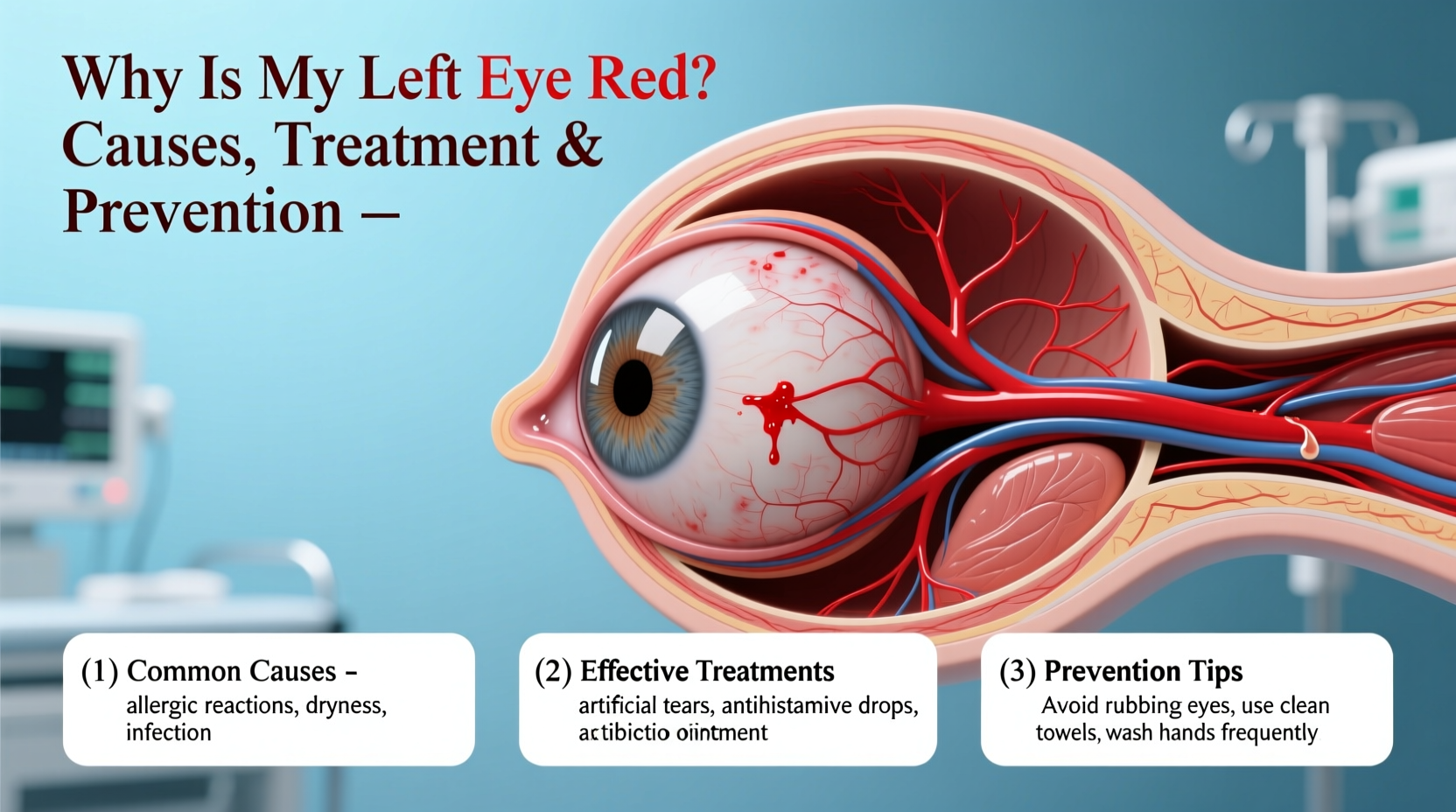
Redness in one eye—particularly just the left—can stem from various factors, some harmless and others requiring medical attention. Identifying the cause helps determine whether home care is sufficient or if professional evaluation is needed.
- Conjunctivitis (Pink Eye): One of the most frequent causes, conjunctivitis results from viral, bacterial, or allergic inflammation of the conjunctiva. It often affects both eyes but can start in one before spreading.
- Dry Eye Syndrome: Insufficient tear production or poor tear quality can lead to irritation and redness, especially after prolonged screen use or exposure to dry environments.
- Subconjunctival Hemorrhage: A burst blood vessel under the conjunctiva causes a bright red patch on the white of the eye. Though alarming in appearance, it’s usually painless and resolves within 1–2 weeks.
- Eye Strain: Extended focus on digital screens, reading, or driving can fatigue the eyes, leading to redness and discomfort.
- Foreign Body or Irritant: Dust, smoke, chlorine, or a small particle trapped in the eye can trigger redness and tearing.
- Corneal Abrasion: A scratch on the cornea due to contact lens misuse or trauma causes pain, redness, and sensitivity to light.
- Uveitis or Iritis: Inflammation inside the eye affecting the uvea. This condition requires prompt treatment to avoid vision loss.
- Acute Glaucoma: A sudden increase in eye pressure may cause redness, severe pain, blurred vision, and nausea. This is a medical emergency.
Treatment Options Based on Cause
Treatment depends entirely on the underlying condition. Misdiagnosis or self-treatment without understanding the root cause can worsen symptoms.
- Viral Conjunctivitis: Usually self-limiting. Cold compresses and artificial tears help manage symptoms. Avoid touching the eye to prevent spreading.
- Bacterial Conjunctivitis: Requires antibiotic eye drops prescribed by a doctor. Symptoms typically improve within 2–3 days of starting treatment.
- Allergic Conjunctivitis: Antihistamine eye drops or oral antihistamines reduce redness and itching. Avoid known allergens like pollen or pet dander.
- Dry Eyes: Use preservative-free artificial tears 3–4 times daily. Consider a humidifier and take screen breaks using the 20-20-20 rule.
- Subconjunctival Hemorrhage: No treatment needed. Reassurance is key. Monitor for recurrence or other systemic symptoms like high blood pressure.
- Corneal Abrasion: Requires evaluation by an ophthalmologist. Antibiotic ointment prevents infection, and patching may be advised temporarily.
- Uveitis: Treated with steroid eye drops and pupil-dilating agents. Referral to a specialist is necessary to identify any underlying autoimmune conditions.
- Acute Angle-Closure Glaucoma: Emergency treatment with medications to lower intraocular pressure, followed by laser therapy.
“Not all red eyes are equal. A painless red eye with discharge is likely conjunctivitis, but a painful red eye with vision loss could signal glaucoma or uveitis—both require urgent care.” — Dr. Lena Torres, Ophthalmologist
Prevention Strategies for Long-Term Eye Health
Many causes of a red left eye are preventable with consistent habits and awareness of environmental triggers.
| Prevention Strategy | Action Steps | Frequency/Duration |
|---|---|---|
| HAND HYGIENE | Wash hands before touching eyes; avoid rubbing | Multiple times daily |
| CONTACT LENS CARE | Clean lenses properly, replace as scheduled, never sleep in them | Daily maintenance |
| SCREEN BREAKS | Follow the 20-20-20 rule: every 20 minutes, look 20 feet away for 20 seconds | During extended screen use |
| ALLERGEN AVOIDANCE | Keep windows closed during high pollen seasons; use HEPA filters | Seasonally or year-round |
| INDOOR HUMIDITY CONTROL | Use a humidifier in dry climates or heated rooms | As needed |
Real-Life Scenario: When a Red Eye Was a Warning Sign
Sarah, a 34-year-old graphic designer, noticed her left eye had been red for three days. She assumed it was due to late-night work and dry office air. Using over-the-counter redness-relief drops gave temporary improvement, but she began experiencing mild pain and blurred vision. Concerned, she visited an optometrist, who diagnosed her with anterior uveitis. Further testing revealed an association with undiagnosed sarcoidosis. With steroid eye drops and systemic treatment, her symptoms resolved. Sarah now schedules regular eye exams and avoids eye drops that mask symptoms without treating causes.
Step-by-Step Guide: What to Do When Your Left Eye Turns Red
If you notice redness in your left eye, follow this logical sequence to assess severity and respond appropriately:
- Assess Symptoms: Note presence of pain, discharge, vision changes, light sensitivity, or swelling.
- Check for Triggers: Did you get dust in your eye? Wear contacts? Experience seasonal allergies?
- Stop Using Cosmetic Eye Drops: Products like Visine constrict blood vessels temporarily but don’t treat the cause and can worsen irritation over time.
- Apply a Clean Cold Compress: Use a sterile cloth soaked in cool water to soothe mild irritation. Do not press on the eye.
- Use Artificial Tears: Preservative-free drops can help flush irritants and lubricate dry eyes.
- Avoid Contact Lenses: Switch to glasses until the redness resolves.
- Monitor for 24–48 Hours: If redness persists or worsens, or if new symptoms appear, consult a healthcare provider.
- Seek Immediate Care: If you have severe pain, vision loss, headache, or nausea, go to an emergency clinic or eye specialist immediately.
Frequently Asked Questions
Can a red left eye be caused by high blood pressure?
Indirectly, yes. High blood pressure can contribute to subconjunctival hemorrhage, where a tiny blood vessel bursts. While the hemorrhage itself isn't dangerous, recurrent episodes should prompt a check of your cardiovascular health.
Is it safe to wear makeup when my eye is red?
No. Wearing eye makeup can introduce bacteria and irritants, prolonging healing. Discard any products used around the eye during an infection to prevent reinfection.
How long does a red eye usually last?
Mild cases like eye strain or minor irritation resolve in 1–2 days. Viral conjunctivitis may last 5–7 days, while subconjunctival hemorrhage can take up to two weeks to fade completely. Persistent redness beyond a week warrants evaluation.
Final Thoughts and Call to Action
A red left eye may seem like a minor issue, but it can be a window into your overall health. From simple dryness to serious inflammatory conditions, the causes vary widely in severity. By recognizing warning signs, practicing good eye hygiene, and knowing when to seek help, you protect not only your comfort but also your vision. Don’t ignore persistent redness—early intervention prevents complications. Take action today: schedule an eye exam if you’ve delayed one, replace old contact lens solutions, and commit to healthier screen habits. Your eyes will thank you.




 浙公网安备
33010002000092号
浙公网安备
33010002000092号 浙B2-20120091-4
Comments
No comments yet. Why don't you start the discussion?