
A flickering lighted wreath can be more than just a nuisance—it can disrupt holiday ambiance, raise safety concerns, or signal an underlying electrical issue. Whether it's a seasonal decoration on your front door or a centerpiece indoors, consistent lighting matters. Flickering isn't always a sign of failure, but it does indicate something needs attention. From loose bulbs to incompatible dimmers, the causes vary in complexity. This guide walks you through every possible reason your lighted wreath is flickering, how to diagnose the problem, and what steps to take for a lasting fix.
Understanding How Lighted Wreaths Work
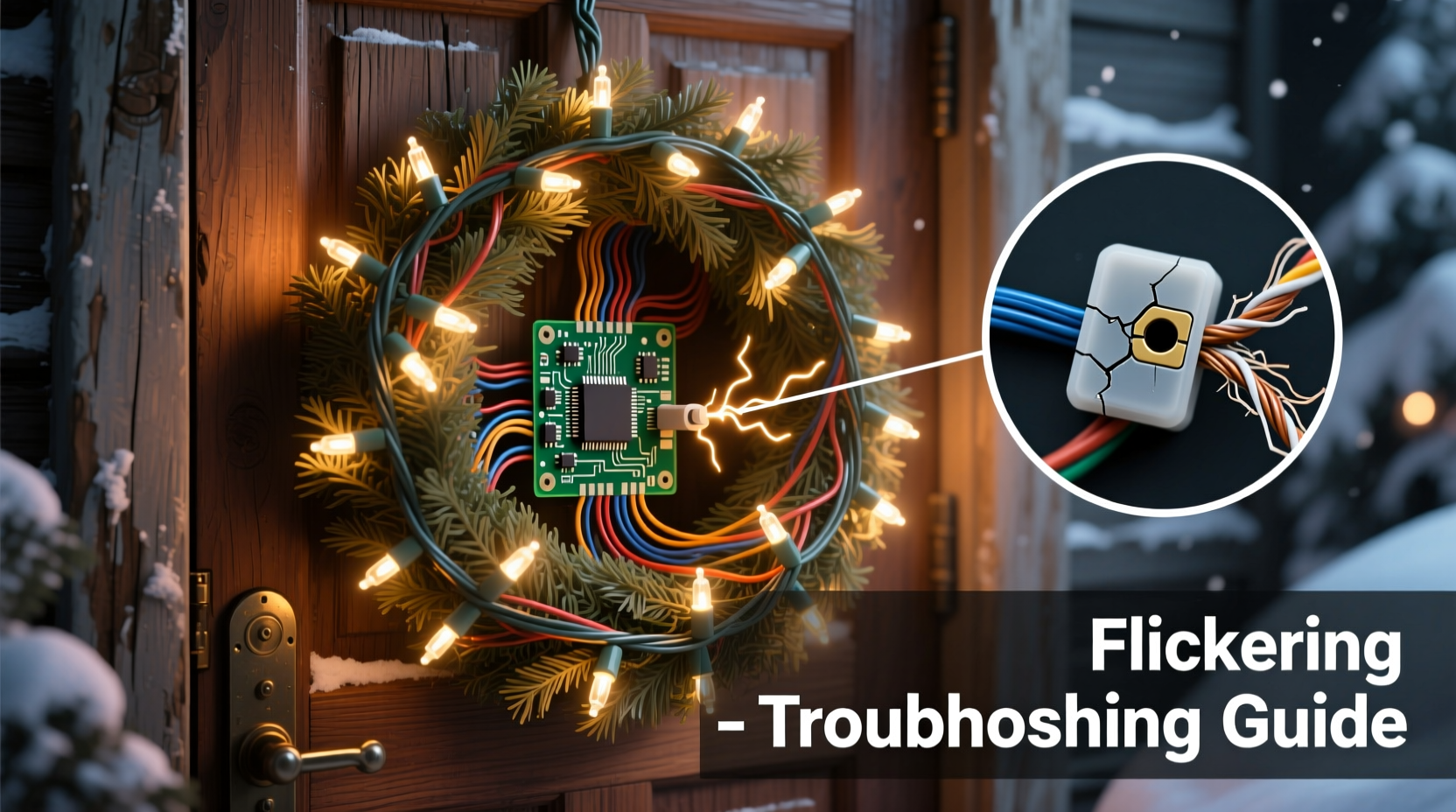
Most modern lighted wreaths use either incandescent or LED bulbs powered by a low-voltage transformer or standard plug-in cord. They're typically wired in series or parallel circuits. In a series setup, if one bulb fails or becomes loose, it can affect the entire string. Parallel wiring allows individual lights to function independently, making them more reliable. However, even LED wreaths with parallel circuits can flicker due to power inconsistencies, poor connections, or external interference.
The materials used—especially in outdoor models—must withstand temperature changes, moisture, and wind. Over time, exposure can degrade wiring insulation, loosen connections, or corrode contacts. Indoor wreaths may face fewer environmental challenges, but they’re still vulnerable to wear from storage, handling, and electrical mismatches.
“Flickering in decorative lighting is rarely random. It’s usually a symptom of voltage fluctuation, connection failure, or component degradation.” — Alan Reeves, Electrical Systems Technician with 15 years in residential diagnostics
Common Causes of Flickering and How to Identify Them
Flickering doesn’t mean your wreath is beyond repair. In fact, most issues are easily diagnosable with basic observation and a few simple tools. Below are the primary culprits behind flickering lights, ranked from most to least common:
- Loose or improperly seated bulbs – Especially in older incandescent models, bulbs can vibrate loose over time or not be fully twisted into their sockets.
- Dirty or corroded bulb contacts – Oxidation on metal bases prevents proper conductivity, leading to intermittent lighting.
- Damaged or frayed wiring – Outdoor wreaths exposed to weather or stored carelessly often develop cracked insulation or pinched wires.
- Overloaded circuit or voltage drop – Plugging multiple decorations into one outlet can reduce available voltage, causing lights to dim or flicker.
- Incompatible dimmer switches – If your wreath is connected to a dimmer (even indirectly via a smart plug), non-dimmable LEDs will flicker unpredictably.
- Defective transformer or power adapter – Low-quality or aged adapters may deliver inconsistent current, especially under load.
- Temperature sensitivity (LEDs only) – Some cheaper LED strings flicker in cold environments due to internal driver instability.
Step-by-Step Troubleshooting Guide
Follow this logical sequence to isolate and resolve the cause of your flickering wreath. Move to the next step only after eliminating the previous one.
- Unplug the wreath immediately. Safety comes first. Never inspect live circuits without proper protection.
- Visually inspect all bulbs. Look for darkened glass, broken filaments, or signs of overheating. Gently press each bulb to ensure it’s seated firmly. For screw-in types, twist clockwise until snug—but don’t overtighten.
- Clean bulb bases and sockets. Use a cotton swab dipped in rubbing alcohol to wipe away corrosion or debris. Let dry completely before reassembly.
- Examine the wire path. Run your fingers along the entire length, checking for cuts, kinks, or melted spots. Pay special attention to where wires enter connectors or pass through the wreath frame.
- Test with a different outlet. Plug the wreath into a known-working outlet on a separate circuit. Avoid using extension cords during testing to rule out voltage loss.
- Bypass any dimmers or smart plugs. Connect directly to a wall outlet. If the flickering stops, the issue lies in the control device, not the wreath.
- Check the power adapter (if applicable). Ensure it matches the wreath’s voltage and amperage requirements. A mismatch—even slight—can cause instability.
- Try a known-good replacement string (if modular). Some wreaths allow individual light strands to be swapped. Replace one at a time to isolate faulty sections.
When to Suspect Internal Circuit Failure
If all bulbs are secure, wiring appears intact, and the problem persists across outlets, the issue may lie within the internal circuit board (common in LED models). These boards regulate current and prevent surges. A failing driver chip can cause rhythmic flickering, half-lit sections, or pulsing behavior. Unfortunately, internal repairs require soldering skills and are often not cost-effective unless the wreath is high-end or sentimental.
Do’s and Don’ts: What to Avoid When Fixing Your Wreath
| Action | Recommended? | Why |
|---|---|---|
| Use pliers to tighten bulbs | No | Can crush glass or damage socket threads |
| Replace bulbs with higher wattage | No | Overheats wiring; fire hazard |
| Combine different light sets on one plug | No | Causes voltage drop and flickering |
| Store wreath with lights still attached | Yes (if protected) | Prevents tangling, but only if coiled carefully |
| Use dielectric grease on bulb bases | Yes | Prevents future corrosion, improves conductivity |
| Leave flickering wreath unattended | No | Potential fire risk; monitor until fixed |
Real-World Example: The Front Door Wreath That Wouldn’t Stay On
Sarah from Portland hung her favorite LED wreath on her front door in early December. By mid-month, she noticed the lights would flicker rapidly when the temperature dropped below 40°F. During the day, they worked fine. She unplugged it, checked all bulbs, and found no visible damage. After reading online about cold-sensitive LEDs, she suspected the power adapter.
She tested the wreath indoors using the same adapter—still flickered when cooled with a fan. Then she borrowed a compatible 12V/2A adapter from a similar decoration. The lights remained steady, even under simulated cold conditions. Sarah ordered a replacement adapter rated for outdoor and low-temperature use. Since then, the wreath has performed flawlessly, proving that environmental factors combined with subpar components were to blame.
This case highlights how ambient conditions interact with hardware limitations—something many users overlook when assuming “all LED lights are the same.”
Preventative Maintenance Checklist
To avoid future flickering and extend the life of your lighted wreath, follow this annual maintenance routine:
- ✅ Inspect bulbs for tightness and cleanliness before each season
- ✅ Check wiring for cracks, brittleness, or exposed copper
- ✅ Test the entire unit on a spare outlet before hanging
- ✅ Confirm compatibility with timers, remotes, or smart home systems
- ✅ Store in a climate-controlled area, preferably in a ventilated container
- ✅ Label cords and adapters to prevent mix-ups next year
- ✅ Replace aging adapters or damaged sections proactively—not after failure
“Prevention beats repair every time with seasonal lighting. Ten minutes of inspection can save hours of frustration—and prevent hazards.” — National Fire Protection Association (NFPA) Holiday Safety Bulletin, 2023
Frequently Asked Questions
Can LED lighted wreaths be repaired if they start flickering?
Yes, many LED wreaths can be repaired depending on the cause. Loose bulbs, dirty contacts, or damaged wires are often fixable. However, if the internal driver circuit has failed, repair requires technical skill. For mass-market wreaths, replacement is usually more economical. High-end or custom models may warrant professional repair.
Is it safe to leave a flickering lighted wreath plugged in?
No. Persistent flickering can indicate arcing, overheating, or insulation breakdown—all potential fire hazards. Unplug the wreath immediately and do not reuse it until the cause is identified and resolved. The U.S. Consumer Product Safety Commission reports hundreds of holiday fires annually linked to faulty decorative lighting.
Why does my wreath flicker only when other appliances turn on?
This points to circuit overload or voltage fluctuation. Large appliances like refrigerators or heaters draw significant power when starting, which can momentarily lower voltage on shared circuits. To fix this, plug the wreath into a dedicated outlet or use a surge protector with stable output. Avoid daisy-chaining multiple decorations.
Final Recommendations and Long-Term Solutions
Not all flickering is created equal. Some causes are trivial, others serious. But consistent performance starts with quality. When purchasing a new lighted wreath—or replacing a problematic one—prioritize these features:
- Commercial-grade wiring with thick insulation, especially for outdoor use
- Sealed connectors to resist moisture and dust ingress
- Regulated power supplies that maintain stable voltage in varying temperatures
- UL certification indicating compliance with safety standards
- Modular design allowing individual strand replacement
Consider investing in wreaths with battery-operated options if outlet access is limited or unstable. Battery-powered models eliminate ground loop and voltage drop issues entirely, though they require regular charging or replacement.
Finally, treat your lighted wreath as a piece of electrical equipment—not just decor. Just as you’d service a heater or fan annually, give your holiday lights the same care. A few minutes of attention now can ensure years of reliable, beautiful illumination.




 浙公网安备
33010002000092号
浙公网安备
33010002000092号 浙B2-20120091-4
Comments
No comments yet. Why don't you start the discussion?