
Monstera deliciosa, often called the Swiss cheese plant, is prized for its dramatic, split leaves that bring a tropical flair to indoor spaces. When new leaves emerge whole instead of fenestrated—without those signature splits—it can be disappointing. While young Monsteras naturally produce solid leaves, mature plants should develop deep lobes and perforations over time. If your plant isn’t progressing as expected, several underlying factors could be stalling its development. The good news? Most issues are correctable with adjustments in light, age management, nutrients, and environment.
Understanding Monstera Leaf Splitting: What’s Normal?
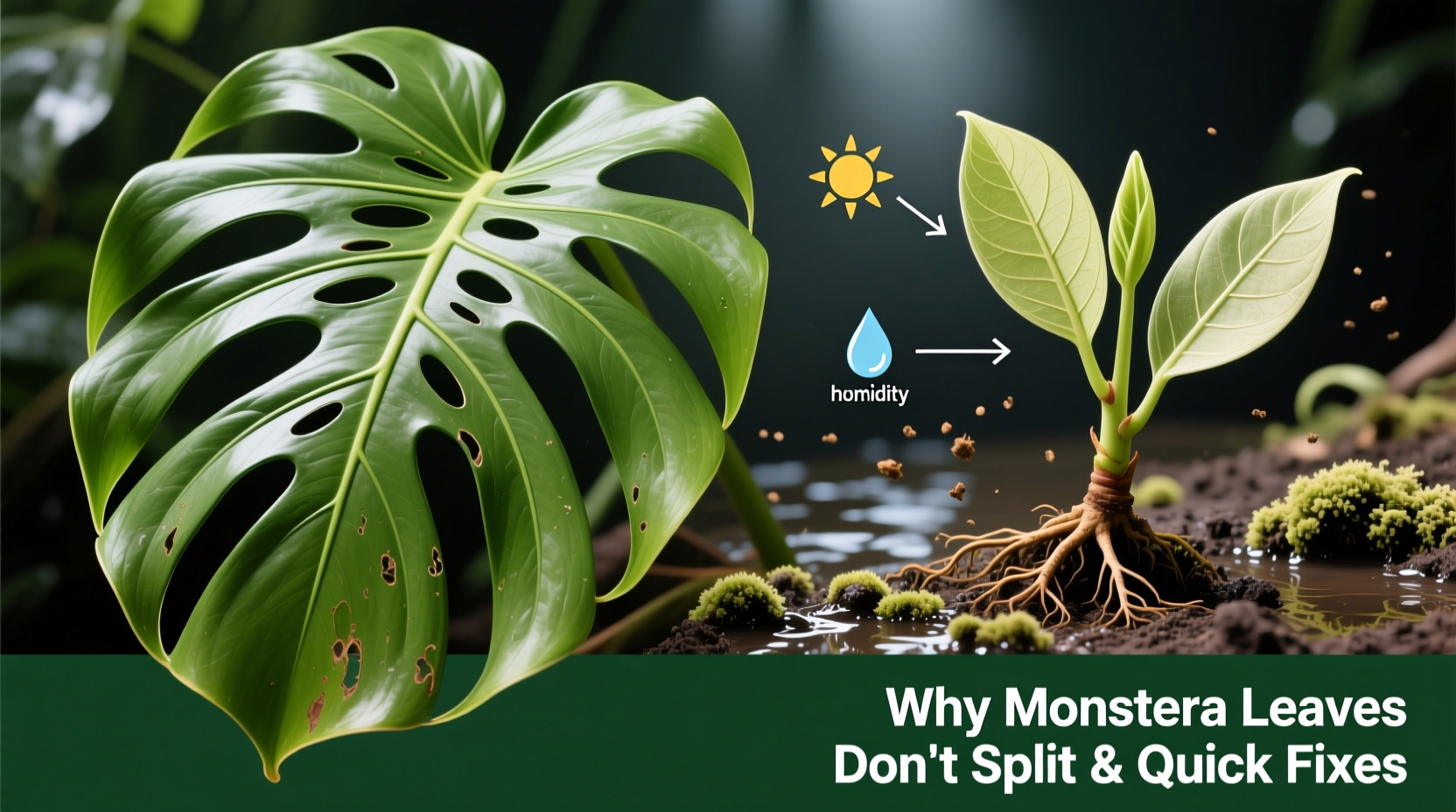
Fenestration—the process by which Monstera leaves develop splits and holes—is a sign of maturity and optimal growing conditions. Young plants, typically under 1–2 years old, grow heart-shaped, unsplit leaves. This is completely normal. Fenestration usually begins once the plant reaches a certain developmental stage, often when it has produced 5–7 leaves or grown beyond 18 inches in height.
However, even mature plants may fail to split if environmental cues are missing. In their native rainforest habitats, Monsteras climb tall trees, reaching for bright, filtered light. As they ascend, their leaves adapt by developing splits—believed to help withstand wind and allow sunlight to reach lower foliage. Indoors, replicating these conditions encourages natural leaf development.
“Fenestration is less about genetics and more about environmental signals. A healthy, well-lit Monstera will begin splitting reliably once it feels ‘mature’ enough.” — Dr. Lena Reyes, Botanist & Indoor Plant Specialist
Top 5 Causes Why Your Monstera Isn’t Splitting
1. Insufficient Light
The most common reason for lack of fenestration is inadequate light. Monsteras need bright, indirect sunlight for at least 6–8 hours daily. Low light forces the plant to conserve energy, resulting in smaller, solid leaves close to the soil. Without sufficient photons, the plant doesn’t signal maturity or allocate resources to complex leaf structures.
2. Immature Plant Age
If your Monstera is less than a year old or still small in size, it likely hasn’t reached the growth phase where splitting occurs. Patience is key. Juvenile plants focus on root and stem development before investing in elaborate foliage.
3. Poor Nutrition or Soil Quality
Nutrient-deficient soil hampers overall growth and delays maturation. Nitrogen supports leaf production, while potassium and magnesium contribute to structural integrity and chlorophyll synthesis—both essential for robust, fenestrated leaves. Over time, potted soil depletes nutrients, especially if not fertilized regularly.
4. Lack of Support for Climbing
In nature, Monsteras are climbers. When they attach to tree trunks using aerial roots, they grow upward toward brighter light, triggering hormonal changes that promote larger, split leaves. Potted Monsteras left to sprawl rarely receive this signal. Without vertical support, the plant remains in survival mode rather than growth mode.
5. Inconsistent Watering and Humidity
Monsteras thrive in stable environments. Frequent droughts or waterlogged soil stress the plant, reducing energy available for advanced leaf development. Similarly, low humidity (below 40%) mimics dry, inhospitable climates, discouraging lush growth patterns typical of tropical zones.
Quick Fixes to Encourage Leaf Splitting
Step-by-Step Guide to Promote Fenestration
- Assess Light Levels: Move your Monstera to a brighter spot with consistent indirect light. Use a light meter app or observe shadow clarity—a soft, diffused shadow indicates ideal brightness.
- Add a Moss Pole or Trellis: Install a sturdy climbing support. Gently tie stems to the pole with soft plant ties. This mimics natural ascent and triggers maturity signals.
- Optimize Fertilization: Feed every 4–6 weeks during spring and summer with a balanced liquid fertilizer (N-P-K 5-5-5 or 10-10-10). Reduce feeding in fall and winter.
- Improve Soil Drainage: Repot into a mix of two parts potting soil, one part perlite, and one part orchid bark. This enhances aeration and prevents compaction.
- Boost Humidity: Group plants together, use a pebble tray, or run a humidifier nearby. Aim for 50–60% relative humidity.
- Prune Strategically: Remove yellowing or weak lower leaves to redirect energy to new growth. Avoid cutting the topmost node unless propagating.
Real Example: From Leggy to Lush
Sarah, a plant enthusiast in Portland, noticed her 18-month-old Monstera wasn’t splitting despite regular watering. The plant sat in a north-facing room with limited daylight. After moving it near a filtered south window and installing a coco coir pole, she began fertilizing monthly. Within three months, new leaves emerged larger and showed faint pre-fenestration notches. By month five, full splits appeared. “I didn’t realize how much climbing mattered,” she said. “Now it looks like a jungle plant.”
Do’s and Don’ts: Table of Best Practices
| Do’s | Don’ts |
|---|---|
| Provide 6–8 hours of bright, indirect light daily | Place in dim corners or behind furniture |
| Use a moss pole or trellis for vertical growth | Let vines trail indefinitely without support |
| Fertilize during active growing season (spring–summer) | Over-fertilize, risking salt buildup and root burn |
| Maintain humidity above 50% | Expose to dry HVAC vents or cold drafts |
| Repot every 1–2 years in fresh, well-draining mix | Keep in soggy soil or pots without drainage holes |
Checklist: Is Your Monstera Ready to Split?
- ✅ At least 18 inches tall with multiple established leaves
- ✅ Receiving bright, indirect light (not direct sun)
- ✅ Growing vertically with support (pole, trellis, or stake)
- ✅ Fed with balanced fertilizer during growing months
- ✅ Kept in stable temperatures (65–85°F / 18–29°C)
- ✅ Humidity maintained between 50–60%
- ✅ Watered only when top 1–2 inches of soil are dry
- ✅ Planted in aerated, chunky soil mix
FAQ: Common Questions About Monstera Leaf Splitting
Why are my older Monstera leaves not splitting but new ones are starting to?
Fenestration appears on newer leaves as the plant matures. Older leaves won’t change after unfurling. Once environmental conditions improve, future growth will reflect better health and structure. Focus on supporting upcoming foliage rather than altering existing ones.
Can I force a Monstera to split by cutting the leaves?
No. Cutting leaves manually does not induce natural fenestration and risks infection or stunted growth. Splits form due to genetic programming activated by proper light, maturity, and support—not physical intervention.
How long does it take for a Monstera to start splitting?
Most Monsteras begin splitting between 1.5 to 3 years of age, depending on care quality. With ideal conditions—especially strong indirect light and climbing support—some show early signs as early as 12 months. Consistency is more important than speed.
Expert Tips for Long-Term Success
Beyond immediate fixes, long-term success with Monstera comes from mimicking its natural habitat. Think of your home as a micro-rainforest. These plants evolved beneath dense canopies, so dappled sunlight, high moisture in the air, and physical support are non-negotiable for peak performance.
Monitor seasonal changes. During winter, growth slows. Avoid aggressive repotting or fertilizing during dormancy. Instead, maintain baseline care and resume active support when days lengthen in spring.
Also, consider propagation. If your current plant remains stubbornly juvenile, propagate a stem cutting with at least one node and aerial root. Start fresh in optimal conditions—sometimes a clean slate yields faster results.
Conclusion: Help Your Monstera Thrive and Split
A Monstera without splits isn’t failing—it’s communicating. Whether it’s craving more light, needing a climbing boost, or waiting to mature, each factor offers a clear path to improvement. By addressing core needs like illumination, nutrition, and structural support, you create the conditions for dramatic transformation. Fenestrated leaves aren’t just aesthetic—they’re proof of a thriving, confident plant.
Start today: assess your setup, install a moss pole, adjust placement, and commit to seasonal care. Within months, you’ll see the first notches appear, followed by bold, sculptural splits that turn heads. Nature rewards attention to detail. Give your Monstera what it truly needs, and watch it rise to its full potential.




 浙公网安备
33010002000092号
浙公网安备
33010002000092号 浙B2-20120091-4
Comments
No comments yet. Why don't you start the discussion?