
There’s nothing quite like the warm, shimmering glow of a net-style Christmas light curtain draped across a window, balcony, or patio. These festive string lights—woven into a grid pattern—create a magical backdrop during the holiday season. But when that enchanting display starts flickering unpredictably, it can quickly turn from joyful to frustrating. Flickering isn’t just annoying; it can indicate deeper electrical issues, safety hazards, or simple wear and tear. Understanding the root causes and knowing how to troubleshoot them ensures your holiday lighting remains both beautiful and safe.
Flickering in net-style light curtains can stem from multiple sources: loose bulbs, incompatible dimmers, voltage fluctuations, damaged wiring, or even environmental factors like moisture and temperature shifts. While some issues are easy to resolve at home, others may require replacing components or upgrading to more reliable lighting systems. This guide breaks down the most common reasons for flickering, offers actionable solutions, and provides preventative strategies so you can enjoy a steady, sparkling display year after year.
Common Causes of Flickering in Net-Style Christmas Light Curtains
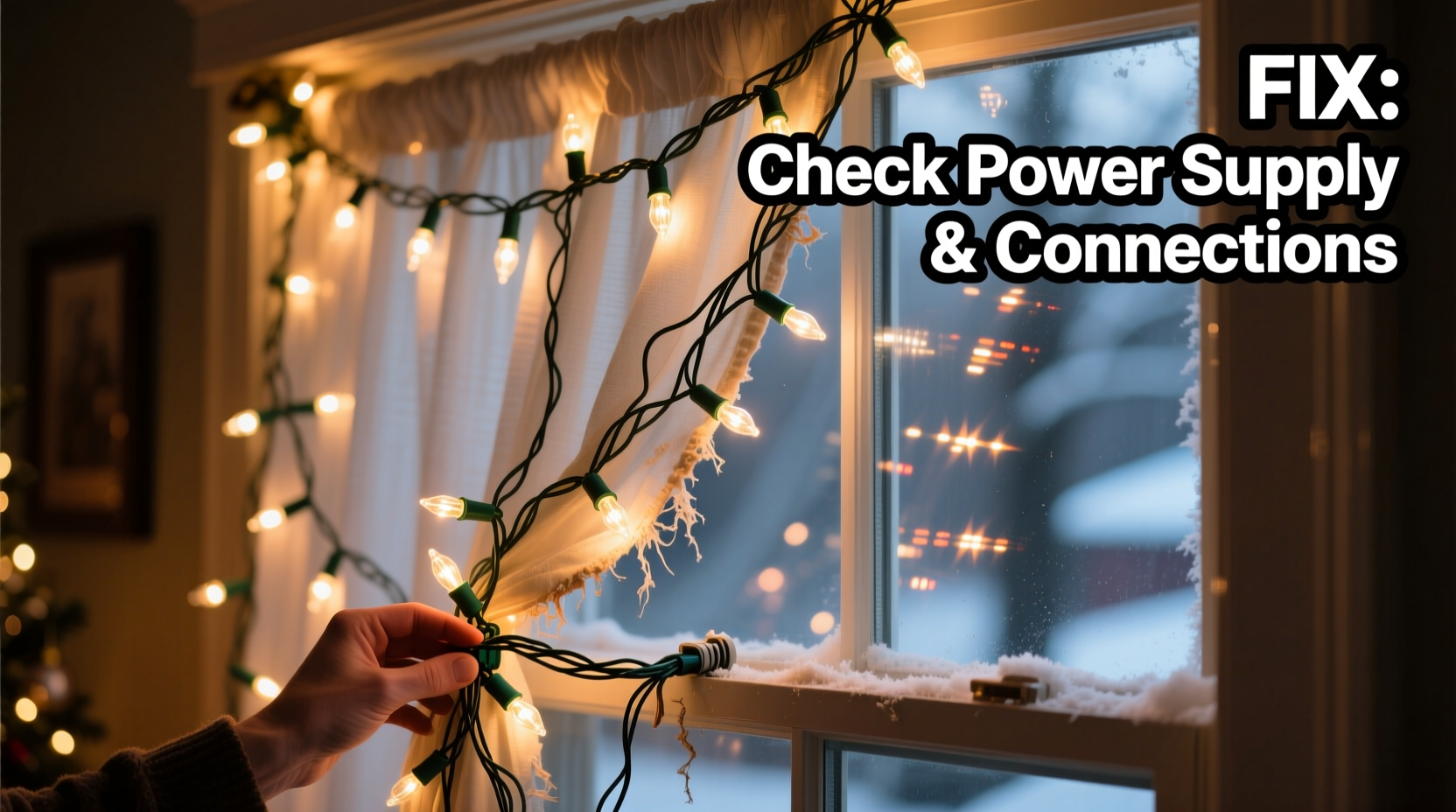
Flickering doesn’t happen randomly. It’s usually a symptom of an underlying issue in the circuit, connection, or environment. Identifying the cause is the first step toward a lasting fix.
- Loose or improperly seated bulbs: Miniature screw-in or plug-in bulbs can become loose over time due to vibration or thermal expansion, creating intermittent contact.
- Damaged or frayed wires: Outdoor exposure, foot traffic, or improper storage can lead to cracked insulation or broken conductors, causing erratic current flow.
- Overloaded circuits: Connecting too many light strands in series exceeds the manufacturer’s load limit, leading to voltage drops and flicker.
- Incompatible dimmer switches: Using non-dimmable LED lights with traditional incandescent dimmers results in unstable power delivery.
- Poor outlet or extension cord connections: Corroded, worn, or low-quality outlets and cords create resistance and inconsistent power supply.
- Moisture intrusion: Water seeping into sockets or connectors (especially outdoors) disrupts conductivity and increases short-circuit risk.
- Low-quality or aging lights: Budget-friendly sets often use subpar materials that degrade faster under stress.
Step-by-Step Guide to Diagnose and Fix Flickering Lights
Resolving flickering requires a methodical approach. Follow this timeline to isolate and correct the problem efficiently.
- Unplug the light curtain immediately. Never work on live electrical devices. Wait several minutes if the set was recently on, as components may be hot.
- Inspect each bulb visually. Look for darkened filaments (in incandescent), cracked lenses, or bulbs that appear dislodged. Gently press each bulb to ensure it's fully seated.
- Check the end-to-end connection points. Examine male and female plugs for bent pins, corrosion, or debris. Clean contacts with a dry cloth or isopropyl alcohol if needed.
- Test the power source. Plug the lights into a different outlet using a known-good extension cord. If the flickering stops, the original outlet or cord is likely faulty.
- Disconnect additional strands. If you’ve daisy-chained multiple sets, remove all but one and test it alone. Reconnect one at a time to identify if overload is the culprit.
- Examine the wire mesh for damage. Run your fingers gently along the entire length. Look for cuts, kinks, or exposed copper. Pay special attention to corners and edges where stress accumulates.
- Use a multimeter (optional). For advanced users, test continuity across the circuit and voltage output at the plug to detect internal breaks or insufficient power delivery.
- Replace defective bulbs or sections. Swap out any non-functional bulbs with exact replacements. Some manufacturers sell repair kits with spare bulbs and fuses.
If the issue persists after these steps, consider whether the lights are nearing the end of their lifespan—typically 3–5 seasons for average outdoor use.
Troubleshooting by Light Type: Incandescent vs. LED
The type of bulb significantly influences how and why flickering occurs. Here’s a comparison of common behaviors and solutions:
| Issue | Incandescent Lights | LED Lights |
|---|---|---|
| Common Cause of Flicker | Loose filament, voltage drop | Driver failure, incompatible transformer |
| Heat Sensitivity | High – frequent on/off cycles reduce lifespan | Low – efficient, but drivers can overheat |
| Power Consumption | High (40–100W per strand) | Low (2–10W per strand) |
| Fix for Flicker | Re-seat bulbs, check fuses, avoid overloading | Ensure stable DC power, use LED-rated dimmers |
| Lifespan | 1,000–2,000 hours | 25,000–50,000 hours |
LED net lights are generally more energy-efficient and longer-lasting, but they’re more sensitive to electrical inconsistencies. Many flickering issues in LED curtains arise from using old dimmer switches designed for higher-wattage incandescent systems. The mismatch causes the driver (internal power converter) to cycle on and off rapidly, resulting in visible flicker.
“Modern LED holiday lights need clean, stable power. Even minor voltage fluctuations can trigger visible strobing, especially in dense curtain arrays.” — Mark Reynolds, Electrical Systems Engineer at Holiday Lighting Institute
Preventative Maintenance Checklist
Proper care extends the life of your light curtain and prevents future flickering. Use this checklist each season before installation:
- ✅ Inspect every bulb for tightness and signs of burnout
- ✅ Check all plugs, sockets, and connectors for corrosion or damage
- ✅ Test the strand on a grounded indoor outlet before outdoor use
- ✅ Confirm compatibility with dimmers or controllers (if used)
- ✅ Verify maximum daisy-chain limits (usually 3–5 sets for LEDs, fewer for incandescent)
- ✅ Use only outdoor-rated extension cords with weatherproof covers
- ✅ Ensure GFCI protection when installing near moisture sources (e.g., gutters, patios)
- ✅ Store in a cool, dry place away from rodents and extreme temperatures
Real-World Example: A Flickering Balcony Display Resolved
Sarah in Portland installed a 6x10-foot LED net light curtain on her apartment balcony each December. In her third year, the top third of the curtain began flickering erratically during evening hours. She followed basic troubleshooting—replacing bulbs and checking connections—but the issue returned within days.
Upon closer inspection, she noticed the flickering worsened after rain. She traced the power path and discovered the female plug connector was resting directly on a metal railing, allowing water to pool inside the housing. After elevating the connection with a plastic clip and sealing it with a waterproof electrical sleeve, the flickering stopped completely. Sarah also upgraded to a GFCI-protected outlet, adding an extra layer of safety.
This case illustrates how environmental exposure—even subtle moisture accumulation—can mimic electrical faults. Simple physical adjustments, combined with proper sealing, resolved what seemed like a complex issue.
When to Replace vs. Repair
Not all flickering problems are worth fixing. Consider replacement if:
- The set is older than five years and has been used extensively outdoors.
- Multiple wires are frayed or corroded beyond localized repair.
- The manufacturer no longer supports replacement bulbs or fuses.
- You're consistently exceeding safe connection limits despite upgrades.
- The lights are incandescent and consuming excessive energy.
Modern LED alternatives offer better reliability, lower power draw, and improved weather resistance. Investing in UL-listed, commercial-grade net lights may cost more upfront but pays off in longevity and reduced maintenance.
Frequently Asked Questions
Why do only some sections of my light curtain flicker?
Flickering in specific zones typically indicates a partial circuit break, loose bulb in that segment, or localized water damage. Since net lights are wired in parallel grids, one failed node can affect adjacent cells. Isolate the area and inspect connections carefully.
Can I use duct tape to seal a damaged wire?
No. Duct tape is not electrically insulating for long-term use and degrades quickly outdoors. Use heat-shrink tubing or UL-approved electrical tape for temporary fixes, but plan to replace the section entirely.
Do flickering Christmas lights use more electricity?
Not significantly. However, rapid cycling in LEDs can stress internal drivers, reducing efficiency and lifespan. The primary concern is safety and durability, not energy cost.
Final Tips for a Flicker-Free Holiday Display
A flickering light curtain doesn’t have to ruin your holiday ambiance. Most issues are solvable with patience and attention to detail. Start with the simplest explanations—loose bulbs and poor connections—before moving to complex electrical diagnostics. Prioritize safety by using grounded outlets, GFCI protection, and weather-resistant materials, especially for outdoor installations.
Upgrading to high-quality LED net lights with built-in surge protection and consistent drivers can eliminate recurring problems. And don’t underestimate the value of seasonal maintenance: a 15-minute inspection before hanging can save hours of frustration later.




 浙公网安备
33010002000092号
浙公网安备
33010002000092号 浙B2-20120091-4
Comments
No comments yet. Why don't you start the discussion?