
Sudden, involuntary movements in the outer ear—often described as a fluttering, pulsing, or jumping sensation—can be both surprising and unsettling. While not usually dangerous, persistent outer ear twitching raises questions about underlying causes and effective relief strategies. Unlike twitches in larger muscle groups like the eyelid or leg, ear muscle spasms are less commonly discussed but equally rooted in neurological and muscular activity. This article explores the science behind outer ear twitching, identifies potential triggers, and provides practical solutions for managing and preventing discomfort.
Understanding the Anatomy Behind Ear Twitching
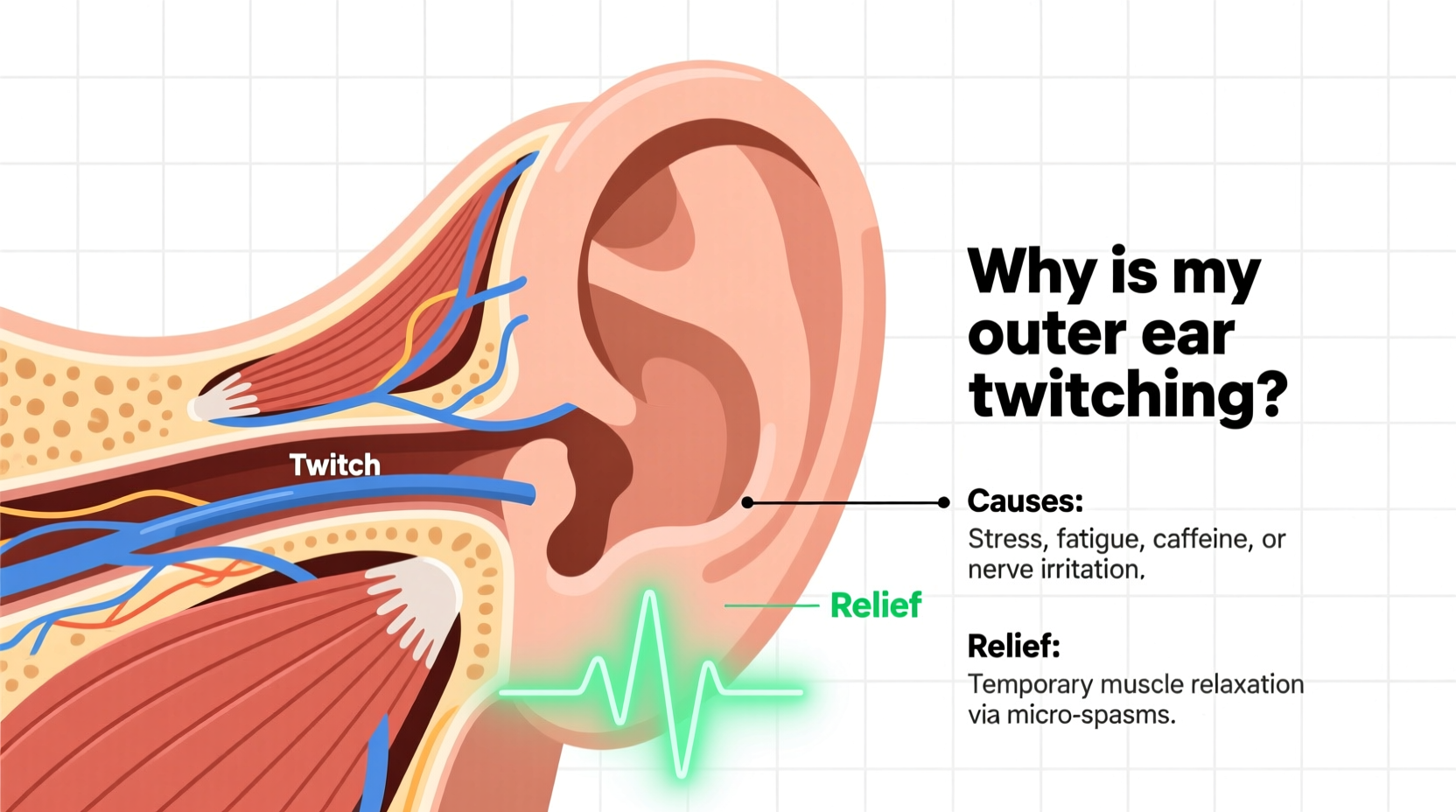
The outer ear contains several small muscles, including the auricularis anterior, posterior, and superior. These muscles evolved to help humans (and many animals) orient their ears toward sounds. In modern humans, they’re largely vestigial—meaning they serve minimal functional purpose—but they remain innervated by the facial nerve (cranial nerve VII), which controls facial expressions and muscle movement.
When these tiny muscles contract involuntarily, it results in what’s known as **auriculomandalibular myoclonus** or more simply, ear twitching. The movement may be barely noticeable or strong enough to cause visible flutters along the ear's rim. Because the muscles are so small, the energy required for contraction is minimal, which is why most twitches go unnoticed until they become repetitive or prolonged.
“Even minor neurological misfiring can activate dormant facial muscles, including those in the ear. It’s often benign, but chronic cases warrant evaluation.” — Dr. Lena Patel, Neurologist at Boston Neuro Care Center
Common Causes of Outer Ear Twitching
Ear twitching is typically temporary and resolves on its own. However, understanding the root cause helps determine whether intervention is necessary. Below are the most frequent contributors:
- Stress and Anxiety: Elevated cortisol levels impact nerve signaling, increasing the likelihood of muscle spasms throughout the body, including the face and ears.
- Fatigue: Sleep deprivation disrupts neuromuscular regulation, making spontaneous contractions more likely.
- Caffeine and Stimulants: Excessive intake of coffee, energy drinks, or certain medications can overstimulate the nervous system.
- Electrolyte Imbalance: Low levels of magnesium, potassium, or calcium impair proper muscle function and nerve transmission.
- Dry Skin or Irritation: Itching or flaking skin around the ear canal may trigger reflexive micro-movements as the body responds to irritation.
- Nerve Irritation: Compression or inflammation of the facial nerve due to injury, infection, or even poor posture during sleep can lead to localized twitching.
When to Be Concerned: Red Flags to Watch For
Most cases of ear twitching are harmless and self-limiting. However, certain symptoms suggest a need for medical evaluation. Persistent or worsening twitching accompanied by any of the following should prompt a visit to a healthcare provider:
- Facial weakness or drooping
- Hearing changes or tinnitus (ringing in the ears)
- Pain or swelling in or around the ear
- Spasms spreading to other facial areas
- Double vision or difficulty speaking
These could indicate conditions such as **Bell’s palsy**, **hemifacial spasm**, or even rare neurological disorders like multiple sclerosis. Early diagnosis improves outcomes significantly.
Effective Relief Strategies and Prevention Tips
For benign, stress-related twitching, targeted interventions can bring rapid relief. The key lies in addressing both physiological triggers and environmental stressors.
Step-by-Step Guide to Reduce Ear Twitching
- Assess Lifestyle Triggers: Eliminate excess caffeine, ensure 7–8 hours of quality sleep, and manage daily stress through mindfulness or breathing exercises.
- Replenish Electrolytes: Incorporate magnesium-rich foods (spinach, almonds, avocado) or consider a supplement after consulting your doctor.
- Apply Warm Compresses: Gently place a warm towel over the affected ear for 5–10 minutes to relax tense muscles and improve blood flow.
- Practice Facial Relaxation: Perform gentle facial massage or try guided facial yoga routines to release tension in the jaw and ear muscles.
- Limit Screen Time Before Bed: Blue light exposure suppresses melatonin and contributes to nervous system hyperactivity.
| Cause | Relief Method | Time to Effect |
|---|---|---|
| Stress-induced | Mindfulness meditation, deep breathing | Hours to days |
| Electrolyte deficiency | Magnesium supplementation, dietary change | 2–7 days |
| Caffeine overload | Gradual reduction | 24–48 hours |
| Dry skin irritation | Moisturizing lotion, avoid scratching | Immediate to 3 days |
| Chronic fatigue | Improved sleep hygiene | 3–10 days |
Real-Life Example: Managing Chronic Twitching
Sarah, a 34-year-old graphic designer from Portland, began noticing her left ear twitching after transitioning to remote work. Initially dismissive, she found the spasms intensified over two weeks, especially during late-night deadlines. She also reported increased coffee intake (up to 4 cups daily) and inconsistent sleep.
After reading about facial nerve sensitivity, Sarah reduced caffeine, started a nightly stretching routine, and applied a warm compress before bed. Within five days, the twitching subsided completely. A follow-up with her primary care physician confirmed no neurological abnormalities, reinforcing that lifestyle factors were the primary drivers.
Her experience highlights how modern work habits—screen strain, sedentary routines, and high stress—can manifest in subtle physical symptoms like ear twitching.
Do’s and Don’ts: Quick Reference Checklist
- ✅ Do maintain consistent sleep and hydration
- ✅ Do practice relaxation techniques like diaphragmatic breathing
- ✅ Do consult a doctor if twitching persists beyond two weeks
- ❌ Don’t ignore accompanying facial weakness or pain
- ❌ Don’t self-diagnose with serious conditions without professional input
- ❌ Don’t use alcohol-based wipes near irritated ear skin
Frequently Asked Questions
Can earwax buildup cause ear twitching?
No direct link exists between earwax and muscle twitching. However, impacted wax can irritate the ear canal, leading to itching or reflexive movements that mimic twitching. If you suspect wax buildup, see a healthcare provider for safe removal.
Is outer ear twitching a sign of a seizure?
Isolated ear twitching is not considered a seizure symptom. Seizures involving facial muscles typically present with broader involvement—such as eye blinking, lip smacking, or altered awareness—and last longer than brief twitches. If you have concerns about neurological events, seek evaluation from a neurologist.
Can children experience ear twitching?
Yes, though less commonly reported. Children may not recognize or describe the sensation accurately. Parents might observe slight ear movements during concentration or fatigue. As in adults, most cases are benign and resolve without treatment.
Conclusion: Take Control of Your Comfort
Outer ear twitching is more common than many realize and often reflects everyday imbalances in stress, nutrition, and rest. While alarming at first, the vast majority of cases respond well to simple, non-invasive adjustments. By tuning into your body’s signals and making mindful changes, you can restore calm—not just to your ear muscles, but to your overall well-being.




 浙公网安备
33010002000092号
浙公网安备
33010002000092号 浙B2-20120091-4
Comments
No comments yet. Why don't you start the discussion?