
Feather plucking—also known as feather picking or self-mutilation—is one of the most distressing behaviors a parrot owner can witness. Watching your vibrant, intelligent companion pull out its own feathers can be alarming and confusing. While it may seem like a simple grooming habit gone wrong, persistent feather loss is rarely normal. The causes are complex and often intertwined, spanning both physical health conditions and psychological stressors. Understanding whether the root lies in medical illness or emotional imbalance is crucial for effective treatment. More importantly, early intervention significantly improves recovery chances.
Parrots are highly sensitive creatures with long lifespans and deep cognitive abilities. When they begin plucking, it’s a cry for help—whether from pain, boredom, anxiety, or disease. Ignoring the behavior or assuming it will resolve on its own only worsens outcomes. This article breaks down the primary causes of feather plucking, offers diagnostic guidance, and provides practical, humane strategies grounded in veterinary science and avian psychology.
Medical Causes: When Feather Plucking Signals Illness
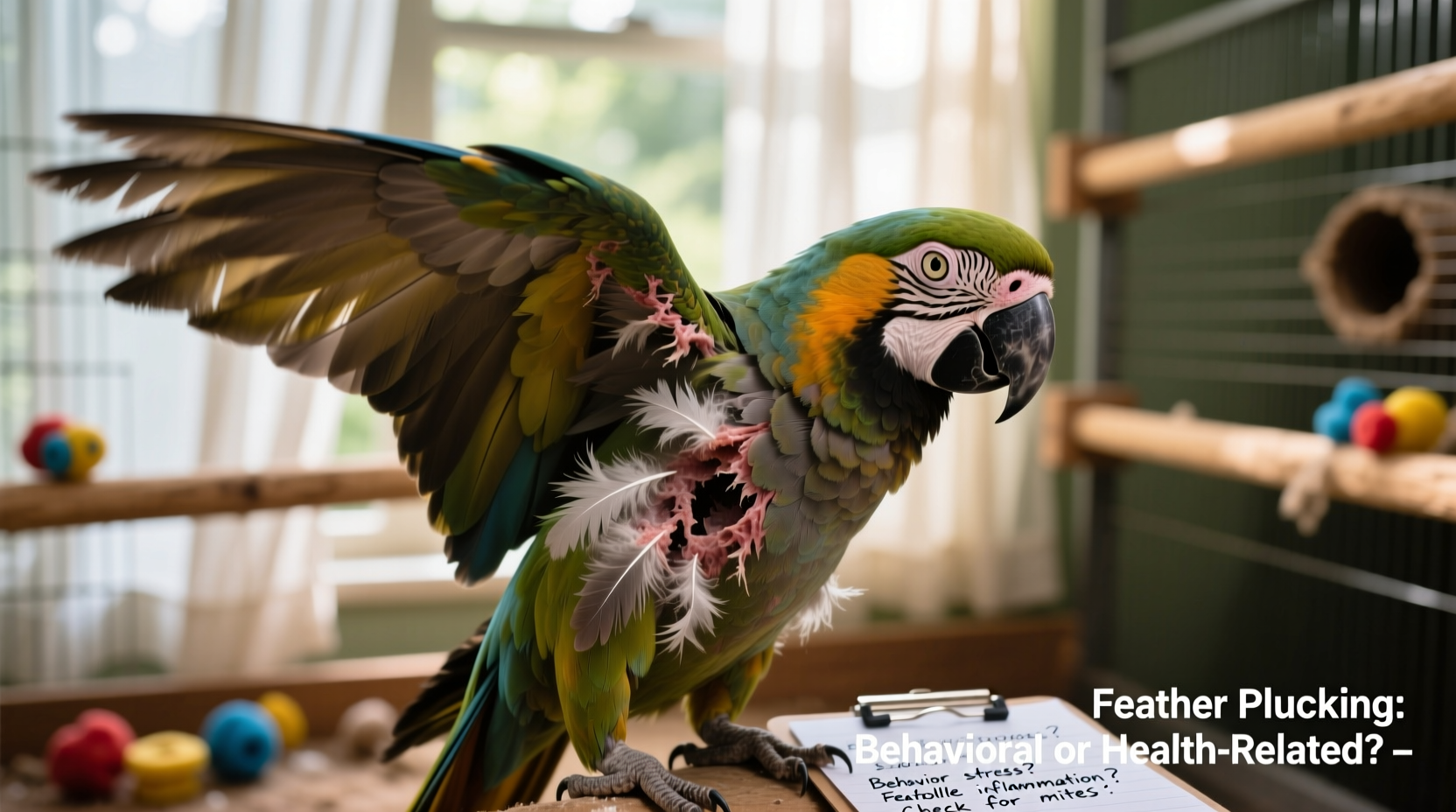
Before addressing behavioral factors, rule out underlying health problems. Many systemic diseases present initially through skin irritation or feather abnormalities. A veterinarian experienced in avian medicine should conduct a full workup if plucking persists beyond a few days.
Common medical triggers include:
- Skin infections: Bacterial, fungal (like candidiasis), or parasitic infestations such as mites can cause intense itching.
- Hepatic (liver) disease: Liver dysfunction alters metabolism and can lead to generalized pruritus (itching).
- Hormonal imbalances: Thyroid disorders or reproductive hormone fluctuations may trigger over-grooming.
- Nutritional deficiencies: Lack of essential amino acids, vitamins (especially A and B-complex), or fatty acids weakens feather structure and irritates skin.
- Allergies: Environmental allergens (dust, mold, cleaning products) or food sensitivities may manifest as dermatitis.
- Pain or discomfort: Arthritis, nerve damage, or internal tumors can prompt birds to focus attention—or relieve pain—by picking at nearby areas.
“Over 35% of chronic feather pluckers have an undiagnosed medical condition that precedes the behavior.” — Dr. Laurie Hess, Diplomate ABVP (Avian Practice)
Behavioral Triggers: The Emotional Roots of Self-Harm
When medical causes are ruled out, behavioral origins become the central focus. Parrots evolved as social, active foragers spending up to 60% of their day engaged in complex tasks. Captivity often fails to meet these needs, leading to frustration, anxiety, and displacement behaviors—including feather plucking.
Key psychological contributors include:
- Environmental monotony: Lack of stimulation leads to boredom, which manifests as repetitive actions like picking.
- Social isolation: Parrots form strong pair bonds. Single-bird households may suffer profound loneliness.
- Stressful household dynamics: Loud noises, frequent guest visits, or conflict among family members elevate cortisol levels.
- Attention-seeking: If plucking results in human interaction—even scolding—the bird learns to repeat the act for contact.
- Learned habits: Once initiated during a stressful event (e.g., moving homes), the behavior can persist even after the trigger is gone.
It’s important to note that behavioral plucking doesn’t mean “it’s all in their head.” Chronic stress alters brain chemistry and can result in true compulsive disorders, similar to OCD in humans.
Mini Case Study: Luna the Eclectus Parrot
Luna, a 5-year-old female Eclectus, began plucking her chest feathers after her owner started working from home. At first glance, more time together seemed beneficial. However, the change disrupted Luna’s routine. Her cage was now in a high-traffic area, exposed to constant screen glare and keyboard noise. She had no visual barrier and limited control over her environment.
After ruling out infection and nutritional deficits, the vet suggested environmental enrichment and scheduled downtime. Her owner added a canopy cover to one side of the cage, introduced foraging toys, and established quiet hours. Within six weeks, Luna stopped plucking and regrew healthy contour feathers. The case illustrates how subtle environmental shifts impact sensitive species profoundly.
Diagnostic Checklist: Is It Medical or Behavioral?
Distinguishing between health-related and psychological causes requires careful observation and professional input. Use this checklist to guide initial assessment:
- Observe location and pattern of feather loss (symmetrical vs. localized)
- Check skin for redness, sores, flaking, or discharge
- Review diet: Are pelleted foods used? Any seed-only feeding?
- Assess daily routine: How much out-of-cage time and mental stimulation?
- Track changes in environment or household within past 3 months
- Record frequency of plucking episodes (video helps)
- Schedule complete avian exam including bloodwork and gram stain
- Eliminate potential allergens (aerosols, smoke, new detergents)
Step-by-Step Guide to Recovery
Resolving feather plucking demands patience and consistency. Here’s a proven 8-week action plan:
- Week 1–2: Veterinary Assessment
Complete diagnostics: CBC, biochemistry panel, fecal exam, bacterial/fungal culture, and possibly radiographs. Begin treatment for any identified conditions. - Week 3–4: Optimize Nutrition
Transition to a balanced diet consisting of 60–80% high-quality pellets, supplemented with fresh vegetables, limited fruit, and occasional nuts. Eliminate seeds as primary food source. - Week 5–6: Enrich Environment
Introduce at least three new foraging activities per week (e.g., paper-wrapped treats, puzzle feeders). Rotate toys weekly to maintain novelty. Provide natural wood perches and shreddable materials. - Week 7: Establish Predictability
Create a stable daily schedule for feeding, interaction, and sleep (10–12 hours of darkness). Minimize sudden changes. - Week 8: Monitor Progress & Adjust
Document feather regrowth and reduction in picking frequency. Consult an avian behaviorist if progress stalls.
Recovery isn’t linear. Some birds improve rapidly; others take months. Regrown feathers may initially appear pinched or discolored—a sign of previous trauma—but typically normalize over molts.
Do’s and Don’ts: Common Mistakes in Managing Feather Plucking
| Do’s | Don’ts |
|---|---|
| Provide daily out-of-cage time in a safe, bird-proofed area | Leave the bird alone for 8+ hours without stimulation |
| Use distraction techniques when plucking begins (call name, offer toy) | Yell at or punish the bird—it reinforces attention-seeking cycles |
| Offer bathing opportunities (misting, shallow dish) 3x/week | Force baths or handle roughly during episodes |
| Consult an avian vet before using medications like antipsychotics | Rely solely on drugs without environmental modifications |
| Keep a journal tracking mood, diet, and plucking patterns | Ignore gradual changes until severe baldness occurs |
Expert Insight: The Role of Medication and Therapy
In refractory cases where behavioral modification alone fails, veterinarians may prescribe psychotropic medications. These are not quick fixes but tools to lower anxiety enough for learning new coping mechanisms.
“We use drugs like clomipramine or fluoxetine not to sedate birds, but to reset neurological pathways overwhelmed by chronic stress. Combined with enrichment, they can be life-changing.” — Dr. Greg Harrison, Avian Medicine Specialist
Medication should always be paired with environmental therapy. Never administer prescription drugs without veterinary supervision—dosage precision is critical in small-bodied animals.
Frequently Asked Questions
Can feather plucking be reversed once it starts?
Yes, especially if addressed early. Full reversal depends on duration, cause, and tissue damage. Chronic plucking may permanently impair feather follicles, but halting the behavior prevents further harm and allows partial regrowth.
Should I get a second parrot to keep my bird company?
Not automatically. Introducing another bird adds complexity and can increase stress if mismatched. First try enhancing human interaction, providing mirrors (temporary), or supervised playdates with other trusted birds. Pair bonding requires careful introduction and lifelong commitment to two birds.
Are certain species more prone to feather plucking?
Yes. Cockatoos, African Greys, and Eclectus parrots show higher incidence due to intelligence, sensitivity, and strong emotional needs. However, any parrot can develop the behavior under poor conditions.
Conclusion: Healing Begins with Understanding
Feather plucking is not a choice your parrot makes lightly—it’s a symptom of deeper imbalance. Whether rooted in disease, diet, or emotional distress, the solution lies in compassionate investigation and sustained care. There is no single fix, but a combination of veterinary insight, enriched living, and patient engagement yields real results.
Your parrot relies on you not just for food and shelter, but for mental well-being. By listening to what this behavior communicates, you honor the depth of their sentience. Start today: observe closely, consult experts, enrich their world, and restore trust. With time and dedication, many plucking parrots return to vibrant health—feathers and spirit intact.




 浙公网安备
33010002000092号
浙公网安备
33010002000092号 浙B2-20120091-4
Comments
No comments yet. Why don't you start the discussion?