
Plants are remarkably responsive organisms. They don’t just grow—they adapt. One of the most common signs of adaptation you’ll notice as a plant owner is sideways growth. If your houseplant appears to be leaning dramatically to one side, stretching toward a window, or developing an uneven shape, it’s not random. This behavior is typically a direct response to insufficient or poorly distributed light. While this might look concerning, it's actually a natural survival mechanism known as phototropism—the plant’s instinctive effort to reach the best available light source. The good news? In most cases, sideways growth can be corrected with straightforward adjustments to lighting, positioning, and care routines.
Understanding Phototropism: Why Plants Lean Toward Light
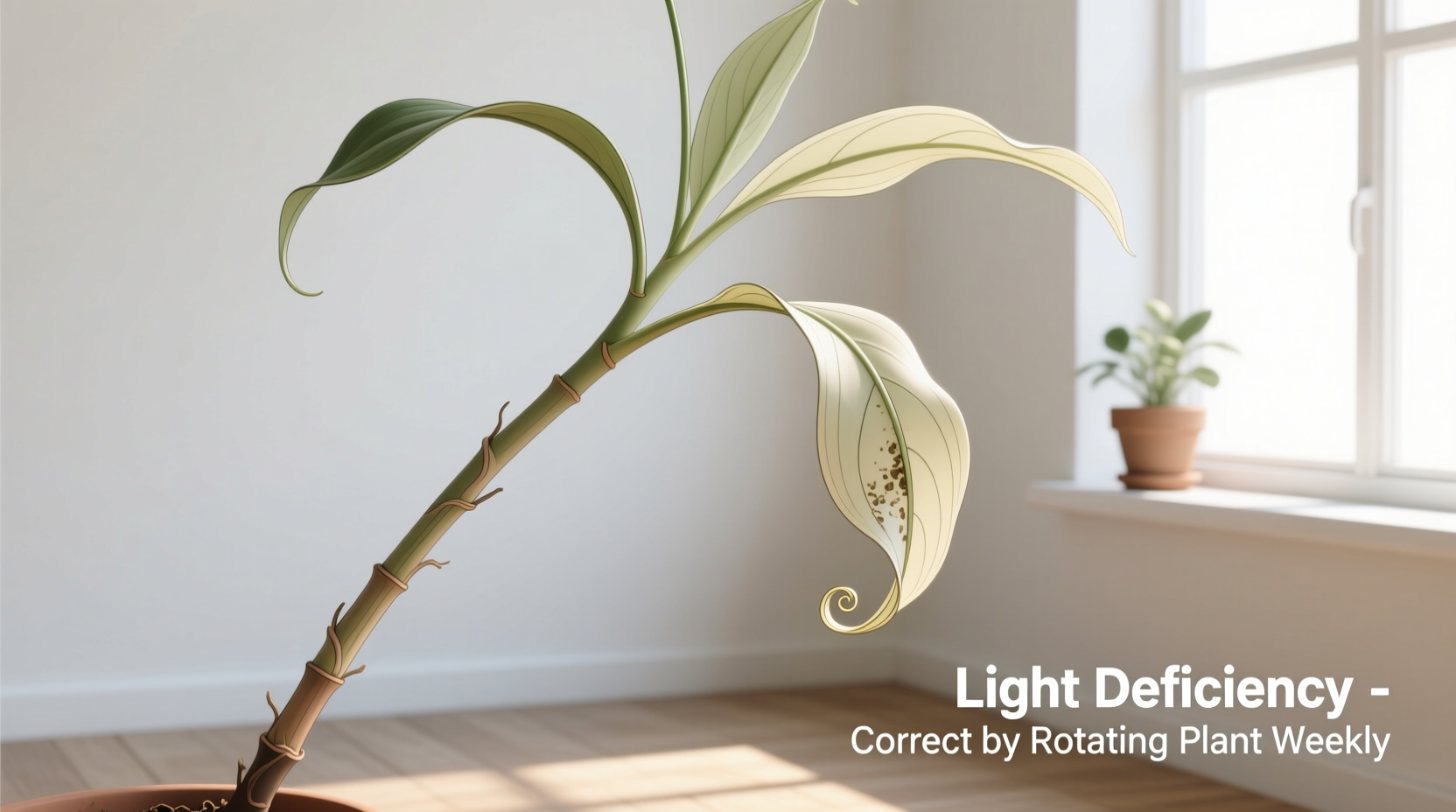
At the core of sideways plant growth lies a biological process called phototropism. This is the directional growth of a plant in response to light stimuli. When light comes from only one direction—such as a south-facing window—cells on the shaded side of the stem elongate more than those on the illuminated side. This imbalance causes the plant to bend toward the light source.
This behavior evolved in nature to help plants compete for sunlight under dense canopies. Indoors, however, this same mechanism can lead to lopsided, weak, and unattractive growth. Seedlings, fast-growing tropicals like pothos or monstera, and flowering plants such as African violets are especially prone to pronounced phototropic responses.
“Plants don’t just grow toward light—they prioritize it above symmetry. What looks like a flaw to us is, to the plant, a successful survival strategy.” — Dr. Lena Ruiz, Botanist and Indoor Plant Physiologist
Recognizing that sideways growth is a symptom rather than a disease allows you to address the root cause: inadequate or uneven light distribution.
Common Lighting Issues That Cause Sideways Growth
Not all light is equal when it comes to supporting balanced plant development. Several indoor lighting conditions can trigger asymmetric growth patterns:
- Single-direction lighting: Most homes rely on windows as the primary light source, which naturally creates a strong gradient. Plants placed near a single window receive intense light on one side and very little on the other.
- Insufficient overall light: Low-light environments force plants to stretch aggressively toward any available brightness, leading to leggy, weak stems.
- Inconsistent exposure over time: If you never rotate your plant, the same side remains shaded, reinforcing directional growth.
- Seasonal changes: Winter months bring shorter days and lower sun angles, reducing both intensity and duration of light, which can suddenly trigger stretching behaviors in previously stable plants.
How to Correct Sideways Growth: A Step-by-Step Guide
Correcting sideways growth isn’t about forcing the plant back into shape overnight—it’s about guiding it toward balanced development through consistent environmental improvements. Follow these steps to realign your plant’s growth pattern:
- Assess current light conditions. Use a light meter app or simply note how many hours of direct or indirect sunlight your plant receives daily. South-facing windows offer the strongest light in the Northern Hemisphere; east and west provide moderate exposure; north-facing windows usually deliver low light.
- Rotate your plant weekly. Turn the pot 90 degrees every 7 days to ensure all sides receive equal exposure. For severely skewed plants, rotate daily at first to gradually correct the lean.
- Relocate to a brighter spot. Move the plant closer to a window or into a room with better natural light. Avoid placing it directly against cold glass in winter or in scorching sun during summer afternoons.
- Add supplemental lighting. Use full-spectrum LED grow lights positioned above or on multiple sides of the plant. Set them on a timer for 12–14 hours per day to mimic natural daylight cycles.
- Prune selectively. Trim back elongated, weak stems to encourage branching from the base or stronger nodes. This helps redistribute energy and promotes fuller, upright growth.
- Stake or support if needed. For tall or top-heavy plants, use a discreet bamboo stake or moss pole to provide structural support while new growth adjusts.
Expected Timeline for Recovery
Improvement won’t happen immediately. Here’s what to expect:
| Timeframe | What to Expect |
|---|---|
| 1–2 weeks | Reduced stretching; new leaves may begin emerging more evenly. |
| 3–6 weeks | Visible correction in stem orientation; improved leaf spacing. |
| 2–3 months | Full recovery with symmetrical growth, assuming consistent care. |
Preventing Future Imbalances: Best Practices
Once your plant begins growing upright again, maintaining balance requires ongoing attention. These habits will help prevent recurrence:
- Establish a rotation schedule: Mark your calendar or set a phone reminder to turn your plant weekly.
- Monitor seasonal shifts: As daylight changes throughout the year, reassess placement. You may need to move plants further from windows in summer and closer in winter.
- Clean leaves regularly: Dust buildup blocks light absorption. Wipe leaves gently with a damp cloth every few weeks.
- Avoid overcrowding: Grouped plants shade each other. Space them apart to allow light penetration on all sides.
- Use reflective surfaces: Place white boards, mirrors, or aluminum foil behind plants (without touching) to bounce light back onto shaded areas.
Do’s and Don’ts of Correcting Sideways Growth
| Do’s | Don’ts |
|---|---|
| Rotate your plant regularly | Leave your plant in the same position for months |
| Supplement with grow lights in low-light spaces | Expose sensitive plants to sudden intense sunlight after acclimation |
| Prune leggy stems to promote bushiness | Over-prune in a single session—limit removal to 1/3 of foliage at once |
| Use stakes for support during recovery | Tie stems too tightly, which can damage tissue |
| Observe growth patterns monthly | Ignore early signs of leaning or stretching |
Real Example: Reviving a Leaning Pothos
Samantha, a plant enthusiast in Chicago, noticed her golden pothos had started creeping across her bookshelf like a vine chasing sunlight. The stems were long, sparse, and clearly angling toward a nearby east-facing window. After researching, she realized the issue wasn’t poor health—but poor light distribution.
She began rotating the plant every Sunday, moved it slightly closer to the window sill (but out of direct midday sun), and wiped the leaves monthly to improve photosynthesis. After six weeks, new growth emerged straighter and more compact. By week ten, the plant had developed a fuller appearance, and the sideways stretch had reversed significantly. Samantha now uses a small LED grow light during winter months to maintain consistent growth.
Her experience highlights a key truth: even dramatic sideways growth can be corrected with patience and proper technique.
Frequently Asked Questions
Can sideways growth be reversed completely?
Yes, in most cases. While older, stretched stems won’t revert to being upright, new growth will respond to improved lighting conditions. Over time, pruning and training allow the plant to regain a balanced form. Full recovery typically takes several weeks to months.
Should I cut off the leaning part of my plant?
You can—and often should. Pruning elongated, weak stems redirects energy to healthier parts of the plant and encourages branching. Use clean, sharp scissors to trim just above a leaf node. Consider propagating the cuttings to grow new, compact plants.
Is sideways growth a sign of overwatering or pests?
Not usually. While overwatering or pests can weaken a plant and make it more susceptible to stress, sideways growth is primarily a light-seeking behavior. However, if your plant shows yellowing leaves, mushy stems, or insect residue alongside leaning, investigate root rot or infestation as secondary issues.
Expert Insight: The Role of Light Quality
Light isn’t just about quantity—it’s also about quality. Plants respond best to blue and red wavelengths, which are abundant in natural daylight and full-spectrum LEDs. Incandescent bulbs, common in household lamps, emit mostly red and infrared light, which can promote excessive stem elongation without supporting healthy leaf development.
“Using the wrong type of artificial light is like feeding your plant junk food—it survives, but it doesn’t thrive.” — Dr. Arjun Patel, Horticultural Lighting Specialist
For long-term health, invest in grow lights labeled “full spectrum” with a color temperature between 5000K and 6500K. These mimic midday sunlight and support balanced growth.
Final Checklist: Fixing and Preventing Sideways Growth
- ✅ Evaluate your plant’s current light exposure (duration and direction).
- ✅ Rotate the plant 90 degrees weekly.
- ✅ Move it closer to a bright window or add a grow light.
- ✅ Prune leggy or uneven stems to encourage bushier growth.
- ✅ Support weak stems with stakes or trellises if necessary.
- ✅ Monitor new growth monthly for symmetry and vigor.
- ✅ Adjust placement seasonally to account for changing sunlight angles.
Conclusion: Grow Strong, Not Just Sideways
Your plant’s sideways growth isn’t a failure—it’s a signal. It tells you that your green companion is doing its best to survive in less-than-ideal conditions. With a few thoughtful adjustments, you can transform that lean into a lesson in attentive care. By understanding light dynamics, committing to regular rotation, and supporting recovery with smart pruning and lighting, you give your plant the chance to grow not just taller, but stronger and more resilient.




 浙公网安备
33010002000092号
浙公网安备
33010002000092号 浙B2-20120091-4
Comments
No comments yet. Why don't you start the discussion?